

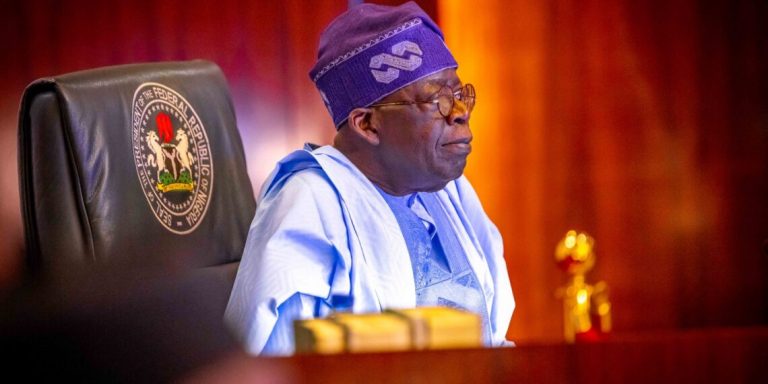
As President Bola Ahmed Tinubu marks the third anniversary of his administration, Nigeria stands at a definitive crossroads between the “foundational sacrifice” of his early tenure and the “visible recovery” he now proclaims. Since assuming office in May 2023, the administration has moved through a narrative arc that transitioned from urgent, painful reforms to a claim of undeniable progress. Yet, the central question remains: is the “Renewed Hope” agenda a burgeoning reality or a collection of sustained, albeit difficult, structural adjustments? To assess these three years, one must look beyond the rhetoric to the performative nature of the administration’s governance and the tangible shifts in Nigeria’s socio-economic landscape.
The Foundation of Reform: Choosing Reform over Ruin
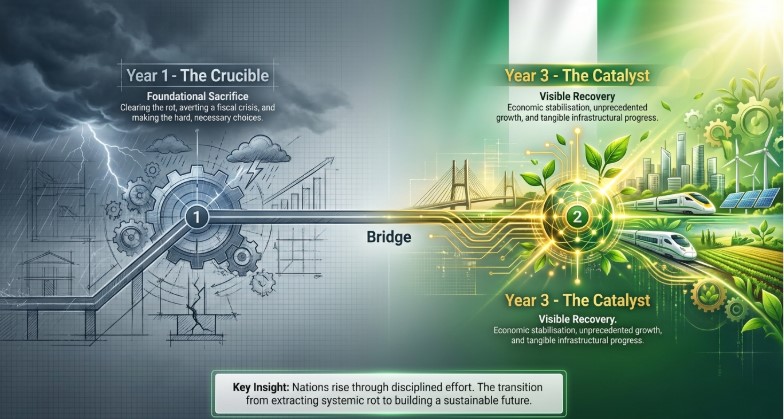
The administration began in 2023 with a “thunderbolt” announcement that “subsidy is gone,” a decision aimed at ending a regime that drained ?18.4 billion daily from the national treasury. This “courageous action” was presented as the only alternative to a fiscal breakdown that would have led to a plunging Naira and an economy in free-fall. While the unification of exchange rates and the removal of subsidies created “enormous pressure” on families and job seekers, the President maintains these were necessary to stop the economy from “bleeding”. This first year was defined by a call for “foundational sacrifice,” asking Nigerians to endure a temporary period of pain for long-term national recovery.
Register for the next Tekedia Mini-MBA.
Register for Tekedia AI in Business Masterclass.
Join Tekedia Capital Syndicate and co-invest in great global startups.
Macroeconomic Stabilisation: The Narrative of Progress
By the second anniversary in 2025, the administration shifted its tone to “Undeniable Progress,” reporting that the fiscal deficit had narrowed sharply from 5.4% of GDP in 2023 to 3.0% in 2024. Strategic indicators began to show a turnaround; net external reserves grew by almost 500%, surging from $4 billion to over $23 billion by the end of 2024. Furthermore, bold tax reforms saw the tax-to-GDP ratio rise from 10% to 13.5% in just one year, aimed at making the system fairer and more growth-oriented. Supporters argue these metrics signal a more competitive economy, evidenced by a stock market where market capitalisation surged from ?30 trillion in 2023 to a record ?160 trillion by 2026.
Youth and Infrastructure: The Engine of the Future

Perhaps the most significant pillar of the administration’s third-year outlook is the repositioning of Nigerian youth as the primary “engine of Nigeria’s future”. The Nigerian Education Loan Fund (NELFUND) has emerged as a landmark intervention, providing over 1.5 million students with access to higher education and disbursing more than ?282 billion to remove financial barriers. This focus on human capital is matched by a massive infrastructure drive, with over 2,700 kilometres of highways—including the Lagos-Calabar Coastal Highway—under construction to boost trade and create thousands of jobs. Additionally, the Renewed Hope Housing Programme has delivered over 10,000 units across 14 states, directly generating over 300,000 jobs for young artisans and professionals.
The Paradox of Resilience: Hardship vs. Recovery
Despite these institutional gains, a stark counter-narrative persists among the populace and opposition figures. Critics highlight that the reforms have triggered hyperinflation, which climbed to 33.69% by 2024, with food inflation exceeding 40%. The “rising cost of living” has led some civil society groups to describe the last three years as a period of “hunger, hardship, and pain,” arguing that the benefits of foreign investment have yet to reach the average household. While the administration points to “ease-of-doing-business” successes, businesses continue to struggle with high interest rates and a weakened currency. This creates a “paradox” where macroeconomic indicators improve while widespread economic inequality and poverty remain at an all-time high.

A Marathon of Renewal
President Tinubu’s third-year address serves as a “call to national purpose,” asserting that history tests nations before it elevates them. The administration has successfully moved from “laying the foundation” to implementing high-impact programmes like the 3 Million Technical Talent (3MTT) initiative and the Presidential CNG scheme to reduce transport costs. However, the durability of this democracy hinges on bridging the gap between “reform rhetoric” and the “lived realities” of Nigerians.
Whether the last three years represent “Renewed Hope” or merely “Sustained Progress” depends on one’s perspective: the investor seeing a booming stock market or the worker facing rising food prices. The foundation for recovery has undoubtedly been laid through difficult and often unpopular decisions. The task for the remaining tenure is to ensure that the “signs of recovery” currently visible in economic data become a tangible reality in the daily lives of all Nigerians. The administration’s legacy will ultimately be defined by its ability to translate these structural gains into shared prosperity and lasting social stability.