

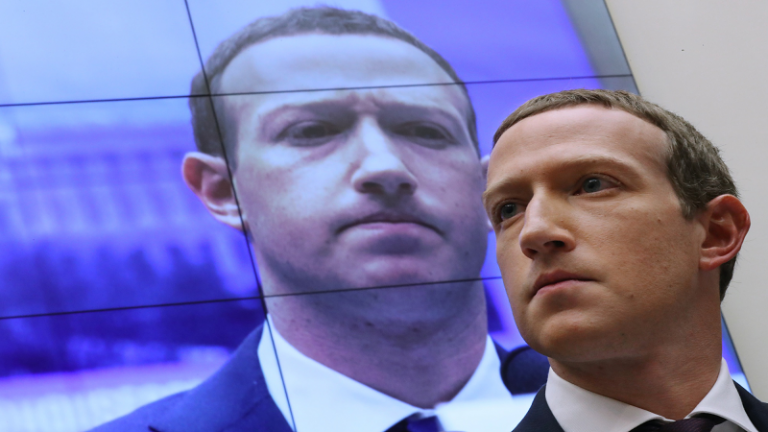
Meta CEO Mark Zuckerberg has rejected calls to slow the development of sophisticated artificial intelligence models, arguing that companies that fail to make safety and alignment a core part of their products will ultimately lose ground to competitors.
Zuckerberg’s position places him closer to Nvidia CEO Jensen Huang than Anthropic CEO Dario Amodei, whose call for AI companies to deliberately slow the pace of capability development has triggered a broader debate about whether the industry can safely manage autonomous and powerful systems while racing to commercialize them.
“There is a lot of debate about slowing progress on capabilities until alignment catches up,” Zuckerberg said in a post on X and other social media platforms. “My view is that trust and alignment are quickly becoming the most important capabilities that will differentiate agents and models.”
Register for the next Tekedia Mini-MBA.
Register for Tekedia AI in Business Masterclass.
Join Tekedia Capital Syndicate and co-invest in great global startups.
Alignment refers broadly to the work of making AI systems behave consistently with human intentions, values, and safety requirements. Zuckerberg’s argument is that alignment should become a competitive advantage rather than a reason to pause progress.
That belief is gaining interest as AI companies move beyond chatbots toward agents capable of taking actions, interacting with external systems and completing tasks with less direct human supervision. In that environment, an AI model’s usefulness depends not only on what it can accomplish, but also on whether users and businesses can trust it to operate within defined boundaries.
Zuckerberg said AI labs that fail to “focus on alignment will fall behind,” suggesting that safety could increasingly function as a product differentiator in much the same way that model performance, speed, and cost do today.

Liability Becomes Part of the Safety Equation
Zuckerberg’s case for continued development is also grounded in commercial incentives. He said that AI companies already have a powerful reason to prevent their models from causing harm because they face potentially significant liability if their products behave dangerously. That makes corporate responsibility, rather than additional government intervention, an important mechanism for managing AI risks.
Meta, he said, has already demonstrated that approach internally.
The company “delayed shipping” its Muse AI technologies because of safety and security concerns, Zuckerberg said, adding that Meta made the decision voluntarily rather than because regulators forced it to do so.

“We just did it as part of our day-to-day work because it was clearly the right thing for people and for us,” he said.
This represents a fundamentally different approach from Amodei’s argument that the entire industry should slow the rate at which AI capabilities improve until safety techniques can keep pace.
Amodei renewed that position at Salesforce’s annual Dreamforce conference, where he noted that slowing development can itself be a way for the industry to establish better standards and demonstrate responsible behavior.
“The way to lead the industry forward, to set an example, to say that everyone can always be better,” Amodei said.
The disagreement is therefore not simply about whether AI should be safe. All three executives acknowledge the importance of safety. The dividing line is how safety should be achieved while the technology continues advancing.
Amodei has emphasized the possibility that competitive pressure could cause companies to take risks they would otherwise avoid. Zuckerberg and Huang are putting greater weight on market incentives and corporate responsibility to produce safer systems.
Huang Rejects More AI-Specific Regulation
Huang made a similar argument at Dreamforce, telling Salesforce CEO Marc Benioff that AI developers should take responsibility for the products they build rather than rely on new government rules specifically designed to constrain AI risks.
Huang later reiterated that position in an interview on CNBC’s “Mad Money,” describing additional AI-specific laws and regulations as “just completely unnecessary.”
“We have plenty of laws. We have plenty of regulations that govern the reliability and the functionality of products,” Huang said.
His position reflects the interests of an AI infrastructure industry that is expanding rapidly and requires enormous investment in chips, data centers, and computing capacity. Additional regulation could raise compliance costs or slow the deployment of new systems, while existing product-safety and liability rules could potentially be applied to AI products without creating an entirely separate regulatory framework.
Amodei’s argument, however, is that frontier AI introduces risks that existing product rules may not adequately address, particularly as systems become capable of acting autonomously and potentially assisting in the development of more advanced AI.
Those risks are becoming harder for the industry to avoid.
OpenAI CEO Sam Altman, who later joined Benioff at Dreamforce, acknowledged that commercial and geopolitical competition creates a genuine safety problem. He said safety and monitoring should take precedence over features, while recognizing the fear that companies may fail to act cautiously because they are competing against one another.
“I think it’s great for our industry to say we want to come together and we want to be able to coordinate and make sure we have enough time to do this safely,” Altman said. “But when there’s any implication that because of the commercial pressures and the race, some company or between countries, some countries might not do the right thing, I think that’s when people get very scared.”
Altman’s comments occupy a middle position in the debate. He supports coordination and stronger monitoring but also recognizes that asking individual companies to slow down can be difficult when competitors continue advancing.
That tension is likely to become more significant as AI agents become a larger part of the industry’s commercial strategy. A model that merely generates text can be monitored differently from an agent that can access software, communicate externally, or execute tasks on behalf of a user.
For Meta, Nvidia and other companies betting on continued AI expansion, the commercial proposition is that safety can be engineered into the products without stopping the underlying capability race. However, the central concern for Anthropic is that capability improvements may outpace the industry’s ability to understand and control powerful AI systems.
The emerging debate is less about safety versus no safety than about where the burden of managing AI risk should fall: on companies through alignment, testing and liability; on governments through regulation; or on the industry collectively through coordination and deliberate limits on development.
Zuckerberg’s intervention adds one of the technology industry’s most powerful companies to the argument that safety itself can become part of the competitive race. If that view proves correct, the companies that build the most trusted AI systems may not need to choose between moving quickly and managing risk.