DD
MM
YYYY

PAGES

DD
MM
YYYY

spot_img

PAGES

Home Blog

XRP and Cardano Are Well Below Their Peaks, Could BlockDAG Turn $500 Into $25,000? Here’s Why Buyers Are Rushing In

0

Two top crypto projects are testing investor confidence today. XRP and Cardano spent years building systems, seeking big partners, and launching updates. Yet both projects sit far down from their past price peaks. Investors who bought these coins hoping for big gains now face a long period of waiting. The core tech works fine, but the token values remain flat.

This split between network progress and token value moves money into earlier opportunities. Old projects often get stuck in past price trends. Because of this, early presale deals look much better to many buyers. The BlockDAG (BDAG) presale now attracts strong interest for this reason. It offers a fresh entry price that older projects like XRP or Cardano cannot offer today.

XRP Struggles to Push Higher Despite Strong Utility

XRP remains a major asset in crypto. It uses the XRP Ledger to move money fast across borders at low cost. This ledger has processed millions of transactions reliably since 2012. Ripple also gained key regulatory wins in Europe and America. Major banks even filed for products tied to this asset.

However, these wins failed to lift the price. XRP trades near $1.02, down about 73% from its high and down 69% over the past year. It hovers near the $1 mark after a long fall. Legal rules remain unclear and slow down buyer confidence. A growing supply also means XRP needs massive money inflows to rise. Network progress stays strong, but the market price stays disappointing.

Cardano Remains Trapped in Long Downtrend

Cardano shows a similar pattern. The project uses peer-reviewed research and offers community voting through its Voltaire system. ADA holders vote on network changes and fund usage. Over 60% of all coins stay locked in staking pools. The network also gained institutional interest as spot products entered review processes.

Despite this progress, the token value remains weak. ADA trades around $0.18, down 94% from its $3.10 peak in September 2021. It also shows heavy drops over the last year. Most traders expect ADA to stay in a narrow range instead of jumping high. Early buyers face a long wait, while new buyers must bet on a recovery that has not happened for years.

BlockDAG (BDAG) Opens Early Presale Access

The BlockDAG (BDAG) presale works differently than XRP and Cardano. It avoids long price drops by fixing early entry rates before open market trading starts. Stage 1 begins at $0.002 across 25 total phases leading to a $0.05 final rate and a $0.10 launch target. A $500 buy at Stage 1 gets 250,000 BDAG tokens, which turns into $25,000 if BDAG hits $0.10. That equals a 50x return on initial funds.

This setup rests on real tools rather than plain promises. The BlockDAG network runs live right now. BlockDAG Casino operates as an active product, and mining rigs ship out to buyers. The team is also building the BlockDAGX exchange for future trading. A Super App will soon connect wallets, mining, and payments. Plus, $100 million in liquidity sits ready for launch day, giving it a strong start.

Final Thoughts

XRP and Cardano show that top projects with working tech can trap holders at low prices for years. Good news alone has failed to push those values higher. The BlockDAG (BDAG) presale provides a new choice with its $0.002 Stage 1 rate, a 25-stage path toward a $0.10 launch target, and a path to turn $500 into $25,000. It backs this offer with a live network instead of a weak price history. For traders watching old tokens struggle, a fresh presale offers a clear reason to take action now.

Explore BlockDAG Now:

Presale: https://purchase.blockdag.network

Website: https://blockdag.network

Telegram: https://t.me/blockDAGnetworkOfficial

Discord: https://discord.gg/Q7BxghMVyu

 

Ndubuisi Ekekwe Delivers Keynote At NiDEC 2026 in Toronto, Canada

0

Good People, thank you, Fellow Citizens, for giving this Ovim village boy the privilege of delivering the Keynote Address at the Nigeria Diaspora Economic Conference (NiDEC) 2026 in Toronto, Canada.

It was truly a magical experience, sharing ideas on Nigeria’s economic future and co-moderating important conversations with H.E. Prof. Chukwuma Charles Soludo, CFR, Governor of Anambra State, and H.E. Dauda Lawal, Governor of Zamfara State. We explored how Nigeria can better mobilize diaspora capital, deepen investment, and create pathways through which money becomes productive capital that advances communities and creates prosperity.

Today, I will be in a plenary session on Investing at Home and how Nigeria’s capital market is creating wealth for the diaspora at 10:20am.

Booking CEO Warns AI Could Trigger ‘Human Cost’, Wants “Every Single Employee” To Become “AI Literate” 

0

Booking Holdings CEO Glenn Fogel has warned that the rapid adoption of artificial intelligence could carry a significant “human cost,” as companies deploy increasingly capable systems to automate tasks once performed by employees.

Fogel, who has led Booking Holdings since 2017 and also serves as CEO of Booking.com, said the company is actively considering how AI could reshape its workforce while seeking to ensure employees acquire the skills needed to remain productive as technology advances.

“Unfortunately, we’re always thinking, ‘What are the changes in our workforce going to be due to the benefits of AI?’” Fogel said in an episode of the Grit podcast released Monday. “There’s a cost, a human cost to that.”

Fogel is not questioning the usefulness of AI. Booking has been investing in AI to make travel planning more personalized and automated, with Fogel previously describing a future in which AI could function much like a travel agent that understands a customer’s preferences and can help manage the wider journey.

The tension is that the same technology that can make travel easier for consumers could reduce the amount of human labor required to provide those services.

Fogel said he has instructed Booking’s human-resources leadership that he wants “every single employee” to become “AI literate” and capable of using the technology.

“If such things happen that this person’s job role is no longer necessary, and we can find another spot for that person, at least that person now has been developed so they will have a better opportunity going forward somewhere else,” he said.

A Booking Holdings spokesperson said the company’s effort to make AI literacy a “foundational capability” is an ongoing initiative rather than a one-time training programme.

That distinction points to a broader change in how companies are approaching AI adoption. Rather than treating AI solely as a tool for cutting costs, businesses are increasingly attempting to make AI proficiency a baseline workplace skill. The economic consequences could depend on whether productivity gains translate into higher output and new roles or allow companies to accomplish the same amount of work with fewer employees.

Fogel believes the pressure could be particularly intense for workers at the beginning of their careers.

He predicted that investment banks could eventually employ substantially fewer entry-level analysts as AI systems become capable of performing more of the research, data analysis, and other tasks traditionally assigned to junior employees. That could disrupt a long-standing career model in which graduates enter professional services through highly repetitive junior roles before progressing into positions requiring greater judgment and expertise.

The potential problem extends beyond the number of jobs eliminated. If AI removes a large portion of entry-level work, companies could also lose an important mechanism for training the next generation of experienced professionals. Workers who would traditionally have learned by performing routine tasks may instead have to acquire expertise through new training and apprenticeship models.

The issue is already generating sharply different forecasts among technology executives. Anthropic CEO Dario Amodei has warned that AI could eliminate a substantial share of entry-level white-collar jobs within five years, while other executives have argued that AI will primarily increase employee productivity and allow companies to produce more without materially reducing headcount.

Fogel’s position sits between those two views. His assertion suggests that even companies expecting AI to expand productivity cannot assume employment will remain unchanged. Some jobs may disappear, others may be redesigned, and workers may increasingly be expected to supervise, direct, and verify AI systems rather than perform the underlying tasks themselves.

Fogel has previously described AI as potentially capable of restoring the personalized experience traditionally associated with human travel agents, but at digital scale. Booking has been developing AI capabilities aimed at making travel planning more conversational and personalized.

That creates an important economic paradox. AI could make travel services more accessible and efficient while simultaneously reducing the human labor needed to deliver them.

The consequences could extend well beyond the technology sector. If investment banks, travel companies, insurers, professional-services firms and other large employers begin reducing entry-level hiring, the effect could reach universities, graduate recruitment and household incomes. A decline in early-career opportunities could also make it harder for workers to accumulate the experience traditionally required to move into higher-paying positions.

Fogel therefore sees the transition as a workforce challenge rather than simply a technology upgrade.

“I think we’ll have some significant rough waters ahead of us,” he said.

Companies have been moving rapidly to integrate AI into their operations, leaving a central question for employers and policymakers: will the productivity gains generated by increasingly capable AI create enough new economic activity and employment opportunities to offset the jobs displaced by automation?

Fogel’s response is to prepare workers for a workplace in which AI is increasingly embedded in everyday tasks. The larger uncertainty is whether becoming “AI literate” will be enough to protect workers when the technology begins performing entire categories of work rather than simply assisting the people who perform them.

CFTC Prepared to Advance Crypto Regulations Even if Congress Fails on Clarity Act

0

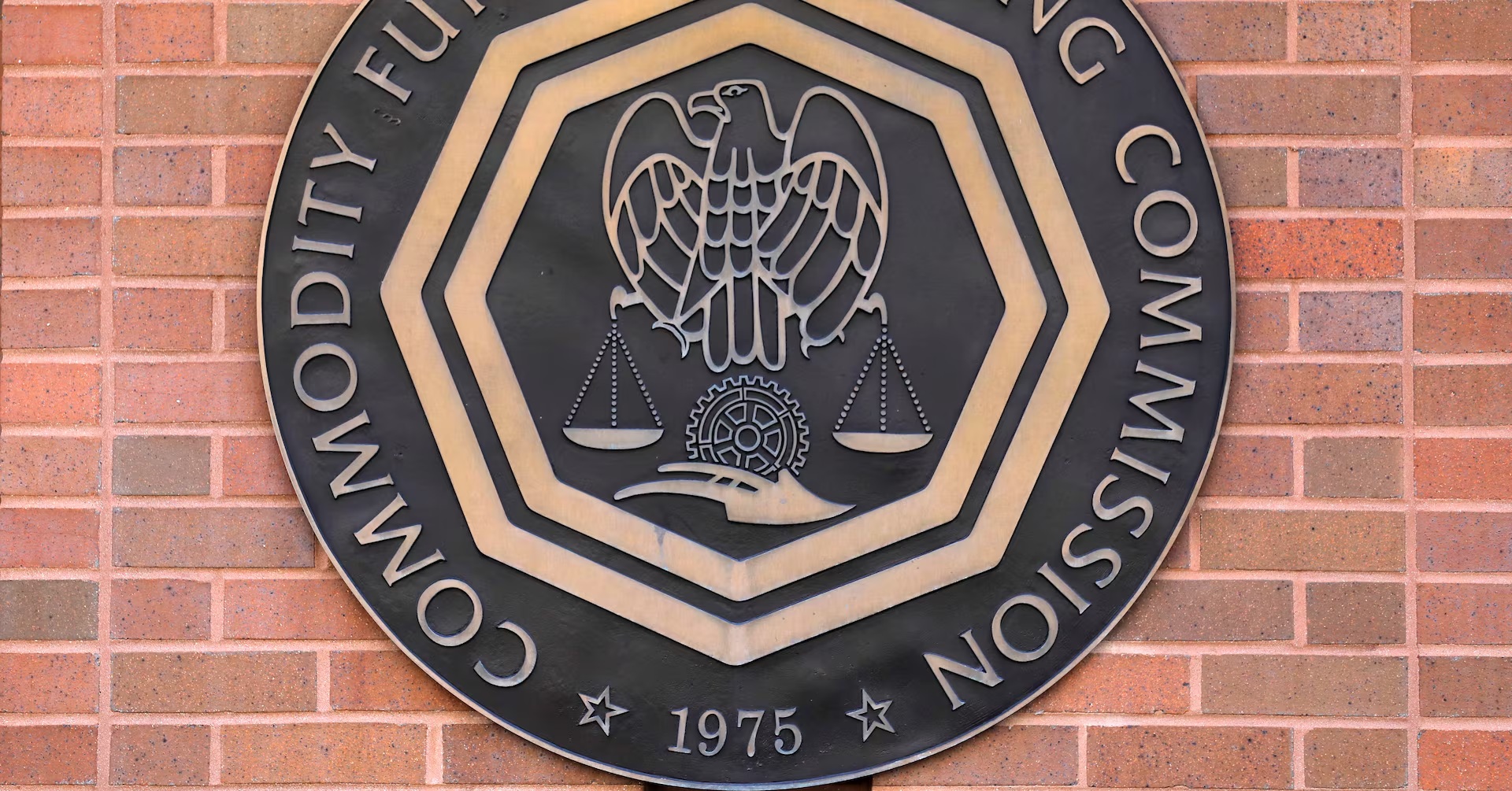
The Commodity Futures Trading Commission has disclosed its readiness to move forward with cryptocurrency regulations using its existing authorities if Congress does not pass the long-awaited Digital Asset Market Clarity Act.

The development comes as the landmark market structure bill stalled ahead of the August recess, shifting momentum toward agency-driven rulemaking.

Recall that the U.S. Senate left Washington for its August recess without voting on the Digital Asset Market Clarity Act, the landmark legislation long sought by the cryptocurrency industry to establish a clear federal regulatory framework for digital assets.

On August 8, Senate Majority Leader John Thune filed a cloture motion on the bill, setting up a key procedural vote for September 15 after lawmakers return.

CFTC Chair Michael Selig has repeatedly signaled that regulators will not wait indefinitely. In earlier comments, he warned that without legislation, agencies would end up “writing all the rules” for digital assets.

A CFTC spokesperson reinforced the position this week, stating the agency “stands ready to protect America’s leadership in financial markets and ensure it remains the crypto capital of the world,” citing the costs of prolonged regulatory uncertainty under previous administrations.

The Clarity Act, which passed the House in 2025, aims to establish a comprehensive federal framework for digital assets. It would primarily assign oversight of digital commodities, such as bitcoin and similar tokens, to the CFTC, while leaving securities-related digital assets under the Securities and Exchange Commission.

The bill seeks to replace the current patchwork of state rules and enforcement actions with clearer definitions, registration requirements for exchanges, brokers, and dealers, and stronger consumer protections.

Critics, including many Democrats, have argued that the current text lacks sufficient safeguards against illicit finance and stronger ethics rules. Supporters on the other hand continue to press for a resolution, arguing that clear rules would encourage greater institutional participation and position the United States as a leader in digital asset markets.

American multinational banking institution JPMorgan, has issued a stark warning to US lawmakers, stating that continued delays in passing the Clarity Act, pose an increasing threat to the country’s crypto industry and broader financial innovation.

The banking giant emphasized that the longer approval of the legislation is postponed, the greater the potential damage to crypto markets.

JP Morgan wrote,

“The longer the approval of the Clarity Act is postponed, the greater the threat to crypto markets from the growth of tokenization and blockchain-based applications eventually being absorbed by incumbent market infrastructure rather than accruing to public crypto networks.”

The delay in passing the Clarity Act represents a setback for crypto companies and advocates who had hoped for passage before the summer break, viewing the pre-recess window as one of the last realistic opportunities in 2026.

When the Senate reconvenes on September 14, it faces a compressed schedule of about 14 session days before an October election recess, with midterm campaigns expected to dominate attention.

The Senate Banking Committee advanced a version of the measure earlier this year with limited bipartisan support, but unresolved issues around decentralized finance, ethics provisions, and stablecoin treatment prevented a full floor vote before lawmakers left for recess.

In the meantime, the CFTC and SEC are advancing coordinated efforts under an initiative known as Project Crypto. The agencies have already issued joint interpretive guidance on the application of securities laws to certain crypto assets and transactions.

Further steps are expected, including clearer taxonomies distinguishing digital commodities from securities, innovation exemptions that could temporarily ease requirements for new token offerings, and rules addressing custody, trading venues, and self-custody.

The SEC has scheduled an open meeting to consider a tailored offering regime for certain investment contracts involving crypto assets and is preparing additional proposals that could facilitate tokenized securities trading.

Industry observers note that agency action can deliver near-term clarity and support continued market development, yet many emphasize that statutory legislation remains the more durable path.

Whether through legislation or administrative rulemaking, U.S. regulators appear determined to reduce uncertainty and position American markets as a leading venue for digital asset activity.

Bank of America Unveils $250bn U.S. Infrastructure Financing Plan as AI Drives Capital Demand

0

Bank of America plans to deploy $250 billion toward U.S. digital and infrastructure projects by July 2027, adding to a growing push by Wall Street’s largest banks to channel unprecedented amounts of private capital into the facilities needed to support artificial intelligence, energy production, and broader economic growth.

The bank said Wednesday that its new “Critical Infrastructure Finance Initiative” will provide lending, investments, capital markets services, banking and advisory support for projects considered important to the U.S. economy.

The initiative, launched following the country’s 250th anniversary celebrations, will focus on infrastructure that Bank of America says is essential to meeting rising demand for computing capacity, electricity and transportation while supporting long-term economic expansion.

The $250 billion target covers an 18-month period from Jan. 1, 2026, through July 4, 2027. Bank of America said the financing could support tens of thousands of jobs as new infrastructure is developed across the country.

The initiative highlights the important role major banks are seeking to play in financing the physical infrastructure behind the AI boom. The rapid construction of data centers has created enormous demand for computing facilities, power generation, electricity transmission, and energy storage, while the expansion of advanced manufacturing has increased demand for critical minerals and related infrastructure.

“Meeting America’s growing infrastructure needs requires mobilizing capital at scale across increasingly interconnected sectors,” Karen Fang, Bank of America’s global head of infrastructure and sustainable finance, said in a statement.

“Delivering these projects requires integrated financing solutions spanning corporate and project-level capital in both public and private markets.”

Bank of America’s plan will concentrate on three broad categories.

The first is digital infrastructure, including data centers and computing facilities. The second covers energy and power infrastructure, including renewable generation and energy-storage projects. The third encompasses core infrastructure such as transportation and natural gas.

The strategy comes as the U.S. faces a growing financing requirement for the physical assets needed to support the country’s technology expansion. AI companies and cloud providers are committing billions of dollars to data centers, but those facilities require substantial investments in electricity generation, transmission, and other supporting infrastructure before they can begin operating.

The scale of those requirements is reshaping the financing market.

Morgan Stanley said days ago that it plans to facilitate roughly $1.5 trillion in technology and infrastructure projects over the next decade. JPMorgan Chase launched a $1.5 trillion initiative last year to facilitate, finance and invest in industries it considers critical to U.S. national security and economic resilience, including defense, energy and advanced manufacturing.

Bank of America’s $250 billion commitment is smaller in absolute terms, but its shorter 18-month timeframe represents a substantial planned deployment of capital. The bank expects the financing to span multiple stages of infrastructure development.

Fang said many projects require significant capital to build facilities before they begin generating revenue.

Construction loans for U.S. infrastructure projects typically run for five to seven years, she said. Once projects are completed and operational, they can be refinanced through longer-term debt with maturities of 10, 15 or 20 years. That financing structure could allow banks to participate throughout the infrastructure lifecycle, from initial construction through refinancing after projects become operational.

Fang also left open the possibility that Bank of America’s financing could exceed the $250 billion target after July 2027.

“If we all do our job right, we should be deploying more capital,” she said when asked whether the bank could increase its deployment beyond the initial period.

The views appear to emanate from how banks view infrastructure finance. The surge in AI investment is creating demand not only for chips and software but also for physical assets that require large amounts of capital and years to build.

Data centers, for example, require land, buildings, specialized computing equipment and reliable power supplies. As electricity demand rises, developers also need new generation capacity, transmission infrastructure and storage systems. These interconnected requirements create opportunities for financial institutions capable of arranging debt, equity and capital-markets financing across multiple parts of a project.

Bank of America expects that spending on infrastructure will have effects beyond individual projects, with construction activity supporting employment while completed infrastructure improves productive capacity.

“Infrastructure spending will lead to economic growth and prosperity,” Fang said.

The latest commitments from Bank of America, Morgan Stanley and JPMorgan Chase show that Wall Street is positioning itself at the center of what could become one of the largest infrastructure investment cycles in decades.

The competition among banks also reveals the changing economics of the AI boom. The technology industry’s expansion increasingly depends on access to physical infrastructure, making financing capacity a critical component of the race to build AI systems and the energy networks required to operate them.