DD
MM
YYYY

PAGES

DD
MM
YYYY

spot_img

PAGES

Home Blog

BANKR’s Robinhood Chain Push and Reddit’s S&P 500 Breakthrough Signal a New Era of Retail Market Power

0

The intersection of decentralized finance and traditional markets is becoming increasingly difficult to ignore, with two developments this week highlighting how rapidly retail-driven financial ecosystems are evolving.

BANKR is reportedly preparing to deploy Pools.fun’s launchpad on Robinhood Chain with a native token, while Reddit is set to join the S&P 500 next week after its shares surged more than 10% following the announcement.

BANKR’s expected move places it directly inside the growing competition for token-launch infrastructure on Robinhood Chain. The network has already attracted multiple launchpad projects.

While Uniswap recently introduced its own Pools launchpad, allowing new tokens to launch through different mechanisms and transition into liquidity pools.

A BANKR deployment could therefore add another significant participant to an increasingly crowded ecosystem. The addition of a native token would potentially give the platform an economic layer beyond simply providing token-creation infrastructure.

Depending on its final design, the token could be connected to governance, incentives, liquidity, platform activity or other functions within the launchpad. The significance goes beyond BANKR itself.

Robinhood Chain is positioning itself as infrastructure for onchain financial activity, with Robinhood highlighting capabilities such as 24/7 trading and the ability to use tokenized assets in lending pools and as collateral across decentralized finance.

This creates fertile ground for launchpads that can transform retail attention into new onchain markets. The launchpad race could also become an important test of whether retail users are prepared to move beyond speculative token trading toward deeper participation in decentralized applications.

If BANKR successfully integrates Pools.fun with Robinhood Chain, the platform could benefit from Robinhood’s expanding user base while bringing new liquidity and attention into the chain’s ecosystem. Native-token incentives could further intensify competition among launchpads.

The other major development is Reddit’s arrival in the S&P 500. S&P Dow Jones Indices confirmed that Reddit will replace AvalonBay Communities, with the change becoming effective before trading opens on August 18. The announcement immediately triggered a powerful reaction.

Reddit shares jumped roughly 11% in after-hours trading and later gained more than 12% in premarket activity. The rally reflects more than investor enthusiasm: inclusion in the S&P 500 typically creates automatic demand from index-tracking funds.

Reuters reported that funds tracking the benchmark could need to purchase approximately 16.7 million Reddit shares, nearly three times the stock’s average daily trading volume since its 2024 public listing. That mechanical demand can create significant short-term price pressure as institutional portfolios rebalance.

Yet Reddit’s S&P 500 inclusion represents a broader transformation of the platform. Reddit began as a community-driven social network and became deeply influential in financial markets, particularly during the meme-stock era. Its elevation into the S&P 500 demonstrates how a platform built around online communities has evolved into a major publicly traded technology company.

There are still risks. Reddit has faced concerns surrounding user growth, search traffic and the changing relationship between traditional search engines and AI-generated answers. The immediate rally therefore does not guarantee sustained gains.

Investors will focus on whether Reddit can convert its enormous community into durable advertising, data and AI-related revenue opportunities.

BANKR’s potential Robinhood Chain expansion and Reddit’s S&P 500 inclusion illustrate two sides of the same market transformation. One is moving financial experimentation further onchain.

While the other shows how internet-native communities can mature into institutional market assets. As Robinhood Chain attracts more token infrastructure and Reddit gains deeper exposure to passive investment flows, the boundary between retail culture, technology and mainstream finance continues to disappear.


OpenAI Shake-Up Continues as Senior Executives Walk Away

0

OpenAI’s leadership shake-up is continuing, with a second major executive departure this week adding to a growing list of senior figures who have left the artificial intelligence company.

Chief Revenue Officer Denise Dresser announced her departure after less than a year at OpenAI, following the exit of longtime executive Brad Lightcap just days earlier. The latest changes are particularly significant because they arrive as OpenAI prepares for a potential public offering and intensifies its competition with Anthropic.

Dresser joined OpenAI in December after previously serving as CEO of Slack. Her departure follows Lightcap, who joined OpenAI in 2018 and had served as chief operating officer before transitioning to special projects.

Lightcap said he was leaving to start a new venture, suggesting that the movement of experienced AI executives may create new competitors rather than simply removing talent from the industry.

The two departures are only the latest in a much broader executive reshuffling.

Other prominent names who have exited or moved away from major operational roles include Fidji Simo, who had been leading OpenAI’s applications business and later its AGI deployment efforts, Kevin Weil, the company’s former chief product officer, and Kate Rouch, its former chief marketing officer.

Their departures demonstrate how dramatically OpenAI’s leadership structure has changed as the organization has expanded from a research laboratory into a major commercial technology company. For investors, the turnover raises an interesting question.

Is it better to find a way to buy into OpenAI or Anthropic, or to build the next company capable of challenging them? Private-market access to the leading AI laboratories is difficult. Unlike publicly traded technology companies.

Some of the people leaving leading AI laboratories are precisely the individuals with the experience, technical knowledge and industry relationships required to build ambitious startups. Lightcap’s decision to launch a new venture is a clear example of how executive departures can potentially become the foundation for another generation of AI companies.

The same pattern has appeared throughout Silicon Valley. Large technology companies attract exceptional researchers and operators, provide them with resources and expose them to enormous markets. Eventually, some of those people leave and use what they learned to build something independently.

Of course, creating another OpenAI or Anthropic is extraordinarily difficult. Frontier AI development requires massive computing resources, specialized chips, research talent, data and billions of dollars in capital. Startups cannot simply replicate the infrastructure of established laboratories.

But they do not necessarily have to. The next major AI company could specialize in autonomous agents, enterprise software, robotics, cybersecurity, AI infrastructure or a completely new category that has not yet emerged.

That is why OpenAI’s current shake-up deserves attention beyond the company’s immediate corporate structure.

Denise Dresser, Brad Lightcap, Fidji Simo, Kevin Weil and Kate Rouch represent different parts of OpenAI’s leadership evolution, and their departures illustrate how quickly the industry is changing.

For entrepreneurs, that disruption could be an opportunity. The next OpenAI may not be bought on a secondary market. It may be founded by someone who previously worked inside today’s leading AI companies.

Germany Updates Security Laws as Hybrid Threats Increase

0

Germany is moving to tighten rules around underage drinking while simultaneously strengthening the powers available to its intelligence agencies as authorities respond to changing security threats.

The two decisions, approved by the federal government, reflect broader efforts to update German law in response to concerns over public health, national security and the increasingly complex nature of modern threats.

One of the most notable changes concerns Germany’s long-standing practice of “supervised drinking.” Under existing rules, 14- and 15-year-olds can legally consume wine or beer when accompanied by a parent or another responsible adult.

The arrangement has traditionally been viewed as part of Germany’s relatively permissive approach to alcohol, particularly within families and social settings. However, the federal government has now agreed to end the practice.

The move represents a significant shift in Germany’s approach to youth alcohol consumption. Supporters of the change argue that younger teenagers should not be introduced to alcohol through a legal framework that appears to normalize drinking at an early age.

By removing the supervised exception, the government is signaling that preventing alcohol-related harm among adolescents should take greater priority. The debate reflects wider European concerns about the effects of alcohol on young people.

Early exposure to alcohol can contribute to risky drinking habits, impaired judgment and longer-term health and social problems. Germany’s decision therefore places greater emphasis on prevention and establishing clearer boundaries around alcohol consumption among minors.

The German Cabinet has approved expanded powers for the country’s intelligence agencies. The decision comes amid growing evidence of low-level hybrid attacks, a category of threats that can include cyber operations, sabotage, disinformation campaigns and other activities designed to undermine national security without necessarily amounting to conventional warfare.

The proposed expansion would give intelligence agencies greater authority to respond to clearly defined threats. In certain circumstances, agencies would be permitted to move beyond monitoring and analysis and actively intervene.

Such powers are intended to improve Germany’s ability to respond quickly when hostile activities are identified. The government’s decision comes as European countries reassess their security policies following a rise in hybrid threats.

Modern adversaries can operate through digital networks, infrastructure and information channels, making traditional distinctions between peace and conflict increasingly difficult to maintain.

However, expanded intelligence powers are likely to generate debate over privacy, oversight and the limits of state intervention. Germany’s history makes surveillance powers particularly sensitive, meaning any new authority will face scrutiny over how it is used and what safeguards are imposed.

The security changes could affect how Germany coordinates with European allies, particularly as governments increasingly share intelligence about cyberattacks, sabotage and foreign interference.

Stronger domestic capabilities could help German authorities identify threats earlier, but maintaining democratic oversight will remain essential as operational powers expand. The two government decisions demonstrate how Germany is balancing social policy with national security.

Ending supervised drinking represents a stricter approach to protecting minors, while expanding intelligence powers reflects a tougher response to emerging threats.

Both measures show a government attempting to adapt established rules to changing conditions, whether the challenge comes from alcohol consumption among teenagers or increasingly sophisticated forms of hybrid warfare.

Frankfurt Fraud Ring Exposes Growing Threat to European Bank Customers

Meanwhile, Police and prosecutors in Frankfurt, Germany’s major financial hub, have uncovered an international fraud ring allegedly responsible for defrauding bank customers of millions of euros.

The investigation highlights the increasingly sophisticated nature of financial crime and the challenges facing banks, law enforcement agencies and consumers as criminals exploit cross-border networks and digital banking systems.

Frankfurt is home to some of Europe’s most important financial institutions, making it an attractive target for organized criminal groups.

According to investigators, the suspected fraud operation extended beyond Germany, demonstrating how modern financial crimes can operate across multiple jurisdictions while using technology and complex transaction networks to conceal illicit activities.

The alleged losses amount to millions of euros, underlining the scale of the operation. While authorities continue to investigate the precise methods used by the suspects, international fraud networks commonly rely on identity theft, social engineering, manipulated payment instructions, fake investment opportunities and unauthorized access to banking information.

Such schemes can make it difficult for victims to recognize that they are being targeted until substantial amounts of money have already disappeared.

The involvement of prosecutors and specialized police units in Frankfurt reflects the growing importance of coordinated financial-crime investigations.

Germany’s financial system is deeply connected to international markets, meaning investigators frequently have to trace transactions across borders, identify beneficiaries and establish links between individuals and organizations operating in different countries.

Cross-border cooperation is particularly important when criminal proceeds are moved rapidly between bank accounts, cryptocurrency platforms or other financial channels. Investigators may need to work with authorities in several countries to freeze assets, identify suspects and recover stolen funds.

The process can be complicated by different legal systems and the speed at which digital transactions can take place. The case serves as a warning to bank customers. Criminals increasingly target individuals rather than financial institutions directly because consumers can be easier to manipulate.

Fraudsters may impersonate bank employees, government officials, businesses or trusted service providers to persuade victims to disclose sensitive information or authorize payments.

Banks have responded by strengthening fraud detection systems, introducing transaction monitoring tools and increasing customer warnings. Artificial intelligence and behavioral analytics are also being deployed to identify unusual payment patterns.

Technology alone cannot eliminate the problem. Criminal groups continuously adapt their tactics, often exploiting human trust and psychological pressure. For European financial centers, the Frankfurt investigation carries broader significance.

Germany’s position within the global financial system makes protecting customers and maintaining confidence in banking institutions essential. Large-scale fraud can cause not only financial losses but also reputational damage and greater public concern about digital banking.

The investigation is still developing, and allegations against suspects must ultimately be established through the legal process. The case demonstrates that financial crime remains an international challenge requiring cooperation between banks, police, prosecutors and regulators.

As banking becomes increasingly digital and interconnected, criminals are gaining more opportunities to exploit the system. The Frankfurt investigation therefore represents more than a single fraud case.

It is another reminder that financial security depends on both sophisticated technological defenses and informed consumers capable of recognizing increasingly convincing scams.

Paripesa live betting in Nigeria and the August 2026 double kick-off

0

Two football seasons open inside the same fortnight this month, which makes August 2026 the fullest calendar Nigerian punters have seen in years. Arsenal host Coventry City at the Emirates on Friday 21 August to start the Premier League, and a week later the NPFL returns with a record ?1 billion waiting for the champions.

If you intend to follow both from your phone rather than wrestling a browser at 8pm on a matchday, sorting out a Paripesa app download in Nigeria before the whistle is the sensible first move.

Here is the thesis. August is a terrible month for pre-match bankers and a very good month for live betting.

Squads came back late from the World Cup, three promoted English clubs are unknown quantities, four promoted Nigerian clubs are even less known, and half the starting elevens will surprise the people who picked them. Nobody has form to lean on yet. What everyone does have is ninety minutes of information arriving in real time, and that is exactly the thing in-play markets are built around.

Two league openings, one fortnight

The English season starts a week later than usual this year to give players recovery time after the summer tournament. That pushes the two calendars closer together than Nigerian fans are used to.

The result is a stretch of about fifteen days where the Emirates, St James’ Park and the Enyimba Stadium all matter to the same bet slip.

Date Event Why it matters in-play
Sun 16 Aug Community Shield, Arsenal vs Man City, Cardiff First competitive look at both squads and their new signings
Fri 21 Aug Arsenal vs Coventry City Promoted side, no data, prices swing on the first ten minutes
Sun 23 Aug Newcastle vs Liverpool Big away test, momentum shifts hard in this one
Mon 24 Aug Fulham vs Chelsea Late Monday window, London derby energy
Thu 27 Aug Champions League league phase draw Futures markets reprice overnight
Fri 28 to Sun 30 Aug NPFL matchday one ?1bn season begins, four newly promoted clubs

The NPFL restart is the real local story

Nigerians have always followed the English league, and the viewing centre culture is not going anywhere. But the domestic game is getting harder to ignore.

Enugu Rangers go into the season as reigning champions after a ninth title, and the National Sports Commission has put ?1 billion on the line for whoever finishes top. That is the biggest winner’s purse in the history of Nigerian club football, and money like that changes behaviour. Clubs invest, coaches stop rotating so casually, and matchday 34 stops being a dead rubber.

Then there is the promotion class. Sporting Lagos, Inter Lagos, Ranchers Bees and Doma United all come up, which means two Lagos sides in the top flight and a fixture that Twitter will spend a whole week arguing about.

For anyone betting, promoted teams are the definition of a live-betting proposition. Pre-match odds on a side with zero top-flight data are basically a guess. Odds in the sixty-first minute, after you have watched them sit deep for an hour, are something you can actually reason about. Paripesa carries in-play markets on Nigerian football as well as the European leagues, so the domestic weekend is not an afterthought on the coupon.

How live betting works on Paripesa

The Live section sits in the top corner of the site and app, one tap from wherever you are. Open it and you get every event currently running, sorted by sport, with odds refreshing as the game moves.

The layout is dense, which some people complain about, but the density is the point. You can hold several matches on one screen with the multi-live view, follow the trackers and stats panel for possession, cards, corners and shots, and watch a stream where broadcasting rights allow it, most reliably on esports, table tennis and selected football fixtures.

The market list runs far past the match result. Typical in-play options on a Premier League or NPFL game include the following.

  • Next team to score and next player to score
  • Total goals and multi-goal bands
  • Corners, offsides, throw-ins and shots on target
  • Cards, both totals and next card
  • Asian handicap and Asian totals
  • First to happen, meaning corner, card, goal or substitution
  • Team to qualify in cup and continental ties
  • Correct score, repriced live as the clock runs

Two features do most of the heavy lifting for in-play punters. Cash out lets you sell a slip back at the current price before the final whistle, so a bet that has gone well by the seventieth minute can be closed for a smaller certain return instead of a bigger maybe.

Bet edit lets you add, remove or change a selection on a slip you have already built, which is the difference between a rookie mistake and a corrected one. Both live in your bet history under My Account, and both take seconds on the app.

There is also the boring practical advantage. In-play betting only works if the connection holds. The Android app is built lighter than the full desktop site and behaves reasonably on 3G, which matters when the light goes off during a second half and you are suddenly running the whole evening on MTN or Airtel data with a phone at nineteen percent.

Funding it the way Nigerians actually pay

Paripesa runs in naira, so there is no conversion nonsense eating into a ?1,000 stake. Deposits go through the rails people already use daily, including OPay and PalmPay wallets, bank transfer through Monnify, GTB mobile transfer, the Kuda app, and Verve, Visa or Mastercard via Paystack and Flutterwave. USSD is there for anyone who would rather not open a browser at all.

Minimums sit around ?250 depending on the method, and most deposits land instantly. The typical Nigerian matchday top-up is somewhere between ?500 and ?2,000 rather than anything dramatic. Withdrawals go back to a Nigerian account in your own name, and finishing KYC early saves you the wait later.

Keep it entertainment

Before the season starts, set a deposit limit in your account settings, because a limit chosen in August is a much better decision than one chosen in November after a bad weekend.

Live betting moves quickly by design, so if you find yourself staking on a Moldovan second division match at 1am simply because something is on, that is the signal to close the app rather than the signal to double up. Betting is for people over 18, and it is entertainment, not income.

The short version

The August 2026 fortnight rewards patience over prediction. Two leagues restart with unfamiliar squads, one of them with a billion naira attached.

The punters who do best in this window will be the ones watching first and staking second. That is the case for the Live section, and it is the reason Paripesa built the mobile experience around getting there in one tap.

FAQ

Can I bet live on NPFL matches or only on European football?

Both. Paripesa carries in-play markets on Nigerian football alongside the Premier League, La Liga, Serie A and the continental competitions, and video coverage of domestic fixtures appears on some matches inside the live screen.

Market depth on an NPFL game will be narrower than on Arsenal against Liverpool, so expect the core markets rather than the full hundred-line menu.

What is the smallest realistic deposit for a Nigerian account?

Around ?250 on most methods, though the exact floor depends on whether you are using a wallet, a card or a bank transfer. Check the figure shown next to the amount field in the cashier, since it updates per payment option.

Is the app better than just using the mobile site?

For live betting, yes. The app keeps odds readable on a small screen, holds up better on weak network, and gets you into the Live section faster than reloading a browser tab between refreshes. The mobile site is fine for a quick pre-match slip on a Sunday afternoon.

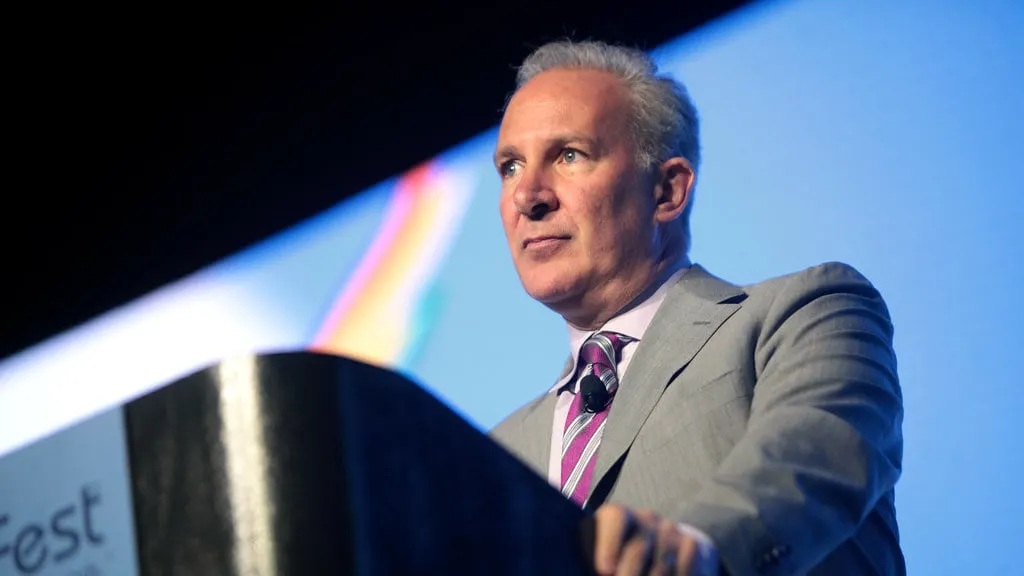
Peter Schiff Urges Investors to Sell Bitcoin Amidst Bearish Price Action

0

Longtime gold advocate and Bitcoin critic Peter Schiff has once again called on investors to sell Bitcoin.

Schiff argued that the cryptocurrency is moving in the opposite direction of gold and that recent actions by Strategy (formerly MicroStrategy) highlight fundamental weaknesses in the digital asset.

In a post on X, Schiff said, “Sell MSTR and sell Bitcoin now.” He pointed to Strategy’s repeated sales of Bitcoin to raise dollars, claiming this shows lenders prefer traditional fiat money as collateral over Bitcoin.

“It seems Saylor has given up on the idea of digital credit,” he wrote, noting that Strategy is “consistently selling Bitcoin now to buy dollars.”

Schiff has consistently argued that Bitcoin lacks intrinsic value and functions more as a speculative bubble than a store of value or “digital gold.”

Recall that he framed Bitcoin as “anti-gold”, arguing that the crypto asset moves in the opposite direction.

In his view, capital rotating into gold as a safe-haven or inflation hedge frequently comes at Bitcoin’s expense, turning the digital asset into a vehicle for betting against the metal.

Schiff’s recent comment urging investors to sell Bitcoin, comes as the crypto asset slipped below $63,000 sparking a wave of liquidations across the cryptocurrency market.

The sharp dip forced leveraged traders who had bet on further upside to automatically close their positions. At the time of reporting, BTC is at $63,047, as traders continue to monitor open interest and funding rates for signs of further volatility. Bitcoin short-term holders are reportedly keen to sell into range highs as they seek to break even on their investment.

Crypto analyst Benjamin Cowen said Bitcoin’s next 60 days could determine how the current bear market ultimately plays out. He highlighted August and September as historically difficult months, particularly during U.S. midterm election years.

Bitwise Chief Investment Officer Matt Hougan said Bitcoin refusing to react to bad news, including BTC sales by Strategy and CLARITY Act delays, is one of the clearest signs the cryptocurrency winter is ending.

Polymarket currently assigns only a 9% chance of Bitcoin hitting $100,000 and beyond this year, down from a high of 91% in January.

Amidst price predictions, Schiff’s latest comments, reinforce the view portraying the current divergence between gold’s strength and Bitcoin’s relative weakness as evidence that capital is rotating back toward traditional hard assets.

His warnings are not new as he has repeatedly advised selling Bitcoin during both rallies and downturns. Whether this latest call marks a meaningful shift in market dynamics or another chapter in his ongoing critique remains a point of debate among investors.

Outlook

Bitcoin’s near-term outlook remains mixed as traders weigh weakening price momentum against signs that the broader crypto market may still have underlying strength.

A sustained break below the $63,000 level could expose Bitcoin to further downside, particularly if leveraged positions continue to unwind and short-term holders increase selling pressure.

However, Bitcoin’s ability to absorb negative catalysts including Strategy’s recent BTC sales and delays surrounding U.S. crypto legislation could suggest that selling pressure is already being priced into the market.

For now, investors are likely to focus on Bitcoin’s ability to hold the $63,000 area, changes in open interest and funding rates, institutional buying activity, and movements in gold.

A decisive move in either direction could provide a clearer signal about whether the current pullback is a temporary correction or the beginning of a deeper market downturn.