DD
MM
YYYY

PAGES

DD
MM
YYYY

spot_img

PAGES

Home Blog

Goldman Sachs Leads H1 EMEA Deal Advisory as Mergers and Acquisitions Activity Surges to 19-Year High

0
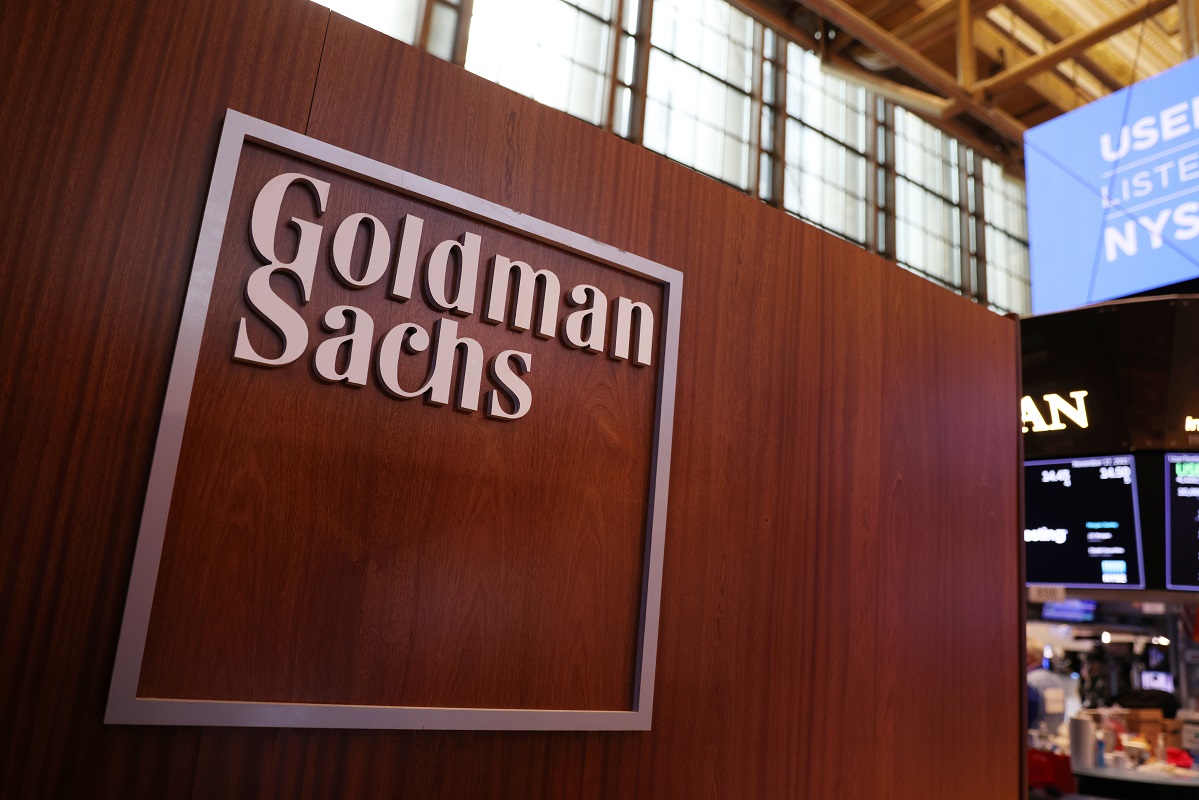
The logo for Goldman Sachs is seen on the trading floor at the New York Stock Exchange (NYSE) in New York City, New York, U.S., November 17, 2021. REUTERS/Andrew Kelly/Files

Goldman Sachs has strengthened its position as the leading mergers and acquisitions adviser in Europe, the Middle East, and Africa during the first half of 2026, capturing its largest share of the market in nearly a decade as regional dealmaking reached its highest level in 19 years, according to LSEG data.

Dealmaking in the region totaled $676 billion during the January to June period, more than double 2025 levels, reflecting a backdrop of looser regulatory constraints and renewed corporate confidence. Goldman advised on 111 deals, representing 44% of the EMEA M&A total by value in the first six months of 2026, up from 42% in the same period a year earlier. The bank’s share was its highest for the January-June period since 2018, when it reached 46%.

The investment bank, which is also the global leader in M&A advisory, has long dominated the EMEA sector. In the first half of this year, its closest rival, JPMorgan, managed to slightly narrow the gap but still trailed with 35% market share after advising on 99 announced deals. That compared with Goldman’s 11 percentage point lead over JPMorgan in the first half of 2025. Globally, Goldman maintained a commanding 38% market share and advised on the biggest number of deals of any firm.

“Companies are taking a long-term strategic view and investing for where they want to be in the coming decades, not just the next few quarters,” said Carsten Woehrn, co-head of M&A in EMEA at Goldman Sachs.

Goldman’s dominance was particularly evident in the largest transactions. The bank advised on 15 of the 20 biggest deals in the region, including working alongside Morgan Stanley on Unilever’s approximately $45 billion sale of its food business to McCormick, the largest deal of the period, and on TK Elevators’ $34 billion combination with Kone. Its closest rival, JPMorgan, worked on 13 of the biggest deals and was not involved in the Unilever-McCormick transaction.

Goldman’s sustained leadership in EMEA M&A comes amid a broader transformation in the advisory landscape since the global financial crisis, when the field became narrower and more concentrated, according to Valeria Vitkova, associate professor of finance at Bayes Business School.

“The firm’s sustained leadership reflects more than simply a succession of favorable years. It appears to represent a sustained competitive advantage that has persisted throughout the post-crisis period,” said Vitkova, who added that in that period dealmaking has become more complex.

The surge in activity this year contrasts with last year’s slowdown, which was partly attributed to initial uncertainty surrounding U.S. President Donald Trump’s return to the White House. Despite ongoing market volatility, bankers report that companies are increasingly looking beyond short-term turbulence to pursue strategic opportunities.

Independent advisory boutique Rothschild advised on the highest number of deals at 163, but Goldman’s lead was built on its involvement in the largest transactions. This highlights the bank’s strength in handling complex, high-value mandates that require deep sector expertise and global reach.

The robust first-half performance suggests dealmakers are regaining confidence after a period of caution. Looser regulatory constraints in parts of the region have likely contributed to the pickup, allowing companies to pursue transactions that might have faced greater hurdles in previous years.

Analysts believe that Goldman maintaining its position at the top of the league tables bolsters its reputation as the go-to adviser for major strategic moves. The bank’s ability to secure mandates on some of the period’s most significant deals underscores its competitive edge in a market where relationships, expertise, and execution capabilities remain paramount.

However, the competitive landscape continues to evolve. Analysts note that JPMorgan’s ability to narrow the gap slightly indicates that rivals are also positioning themselves strongly. Other players, including boutique firms like Rothschild, continue to carve out significant roles, particularly in terms of deal volume.

Looking ahead, bankers caution that league tables could shift substantially in the second half if announced deals fail to close. Goldman, for instance, is advising Commerzbank, which has been seeking to fend off a $28 billion bid from UniCredit. The outcome of such high-profile situations could influence final rankings.

However, the strong first-half performance in EMEA M&A provides an encouraging signal for the global dealmaking environment.

 

Tesla Shatters Q2 Delivery Forecasts as European Rebound Revives Growth Story

0

Tesla delivered its strongest second-quarter vehicle sales on record, comfortably beating Wall Street expectations and strengthening hopes that the electric vehicle maker could finally end two consecutive years of annual delivery declines.

The results provide an important boost for the company as Chief Executive Elon Musk continues steering Tesla beyond its traditional automotive business toward artificial intelligence, autonomous driving and robotics, businesses that increasingly underpin the company’s roughly $1.6 trillion market valuation.

While the delivery figures exceeded expectations, investors remained cautious about Tesla’s long-term execution strategy. Shares fell about 7% in midday trading on Thursday after climbing roughly 12% earlier in the week, suggesting much of the positive news had already been priced into the stock.

Tesla delivered 480,126 vehicles during the April-June quarter, a record for a second quarter and about 25% higher than a year earlier. The figure far surpassed analysts’ consensus estimate of 402,776 vehicles compiled by Visible Alpha. The company produced 451,758 vehicles during the same period, meaning deliveries exceeded production by more than 28,000 units as Tesla reduced inventory accumulated during the first quarter.

The stronger-than-expected performance arrives at a pivotal time for the automaker. Since late 2024, Tesla has faced slowing demand, intensifying competition from Chinese manufacturers, reduced government incentives in the United States, and lingering reputational damage stemming from Musk’s political activities.

Analysts said the latest results suggest Tesla’s turnaround is gathering momentum, particularly outside its home market.

“I think the huge growth in Europe is the key driver for Tesla right now. U.S. sales still appear to be down, albeit less than the broader U.S. EV decline, while China is seeing small growth,” said Seth Goldstein, senior equity analyst at Morningstar.

Goldstein, who had previously forecast Tesla would report a third consecutive annual decline in deliveries, revised his outlook after the figures.

“I think it would be very hard to see a decline for the full year at this point,” he said.

Europe emerged as Tesla’s brightest region during the quarter, benefiting from a combination of higher fuel prices, expanded government incentives for electric vehicles, faster electrification of commercial fleets, and easing consumer resistance following last year’s backlash against Musk’s far-right political positions.

Tesla also continued to benefit from pricing adjustments introduced last year, including lower-cost versions of its Model 3 sedan and Model Y sport utility vehicle, alongside aggressive financing offers designed to stimulate demand.

“Their pricing and their products are helping the buyers overcome any issues they might have with Elon Musk personally,” said Sam Fiorani, vice president at AutoForecast Solutions.

Demand in the United States, however, remains considerably weaker.

The removal of federal tax credits for electric vehicles late last year continues to weigh on consumer purchases, even as Tesla attempts to stimulate sales through refreshed models and financing incentives.

“We’re cautiously optimistic for some growth this year,” Fiorani said.

Other analysts remain more guarded about Tesla’s prospects in its largest market.

“We believe Tesla’s U.S. sales likely declined by at least 10% in the quarter,” said Freedom Broker senior analyst Dmitriy Pozdnyakov.

But China has continued to provide another source of resilience.

Sales of Tesla’s China-produced vehicles have improved this year following the introduction of the refreshed Model Y, although competition from domestic manufacturers remains intense, particularly from BYD and other Chinese electric vehicle producers that continue expanding both product offerings and price competition.

Tesla is also seeking to stimulate demand in North America through new products. On Thursday, the company introduced the six-seat, longer-wheelbase version of the Model Y in the United States. The three-row SUV, known as the Model Y L, previously contributed to stronger sales in China, and analysts believe it could broaden Tesla’s appeal among larger American families.

The delivery results also strengthen Tesla’s financial position as it embarks on one of the most aggressive investment programs in the automotive industry’s history. The company expects capital expenditure to exceed $25 billion in 2026, nearly three times the $8.5 billion invested last year.

The spending will fund expansion across several strategic initiatives, including artificial intelligence infrastructure, battery manufacturing, production facilities for the Cybercab autonomous vehicle, and development of the Optimus humanoid robot. These businesses have increasingly become central to Tesla’s valuation, with many investors viewing the company less as a conventional automaker and more as an AI and robotics company.

Tesla has continued expanding the deployment of its Full Self-Driving (FSD) advanced driver-assistance software across Europe, although regulatory approvals mean the technology remains available in only a limited number of countries. Analysts expect wider European availability over the coming months, which could further support vehicle demand.

The company is simultaneously expanding its robotaxi ambitions after launching a limited commercial autonomous ride-hailing service in Austin, Texas, in June. Musk has repeatedly stated that Tesla intends to scale the robotaxi network rapidly throughout 2026, positioning autonomous mobility as a future pillar of the company’s business.

Production of the Cybercab, Tesla’s purpose-built autonomous vehicle that eliminates both pedals and a steering wheel, is expected to accelerate later this year.

Even with stronger vehicle deliveries, investors remain focused on whether Tesla can successfully execute its broader transformation beyond electric cars.

“The stock price is still riding a bit of a rollercoaster. Investors are hyped about the bounce-back, but the big money is still waiting to see if Tesla can actually deliver on Elon Musk’s promises around AI, robotaxis, and self-driving tech,” said David Wagner, head of equity at Tesla shareholder Aptus Capital Advisors.

The second-quarter delivery report therefore represents more than a rebound in vehicle sales as it offers evidence that Tesla’s core automotive business continues to generate the cash flow needed to finance its increasingly ambitious AI and autonomous driving strategy.

SEC Expands Crypto Regulatory Sandbox With Seven New Firms As Nigeria Deepens Digital Asset Oversight

0

Nigeria’s cryptocurrency regulatory framework has expanded further after the Securities and Exchange Commission (SEC) admitted seven additional companies into its Accelerated Regulatory Incubation Programme (ARIP), marking another milestone in the government’s efforts to bring the country’s rapidly growing digital asset industry under formal regulatory supervision.

The Commission disclosed the development in a statement issued on Friday, announcing that the newly admitted firms have been granted Approval-in-Principle (AIP), allowing them to operate within the regulatory sandbox under defined conditions while remaining subject to ongoing regulatory oversight.

The newly admitted companies are Bitbarter Technologies Limited, Luno Fintech Nigeria Limited, GetEquity Limited, Koinkoin Global Network Limited, Wrapped CBDC Ltd, Trovotech Ltd, and Blockvault Custodian Ltd.

The latest approvals significantly expand the number of digital asset businesses operating within the SEC’s supervised framework, following the admission of Quidax and Busha into the programme in August 2024. The move forms part of the Commission’s broader strategy to create a structured regulatory environment for cryptocurrency exchanges, custodians, tokenization platforms and other virtual asset service providers operating in Nigeria.

The SEC said the Approval-in-Principle confirms that each company has successfully met the admission requirements for participation in the Accelerated Regulatory Incubation Programme, but clarified that the approval does not constitute a full operating license.

“An Approval-in-Principle confirms that an entity has satisfied the Commission’s admission requirements for the Programme. Please note that it is not a final license and remains conditional on the entity’s continued compliance with all applicable regulatory, operational, and supervisory obligations,” the Commission stated.

According to the regulator, the admissions demonstrate its commitment to encouraging responsible innovation in Nigeria’s capital market while maintaining investor protection, market integrity and regulatory oversight as the digital asset ecosystem continues to evolve.

The latest approvals also signal the SEC’s determination to replace years of regulatory uncertainty with a clearer licensing pathway for cryptocurrency operators. Nigeria has emerged as one of Africa’s largest cryptocurrency markets, driven by widespread retail adoption, cross-border payments, remittances and growing institutional interest, even as the sector has experienced periods of policy uncertainty.

One of the newly admitted firms, Luno, described the approval as a significant step in its long-term operations in Nigeria. In a separate statement, the cryptocurrency exchange said the Approval-in-Principle followed an extensive engagement process with the SEC and provides a clearer regulatory framework for its expansion plans.

Luno, which began operating in Nigeria in 2015, said the approval strengthens its ability to serve both retail and institutional customers as demand for regulated digital asset services continues to grow.

Luno Nigeria Chief Executive Officer, Ayotunde Alabi, described the development as an important validation of the company’s regulatory approach.

“This is an important milestone for Luno Nigeria and a strong validation of our commitment to building responsibly in one of Africa’s most important cryptocurrency markets,” Alabi said.

He added that the regulatory approval would deepen the company’s engagement with customers and institutional partners while supporting its expansion into business-to-business (B2B) services.

Luno said regulatory clarity has become important as banks, fintech companies, payment providers, asset managers, and corporate organizations continue to explore digital asset products and blockchain-based financial services. The company disclosed plans to broaden its institutional offerings, including digital asset infrastructure, stablecoin applications, treasury management solutions and crypto-as-a-service products designed for businesses seeking regulated exposure to digital assets.

The latest admissions build on regulatory milestones achieved over the past two years. In 2024, the SEC granted Approval-in-Principle to Quidax and Busha, making them the first cryptocurrency exchanges to receive formal recognition under the Accelerated Regulatory Incubation Programme.

At the same time, the Commission admitted four companies into its Regulatory Incubation (RI) Programme to test their business models and technology under controlled regulatory supervision. Those firms included Trovotech Ltd, Wrapped CBDC Ltd, Dream City Capital and HousingExchange.NG Ltd. With Trovotech Ltd and Wrapped CBDC Ltd now progressing into the Accelerated Regulatory Incubation Programme, the companies move a step closer to obtaining full regulatory authorisation.

The SEC has consistently maintained that additional approvals will be granted on a case-by-case basis as applicants satisfy its regulatory requirements. It has also emphasized that Approval-in-Principle serves only as a precursor to full registration and does not represent a final license to operate.

The Accelerated Regulatory Incubation Programme functions as the Commission’s regulatory sandbox, enabling digital asset service providers and other investment technology firms to operate within a supervised environment while regulators assess their business models, governance structures, technology and compliance systems before issuing permanent licenses.

The framework is designed to help the SEC balance innovation with investor protection by allowing emerging financial technologies to develop under regulatory oversight rather than outside it.

The expansion of the programme comes as regulators worldwide continue developing comprehensive rules for digital assets, stablecoins, tokenized securities and other blockchain-based financial services. This comes amid growing institutional participation and increasing integration between traditional finance and digital asset markets.

June Crypto Market Recap: Winners, Losers, and Hidden Trends

0
Blazpay - top presale crypto

June appeared to be a positive month for the cryptocurrency market. The top 100 digital assets by market capitalization recorded an average return of 8.9%, a figure that suggests investors broadly enjoyed healthy gains.

A closer examination reveals a strikingly different reality. While the average performance was firmly positive, an overwhelming 82.1% of those assets actually declined in value during the month, and the median token suffered a loss of 16.8%.

This stark contrast highlights how averages can sometimes mask the true condition of a market. The discrepancy stems from the influence of a handful of exceptionally strong performers.

Because average returns are calculated by summing all gains and losses before dividing by the number of assets, a small group of tokens posting extraordinary rallies can significantly lift the overall average. Meanwhile, the majority of cryptocurrencies may still be experiencing declines.

In June, this appears to have been exactly what happened, with a limited number of high-performing assets driving the market’s headline figures while most tokens struggled. The median return offers a more representative measure of the typical investor’s experience.

Unlike the average, the median identifies the midpoint of all returns, making it less vulnerable to distortion from extreme winners or losers. A median decline of 16.8% indicates that more than half of the top 100 cryptocurrencies lost at least that amount during the month.

This suggests that the average crypto holder likely endured losses despite the seemingly positive market narrative. Such divergence reflects increasingly narrow market leadership. Rather than broad participation across the digital asset ecosystem, investor capital appears to be concentrating in a select group of cryptocurrencies.

These are often assets benefiting from strong institutional demand, favorable regulatory developments, growing ecosystem activity, or renewed speculative interest. Many mid-cap and smaller-cap tokens continue to struggle with declining liquidity, reduced trading volumes, and weaker investor confidence.

This phenomenon is not unique to cryptocurrency markets. Traditional equity markets frequently experience similar periods where a handful of mega-cap companies account for most index gains while the majority of stocks underperform.

Investors who focus solely on benchmark averages may overlook underlying market weakness. In crypto, where volatility is substantially higher, these disparities can become even more pronounced.

The concentration of gains also reflects changing investor behavior. Following years of heightened volatility, many market participants have become increasingly selective. Rather than spreading capital across hundreds of speculative projects, investors are prioritizing assets with stronger fundamentals, clearer utility, and greater institutional support.

This shift has widened the performance gap between market leaders and the broader altcoin universe. For portfolio managers and individual investors alike, June’s data reinforces the importance of looking beyond headline statistics. An average return alone cannot accurately describe market health or investor outcomes.

Metrics such as market breadth, median returns, sector performance, and trading volume provide a far more comprehensive understanding of market conditions.

The sustainability of the current rally may depend on whether participation broadens across the market. If gains continue to be driven by only a small number of cryptocurrencies, the overall market could remain fragile despite positive index-level performance.

A recovery in market breadth—with more assets participating in the upside—would signal healthier conditions and potentially stronger momentum for the digital asset sector. June serves as a reminder that in financial markets, appearances can be deceiving.

The average return painted an optimistic picture, the underlying data revealed widespread weakness. For investors seeking to navigate the crypto market successfully, understanding the distinction between averages and market breadth is essential for making informed decisions and accurately assessing risk.

Impact of Securitize’s NYSE Listing on the Digital Asset Industry

0

Securitize’s listing on the New York Stock Exchange marks a significant milestone for the digital asset industry, highlighting how blockchain technology is becoming increasingly integrated with traditional financial markets.

As one of the leading platforms specializing in the tokenization of real-world assets, Securitize has spent years building the infrastructure needed to bring securities onto blockchain networks while remaining compliant with financial regulations.

Its debut on one of the world’s most prestigious stock exchanges underscores growing confidence in tokenized finance and signals that institutional investors are taking digital assets more seriously than ever before.

Tokenization refers to the process of converting ownership rights to real-world assets into digital tokens recorded on a blockchain. These assets can include stocks, bonds, real estate, private equity, investment funds, and even fine art.

By representing ownership digitally, tokenization aims to improve liquidity, reduce transaction costs, enhance transparency, and enable fractional ownership.

Instead of requiring investors to purchase an entire asset, blockchain technology allows ownership to be divided into smaller portions, making investments more accessible to a broader range of participants.

Securitize has established itself as a pioneer in this rapidly growing sector by providing end-to-end solutions for issuing, managing, and trading tokenized securities. The company has worked with asset managers, investment firms, and corporations seeking to modernize capital markets through blockchain technology.

Its platform integrates regulatory compliance, investor onboarding, digital asset issuance, and lifecycle management, making it easier for institutions to embrace tokenization without sacrificing legal or operational standards.

The company’s listing on the NYSE represents more than a corporate achievement; it symbolizes the convergence of traditional finance and decentralized technologies. For years, digital assets were largely viewed as speculative investments dominated by cryptocurrencies such as Bitcoin and Ethereum.

Recent developments have shifted attention toward practical blockchain applications that improve financial infrastructure. Tokenized securities are increasingly being recognized as one of the industry’s most promising use cases because they combine the efficiency of blockchain with the legal protections associated with regulated financial products.

Institutional demand has also accelerated the growth of tokenization. Major banks, investment managers, and financial technology companies are actively exploring blockchain-based settlement systems and digital asset platforms.

Analysts believe the tokenization market could expand into the trillions of dollars over the coming decade as more real-world assets migrate onto blockchain networks.

This trend is supported by increasing regulatory clarity, technological advancements, and growing acceptance among professional investors. Securitize’s public listing may further strengthen investor confidence in companies operating within the digital asset ecosystem.

Being traded on the NYSE exposes the company to a wider pool of institutional and retail investors while enhancing its visibility and credibility. Public market access may also provide additional capital to expand its technology, develop new partnerships, and accelerate global adoption of tokenized assets.

Despite the optimism surrounding tokenization, challenges remain. Regulatory frameworks continue to evolve across different jurisdictions, and widespread adoption will require interoperability between blockchain platforms, robust cybersecurity, and investor education.

Securitize’s NYSE listing represents an important step forward for blockchain-powered finance. It demonstrates that digital asset infrastructure companies are maturing beyond startup status and entering mainstream capital markets.

As financial institutions continue embracing tokenization, Securitize is well positioned to help shape the next generation of investment markets. Its successful public debut reinforces the belief that blockchain technology is evolving from an emerging innovation into a foundational component of the future global financial system.