

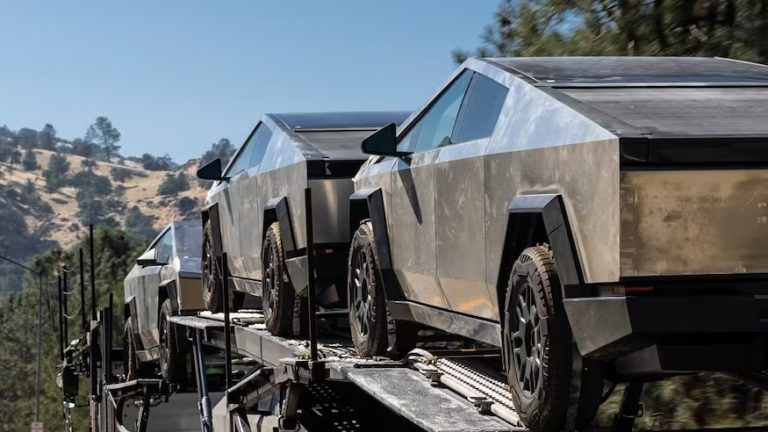
Tesla delivered its strongest second-quarter vehicle sales on record, comfortably beating Wall Street expectations and strengthening hopes that the electric vehicle maker could finally end two consecutive years of annual delivery declines.
The results provide an important boost for the company as Chief Executive Elon Musk continues steering Tesla beyond its traditional automotive business toward artificial intelligence, autonomous driving and robotics, businesses that increasingly underpin the company’s roughly $1.6 trillion market valuation.
While the delivery figures exceeded expectations, investors remained cautious about Tesla’s long-term execution strategy. Shares fell about 7% in midday trading on Thursday after climbing roughly 12% earlier in the week, suggesting much of the positive news had already been priced into the stock.
Register for the next Tekedia Mini-MBA.
Register for Tekedia AI in Business Masterclass.
Join Tekedia Capital Syndicate and co-invest in great global startups.
Tesla delivered 480,126 vehicles during the April-June quarter, a record for a second quarter and about 25% higher than a year earlier. The figure far surpassed analysts’ consensus estimate of 402,776 vehicles compiled by Visible Alpha. The company produced 451,758 vehicles during the same period, meaning deliveries exceeded production by more than 28,000 units as Tesla reduced inventory accumulated during the first quarter.
The stronger-than-expected performance arrives at a pivotal time for the automaker. Since late 2024, Tesla has faced slowing demand, intensifying competition from Chinese manufacturers, reduced government incentives in the United States, and lingering reputational damage stemming from Musk’s political activities.
Analysts said the latest results suggest Tesla’s turnaround is gathering momentum, particularly outside its home market.

“I think the huge growth in Europe is the key driver for Tesla right now. U.S. sales still appear to be down, albeit less than the broader U.S. EV decline, while China is seeing small growth,” said Seth Goldstein, senior equity analyst at Morningstar.
Goldstein, who had previously forecast Tesla would report a third consecutive annual decline in deliveries, revised his outlook after the figures.
“I think it would be very hard to see a decline for the full year at this point,” he said.

Europe emerged as Tesla’s brightest region during the quarter, benefiting from a combination of higher fuel prices, expanded government incentives for electric vehicles, faster electrification of commercial fleets, and easing consumer resistance following last year’s backlash against Musk’s far-right political positions.
Tesla also continued to benefit from pricing adjustments introduced last year, including lower-cost versions of its Model 3 sedan and Model Y sport utility vehicle, alongside aggressive financing offers designed to stimulate demand.
“Their pricing and their products are helping the buyers overcome any issues they might have with Elon Musk personally,” said Sam Fiorani, vice president at AutoForecast Solutions.
Demand in the United States, however, remains considerably weaker.
The removal of federal tax credits for electric vehicles late last year continues to weigh on consumer purchases, even as Tesla attempts to stimulate sales through refreshed models and financing incentives.
“We’re cautiously optimistic for some growth this year,” Fiorani said.
Other analysts remain more guarded about Tesla’s prospects in its largest market.
“We believe Tesla’s U.S. sales likely declined by at least 10% in the quarter,” said Freedom Broker senior analyst Dmitriy Pozdnyakov.
But China has continued to provide another source of resilience.
Sales of Tesla’s China-produced vehicles have improved this year following the introduction of the refreshed Model Y, although competition from domestic manufacturers remains intense, particularly from BYD and other Chinese electric vehicle producers that continue expanding both product offerings and price competition.
Tesla is also seeking to stimulate demand in North America through new products. On Thursday, the company introduced the six-seat, longer-wheelbase version of the Model Y in the United States. The three-row SUV, known as the Model Y L, previously contributed to stronger sales in China, and analysts believe it could broaden Tesla’s appeal among larger American families.
The delivery results also strengthen Tesla’s financial position as it embarks on one of the most aggressive investment programs in the automotive industry’s history. The company expects capital expenditure to exceed $25 billion in 2026, nearly three times the $8.5 billion invested last year.
The spending will fund expansion across several strategic initiatives, including artificial intelligence infrastructure, battery manufacturing, production facilities for the Cybercab autonomous vehicle, and development of the Optimus humanoid robot. These businesses have increasingly become central to Tesla’s valuation, with many investors viewing the company less as a conventional automaker and more as an AI and robotics company.
Tesla has continued expanding the deployment of its Full Self-Driving (FSD) advanced driver-assistance software across Europe, although regulatory approvals mean the technology remains available in only a limited number of countries. Analysts expect wider European availability over the coming months, which could further support vehicle demand.
The company is simultaneously expanding its robotaxi ambitions after launching a limited commercial autonomous ride-hailing service in Austin, Texas, in June. Musk has repeatedly stated that Tesla intends to scale the robotaxi network rapidly throughout 2026, positioning autonomous mobility as a future pillar of the company’s business.
Production of the Cybercab, Tesla’s purpose-built autonomous vehicle that eliminates both pedals and a steering wheel, is expected to accelerate later this year.
Even with stronger vehicle deliveries, investors remain focused on whether Tesla can successfully execute its broader transformation beyond electric cars.
“The stock price is still riding a bit of a rollercoaster. Investors are hyped about the bounce-back, but the big money is still waiting to see if Tesla can actually deliver on Elon Musk’s promises around AI, robotaxis, and self-driving tech,” said David Wagner, head of equity at Tesla shareholder Aptus Capital Advisors.
The second-quarter delivery report therefore represents more than a rebound in vehicle sales as it offers evidence that Tesla’s core automotive business continues to generate the cash flow needed to finance its increasingly ambitious AI and autonomous driving strategy.