DD
MM
YYYY

PAGES

DD
MM
YYYY

spot_img

PAGES

Home Blog

CFTC Acting Chair Caroline Pham Joins MoonPay As DTCC Partners with Canton Network

0
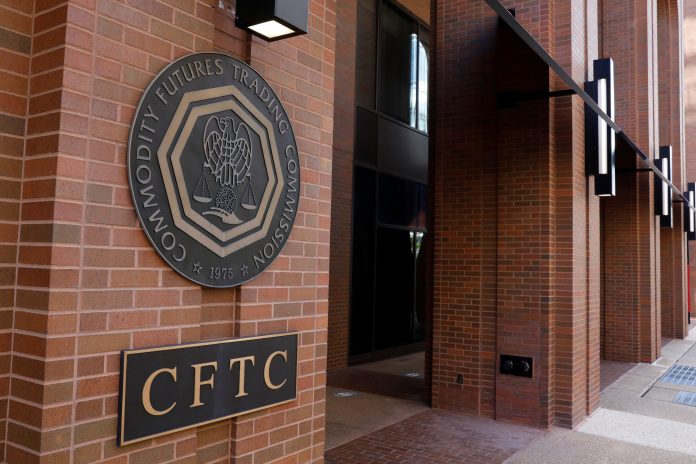
Signage is seen outside of the US Commodity Futures Trading Commission (CFTC) in Washington, D.C., U.S., August 30, 2020. REUTERS/Andrew Kelly

MoonPay, a leading crypto payments platform, announced that Caroline D. Pham, the Acting Chairman of the U.S. Commodity Futures Trading Commission (CFTC), will join the company as Chief Legal Officer and Chief Administrative Officer.

This move follows the expected Senate confirmation of her successor, Mike Selig, and marks another high-profile transition from government regulation to the private crypto sector.

Pham has been a key figure in advancing crypto-friendly policies during her tenure:She became Acting Chairman in January 2025 after serving as a Commissioner since 2022. Under her leadership, the CFTC launched initiatives like the Digital Asset Markets Pilot Program (a regulatory sandbox launched December 8, 2025), the Crypto Sprint for market modernization, and spot crypto trading on regulated futures exchanges.

She emphasized innovation in areas like perpetual futures, prediction markets, and tokenized assets.

MoonPay highlighted Pham’s expertise in regulatory matters and market structure as ideal for guiding its growth, especially after the company secured a New York BitLicense and Limited Purpose Trust Charter in 2025.

This hire aligns with a trend of regulators moving to crypto firms, following examples like former Commissioner Summer Mersinger joining the Blockchain Association.

DTCC Partners with Canton Network for Asset Tokenization

The Depository Trust & Clearing Corporation (DTCC) announced a partnership with Digital Asset and the Canton Network, a privacy-focused, permissioned blockchain to tokenize securities custodied at its subsidiary, the Depository Trust Company (DTC).

The project starts with tokenizing a subset of U.S. Treasury securities, with a minimum viable product targeted for a controlled production environment in the first half of 2026. It follows a recent SEC no-action letter granting DTCC regulatory clearance to tokenize real-world assets.

Long-term plans include expanding to a broader range of DTC-eligible assets, such as equities, ETFs, index products, and more, across multiple networks. DTCC will co-chair the Canton Foundation’s governance alongside Euroclear, emphasizing interoperability, privacy, and institutional-grade controls.

This initiative aims to enhance liquidity, enable atomic settlement, intraday collateral mobility, and bridge traditional finance with blockchain infrastructure. It represents a major step toward mainstream institutional tokenization of real-world assets (RWAs).

Pham’s transition from Acting CFTC Chairman to a senior executive role at MoonPay exemplifies the accelerating revolving door between U.S. financial regulators and the crypto industry in late 2025.

This hire brings deep institutional knowledge of digital asset policy directly into a major crypto payments firm. Pham oversaw initiatives like the CFTC’s Digital Asset Markets Pilot Program, Crypto Sprint for spot trading, and tokenized collateral guidance.

At MoonPay, she will lead global legal, administrative, and Washington policy strategy, helping the company navigate compliance, expand internationally, and address barriers like AML and tax reporting for institutional clients.

This positions MoonPay as a more “regulation-resilient” player amid growing institutional demand. Pham joins a wave of similar transitions in 2025, including former Commissioner Summer Mersinger to the Blockchain Association and others to firms like Tether.

These moves signal crypto’s increasing legitimacy and maturation, as firms seek former regulators for compliance excellence and policy influence. It also reflects a pro-innovation shift under recent administrations, with clearer frameworks for derivatives, perpetuals, and prediction markets.

Critics highlight risks of regulatory capture, where officials might favor industry-friendly policies anticipating private-sector roles. However, proponents argue it bridges gaps, translating public-sector reforms into private innovation and fostering responsible growth.

Overall, this strengthens crypto’s ties to traditional regulation, likely accelerating adoption of compliant infrastructure like payments and wallets.

Implications of DTCC’s Partnership with Canton Network for Asset Tokenization

The DTCC’s selection of the privacy-focused Canton Network to tokenize DTC-custodied securities—starting with U.S. Treasuries and expanding to equities—represents a landmark institutional endorsement of blockchain for core financial infrastructure.

Backed by a recent SEC no-action letter, this initiative enables “digital twins” of real-world assets on a permissioned blockchain. It promises atomic (instant) settlement, intraday collateral mobility, 24/7 liquidity, and programmable features, reducing T+1/T+2 delays, counterparty risks, and operational costs.

Starting with Treasuries in a controlled MVP in H1 2026, it could scale to equities, ETFs, and more, unlocking efficiencies for market makers, hedge funds, and dealers. Canton’s protocol-level privacy addresses key barriers for banks and funds, allowing confidential transactions on shared infrastructure—unlike public blockchains.

DTCC’s co-chair role in the Canton Foundation alongside Euroclear positions it to shape global standards for interoperability and governance. As of late 2025, tokenized RWAs exceed $30-40 billion dominated by Treasuries via platforms like BlackRock’s BUIDL.

This DTCC move validates permissioned networks for systemic-scale tokenization, potentially driving the market toward $50 billion+ in 2026 and trillions long-term. It signals tokenization shifting from experiments to production, enhancing liquidity, fractional ownership, and DeFi-TradFi integration.

These developments, announced on the same day, underscore rapid convergence. Regulators turning industry insiders (Pham) and TradFi giants embracing blockchain (DTCC) indicate crypto’s transition from fringe to foundational. Expect faster growth in compliant products, RWAs, and institutional inflows.

Under a pro-crypto policy environment, these signal reduced enforcement risks, more sandboxes, and frameworks for tokenized assets/derivatives. Enhanced liquidity and efficiency could broaden access, but challenges remain around standardization, privacy risks, and equitable regulation.

Together, they mark a pivotal moment: blockchain integrating into Wall Street’s “plumbing,” with former regulators guiding the bridge. This bodes well for sustained growth in digital assets into 2026.
xStocks Launches on TON Wallet As Samani Criticizes Ethereum

0

Kraken-backed tokenized equities platform xStocks officially launched on the TON (The Open Network) blockchain, integrated directly into Telegram’s self-custodial TON Wallet.

This allows millions of Telegram users to buy, hold, and transfer tokenized versions of U.S. stocks and ETFs, like Tesla – TSLAx, Nvidia – NVDAx, S&P 500 ETF on-chain, often as easily as sending a message. Available in “nearly all markets” where TON Wallet operates, covering significant global turnover, but excluded from the US, EU, and Australia at launch due to regulatory compliance.

xStocks are fully collateralized 1:1 with real underlying assets, issued by Backed Finance which Kraken plans to acquire. Since its initial launch on Kraken in June 2025, xStocks has grown to over $180 million in on-chain assets and nearly 50,000 unique holders.

TON Wallet has ~100 million users, and Telegram overall has over 900 million, potentially accelerating adoption of real-world assets (RWAs) in emerging markets. This move positions TON as a leader in on-chain regulated assets, blending TradFi with crypto accessibility.

Kyle Samani’s Criticism of Ethereum

Kyle Samani, Managing Partner at Multicoin Capital, a major Solana investor, has been vocal in criticizing Ethereum’s progress.

In recent statements, he claimed Ethereum has “accomplished almost nothing in eight years” despite high expectations, pointing to persistent scaling issues, lack of urgency since 2017 and slower development compared to competitors like Solana.

Samani argues: Ethereum lacks founder-driven hustle, treating it more like open-source code valuable but not customer-focused than a competitive business. It has suffered from complacency, with no major scaling urgency post-2017 highs.

Solana, by contrast, has achieved “escape velocity” with better resilience, lower fees, and faster innovation. This fits Samani’s long-standing bullishness on Solana “flipping” Ethereum, emphasizing Ethereum’s challenges in capturing lasting value amid L2 fragmentation and competition.

The integration of Kraken-backed xStocks into Telegram’s TON Wallet marks a significant milestone in bridging traditional finance (TradFi) with crypto, particularly real-world asset (RWA) tokenization.

Telegram has over 900-1,000 million users globally, with TON Wallet reaching nearly 100 million. This exposes tokenized U.S. stocks and ETFs to a massive, non-crypto-native audience, especially in emerging markets. Users can buy, hold, and transfer these assets as easily as sending a message, with self-custody and low fees via TON’s scalable blockchain. No traditional brokerage account or complex onboarding required.

Initial rollout covers “nearly all markets” excluding US, EU, Australia for regulatory reasons, capturing ~95% of global equity turnover outside restricted regions. This prioritizes developing economies, democratizing access to U.S. markets previously limited by geography or capital.

Since June 2025 launch on Kraken, xStocks grew to >$180M in on-chain assets and ~50,000 holders. TON integration plus DeFi access via STON.fi swaps could accelerate this exponentially. Positions TON as a leader in regulated RWAs, ahead of competitors like Ethereum or Solana in mass-distribution channels.

TON’s speed, low costs, and Telegram embedding provide “real, tangible financial utility.” Tokenized assets hit ~$24B by mid-2025 ~380% growth in 3 years, with projections to $30T+ by 2030-2034. This launch aligns with institutional pushes and could drive TON’s TVL and user growth.

Challenges centralized brokers by offering 24/7 transfers though trading hours tied to underlying markets and composability with DeFi. Kraken’s vertical integration unifies issuance/trading/settlement, strengthening its push into global capital markets.

Overall, this could catalyze mainstream RWA adoption, making TON a key hub for on-chain TradFi and boosting Telegram’s role as a “super app” for finance.

Implications of Kyle Samani’s Criticism of Ethereum

Samani contrasts Ethereum’s open-source, decentralized approach valuable but slow, like Linux with Solana’s “founder-driven hustle,” engineering discipline, and customer focus.

He abandoned Ethereum in 2017 due to perceived lack of urgency, doubling down on Solana as the “fastest horse” for global finance. Solana’s resilience; lower fees, and “escape velocity” vs. Ethereum’s L2 fragmentation, high costs, and captured value leaking to layers.

Ethereum dominates TVL/developers but struggles with user experience/scalability; Solana gains in trading volume, DeFi activity, and real-time apps. Samani’s bias noted, but criticism resonates amid Ethereum’s challenges.

Could pressure Ethereum community to address “complacency” as echoed by others like Alex Svanevik, pushing faster innovation or risking market share loss by 2030. Reinforces “flippening” thesis, potentially boosting SOL sentiment/investment amid RWA and DeFi growth.

FTX’s Caroline Ellison Moves to Community Confinement Amid HYPE Trading Below $25

0

Caroline Ellison, former CEO of Alameda Research and a key cooperating witness in the FTX fraud case, was transferred from federal prison to community confinement on October 16, 2025.

This move occurred after she served approximately 11 months of her original two-year sentence at the low-security Federal Correctional Institution in Danbury, Connecticut.

Community confinement typically involves either home confinement or placement in a halfway house, while remaining under Federal Bureau of Prisons supervision. Her projected full release date is now February 20, 2026—about nine months earlier than the end of her original sentence.

The Bureau of Prisons has not disclosed the exact location or specific conditions, citing privacy, safety, and security reasons. This transfer is described as routine, potentially based on factors like good behavior, sentence length, and eligibility for reentry programs.

Ellison pleaded guilty to multiple fraud and conspiracy charges related to the misuse of FTX customer funds and testified against Sam Bankman-Fried. The news of her transfer surfaced publicly in mid-December 2025, sparking discussions about sentencing disparities in the FTX case.

Hyperliquid’s HYPE Token Falls Below $25

The native token of the Hyperliquid decentralized perpetuals exchange, HYPE, has recently dipped below $25 for the first time since May 2025.

HYPE is trading around $24.46 USD, reflecting ongoing bearish pressure amid broader market volatility, token unlocks, and liquidations. This breach of the $25 support level has triggered significant events, including a major whale facing over $19.6 million in unrealized losses on a 5x leveraged long position with liquidation risk at ~$20.65.

Down ~10% in the past week, with analysts noting oversold RSI indicators but warning of potential further declines toward $20–$22 if support fails. HYPE had rallied strongly earlier in 2025— ATH around $58–$59 in September, driven by platform growth, but faced sell pressure from unlocks and competition in the DeFi perp space.

Ellison’s extensive testimony against Sam Bankman-Fried (SBF) was praised by the judge as exceptional, contributing to sentence reductions and early reentry eligibility. Good behavior and short sentence: Short federal sentences often qualify for early transfer to less restrictive settings for reintegration.

Highlights perceived leniency for white-collar crypto fraud cooperators vs. SBF’s 25-year term, potentially fueling discussions on justice disparities in high-profile cases. The news emerged quietly in mid-December 2025 with minimal backlash or viral outrage on social platforms; mostly factual reporting.

Reinforces incentives for cooperation in large fraud prosecutions, but underscores ongoing scrutiny of FTX-related sentencing. This appears standard rather than controversial, with location kept private for safety.

Implications of HYPE Falling Below $25

Oversold RSI ~28, bearish MACD crossover, declining open interest, and negative social dominance signal continued downside risk. Analysts warn of potential drops to $20–$22 or lower if $24 support fails.

High-leverage perps trading on Hyperliquid amplified sell-offs; recent token unlocks ~1.75M HYPE added supply pressure, triggering ~9–15% weekly declines. Some large positions face unrealized losses > $19M on leveraged longs, with liquidation risks near $20.65.

Hyperliquid’s DEX/perps volume hit records ~$419B monthly, with ongoing upgrades like HyperEVM expansion, permissionless markets. A proposed $1B token burn could reduce circulating supply, adding deflationary pressure. Pending ETF filings could drive institutional inflows if approved. Buyback mechanisms support value accrual.

Ranked #13–25 by market cap around $8.2B, HYPE’s performance is tied to broader crypto sentiment and DeFi perp competition. Oversold conditions suggest possible rebound if BTC stabilizes, but further macro weakness could push toward $20 or below.

Both reflect ongoing crypto ecosystem dynamics: regulatory fallout from past scandals and volatility in high-growth DeFi projects.

Hut 8 Partners with Google on Data Center Deal

0

Bitcoin mining and energy infrastructure company Hut 8 announced a major deal, involving a 15-year lease valued at approximately $7 billion with potential to reach $17.7 billion including renewal options for 245 MW of AI-optimized data center capacity at its River Bend campus in Louisiana.

The lessee is Fluidstack, an AI infrastructure provider. Google via Alphabet provides a financial backstop, guaranteeing lease payments and certain obligations if Fluidstack defaults, significantly de-risking the deal for Hut 8.

This ties into a broader partnership with Anthropic— the AI company behind Claude, in which Google is a major investor, where Hut 8 could develop up to 2.3 GW of additional AI data center infrastructure in phases.

The project expects to generate around $6.9 billion in net operating income for Hut 8 over the base term ~$454 million annually, with construction starting soon and the first halls online by Q2 2027.

Financing involves major banks like JPMorgan, Goldman Sachs covering up to 85% of costs. The news drove Hut 8’s stock ($HUT) up over 20% in pre-market and intraday trading on December 17–18, with analysts raising price targets.

This reflects a growing trend where Bitcoin miners leverage their power infrastructure and sites to pivot into high-demand AI/high-performance computing, securing stable, long-term revenue amid crypto volatility.

Similar deals have been struck by peers like Core Scientific, Cipher Mining, and Galaxy Digital. It’s not a direct “partnership” with Google as equals, but Google’s backing adds substantial credibility and security to the transaction.

Hut 8 Corp. announced a strategic AI infrastructure partnership with Anthropic and Fluidstack an AI cloud infrastructure provider. The partnership aims to accelerate the deployment of hyperscale AI data center infrastructure in the United States, leveraging Hut 8’s expertise in power sourcing and site development.

This is not a direct equity partnership but a multi-tranche development and delivery agreement where: Hut 8 develops the power and data center facilities. Fluidstack designs, deploys, and operates high-performance compute clusters.

Anthropic is the primary end-user for the AI training and inference capacity. The deal expands Anthropic’s existing relationship with Fluidstack and introduces Hut 8 as a key collaborator for scaling infrastructure.

The partnership provides a pathway to deliver at least 245 MW and up to 2,295 MW of AI-optimized data center capacity. Starts at Hut 8’s River Bend campus in Louisiana. 245 MW of IT load capacity. Supported by 330 MW of utility power from Entergy Louisiana.

Construction begins soon; first data halls online by Q2 2027, with additional halls throughout 2027. Tranche 2; Right of first offer (ROFO) for up to 1,000 MW additional IT capacity at River Bend, subject to power expansion.

Tranche 3; Optional joint development with Anthropic for up to 1,050 MW across Hut 8’s other sites in its development pipeline. Hut 8 signed a separate 15-year triple-net lease with Fluidstack for the initial 245 MW at River Bend.

Approximately $7 billion. With three 5-year renewal options: Potential total up to $17.7 billion. Expected annual net operating income for Hut 8: ~$454 million from the base term.

Google, a major partner of Anthropic provides a financial backstop/guarantee on the lease payments and obligations, significantly reducing risk for Hut 8 if Fluidstack defaults. Up to 85% loan-to-cost from banks like JPMorgan and Goldman Sachs.

Asher Genoot, CEO of Hut 8: “Scaling frontier AI infrastructure is, at its core, a power challenge… Through our partnership with Anthropic and Fluidstack, we are aligning power, data center design, and compute deployment into an integrated platform capable of delivering at gigawatt scale.”

James Bradbury, Head of Compute at Anthropic: “This partnership is an expansion of our existing work with Fluidstack and marks a new opportunity to collaborate with Hut 8 to bring additional capacity online by early 2027.”

Gary Wu, CEO of Fluidstack: Emphasized solving compute challenges at scale for leading AI labs. This deal positions Hut 8 as a major player in the AI/HPC data center space, diversifying from its Bitcoin mining roots amid surging demand for energy-intensive AI infrastructure.

It follows similar pivots by other miners and highlights Louisiana’s growing role in attracting large-scale AI projects.

The PayPal Bank and Vertical Fintechnolization

0

PayPal is signaling a major shift in its business model with plans to establish a bank. According to reports, the payments giant has applied for regulatory approval to create PayPal Bank, a move that would allow it to lend directly to small businesses in the United States.

Explaining the rationale, PayPal CEO Alex Chriss noted that establishing a bank would strengthen the company’s business and operational efficiency, enabling PayPal to better support small business growth and expand economic opportunity across the U.S.

At one level, this move makes perfect sense. PayPal already extends small business loans to merchants based on their average monthly transaction volumes. Relying on third-party banks to intermediate those loans increases costs and limits flexibility. Bringing lending fully in-house is therefore a logical step.

But there is a deeper dynamic at play. PayPal is feeling the pressure of fintechnolization. As digital platforms mature, they increasingly embed financial services directly into their ecosystems. Banks are now partnering with platforms to offer payments, lending, and financial products seamlessly on websites and apps, often bypassing intermediaries like PayPal. This shift is gradually eroding PayPal’s addressable market.

Fintechnolization  is the process by which every mature digital platform evolves into a financial services provider, embedding payments, lending, insurance, savings, and other financial primitives directly into its core product, often without looking like a traditional fintech company.

To counter this disintermediation, PayPal must vertically integrate. Securing a banking charter allows it to control more of the value chain, reduce dependence on partner banks, and retain economics that would otherwise be shared or lost. In doing so, PayPal also avoids “feeding” banks that are simultaneously competing with it through banking-as-a-service models. A good move for PayPal even though PayPal did not treat Nigeria well, but gracious goodness, we do not miss it in Nigeria.

PayPal Seeks Regulatory Approval to Launch PayPal Bank, Targeting Small Businesses