DD
MM
YYYY

PAGES

DD
MM
YYYY

spot_img

PAGES

Home Blog

Spartans Casino’s $1B Beta Wager Benchmark Leaves Stake.com and Chumba Casino in a Legacy Loop

0

Stake.com operates on a mobile-first betting setup focused on streamlined access and consistent in-play execution. Chumba Casino runs on a sweepstakes structure where engagement is tied to simplified participation rather than wagering depth. Both hold established positions built through steady product design rather than rapid scaling shifts.

Meanwhile, Spartans.com records $1B in wagers during its beta phase, a figure that immediately separates it from typical early-stage rollouts and pulls attention toward its scale across deposits and wagering activity. That level of movement pushes it into discussions around the best crypto casino, where early performance often defines positioning more than history. Spartans Casino holds the reference point that the rest of the comparison builds around.

Stake.com: Mobile-First Betting Infrastructure in a Mature Market

Stake.com operates as a mobile-focused betting platform built around real-time wagering and continuous market access. The system is designed to support sports betting and casino-style games through a single interface that prioritizes quick navigation and stable performance across devices. Its mobile application framework is structured to reduce loading friction and maintain consistency during in-play betting sessions.

The platform also integrates live betting markets that update dynamically as events progress, allowing users to place wagers without switching environments. Over time, Stake.com has expanded its range of supported markets and features within its ecosystem.

Within broader comparisons of the best crypto casino category, Stake.com is often positioned through its mobile execution model and structured betting environment. The platform continues to function within regulated and evolving jurisdictions, adapting its availability based on regional compliance requirements.

Chumba Casino: Sweepstakes-Based Virtual Currency Gaming Model

Chumba Casino operates on a sweepstakes-based model that allows users to engage with casino-style games through a system structured around virtual currency mechanics. The platform separates gameplay from direct wagering by using dual-currency formats that support participation without traditional betting structures.

Users access a catalog of games that includes slots and table-style formats designed for broad accessibility across devices. The system is built to function in regions where sweepstakes frameworks are permitted under local regulations. Transactions and gameplay activity are managed within an account-based environment that tracks entries and rewards through internal balances.

Over time, Chumba Casino has maintained visibility within discussions around the best crypto casino category due to its alternative operational model. The platform continues to operate within its established sweepstakes framework.

Spartans Casino Beta Hits $1B Wagers in the First 60 Days

Spartans Casino records $1B in wagers during its beta phase, driven by rapid activity across deposits and wagering volume that builds steadily through early participation cycles. The scale of movement places the platform into early discussions around the best crypto casino, where measurable performance often carries more weight than platform age or long operating history. Spartans.com structures its early phase around high-throughput betting activity that reflects concentrated user engagement during testing conditions.

Deposit inflows reach $100M within the same 60-day period, indicating sustained participation rather than isolated spikes. This flow of capital supports continuous wagering cycles that contribute to overall volume growth. The platform also reports $40M in gross gaming revenue during this phase, showing that transaction activity converts into realized platform output even before full market maturity.

User onboarding adds another layer to the activity profile. Spartans Casino registers 27,000 first-time depositors during the beta window, creating a base that feeds into ongoing wagering loops. This early participation pattern connects directly with the platform’s operational design, where activity density plays a central role in performance output.

Spartans.com continues to build its position through these early-stage metrics, with each component contributing to a structured expansion of usage. The combination of wagering volume, deposits, revenue, and onboarding activity keeps Spartans betting within active discussion when evaluating the best crypto casino category.

In Summary

Stake.com continues operating within a mobile betting framework that supports live markets and structured wagering environments across sports and casino formats. Chumba Casino maintains its sweepstakes model built around virtual currency systems and regulated participation mechanics that separate gameplay from direct betting structures. Both platforms remain positioned within established operating models that prioritize consistency and controlled expansion rather than rapid scaling behavior.

Spartans Casino, through its early beta performance, reflects concentrated engagement driven by high-volume wagering activity. Spartans.com shows sustained interaction across deposits and betting cycles that form a dense activity profile during its initial phase.

Spartans Casino aligns this early momentum with measurable output that places it within ongoing discussions around the best crypto casino category. Continued participation patterns suggest Spartans Casino may strengthen its position as its systems mature and user activity expands further across evolving engagement cycles.


Find Out More About Spartans:

Website: https://spartans.com/

Instagram: https://www.instagram.com/spartans/

Twitter/X: https://x.com/SpartansBet

YouTube: https://www.youtube.com/@SpartansBet

Otti Pushes Ambitious Abia Seaport Plan, Seeks Tinubu’s Backing to Open Southeast Maritime Corridor

0

Governor Alex Otti has moved to revive one of the Southeast’s oldest economic ambitions, unveiling plans for a proposed seaport and inland waterways corridor that business leaders say could fundamentally alter trade and industrial activity across Nigeria’s eastern corridor.

The governor disclosed on Wednesday that his administration would seek approvals from President Bola Ahmed Tinubu, the Nigerian Ports Authority, and the Federal Ministry of Marine and Blue Economy for the proposed Azumini–Obeaku Sea Port and Inland Waterways Corridor project.

Otti made the disclosure after a meeting with a delegation from China Harbour Engineering Company Limited led by Mr. Nicolas Liu.

According to the governor, the state has already approved an immediate feasibility study and directed that the process be accelerated to shorten the timeline initially proposed by the company.

“We received a delegation from the China Harbour Engineering Company Limited led by Mr. Nicolas Liu, where we discussed the proposed Azumini – Obeaku Sea Port and Inland Waterways Corridor project in Abia State,” Otti said in a statement posted on his official X account.

The announcement has generated renewed attention because the push for a functional seaport in Nigeria’s eastern corridor has long been viewed by manufacturers, traders, and industrial groups as an economic necessity rather than a prestige infrastructure project.

For years, business leaders in the Southeast and South-South have argued that successive governments placed disproportionate emphasis on airport projects while neglecting maritime infrastructure capable of driving large-scale industrial growth and export activity.

Industry groups have repeatedly maintained that airports, though important, cannot match the economic multiplier effect of deep seaports, which serve as gateways for manufacturing supply chains, heavy cargo movement, exports, and regional logistics integration.

The absence of a major fully operational modern seaport in the eastern corridor has left manufacturers and traders heavily dependent on Lagos ports, despite the region’s strong commercial base.

Cities such as Aba, Onitsha, Nnewi, Port Harcourt, Uyo, and Calabar remain among Nigeria’s most active trading and manufacturing centers, yet businesses there continue to grapple with expensive logistics costs tied to moving cargo through Lagos.

Importers frequently complain that containers destined for the Southeast spend weeks trapped in Lagos congestion before being transported by road over long distances, increasing costs for businesses and consumers alike.

Economists say the logistics burden has weakened industrial competitiveness in the region and slowed the growth of export-oriented manufacturing clusters.

The renewed attention on the Abia proposal also stems from frustration that several riverine states in the eastern corridor, despite their coastal advantages, have struggled for decades to successfully advance large-scale seaport projects beyond announcements and early-stage approvals.

Projects linked to states such as Akwa Ibom, Bayelsa, and even older port expansion efforts in Cross River have faced repeated delays tied to financing constraints, political transitions, technical concerns, environmental challenges, and federal bottlenecks.

That history is why some analysts view Otti’s intervention as potentially significant.

Unlike many previous proposals framed largely around political declarations, the Abia initiative appears to be combining inland waterways development with seaport ambitions while simultaneously seeking early federal engagement and technical assessments.

The governor emphasized that technical viability would remain central to the project, especially issues surrounding dredging requirements and navigational access.

“I have also encouraged the team to visit the proposed site to assess its viability, given its proximity to the High Sea and the technical requirements such as dredging,” Otti stated.

Maritime experts note that dredging remains one of the most expensive and technically demanding components of seaport development in Nigeria, particularly for states seeking to create deep-water access channels capable of handling large vessels.

Still, proponents argue that the economic upside could be enormous if the project succeeds. A functioning maritime corridor in Abia could open new opportunities for manufacturing exports, agro-processing, warehousing, inland logistics, and industrial park development while reducing the pressure on overstretched western ports.

It could also reposition the Southeast as a more integrated participant in regional trade under the African Continental Free Trade Area framework.

The inclusion of inland waterways in the proposal is viewed as particularly strategic because it suggests a broader logistics ecosystem rather than a standalone port facility. Such integration could eventually support barge transportation, bulk cargo movement, and lower-cost freight systems connecting multiple commercial centers across the region.

The project also aligns with the Tinubu administration’s broader push to expand Nigeria’s blue economy, an area federal officials believe remains vastly underdeveloped relative to the country’s coastline and inland water potential.

China Harbour Engineering Company’s participation further reflects China’s continuing dominance in African infrastructure construction and financing. Chinese firms have been deeply involved in major Nigerian infrastructure projects spanning rail, roads, airports, and port construction over the past decade.

However, analysts caution that large-scale infrastructure projects involving foreign financing will likely face heightened scrutiny amid concerns over debt sustainability, project execution, and long-term returns.

But the seaport proposal could become one of the defining infrastructure bets of Otti’s administration if it advances beyond the feasibility phase.

“The project has the potential to transform Abia State’s economy and contribute significantly to Nigeria’s maritime development,” the governor said. “With strong commitment, proper funding, and strategic partnerships, we can make the Azumini Sea Port a reality.”

However, it is believed that the success of the initiative ultimately depends on federal political backing, technical feasibility, investor appetite, and the government’s ability to avoid the long list of abandoned or stalled port ambitions that have defined maritime infrastructure development in Nigeria’s eastern corridor for decades.

Anthropic CEO Admits Explosive Growth Sparked By Claude Adoption Overwhelms Its AI Infrastructure

0

Anthropic CEO Dario Amodei said Wednesday that the artificial intelligence company underestimated the scale of demand for its Claude models so dramatically that even aggressive growth projections failed to prepare it for the surge now straining its infrastructure.

Speaking at Anthropic’s developer conference in San Francisco, Amodei revealed that the company planned for tenfold growth, only to see revenue and usage explode by roughly 80 times in the first quarter on an annualized basis.

“That is the reason we have had difficulties with compute,” Amodei said. “We are working as quickly as possible to provide more.”

The remarks offered one of the clearest illustrations yet of the extraordinary pressure sweeping through the AI industry, where surging adoption of generative AI tools is rapidly outpacing the world’s ability to build enough data centers, power systems, and advanced chips to support them.

Anthropic’s sudden expansion also highlights how the AI race is evolving from a battle over algorithms into a full-scale infrastructure war centered on compute capacity, electricity access, and semiconductor supply chains. The company’s growth has been fueled largely by explosive demand for its Claude family of AI models, particularly Claude Code, which has emerged as one of the fastest-growing AI programming tools in the software industry since its launch last year.

“Software engineers are the ones who are fastest to adopt new technology,” Amodei said on stage. “It’s a foreshadowing of how things are going to work across the economy, and how the economy is going to be transformed by AI.”

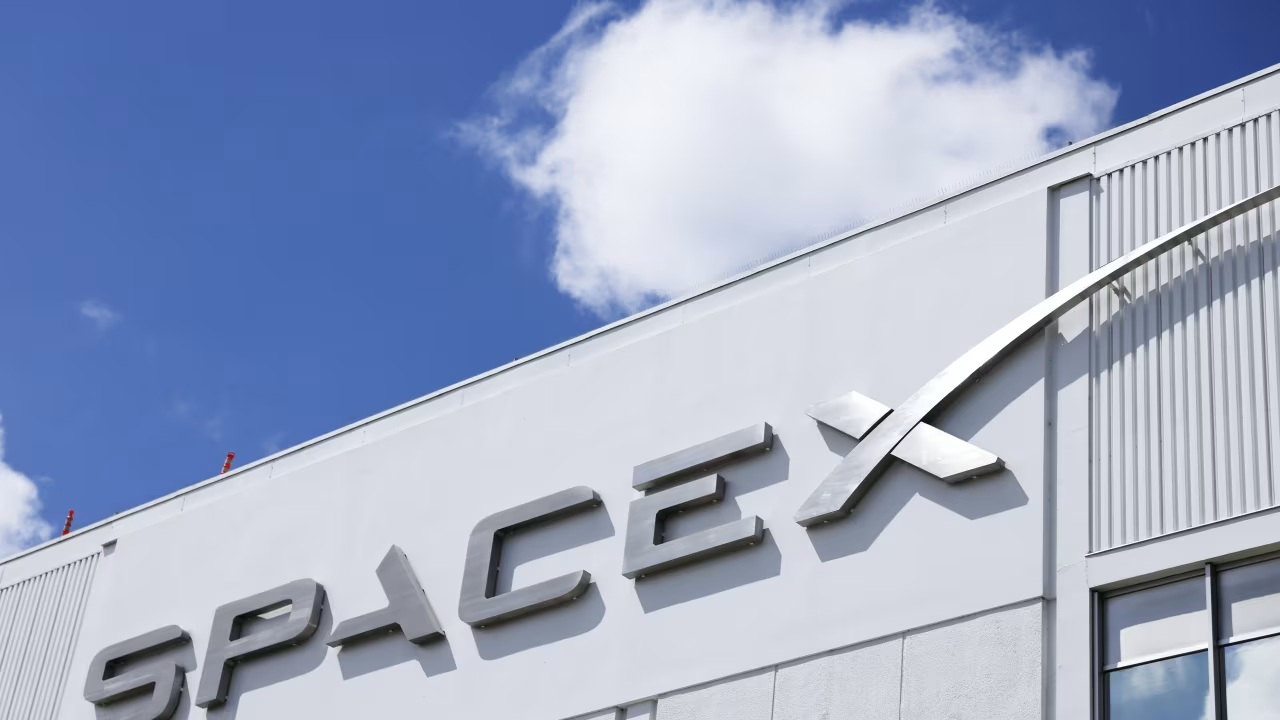
The scale of the growth is now forcing Anthropic into increasingly aggressive efforts to secure computing power. Hours before Amodei’s appearance, the company announced a major agreement with Elon Musk’s SpaceX to utilize the full compute capacity of the Colossus 1 data center in Memphis, Tennessee.

Under the deal, Anthropic will gain access to more than 300 megawatts of computing capacity, a massive allocation that underscores how AI firms are now competing for power infrastructure on a scale previously associated with heavy industry.

The agreement is particularly striking because SpaceX owns rival AI lab xAI, now known as SpaceXAI, making the partnership an unusual alliance between competitors in one of the world’s most aggressive technology races.

The deal also marks a shift underway across Silicon Valley, where access to compute has become as strategically important as access to capital. Companies developing frontier AI systems increasingly face constraints not from talent or software innovation, but from shortages of GPUs, electricity, cooling systems, and data center construction capacity.

Industry analysts have warned that the global AI boom is beginning to reshape energy markets, real estate development, and industrial supply chains as hyperscalers and AI startups rush to secure long-term infrastructure.

Anthropic itself acknowledged last month that demand for Claude had created “inevitable strain on our infrastructure,” affecting reliability and performance, especially during peak usage periods.

The company has responded with a string of major compute agreements, including a multibillion-dollar partnership with Amazon, which has become one of Anthropic’s most important strategic backers.

The rapid expansion has also transformed Anthropic into one of the world’s most valuable private technology companies.

The startup is reportedly in discussions with investors to raise fresh funding at a valuation of approximately $900 billion, according to CNBC. Such a valuation would place Anthropic above OpenAI, marking a stunning rise for a company founded only a few years ago by former OpenAI researchers.

The investor appetite reflects growing belief across financial markets that generative AI could fundamentally reshape global industries ranging from software engineering and finance to healthcare, manufacturing, and defense.

At the same time, Anthropic’s rise has intensified political and regulatory scrutiny. The company remains locked in a contentious dispute with the U.S. government and the Pentagon after the Defense Department labeled Anthropic a “supply chain risk” in March and barred the use of its products across military networks and contractors.

The blacklisting triggered legal and political fallout, particularly because Anthropic’s tools had already become deeply embedded across parts of the defense ecosystem. Pentagon officials and contractors have reportedly resisted efforts to phase out Anthropic products, viewing the company’s AI systems as technologically superior to many rivals.

The conflict also highlights growing tensions between Washington’s national security concerns and the private sector’s breakneck AI expansion. Anthropic’s advanced cyber-focused AI systems, especially its controversial Mythos model, have triggered fears among U.S. officials that such tools could dramatically increase offensive hacking capabilities if deployed irresponsibly.

Even as those concerns deepen, demand for Anthropic’s products continues accelerating at a pace that Amodei himself suggested may be unsustainable.

“The current level of growth is just crazy,” he told attendees. “Too hard to handle.”

He added that he hopes the company eventually sees “more normal” expansion, though current market dynamics suggest the global AI boom is still in its early stages.

Anthropic’s infrastructure challenges mirror wider strains emerging across the AI industry. Microsoft, Amazon, Google, Meta, and OpenAI are collectively spending hundreds of billions of dollars on data centers, networking equipment, and AI chips as they race to meet surging enterprise and consumer demand.

That spending frenzy has become a major driver of global semiconductor markets, electricity demand, and construction activity, while also raising concerns among economists that AI infrastructure investment itself could contribute to inflationary pressures.

For now, however, investors continue rewarding companies tied to the AI ecosystem, betting that the technology’s transformative potential outweighs concerns about soaring valuations, infrastructure bottlenecks, and regulatory risks.

Anthropic’s explosive growth has now become one of the clearest signals yet that the global AI arms race is accelerating faster than even many of its architects expected.

Popcat Holders Are Watching the Wadoozie Fair Launch — May 27 Is Days Away

0

Popcat Holders Are Watching the Wadoozie Fair Launch — May 27 Is Days Away

Popcat traders who lived through the cat-coin surge of 2024 are circling something different this month. Wadoozie — an Ethereum-native, narrative-driven memecoin trading under the $WADZ ticker — is days away from a CertiK-audited fair launch on May 27, 2026, and the audience showing up early to read tokenomics is the kind that does not want to find out about a launch the day after it happens. If you watched POPCAT travel from an inside-joke Solana ticker to a top-tier memecoin and wondered what the next story-shaped launch would look like, this is one to at least keep on the radar before the gate closes.

Why the POPCAT community is circling May 27

The Popcat audience has earned a specific kind of pattern recognition over the last two years. They watched a single dense slice of internet culture turn into a top-tier memecoin run, and they watched the cycle that produced it compress sharply on the way out. Traders who lived through that arc tend to size up new launches with the same questions: is the contract clean, is the LP locked, is the team incentivized to be around in twelve months, and is there anything beyond the meme to coordinate around once the first wave of attention rolls off.

Wadoozie has been answering those questions in public. The headline parameters are now confirmed: 75% of supply parked in a DAO-governed locked liquidity pool, 0/0 tax, contract renounced, team allocation locked for twelve months, and a CertiK-audited review on Skynet alongside a Coinsult report. The token contract is already deployed at 0x8a73…5d72 on Ethereum mainnet, and the public mint will not begin until the fair launch window opens on May 27.

Next memecoin after Popcat: what is actually different

The phrase “next memecoin after Popcat” gets used loosely, but for readers searching it the meaningful version of the question is structural rather than aesthetic. Wadoozie is not chasing the same template. It is an Ethereum ERC-20 with a fixed launch date, on-chain verification published before the mint, and a 48-state United States tour structured as eight narrative Acts that opens in Austin and closes back in New Orleans before continuing into Europe. When the bus arrives at a state, the project releases seven physical Signal Fragments per node — four Common, one Uncommon, one Rare, one Legendary — each redeemable on-chain at fixed per-tier payouts of 15,375, 46,125, 153,750, and 461,250 $WADZ. In total, 34,686,000 $WADZ is earmarked for community recoveries across the 48 states.

What changes for Popcat holders specifically

The relevant difference is what happens after the launch event. Popcat’s post-launch trajectory was driven almost entirely by social momentum, and traders learned the hard way how thin that gets when publishers move on to the next ticker. Wadoozie ships with a calendar, a route, and a payout schedule that exists whether or not the timeline cooperates. Many in the POPCAT audience are watching to see whether both can fit inside the same memecoin sleeve of a 2026 portfolio.

Verification & Where to Watch

Readers who want to verify Wadoozie before the gate closes can pull the contract directly on Etherscan at 0x8a73…5d72 and the audit on CertiK-audited Skynet. The fair launch goes live on May 27, 2026 — between now and then, the smart move is the same one parts of the POPCAT audience have already been making for weeks: keep the page open and watch.

About Wadoozie

Wadoozie is a narrative-driven Ethereum memecoin — $WADZ, ERC-20, fair-launching May 27, 2026 with 75% of supply in a DAO-governed locked LP, 0/0 tax, contract renounced, team locked 12 months, and a CertiK audit — built around a 48-state U.S. tour structured as 8 narrative Acts opening in Austin and closing back in New Orleans, then continuing into Europe. When the tour bus arrives at a state, the node activates and seven physical Signal Fragments are placed in the field — four Common, one Uncommon, one Rare, one Legendary, with every state guaranteed at least one Legendary — recoverable on the ground through clues surfaced on the live stream and the state’s node page; whoever finds a fragment redeems it for $WADZ at fixed per-tier payouts of 15,375 / 46,125 / 153,750 / 461,250 tokens, distributing 34,686,000 $WADZ directly to community recoveries across the 48 states. The story is the product. The token coordinates it.

Links

Disclaimer

This document is for informational purposes only and does not constitute investment advice, an offer, or a solicitation. Cryptocurrency assets carry risk, including total loss of principal. Readers should conduct their own research and consult qualified advisors before making any decisions. All launch parameters are subject to final smart contract implementation, third-party audit, and on-chain deployment, and will be published at launch.

African Start-ups Raised $110m in April as Funding Market Remains Under Pressure

0

African start-ups recorded a modest rebound in funding activity in April 2026, securing a combined $110 million across 32 deals valued above $100,000, according to report by Africa:The Big Deal.

While the figure represented an improvement from the slow pace seen in March, when only 22 deals were announced, it still fell significantly below the continent’s previous 12-month average of 46 deals per month.

Despite the increase in deal count, the total capital raised in April marked the weakest monthly performance since March 2025, when African ventures secured just $52 million. The latest figure also remained far below the previous 12-month monthly average of $275 million, underscoring the continued slowdown in the continent’s start-up funding landscape.

However, on a broader scale, the 12-month rolling funding trend has remained relatively stable. Since August 2025, total funding raised by African start-ups has hovered around the $3.1 billion mark.

Between May 2025 and April 2026, start-ups across the continent raised approximately $3.1 billion, excluding exits, with equity investments contributing $1.7 billion and debt financing accounting for $1.4 billion, alongside an additional $30 million in grants. Analysts noted that the resilience in the rolling total has largely been supported by strong debt financing activity.

April’s funding mix also reflected a shift toward equity compared to March. Equity investments accounted for $74 million of the month’s total, while debt financing contributed $36 million. This contrasted sharply with March’s heavily debt-driven structure, where debt represented $96 million against $55 million in equity funding.

A small number of major deals dominated April’s funding activity. Egyptian fintech start-up Lucky secured a $23 million Series B round, emerging as the month’s largest equity transaction.

On the debt side, mobility platform Gozem raised $15.2 million, while Kenya-based aquaculture company Victory Farms secured $15 million in debt financing. Ethiopia’s electric mobility company Dodai also attracted attention after announcing a combined $13 million package comprising an $8 million Series A round and $5 million in debt funding.

The month additionally witnessed notable acquisition activity. SMC DAO,  web3 community, acquired Nigerian digital asset startup Bread Africa in an all-cash six figure deal, signaling continued consolidation in Nigeria’s crypto sector.  Notably, in Egypt, waste recycling start-up Cyclex was acquired by Edafa Venture.

With the first four months of 2026 completed, African start-ups have collectively raised $708 million across 124 deals above $100,000, excluding exits. The funding has been almost evenly divided between equity and debt, with equity accounting for $364 million and debt contributing $340 million.

Compared to the same period in 2025, the figures reveal a changing investment pattern. Between January and April 2025, African start-ups raised $813 million across 180 deals, indicating a 13% year-on-year decline in funding value and a steeper 31% drop in deal volume in 2026. The earlier period was also far more equity-driven, with equity investments contributing $652 million against just $138 million in debt financing.

The emerging trend in 2026 suggests that fewer African start-ups are successfully attracting capital, while debt financing is increasingly playing a crucial role in sustaining overall funding volumes across the ecosystem.

Outlook

Looking ahead, Africa’s start-up ecosystem is expected to remain cautious but resilient as investors continue prioritizing sustainable business models, profitability, and ventures with proven revenue potential.

The growing dependence on debt financing signals that investors are becoming more risk-conscious amid global economic uncertainty, tighter capital markets, and higher interest rates.

Fintech, mobility, climate technology, and agricultural innovation are likely to remain among the continent’s strongest investment magnets, especially for companies capable of demonstrating scalability and operational efficiency.

At the same time, consolidation through mergers and acquisitions may accelerate as weaker start-ups struggle to secure fresh capital and larger players seek expansion opportunities through strategic buyouts. Industry observers believe the second half of year 2026 could witness a gradual recovery in deal activity if macroeconomic conditions stabilize and global investor confidence improves.