DD
MM
YYYY

PAGES

DD
MM
YYYY

spot_img

PAGES

Home Blog

Russia’s Economy Faces a Key Test as Q2 GDP and July Inflation Data Arrive

0

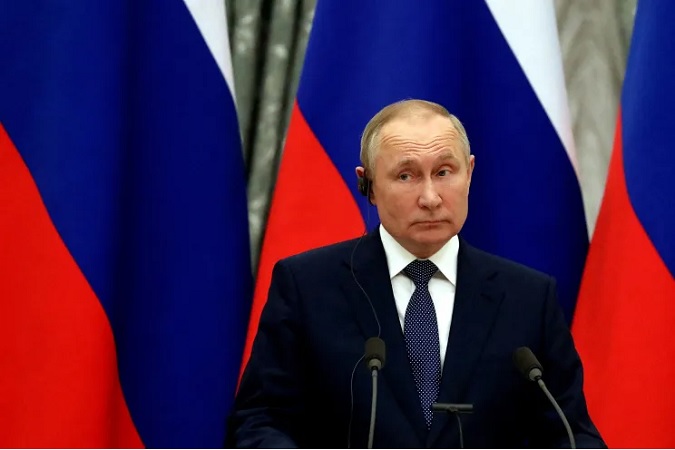
Russia’s economy is approaching an important test as the country prepares to release second-quarter gross domestic product (GDP) data and July inflation figures on Wednesday.

The statistics will provide a clearer picture of whether economic activity is stabilizing after a weak start to the year, while also showing how higher oil prices and changing international sanctions are influencing the country’s financial outlook.

Russia’s economy contracted by 0.2% year on year in the first quarter. Although the decline appeared concerning, the figure was partly affected by calendar effects.

January and February contained fewer working days than usual, reducing economic activity across several sectors. Consequently, economists have been watching the second quarter closely for evidence that the slowdown was temporary rather than the beginning of a deeper contraction.

The latest GDP figures will therefore be important for assessing the resilience of Russia’s economy. A stronger second-quarter performance could suggest that businesses and consumers have adjusted to difficult external conditions.

While another contraction would raise questions about whether years of sanctions, elevated government spending and structural economic pressures are beginning to weigh more heavily on growth.

One of the most important factors supporting Russia remains the energy market. Higher oil prices have increased the value of the country’s most important export commodity, providing additional revenue for the government and supporting the broader economy.

Oil and gas remain central to Russia’s fiscal position, making changes in global energy prices particularly important for Moscow’s ability to finance public spending and sustain economic activity.

The reported easing of restrictions surrounding Russian oil under Donald Trump has also changed the international environment. Greater access to global oil markets can potentially improve Russia’s export revenues.

Particularly if buyers become more willing to purchase Russian crude or if restrictions on transportation, insurance and financial transactions become less restrictive. For an economy heavily dependent on energy exports, such developments can have significant consequences.

Higher oil revenues do not automatically translate into strong economic growth. Russia continues to face challenges related to sanctions, restricted access to Western technology and capital, labor shortages and high borrowing costs.

These pressures can limit investment and make it more expensive for businesses to expand. The government has also had to rely heavily on fiscal spending to support strategic industries and maintain economic momentum.

Inflation will provide another crucial indicator. July’s inflation figures will show whether price pressures are easing or remaining stubbornly high.

Persistent inflation can reduce household purchasing power and force the central bank to maintain restrictive monetary policy for longer.

High interest rates, in turn, can weaken consumer demand and business investment, creating a difficult balance between controlling prices and supporting economic growth.

The combination of GDP and inflation data will therefore offer a more complete picture of Russia’s economic health. Strong growth accompanied by falling inflation would represent a favorable outcome, suggesting that the economy is adapting without excessive price pressures.

Conversely, weak growth combined with high inflation would point toward a more difficult period, potentially resembling stagflation. Wednesday’s figures will provide an important snapshot of an economy navigating geopolitical pressure, energy-market volatility and domestic economic constraints.

Russia may be benefiting from higher oil prices and a more favorable environment for its oil exports, but the underlying data will determine whether those advantages are translating into sustainable growth.

The second-quarter GDP and July inflation reports could therefore reveal whether Russia’s economy is merely slowing temporarily or entering a more persistent period of weakness.

Why China’s Oil Demand Could Be More Important Than OPEC Production Cuts

0

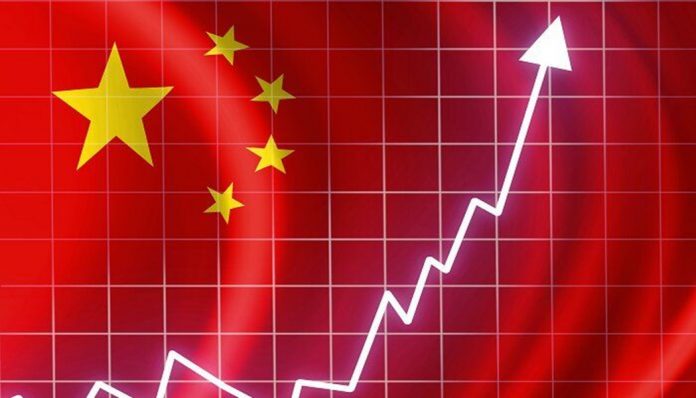
China, the world’s largest oil importer, is increasingly challenging the traditional power structure of the global oil market. For decades, OPEC and its allies, particularly OPEC+, have been the dominant force capable of influencing crude prices by adjusting production.

But China’s enormous appetite for oil has created another form of market power: the ability to rapidly increase or reduce demand. This shift has led one oil-trading executive to describe China as “the new OPEC.”

China does not control oil production on the scale of Saudi Arabia, Russia or other major exporters. Instead, its influence comes from the sheer size of its consumption and its position at the center of global trade.

As the world’s biggest oil importer, changes in Chinese purchasing patterns can quickly alter the balance between supply and demand, affecting prices from Asia to Europe and the United States.

The significance of this power has become increasingly visible as China has developed the ability to build inventories when prices are attractive and slow purchases when crude becomes expensive or domestic demand weakens.

Chinese refiners can therefore act strategically, buying large quantities of crude during periods of low prices and reducing imports when market conditions change. This behavior gives China an unusual degree of influence.

OPEC+ traditionally manages the market from the supply side, with producers cutting or increasing output to support prices or prevent excessive volatility. China can exert similar pressure from the demand side. If its refiners suddenly accelerate purchases, global crude demand rises.

If they step back, exporters may struggle to find buyers, putting downward pressure on prices. China’s influence is strengthened by its enormous refining industry. The country has invested heavily in modern refineries capable of processing crude from different regions and producing fuels for domestic and international markets.

This infrastructure allows Chinese companies to respond to price movements and global supply conditions with considerable flexibility. Strategic stockpiling further increases Beijing’s importance. China has spent years building crude reserves, giving the country a buffer against supply disruptions while allowing it to purchase oil opportunistically.

When global prices fall, Chinese buyers can take advantage of cheaper crude to replenish inventories. When prices rise, slower purchasing can reduce additional upward pressure.

The transformation also reflects broader changes in the global energy economy. China is simultaneously becoming a leader in electric vehicles, renewable energy and battery technology.

Those developments could eventually reduce its dependence on imported petroleum, particularly for transportation. Yet China’s transition away from fossil fuels is gradual, and its industrial economy continues to require enormous quantities of energy.

For traditional oil producers, this creates a complicated relationship with Beijing. OPEC+ can manage production, but its ability to influence prices ultimately depends on consumers being willing and able to purchase crude.

If China changes its buying behavior, producers may find that carefully designed supply cuts or increases produce weaker results than expected. Calling China the new OPEC may therefore be more metaphor than literal description.

Beijing does not possess a cartel or coordinate global oil production. Its power comes from market size rather than control of supply. That distinction does not make its influence less significant.

The global oil market is increasingly shaped by two competing forces: producers controlling barrels and China controlling demand. As energy consumption patterns evolve, the ability to decide when and how much crude to buy could become nearly as powerful as the ability to decide how much oil to pump.

China’s rise as a demand-side heavyweight signals that the era of oil-market power dominated exclusively by producers may be coming to an end.

Yen Nears 160 Per Dollar As Intervention Impact Fades, While Aussie Holds Gains

0

The yen hovered near the psychologically important 160-per-dollar threshold on Tuesday as the impact of the rare U.S.-Japan currency intervention at the end of July continued to fade, reviving speculation that authorities could be forced to intervene again if the Japanese currency weakens further.

The yen was last at 159.20 per dollar, after falling 0.9% on Monday. The move has erased almost half of the currency’s gains following the intervention, when the yen strengthened to a three-month high of 155.20 after previously tumbling to a 40-year low of 163.99.

The rapid reversal reveals the difficulty facing Japanese authorities. Intervention can temporarily alter exchange-rate dynamics, but sustaining a stronger yen ultimately requires a shift in the underlying forces driving the currency, particularly the interest-rate gap between Japan and the United States.

Traders are therefore focused on whether the dollar can break through 160 yen. A sustained move above that level could increase political and market pressure on Tokyo to act again, particularly if the yen’s depreciation begins to push up import costs and inflation.

“This week coincides with Japan’s Obon holiday period, when reduced market participation tends to lower liquidity, potentially increasing the risk of sharp market moves during thin trading hours,” said Masayuki Nakajima, senior strategist for fixed income, currencies and commodities at Mizuho.

“In particular, if (the dollar) were to break decisively above the psychologically important 160 (yen) level, concerns about intervention could intensify further,” he said.

The market positioning has already changed sharply following the intervention. Speculators cut their net bearish yen positions by $8.865 billion in the week to August 4, leaving the net short position at $3.604 billion, according to U.S. regulatory data.

That was the largest weekly reduction in bearish yen bets in more than 12 years.

The decline suggests that traders have become more cautious about betting aggressively against the yen, given the possibility of another official response. But analysts expect short positions to rebuild if the fundamental case for a weaker yen remains intact.

The key variable remains monetary policy.

Japan’s interest rates remain substantially below U.S. rates, making the yen vulnerable to carry trades in which investors borrow in low-yielding currencies and invest in higher-yielding assets elsewhere. Unless expectations for Japanese monetary tightening strengthen or U.S. rates decline sufficiently to narrow the interest-rate differential, intervention alone may struggle to produce a lasting appreciation.

Japan’s authorities also face the challenge of intervening in a market that can quickly absorb official purchases. The July operation demonstrated that coordinated intervention can produce a sharp initial move, but the subsequent depreciation shows how quickly investors can return to the underlying trade when policy fundamentals remain unchanged.

Australian Dollar Supported By RBA Stance

The Australian dollar, meanwhile, remained near an eight-week high after the Reserve Bank of Australia left its cash rate unchanged at 4.35%, in line with expectations, while signaling that further tightening remains possible.

The currency was last at $0.7054, close to its strongest level since mid-June.

The RBA has already raised rates by 75 basis points since February as it attempts to contain persistent inflation, with higher energy costs adding to price pressures.

The decision to leave rates unchanged while retaining a tightening bias gives the Australian dollar support because it keeps the possibility of higher domestic yields alive. That could become particularly important if other major central banks move toward easier monetary policy.

U.S. Inflation Becomes The Next Major Test

The broader currency market remained subdued as investors waited for a series of U.S. economic releases that could determine the next direction for the dollar and global interest-rate expectations. Wednesday’s consumer price index is the main focus, followed by producer prices on Thursday and retail sales on Friday.

The inflation data could provide the clearest indication yet of how the Iran war and higher energy prices are feeding into the U.S. economy. A renewed increase in oil prices could complicate the Federal Reserve’s policy outlook by pushing inflation higher even as geopolitical disruption weighs on economic activity.

The dollar index was broadly unchanged at 99.84, while oil prices remained near one-week highs amid fading expectations of a U.S.-Iran agreement to end the conflict. That combination is creating a difficult environment for currency traders. Higher energy prices can support the dollar through inflation and safe-haven demand, but they can also increase pressure on the Federal Reserve if they feed into consumer prices and weaken growth.

The euro was little changed at $1.1537, while sterling stood at $1.3499.

China’s yuan remained near a three-and-a-half-year high against the dollar, with the offshore yuan at 6.7484 and the onshore yuan at 6.7468.

For the yen, however, 160 remains the immediate fault line. A decisive move beyond that level would put the effectiveness of the recent intervention back under scrutiny and force traders to assess whether Tokyo is prepared to spend more reserves to defend the currency.

The coming U.S. inflation data could make that calculation even more complicated. Analysts say a stronger-than-expected U.S. inflation reading could lift Treasury yields and the dollar, increasing pressure on the yen, while softer data could narrow the U.S.-Japan rate differential and give Tokyo some relief without requiring another intervention.

Jamie Dimon Warns the Dollar’s Reserve-Currency Status Depends on U.S. Power

0
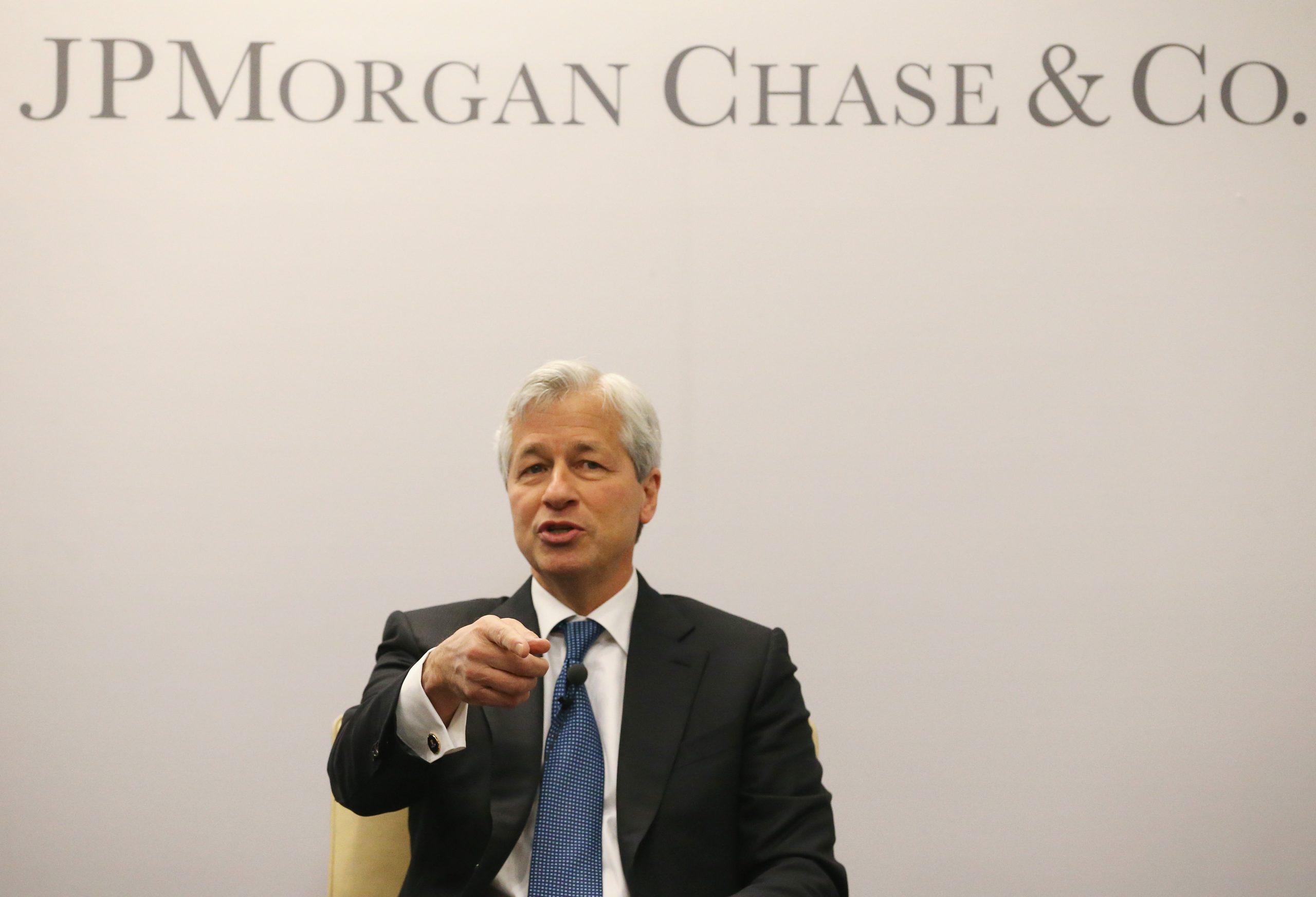
JP Morgan Chase puts contents through its CEO account, it goes viral. But the same content via JPMC account, no one cares (WSJ)

JPMorgan Chase CEO Jamie Dimon has issued a stark warning about the future of the U.S. dollar, arguing that its position as the world’s dominant reserve currency cannot be separated from America’s broader economic and military strength.

According to Dimon, if the United States loses its economic and military edge, the dollar could eventually lose its privileged position in the global financial system.

The warning is significant because the dollar’s reserve status provides the United States with enormous economic and geopolitical advantages.

Central banks around the world hold dollars as foreign-exchange reserves, while international trade, commodities and financial markets continue to rely heavily on dollar-denominated transactions. The dollar currently represents roughly 57% of global foreign-exchange reserves, although that share has declined from about 70% in 2000.

Dimon’s argument goes beyond currency markets. He views monetary dominance as a consequence of national power. A country with a large, productive economy, deep financial markets, strong institutions and credible military capabilities is more likely to have its currency trusted internationally.

In this framework, preserving the dollar’s position requires the United States to remain economically competitive while maintaining the capacity to protect its interests and allies. That creates a major challenge for Washington.

America faces rising competition from China, increasing geopolitical fragmentation, high government debt and concerns about its industrial capacity.

Dimon has repeatedly argued that the United States needs stronger economic growth and greater investment in strategic industries. In a May policy essay, he said better policies could have lifted U.S. growth significantly while strengthening national security and reducing fiscal pressures.

The connection between industrial capacity and national security has become particularly important. Dimon has warned about U.S. dependence on foreign sources for critical materials and manufacturing, including rare-earth elements, aluminum and steel.

He has also argued that America needs greater investment in defense, infrastructure, artificial intelligence, quantum computing and other strategic technologies. JPMorgan has committed to a multitrillion-dollar initiative aimed at strengthening U.S. security and economic resilience.

Losing reserve-currency dominance would not necessarily mean an overnight collapse of the dollar. The global financial system is deeply integrated with U.S. markets, Treasury securities and dollar-based payment infrastructure.

Alternatives face significant limitations. China has capital controls, while the euro lacks a unified fiscal and political structure comparable to the United States. As a result, analysts increasingly view the future not simply as a choice between the dollar and another currency, but as a potentially more fragmented monetary system.

The Federal Reserve has emphasized that the dollar’s international position rests on more than military power. Cleveland Fed President Beth Hammack identified the rule of law, deep and liquid capital markets and central-bank independence as fundamental qualities supporting the dollar’s status.

Dimon’s warning therefore represents a broader message: reserve-currency privilege must be continuously earned. Economic productivity, technological leadership, institutional credibility, military strength and political stability all reinforce one another.

Protecting the dollar may require more than defending its currency. It may require rebuilding productive capacity, maintaining technological leadership, strengthening institutions and preserving confidence among allies and investors.

If those foundations weaken substantially, the world may not immediately replace the dollar with another dominant currency. Instead, global finance could become increasingly multipolar, with countries diversifying reserves across dollars, euros, gold and other assets.

The dollar’s future, in other words, may depend less on what rival currencies do than on whether America continues to provide the economic and geopolitical foundation that made the dollar indispensable in the first place.

AI Productivity and Rising Healthcare Costs Reshape the Modern Workplace

0

The modern workplace is entering a period of rapid transformation as companies adopt artificial intelligence to increase productivity while simultaneously confronting rising employee benefit costs.

Two recent developments illustrate the tension clearly: Meta’s chief technology officer has argued that employees should use productivity gains from AI to accomplish more work rather than simply take more time off.

While Starbucks is reportedly ending coverage for GLP-1 medications used for weight loss as the cost of providing the benefit increases.

The developments highlight a fundamental question about the future of employment: who ultimately benefits when technology makes workers more productive and healthcare becomes more expensive?

At Meta, the growing use of artificial intelligence is changing expectations around what employees can accomplish. AI tools can automate repetitive tasks, accelerate software development, assist with research and analysis, and reduce the time required to complete routine assignments.

From a management perspective, these gains create an opportunity to increase output without proportionally increasing headcount. The expectation that employees should simply use AI to do more work raises important questions about productivity and working conditions.

If an employee can complete a task in two hours instead of four because of AI, the productivity gain could theoretically be converted into additional output, shorter working hours, higher compensation, or some combination of the three.

Companies determine how much of that efficiency becomes an organizational benefit and how much is shared with workers. Meta’s position reflects the increasingly competitive environment surrounding the technology industry.

As companies spend billions of dollars on AI infrastructure, models and talent, executives are under pressure to demonstrate measurable returns.

AI therefore becomes more than a productivity tool; it becomes part of a broader strategy to increase organizational efficiency and maintain competitiveness. The healthcare side of the equation presents a different challenge.

Starbucks’ decision to end GLP-1 coverage for weight loss reportedly reflects the financial pressure associated with providing increasingly expensive medications.

GLP-1 drugs have become highly sought-after because of their effectiveness in treating obesity and, in some cases, diabetes.

Their growing popularity, however, has created significant challenges for employers and insurers attempting to control healthcare spending. For companies, employee benefits are a major component of total compensation.

Expensive treatments can increase insurance premiums and force employers to reconsider which medications and conditions should receive coverage. Removing coverage can reduce costs, but it can also make healthcare less accessible for workers who depend on employer-sponsored insurance.

The two developments reveal a broader economic pattern. Companies are asking workers to embrace technologies that increase output while simultaneously reassessing benefits that increase operating expenses.

In both cases, corporate decision-making is being shaped by the same objective: improving efficiency and controlling costs. The central debate is therefore not whether AI will make workers more productive or whether healthcare costs will continue rising.

Both trends are already influencing businesses. The more consequential question is how the gains and burdens will be distributed. If AI substantially increases productivity, employees may increasingly expect higher wages, reduced working hours, or stronger benefits in return.

Meanwhile, employers will continue looking for ways to control healthcare expenses without undermining recruitment and retention. The future workplace will ultimately be shaped by this balance.

Corporate policies, labor expectations, compensation structures and benefit decisions will determine whether the next era of work produces simply more output—or a meaningful improvement in the quality of working life.