

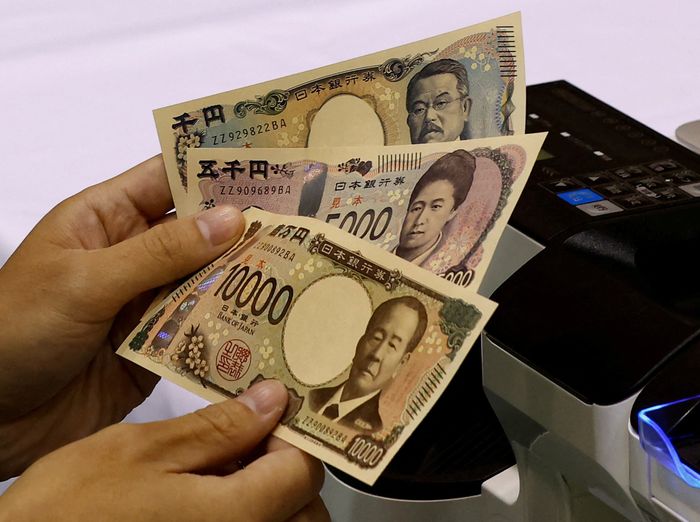
The yen hovered near the psychologically important 160-per-dollar threshold on Tuesday as the impact of the rare U.S.-Japan currency intervention at the end of July continued to fade, reviving speculation that authorities could be forced to intervene again if the Japanese currency weakens further.
The yen was last at 159.20 per dollar, after falling 0.9% on Monday. The move has erased almost half of the currency’s gains following the intervention, when the yen strengthened to a three-month high of 155.20 after previously tumbling to a 40-year low of 163.99.
The rapid reversal reveals the difficulty facing Japanese authorities. Intervention can temporarily alter exchange-rate dynamics, but sustaining a stronger yen ultimately requires a shift in the underlying forces driving the currency, particularly the interest-rate gap between Japan and the United States.
Register for the next Tekedia Mini-MBA.
Register for Tekedia AI in Business Masterclass.
Join Tekedia Capital Syndicate and co-invest in great global startups.
Traders are therefore focused on whether the dollar can break through 160 yen. A sustained move above that level could increase political and market pressure on Tokyo to act again, particularly if the yen’s depreciation begins to push up import costs and inflation.
“This week coincides with Japan’s Obon holiday period, when reduced market participation tends to lower liquidity, potentially increasing the risk of sharp market moves during thin trading hours,” said Masayuki Nakajima, senior strategist for fixed income, currencies and commodities at Mizuho.
“In particular, if (the dollar) were to break decisively above the psychologically important 160 (yen) level, concerns about intervention could intensify further,” he said.

The market positioning has already changed sharply following the intervention. Speculators cut their net bearish yen positions by $8.865 billion in the week to August 4, leaving the net short position at $3.604 billion, according to U.S. regulatory data.
That was the largest weekly reduction in bearish yen bets in more than 12 years.
The decline suggests that traders have become more cautious about betting aggressively against the yen, given the possibility of another official response. But analysts expect short positions to rebuild if the fundamental case for a weaker yen remains intact.

The key variable remains monetary policy.
Japan’s interest rates remain substantially below U.S. rates, making the yen vulnerable to carry trades in which investors borrow in low-yielding currencies and invest in higher-yielding assets elsewhere. Unless expectations for Japanese monetary tightening strengthen or U.S. rates decline sufficiently to narrow the interest-rate differential, intervention alone may struggle to produce a lasting appreciation.
Japan’s authorities also face the challenge of intervening in a market that can quickly absorb official purchases. The July operation demonstrated that coordinated intervention can produce a sharp initial move, but the subsequent depreciation shows how quickly investors can return to the underlying trade when policy fundamentals remain unchanged.
Australian Dollar Supported By RBA Stance
The Australian dollar, meanwhile, remained near an eight-week high after the Reserve Bank of Australia left its cash rate unchanged at 4.35%, in line with expectations, while signaling that further tightening remains possible.
The currency was last at $0.7054, close to its strongest level since mid-June.
The RBA has already raised rates by 75 basis points since February as it attempts to contain persistent inflation, with higher energy costs adding to price pressures.
The decision to leave rates unchanged while retaining a tightening bias gives the Australian dollar support because it keeps the possibility of higher domestic yields alive. That could become particularly important if other major central banks move toward easier monetary policy.
U.S. Inflation Becomes The Next Major Test
The broader currency market remained subdued as investors waited for a series of U.S. economic releases that could determine the next direction for the dollar and global interest-rate expectations. Wednesday’s consumer price index is the main focus, followed by producer prices on Thursday and retail sales on Friday.
The inflation data could provide the clearest indication yet of how the Iran war and higher energy prices are feeding into the U.S. economy. A renewed increase in oil prices could complicate the Federal Reserve’s policy outlook by pushing inflation higher even as geopolitical disruption weighs on economic activity.
The dollar index was broadly unchanged at 99.84, while oil prices remained near one-week highs amid fading expectations of a U.S.-Iran agreement to end the conflict. That combination is creating a difficult environment for currency traders. Higher energy prices can support the dollar through inflation and safe-haven demand, but they can also increase pressure on the Federal Reserve if they feed into consumer prices and weaken growth.
The euro was little changed at $1.1537, while sterling stood at $1.3499.
China’s yuan remained near a three-and-a-half-year high against the dollar, with the offshore yuan at 6.7484 and the onshore yuan at 6.7468.
For the yen, however, 160 remains the immediate fault line. A decisive move beyond that level would put the effectiveness of the recent intervention back under scrutiny and force traders to assess whether Tokyo is prepared to spend more reserves to defend the currency.
The coming U.S. inflation data could make that calculation even more complicated. Analysts say a stronger-than-expected U.S. inflation reading could lift Treasury yields and the dollar, increasing pressure on the yen, while softer data could narrow the U.S.-Japan rate differential and give Tokyo some relief without requiring another intervention.