DD
MM
YYYY

PAGES

DD
MM
YYYY

spot_img

PAGES

Home Blog

Slot Symbols Explained: How Visual Themes Create Distinct Game Identities

0

Slot symbols help define a game’s identity by turning its theme into recognizable visual elements. From colorful fruits and precious gems to mythical creatures and familiar characters, each symbol contributes to the look and feel of the reels. These choices can make games with similar mechanics feel noticeably different from one another.

Symbols also help communicate a game’s mood and theme at a glance. Their imagery, colors, and design can create a playful, adventurous, mysterious, or classic atmosphere across the reels. This makes symbols an important part of how players recognize and experience a slot beyond its basic gameplay structure.

Familiar Symbols Create an Immediate Starting Point

Classic fruit, bell, BAR, and seven symbols give a slot an old-school identity almost instantly. Their simple designs recall mechanical reels while keeping the visual presentation clear and familiar. This traditional visual language can remain effective even when the rest of the game is fully digital.

The pattern reaches back much further than modern online play. A history of slot machines notes that the Liberty Bell used card suits and a bell, while later machines introduced lemons, plums, and cherries. That long history allows a few familiar pictures to carry a strong sense of tradition.

Card Ranks Support the Main Theme

Once the main symbols are established, card ranks often fill the supporting positions on the reels. A, K, Q, J, and 10 may feature details such as vines, metal, ice, or neon effects that reflect the game’s setting. Their familiar structure keeps the symbols easy to recognize while the added design elements tie them into the overall theme.

FanDuel Casino, for example, includes real-money slots where card ranks may form the supporting layer of a game’s symbol set. In real-money play, these symbols can carry lower values than the detailed characters or objects placed above them. The paytable explains each symbol’s exact value, since visual size or decoration alone doesn’t confirm a payout.

Themed Objects Establish Place and Mood

From that familiar base, themed objects show where a game wants to go. A deep-sea design might use shells, anchors, and glowing fish, while a mountain story could feature maps, ropes, and stone markers. Together, these objects create a setting without needing long explanations.

Their shared style then determines the mood within that setting. Rounded drawings and soft textures can feel lighthearted, while sharp edges and weathered surfaces can make similar objects seem more serious. Because every object receives the same treatment, the reels feel like one connected place.

Character Symbols Suggest a Larger Story

Character symbols can make a slot’s theme feel more alive. Explorers, rulers, animals, and fantasy figures can appear as premium symbols that fit the game’s setting. Their clothing, poses, and expressions help players quickly recognize each character and understand their role in the theme.

These characters don’t need complex dialogue to suggest a story. NN/g’s 2024 overview of picture-superiority research says clear, familiar, and distinctive pictures are often easier to remember than words. A confident guide, hidden rival, and mysterious guardian can therefore imply a larger journey through artwork alone.

Color and Shape Build Visual Hierarchy

That symbol family becomes easier to read when color separates its different levels. Bright accents can highlight premium or special symbols, while softer shades keep supporting icons from competing for attention. This contrast makes the visual hierarchy easier to follow during play.

Shape provides another layer of order through bold silhouettes, thick borders, or unusual frames. The need for quick separation grows because the moving reels hold much of the viewer’s attention. A New South Wales government evidence review found that most recorded gaze stayed on reels, especially while they were spinning.

Motion Gives Static Artwork More Personality

Once symbols have clear roles, animation can add more personality to their design. A bird may flap its wings, a gem may pulse with light, or a door may open when the symbol is activated. These brief effects make the game feel more responsive while keeping each symbol easy to recognize.

Sound can add to the experience when it matches the visuals and animations. A 2025 Journal of Gambling Studies experiment with 156 participants found that audiovisual cues affected how immersed people felt during simulated slot play. But the highest level of cues didn’t create the most immersion, showing that more effects don’t always improve the experience.

Strong Symbol Systems Hold Everything Together

A distinctive slot identity rarely comes from one impressive symbol. It develops when familiar references, themed objects, characters, card ranks, colors, special icons, and motion share one visual language. Consistency lets each element add detail without making the screen feel disconnected.

At the same time, style works best when meaning remains clear. Symbols should establish the mood, support the theme, and show their roles without implying that appearance changes random outcomes. When those goals stay balanced, the reels become both readable and easy to recognize.

 

OpenAI’s AI Chip Strategy Could Reshape the Semiconductor Industry

0

OpenAI is taking a significant step toward greater control over its artificial intelligence infrastructure after claiming that its custom-designed Jalapeño chip can outperform NVIDIA’s leading processors in key tests.

The development highlights an increasingly competitive AI hardware market in which major technology companies are seeking alternatives to the expensive and highly demanded graphics processing units that have powered the generative AI boom.

Jalapeño is OpenAI’s first custom inference chip, developed in collaboration with Broadcom. Unlike general-purpose AI accelerators, it was designed specifically around the requirements of serving large language models.

OpenAI says its early results demonstrate advantages in both performance per watt and response latency, two metrics that are increasingly important as AI companies operate models at enormous scale.

In benchmark testing, Jalapeño was compared with NVIDIA’s GB200 and GB300 systems. OpenAI reported that its processor could deliver significantly more AI work for each unit of power while also returning responses faster.

Some reported tests showed between 1.5 and 1.9 times greater throughput per kilowatt and substantially lower latency than NVIDIA’s systems, although the comparisons focus specifically on inference workloads rather than AI model training.

That distinction is important. NVIDIA remains deeply entrenched in AI because its hardware is supported by a massive software ecosystem and is capable of handling a broad range of workloads, including training and inference.

Jalapeño, by contrast, has been optimized primarily for inference—the stage at which trained AI models generate responses for users. OpenAI therefore is not presenting the chip as an immediate replacement for NVIDIA across its entire computing infrastructure.

Instead, the project reflects a broader strategic objective: reducing the cost of operating AI at massive scale. Every query sent to an AI model requires computing resources, and as usage increases, electricity, cooling, networking and hardware expenses become major operational considerations.

A chip capable of producing more output with less energy could therefore improve the economics of running AI services.

OpenAI has also demonstrated that it intends to develop the technology across multiple generations.

The company says a second-generation processor is already well advanced, while concepts for a third generation are being explored. OpenAI has said it expects to begin deploying Jalapeño later in 2026 and scale its use during 2027.

The development could have implications beyond OpenAI. If major AI laboratories increasingly design their own accelerators, demand for customized silicon could grow, creating a more fragmented market and challenging NVIDIA’s dominance.

Google, Amazon and other technology companies have already pursued specialized AI processors, reflecting the industry’s desire to optimize hardware for specific workloads. Yet OpenAI’s announcement does not mean NVIDIA is suddenly irrelevant.

OpenAI itself has emphasized that NVIDIA remains an important partner and that it will continue purchasing large quantities of NVIDIA hardware. The two strategies can coexist: custom chips can handle highly specialized inference workloads while NVIDIA accelerators continue supporting broader and more demanding computing requirements.

Jalapeño represents more than a benchmark victory. It signals that the next phase of the AI race may be fought not only over models and applications, but also over the chips powering them. If OpenAI can translate its early testing results into reliable, large-scale deployment.

Custom silicon could become an important tool for lowering AI costs and increasing computational efficiency. NVIDIA remains a formidable industry leader, but OpenAI’s progress suggests that the race for AI hardware dominance is becoming considerably more competitive.

Bitcoin Payments in El Salvador Dry Up as Consumers Return to Fiat

0

El Salvador’s experiment with Bitcoin as a mainstream payment method is facing another test as everyday cryptocurrency spending appears to be fading, even in the country’s iconic Bitcoin Beach community.

Recent reports from El Zonte, the coastal town that became synonymous with Bitcoin adoption, suggest that customers are increasingly choosing traditional payment methods such as cards and U.S. dollars instead of Bitcoin.

The latest anecdotal evidence came from Bitcoin Core contributor Jon Atack, who reported that a restaurant in El Zonte received its first Bitcoin payment of the month when he used BTC to pay for lunch. Staff reportedly told him that most customers now pay by card.

In another indication of declining familiarity, a worker reportedly declined a tip in satoshis because she had forgotten how to operate the Bitcoin payment application. While the experience is only one merchant’s observation and cannot establish nationwide payment activity.

Its symbolism is significant because El Zonte was one of the earliest communities to demonstrate Bitcoin’s potential as a circular economy.

The development highlights the difference between owning Bitcoin and spending it. Bitcoin is increasingly viewed by many investors as a scarce digital asset and long-term store of value.

That investment narrative can create a powerful disincentive to spend the asset on everyday goods. If consumers expect Bitcoin to appreciate, using it to purchase lunch, groceries or other necessities can feel less attractive than paying with fiat while preserving BTC for potential future gains.

Fiat offers practical advantages. Cards and cash are familiar, widely accepted and relatively straightforward for merchants and consumers. Bitcoin payments can require additional applications, wallet familiarity and transaction processes that consumers may not consider worthwhile when conventional payment systems already meet their needs.

El Salvador’s regulatory shift has further changed the environment. The country introduced Bitcoin as legal tender in 2021, but reforms subsequently made private-sector acceptance voluntary.

The U.S. government’s trade guide for El Salvador says Bitcoin acceptance is now entirely voluntary for companies, while government entities cannot receive or make Bitcoin payments.

The same source notes that fewer than 8% of Salvadorans reported using Bitcoin for transactions in a 2024 survey, with most businesses and citizens continuing to prefer the U.S. dollar.

The International Monetary Fund has also documented the distinction between Bitcoin activity and genuine transactional adoption. Its analysis found that much of Chivo’s activity involved dollar-Bitcoin conversions rather than purchases.

While Bitcoin sales represented only a marginal share of transactions. The IMF concluded that consumers were more inclined to buy, hold or sell Bitcoin as a speculative asset than use it as a medium of exchange.

This distinction may define El Salvador’s Bitcoin experiment. The country has demonstrated that a government can accelerate cryptocurrency adoption through legislation, infrastructure and incentives.

However, turning Bitcoin into a preferred everyday currency is considerably harder because consumer behavior depends on convenience, price stability, familiarity and perceived value.

The decline in Bitcoin payments therefore does not necessarily mean that Bitcoin has disappeared from El Salvador. The cryptocurrency remains an important part of the country’s financial and political identity.

But the latest developments suggest that everyday commerce is moving in a different direction. For consumers, the question is increasingly not whether Bitcoin can be used to pay, but whether there is a compelling reason to use it when fiat already works.

El Salvador’s experience offers a broader lesson for the global crypto industry: technological availability does not automatically create consumer adoption. For Bitcoin to become a dominant payment currency, users must have a practical reason to spend it—not merely an opportunity to do so.

Nvidia’s Jensen Huang Enters the Open-Weight AI Race

0

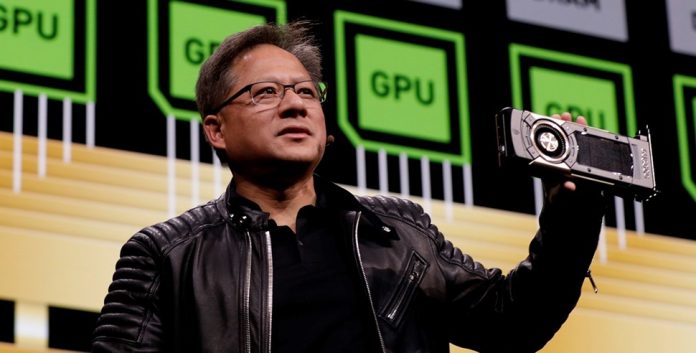
Nvidia CEO Jensen Huang is taking the company deeper into the rapidly expanding open-weight artificial intelligence market.

Signaling that the world’s leading AI chipmaker wants a stronger position not only in the infrastructure layer but also in the models that power the next generation of software.

The move comes as competition intensifies among technology companies seeking greater control over increasingly capable AI systems.

Nvidia is investing $1 billion in Poolside at a $12 billion valuation, while committing an additional $6 billion to license the startup’s technology. As part of the agreement, roughly 100 Poolside engineers are expected to join Nvidia’s Nemotron project.

The scale of the transaction highlights how important AI model development has become, particularly as companies increasingly compete over open-weight systems. Poolside has emerged as an AI startup focused on software development and autonomous coding capabilities.

Bringing its engineers and technology into Nvidia could significantly strengthen the company’s efforts to build models capable of handling complex programming and reasoning tasks.

For Nvidia, the objective appears broader than simply developing another AI model. It is about creating an ecosystem in which its hardware, software and models reinforce one another. The Nemotron project is central to that strategy.

Nvidia has increasingly positioned Nemotron as a family of AI models designed for developers, enterprises and researchers. By expanding the project with Poolside’s talent and technology.

Nvidia can potentially accelerate the development of open-weight models that customers can adapt for specific applications. Open-weight AI has become an increasingly important battleground.

While companies such as OpenAI and Anthropic have largely emphasized proprietary models and controlled access, open-weight approaches give developers greater flexibility to inspect, customize and deploy models.

Meta has also invested heavily in this strategy through its Llama family, helping establish open models as a serious alternative to closed systems.

For Nvidia, entering this competition represents a logical extension of its dominance in AI infrastructure.

The company already supplies much of the computing power required to train and operate advanced AI models. Owning or controlling important model technology could allow Nvidia to capture additional value further up the AI stack.

The financial commitment is particularly notable. A $1 billion investment at a $12 billion valuation, combined with $6 billion in technology licensing, represents a substantial bet on Poolside’s capabilities and the broader importance of AI coding systems.

It also demonstrates how aggressively major technology companies are competing for scarce AI engineering talent. The addition of approximately 100 engineers could prove just as valuable as the financial investment.

Advanced AI development depends heavily on specialized researchers, engineers and infrastructure expertise, making talent acquisition one of the industry’s most important competitive advantages. Jensen Huang’s move therefore reflects a larger transformation in the AI market.

Nvidia is no longer simply supplying the engines behind the AI revolution. It is increasingly positioning itself to influence the models, tools and software ecosystems built on top of those engines.

If the Poolside partnership succeeds, Nvidia could emerge as a more significant force in open-weight AI, challenging established model developers while strengthening the strategic importance of its own computing platform.

The race is no longer just about who builds the fastest chips. It is increasingly about who controls the full AI stack.

Anthropic’s Mythos Bets and Revolut’s EURR Signal a New Phase for AI and Digital Finance

0

The convergence of advanced artificial intelligence and blockchain-based finance is becoming increasingly visible, with two developments highlighting how quickly both industries are evolving.

Prediction-market traders are placing substantial odds on Anthropic releasing a new Mythos-class model within weeks, while fintech giant Revolut has launched EURR, a euro-backed stablecoin designed to bring digital euro-denominated money directly onto blockchain networks.

Reports indicate that prediction-market participants have raised the probability of Anthropic releasing its next Mythos-class model sharply, with Polymarket pricing the chance of a release by September 15 at more than 80%.

The market has attracted significant trading volume, reflecting growing expectations that Anthropic could soon unveil another major step in its artificial intelligence roadmap.

Mythos is particularly important because Anthropic positions the model family at the frontier of cybersecurity and biology research.

The existing Mythos 5 is currently restricted to selected partners because of its advanced capabilities and potential dual-use risks. Anthropic has emphasized that broader access requires additional safeguards.

Especially because powerful AI systems can potentially be misused for cyberattacks and other dangerous applications. If a new Mythos model arrives within the next two weeks, the significance would extend beyond another AI product launch.

It could intensify competition among leading AI laboratories while raising fresh questions about model safety, cybersecurity, export controls and responsible deployment.

The prediction-market odds should also be viewed as market expectations rather than confirmation: Anthropic itself remains the authoritative source for an official launch announcement.

At the same time, Revolut is pushing the financial system further toward blockchain-based money with EURR. The fintech has begun a phased rollout of its euro-backed stablecoin to eligible customers in Denmark, Poland and Portugal.

EURR is designed to maintain a value of €1 and is issued by Bridge, a Stripe company. It is being integrated into Revolut’s retail ecosystem and is available on Ethereum and Polygon.

The importance of EURR lies in its potential to make stablecoins less dependent on the US dollar. Dollar-backed stablecoins dominate the global market, but European users transact primarily in euros.

Revolut’s approach gives customers a way to move euro-denominated value on-chain without first converting into dollars, creating a potential bridge between traditional banking, cryptocurrency and digital payments.

The rollout also arrives as European regulators continue developing clearer rules for digital assets.

Revolut says EURR is designed within the European regulatory framework, while Bridge is responsible for issuing the token. Wider availability across the European Economic Area is expected later this year, alongside plans for stablecoins tied to additional currencies.

The Mythos speculation and EURR launch illustrate two different but connected transformations. AI companies are competing to build increasingly capable digital intelligence, while fintech companies are working to put traditional currencies onto programmable blockchain networks.

The next few weeks could therefore become significant for both sectors. A new Mythos release would test the limits of frontier AI, while EURR could help determine whether euro stablecoins can move from a niche crypto product into mainstream financial infrastructure.

Both developments point toward the same broader trend: technology is steadily reshaping how intelligence, money and digital services operate.