


DD
MM
YYYY

PAGES

DD
MM
YYYY

spot_img

PAGES

Home Blog

Michael Saylor Predicts Bitcoin to Reach $1 Million in 10 Years as Strategy Eyes Supply Cap

0

Strategy CEO Michael Saylor has projected a dramatic long-term rise in Bitcoin’s value, linking future price levels to how much of the cryptocurrency’s total supply his company, Strategy, ultimately controls.

Speaking on The Breakdown with David Gokhshtein, the Strategy executive chairman said the firm plans to continue accumulating Bitcoin until it holds between 5% and 7.5% of the asset’s total supply.

According to Saylor, Strategy would only slow its purchases once it approaches that threshold, which he described as a natural ceiling driven by Bitcoin’s scarcity rather than a change in corporate strategy.

Saylor noted that reaching such ownership levels would likely coincide with significantly higher Bitcoin prices. He suggested that if Strategy were to control around 5% of Bitcoin’s circulating supply, the cost of a single coin could rise to approximately $1 million in 10 years.

He attributed these potential price increases to Bitcoin’s fixed supply and structural constraints, arguing that long-term valuation growth would be fueled by scarcity dynamics rather than short-term speculative demand.

In a recent post on X, he shared a chart of Strategy’s recent Bitcoin accumulation, with the caption, “Green Dots Beget Orange Dots.”

The post features a chart tracking the company’s 90 Bitcoin purchases since 2020, with orange dots marking buy events, a green line showing average cost at $74,972, and current holdings of 671,268 BTC valued at $59 billion as of December 21, 2025.

The caption “Green Dots Beget Orange Dots” metaphorically links profitable unrealized gains (green line below price) to triggering additional buys (orange dots), reflecting a strategy of accumulating during dips for long-term appreciation.

Recent data confirms this approach, as Strategy added 10,645 BTC for $980 million on December 16 2025, at $92,098 per coin, achieving 24.9% year-to-date BTC yield amid market volatility, as echoed in community replies praising conviction over short-term timing.

As Strategy chairman, Saylor’s optimism often precedes corporate buys, aligning with the firm’s debt-financed accumulation strategy amid the 2025 average price of $102,112. He described Bitcoin buying as a process of deploying ever-larger amounts of capital against a fixed and diminishing supply, naturally slowing accumulation over time.

Amidst Saylor’s prediction of BTC to reach $1 million per coin in 10 years, the crypto asset according to analysts underperformed in 2025. At the time of writing this report, Bitcoin was trading at $89,530, beneath its peak. Recall that the crypto asset had traded as high as $94,461 this year, before it retraced. Overall in 2025, Bitcoin is down nearly 5%. This performance has increased pressure on long-term holders, with profits continuing to decline.

Notably, the underperformance of Bitcoin relative to gold has sparked concerns among analysts that speculative assets may be entering a prolonged downturn. Gold continued its upward rally today, reaching a fresh all-time high of $4,409 during the early Asian trading session.

A market watcher explained that gold’s move to fresh all-time highs heading into year-end suggests that investors continue to prioritize capital protection while rotating into risk assets selectively.

Bitcoin critic and Gold advocate Peter Schiff has stated that Bitcoin hype is what is preventing people from buying Gold.

He said,

“Bitcoin is what’s preventing so many people from buying gold or silver. It’s so unfortunate that they will lose most of their money in Bitcoin instead of making even more money in precious metals”.

In an earlier post on X, he criticised CNBC for focusing on BTC, while ignoring much bigger rallies in precious metals like Gold and silver.

He wrote,

“Now CNBC is focusing on today’s meaningless Bitcoin rally as reflecting an increased appetite for risk assets in general. But they are ignoring much bigger rallies in precious metals and mining stocks, which indicate that investors are rotating into assets seen as safe havens.”

The post underscores Schiff’s longstanding preference for precious metals over cryptocurrencies during economic volatility, positioning gold and mining stocks as indicators of investor caution rather than speculation.

Nevertheless, some market participants hold a more optimistic view on Bitcoin’s outlook, arguing that long-term fundamentals outweigh short-term volatility.

Cathie Wood, CEO of ARK Invest, has expressed confidence in Bitcoin’s long-term potential, citing its expanding use cases, rising institutional allocation, and the maturation of market infrastructure such as spot Bitcoin exchange-traded funds (ETFs). According to Wood, these developments could unlock fresh capital inflows and reduce barriers to entry for traditional investors.

Large financial institutions have also contributed to the optimistic sentiment. Analysts at firms such as Fidelity Digital Assets have noted that Bitcoin’s network fundamentals including hash rate growth and wallet adoption continue to strengthen, even during periods of market correction. This resilience, they argue, suggests that Bitcoin is evolving beyond a speculative asset into a more established component of global financial markets.

While risks remain and price fluctuations are expected, these optimistic voices maintain that Bitcoin’s long-term trajectory remains intact. For them, periods of market uncertainty represent not a signal to exit, but an opportunity to accumulate ahead of what they believe could be another phase of sustained growth.

OpenAI’s Stargate Seals Memory Deals with Samsung and SK Hynix for DRAM, Sparking Global Supply Chain Concerns

0

OpenAI’s ambitious Stargate project, a cornerstone of the AI infrastructure race, has secured preliminary agreements with South Korean semiconductor powerhouses Samsung Electronics and SK Hynix to supply massive volumes of DRAM wafers, potentially devouring up to 40% of global production by 2029.

The deals, formalized as letters of intent in October 2025 following high-stakes meetings involving OpenAI CEO Sam Altman, South Korean President Yoon Suk Yeol, and executives from both firms, underscore the project’s unprecedented scale and its ripple effects on global tech supply chains.

The partnerships go beyond mere supply: Samsung and SK Hynix, which together command about 70% of the global DRAM market and 80% of high-bandwidth memory (HBM), have committed to ramping production to meet OpenAI’s projected demand of 900,000 DRAM wafer starts per month.

This volume encompasses commodity DDR5, low-power LPDDR4/LPDDR5, premium HBM for AI accelerators, and specialty DRAM types. Notably, initial deliveries will consist of undiced wafers—raw silicon before cutting into individual chips—granting Stargate flexibility in customization and processing. But questions linger on who will handle dicing, packaging into DRAM chips, HBM stacks, or modules, with speculation pointing to potential in-house or third-party fabs.

To contextualize the scale, global 300mm fab capacity is forecasted to hit 10 million wafer starts per month (WSPM) in 2025, per TechInsights. DRAM’s share stood at 22% (about 2.07 million WSPM) in 2024, with analysts like those at TrendForce projecting an 8.7% growth to roughly 2.25 million WSPM in 2025—meaning Stargate could claim around 40% of that capacity at peak. Broader market forecasts from Yole Group predict DRAM revenues surging to $129 billion in 2025, up from prior years, driven by AI demand, with total memory market revenues nearing $190 billion, including NAND.

However, this concentration has fueled warnings of shortages: Counterpoint Research notes 50% price hikes in 2025, with further increases into 2026, impacting consumer electronics like PCs, smartphones, and GPUs.

Deloitte’s 2025 Semiconductor Outlook highlights AI and data centers as key drivers for chip sales growth, even as PC and mobile demand lags.

Stargate, a $500 billion collaboration controlled by OpenAI, Oracle, and SoftBank, aims to deploy multiple gigawatt-scale AI data centers globally to train next-generation models. Launched in January 2025 with a request for proposals from partners, the project has accelerated rapidly.

The flagship site in Abilene, Texas, went operational early, providing 1 gigawatt of capacity. By mid-2025, Oracle pledged an additional 4.5 gigawatts, pushing totals over 5 gigawatts. September brought announcements of five new U.S. sites, escalating investments to $400 billion, and capacity toward 7 gigawatts. In October, Michigan joined with a multi-billion-dollar campus developed by Related Digital, set for construction in early 2026. December saw ground broken on a $15 billion, four-building complex in Wisconsin by Vantage Data Centers, offering nearly 1 gigawatt, and Michigan regulators approving 1.4 gigawatts of power from DTE Energy—despite local opposition over energy costs and grid strain.

These facilities demand enormous resources: thousands of servers per site, each packed with Nvidia Blackwell GPUs and ancillary gear like cooling systems and power delivery—potentially necessitating dedicated power plants, as Altman has toured Asia-Pacific to secure. The Samsung ecosystem’s involvement deepens the alliance. Samsung SDS will co-design and operate Stargate sites in Korea, provide consulting for integrating OpenAI models into enterprise systems, and act as a reseller for services like ChatGPT Enterprise in South Korea.

Samsung C&T and Samsung Heavy Industries are pioneering floating data centers—offshore platforms leveraging maritime tech for superior cooling efficiency and lower emissions, though engineering hurdles remain. Plans include two Korean “Stargate-style” facilities starting at 20 megawatts, positioning South Korea as an AI hub amid high local adoption of OpenAI tools.

Altman lauded Korea’s “incredible tech talent, world-class infrastructure, strong government support, and thriving AI ecosystem” during his visit.

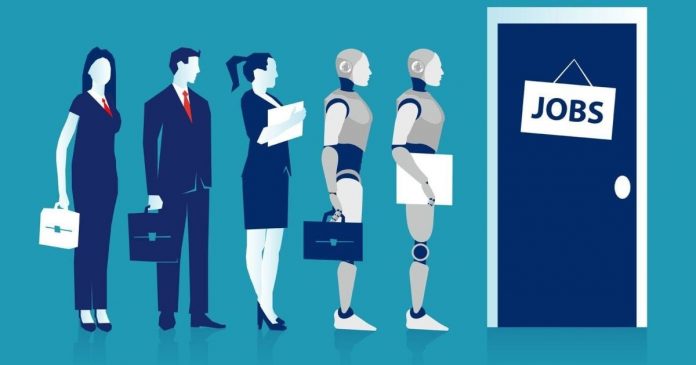
AI Drove Over 50,000 Job Cuts in U.S. in 2025 – Report

0

Artificial Intelligence (AI) is no longer just reshaping how work is done, it is now reshaping who gets to keep their jobs.

In 2025, the rapid adoption of AI across U.S. industries was responsible for almost 50,000 layoffs, according to data from consulting firm Challenger, Gray & Christmas.

These figures highlight a growing shift as companies automate roles, streamline operations, and replace human labor with AI-driven systems in a bid to cut costs and boost efficiency. Per Challenger, overall job cuts topped 1 million in 2025, the highest level since the Covid-19 pandemic in 2020.

Major firms such as Meta, Salesforce, Microsoft, IBM, amongst others, announced significant job cuts this year, citing AI as a factor. Amazon in October, announced the largest ever round of layoffs in its history, slashing 14,000 corporate roles, as it looks to invest in its biggest bets which include AI.

CEO Andy Jassy warned of the cuts earlier this year, telling employees that AI will shrink the company’s workforce and that the tech giant will need “fewer people doing some of the jobs that are being done today, and more people doing other types of jobs.”

Also, Tech giant Microsoft has cut a total of around 15,000 jobs through 2025, and its most recent announcement in July saw 9,000 roles on the chopping block.

CEO Satya Nadella wrote in a memo to employees that the company needed to “reimagine” its “mission for a new era,” and went on to tout the significance of AI to the company.

Salesforce CEO Marc Benioff confirmed in September that 4,000 customer support workers had been cut at the firm with the help of AI.

He said on a podcast, “I’ve reduced it from 9,000 heads to about 5,000, because I need less heads”.

Artificial intelligence is no longer a distant disruption in the U.S. labor market, it is already reshaping how people work and what skills are valued. As AI systems become more capable of automating routine, repetitive, and rules-based tasks, U.S. citizens are increasingly being pushed to upskill and adapt in order to remain relevant in a fast-changing economy.

According to a recent report from the McKinsey Global Institute, AI and AI-powered robots are now capable of performing more than half of all work hours in the United States. The report found that although the vast majority of human skills will remain relevant in an era of large-scale automation, the way people use those skills is expected to change dramatically.

At current levels of capability, AI agents could perform tasks that occupy 44 percent of U.S. work hours today, and robots could account for 13 percent, the report said. Recent U.S. government projections underline this shift. Employment growth is expected to remain flat or even decline in several tech-exposed fields, particularly administrative support roles, paralegals and legal assistants, and computer programmers.

These occupations have traditionally relied on structured tasks such as data entry, document preparation, basic legal research, and writing or debugging standard code areas where AI tools now perform faster and at lower cost.

The Bureau of Labor Statistics (BLS) has explicitly pointed to technology, including AI, as a major factor behind these projections. In administrative roles, for example, AI-powered software can now schedule meetings, manage emails, generate reports, and process invoices with minimal human input. This reduces demand for entry-level and mid-level clerical workers while increasing demand for professionals who can supervise systems, interpret outputs, or manage more complex workflows.

Even in programming once seen as a future-proof career AI is changing the landscape. Tools that can generate code, fix bugs, or translate natural language into software instructions are reducing demand for basic coding tasks.

The BLS suggests that while advanced software engineering, systems design, and AI-related roles will grow, traditional programming jobs focused on routine development may stagnate or decline. This is forcing programmers to upskill into areas like AI engineering, cybersecurity, cloud architecture, and product-focused development.

Overall, AI is not just replacing jobs, it is redefining them. Workers who rely solely on routine technical or administrative skills face higher risk, while those who invest in continuous learning especially in analytical thinking, creativity, system oversight, and human-centered skill are better positioned to thrive.

As AI adoption accelerates across industries, the U.S. workforce is being nudged toward higher-value roles that complement machines rather than compete with them. The future of work, as the BLS projections suggest, will belong to those who can adapt alongside AI, not those who ignore its impact.

AI-Fueled Layoffs Deepen in 2025 as 1.17m Job Cuts Mark Automation Acceleration

0

Layoffs have become one of the most defining and unsettling features of the U.S. labor market in 2025, with artificial intelligence now sitting at the center of corporate explanations for sweeping job cuts.

Across technology, finance, enterprise software, and cybersecurity, companies are increasingly framing workforce reductions as a necessary consequence of rapid AI adoption, even as questions grow over whether automation is the sole or even primary driver.

Figures from consulting firm Challenger, Gray & Christmas, published by CNBC, show that AI-linked layoffs reached nearly 55,000 jobs in the United States this year. In total, employers announced about 1.17 million job cuts through 2025, the highest annual level since the height of the Covid-19 pandemic in 2020, when layoffs surged to 2.2 million. The scale and persistence of the cuts suggest a structural reset rather than a temporary correction.

The pace of job losses has remained elevated into the final quarter of the year. Employers announced roughly 153,000 job cuts in October, followed by more than 71,000 in November. AI was explicitly cited in over 6,000 of the November cuts alone, according to Challenger, underscoring how frequently the technology now features in restructuring announcements.

These layoffs are unfolding against a challenging economic backdrop. Inflation continues to erode purchasing power, tariffs have added to input costs, and borrowing remains expensive after years of aggressive interest rate hikes. For many firms, especially large multinationals under pressure to protect margins, AI has emerged as an appealing lever. Automation promises immediate efficiency gains, lower payroll costs, and faster execution, particularly in roles involving repetitive cognitive tasks.

Academic research is reinforcing those incentives. CNBC cited a study released by the Massachusetts Institute of Technology in November, which found that AI systems can already perform tasks equivalent to about 11.7% of jobs across the U.S. labor market. The researchers estimated potential wage savings of up to $1.2 trillion, with the largest exposure in finance, healthcare, legal services, and other professional sectors where routine analysis, documentation, and customer interaction are common.

Yet not everyone agrees that AI alone explains the scale of the layoffs. Fabian Stephany, assistant professor of AI and work at the Oxford Internet Institute, has argued that many companies are overstating the role of automation. He has said that firms that expanded aggressively during the pandemic-era boom are now reversing course, using AI as a convenient narrative.

“Many companies significantly overhired during Covid,” Stephany previously told CNBC. “Instead of saying ‘we miscalculated two or three years ago,’ they can now point to AI as the reason.”

In his view, a portion of the layoffs represents a delayed market correction rather than a sudden technological displacement.

Even so, corporate leaders have been unusually candid about AI’s role in reshaping their organizations.

Amazon announced in October the largest round of layoffs in its history, cutting 14,000 corporate roles as it redirects spending toward what it describes as its “biggest bets,” with AI at the top of the list. In a blog post, Beth Galetti, the company’s senior vice president of people experience and technology, said the shift was necessary to reduce layers, speed up decision-making, and give teams more ownership.

CEO Andy Jassy had earlier warned employees that AI would fundamentally change Amazon’s workforce. He said the company would need “fewer people doing some of the jobs that are being done today, and more people doing other types of jobs,” signaling a long-term rebalancing rather than a short-term cutback.

Microsoft has taken a similar path. The company has cut around 15,000 jobs in 2025, including 9,000 announced in July. CEO Satya Nadella framed the layoffs as part of a broader effort to reposition Microsoft around AI, describing a transition from a traditional software model to what he called an “intelligence engine.”

In an internal memo, Nadella emphasized that AI was not just another product line but a foundational shift.

“It’s about building tools that empower everyone to create their own tools,” he wrote, arguing that this approach required a different organizational structure and skill mix.

At Salesforce, the impact has been particularly visible in customer support. CEO Marc Benioff confirmed in September that about 4,000 customer support roles had been eliminated, reducing headcount in that division from roughly 9,000 to 5,000. Benioff has said AI is already handling up to half of the company’s workload, allowing it to operate with far fewer staff than before.

IBM’s experience highlights the uneven nature of the transition. CEO Arvind Krishna said in May that AI chatbots had replaced a few hundred human resources roles, but he stressed that the company was simultaneously hiring in areas that demand higher-level judgment, including software engineering, sales, and marketing. Still, IBM announced a 1% global workforce reduction in November, potentially affecting nearly 3,000 employees.

Cybersecurity firm CrowdStrike was among the most explicit in linking layoffs to AI. In May, it said it would cut about 500 jobs, or 5% of its workforce. CEO George Kurtz described AI as a “force multiplier” that flattens hiring needs and accelerates everything from product development to customer engagement, reducing the number of people required to scale the business.

Workday, an HR software company, moved early in the year. In February, it announced plans to cut about 8.5% of its workforce, or roughly 1,750 jobs, to free up resources for AI investment. CEO Carl Eschenbach said the decision was about prioritization, signaling that AI spending had become more important than maintaining existing headcount.

Collectively, these moves point to a deeper shift in how companies value labor. While executives insist that AI will create new roles over time, particularly for engineers, data scientists, and AI specialists, the near-term effect has been a sharp contraction in white-collar and support roles that were once considered relatively insulated from automation.

The result has been growing anxiety about job security and reskilling for workers. For policymakers, it raises difficult questions about how quickly labor markets can adapt and whether existing safety nets are adequate. As 2025 draws to a close, AI’s promise of productivity and innovation is becoming inseparable from its social cost, with layoffs serving as the most visible sign of a labor market being reshaped in real time.

AI Boom Keeps Memory Markets Tight as Micron CEO Warns RAM and Storage Shortages Will Last Beyond 2026

0

One of the world’s largest memory chipmakers is signaling that the global shortage of RAM and storage is no longer a cyclical blip but a prolonged structural challenge, as the explosive growth of artificial intelligence continues to outstrip supply across the semiconductor industry.

Micron Technology CEO Sanjay Mehrotra delivered the warning during the company’s latest earnings call, telling investors that tight conditions across memory markets are likely to persist for years rather than quarters. The imbalance, he said, reflects a sharp acceleration in AI-related demand colliding with the hard physical limits of semiconductor manufacturing.

“Sustained and strong industry demand, along with supply constraints, are contributing to tight market conditions and we expect these conditions to persist beyond calendar 2026,” Mehrotra said, tempering expectations that new capacity will quickly ease shortages.

At the heart of the supply crunch is the scale of AI data center expansion. Mehrotra said customers have significantly upgraded their buildout plans in recent months, forcing Micron and its peers to revise demand forecasts sharply upward.

“Over the last few months, our customers’ AI data center buildout plans have driven a sharp increase in demand forecast for memory and storage,” he said. “We believe that the aggregate industry supply will remain substantially short of the demand for the foreseeable future.”

AI workloads consume vastly more memory than traditional computing. Training and running large language models requires high-bandwidth memory, advanced DRAM, and large volumes of NAND storage, often deployed in dense, power-hungry server configurations. As AI adoption spreads from hyperscalers to enterprises and governments, memory intensity per server continues to rise, compounding pressure on supply.

Mehrotra said these dynamics are affecting both major memory segments. “Together, these demand and supply factors are driving tight industry conditions across DRAM and NAND and we expect tightness to persist through and beyond calendar 2026,” he noted.

Supply growth constrained by long lead times

While demand has surged, the industry’s ability to respond remains limited. Building new semiconductor fabs or expanding existing ones is a multiyear process that requires massive capital investment, access to advanced lithography tools, and a highly specialized workforce.

Even with aggressive spending, new facilities can take several years before reaching meaningful output. Advanced memory products such as high-bandwidth memory add another layer of complexity, with lower yields and more intricate manufacturing steps than conventional DRAM.

Mehrotra acknowledged that Micron is already operating under strain.

“Despite significant efforts, we are disappointed to be unable to meet demand from our customers across all market segments,” he said, underscoring that shortages are not confined to AI alone but are spilling into other end markets.

Industry discipline reinforces tightness

Micron’s outlook aligns with recent signals from its main competitors, Samsung Electronics and SK Hynix, both of which have cautioned that memory constraints are likely to linger. Rather than rushing to add capacity, leading manufacturers are exercising restraint, shaped by hard lessons from past boom-and-bust cycles.

Samsung has previously said it prefers maintaining long-term profitability and balance sheet strength over aggressive expansion that could trigger another oversupply crash. SK Hynix has similarly highlighted the risks of overbuilding, particularly given the capital intensity and technical difficulty of scaling advanced memory for AI accelerators.

This discipline means that even as prices rise, supply growth will remain measured, reinforcing Mehrotra’s view that shortages are structural rather than temporary.

Broader implications for tech and pricing

For customers, prolonged tightness in memory markets is likely to keep prices elevated, raising the cost of AI infrastructure and pressuring margins for cloud providers, hardware makers, and enterprise IT budgets. Consumer electronics manufacturers could also face higher component costs, especially as devices increasingly rely on larger memory configurations to support AI features.

For memory producers, however, the environment supports stronger pricing power and improved profitability, provided they can execute on advanced products and manage capacity carefully.

Mehrotra’s comments point to a broader shift underway in the semiconductor industry. The AI boom has fundamentally altered demand patterns for memory, and the supply side is structurally constrained from responding at the same pace. Rather than a short-lived shortage, Micron is warning of a new normal in which tight memory markets extend deep into the second half of the decade.