DD
MM
YYYY

PAGES

DD
MM
YYYY

spot_img

PAGES

Home Blog

Airtel Crosses 650m Subscribers, Tightens Grip as Global Telecom Powerhouse, and Deepens Nigeria Expansion

0

Bharti Airtel has crossed the 650 million mobile subscriber mark globally, a milestone that now places the telecom giant as the second-largest operator in the world by customer base, underscoring the scale of its international footprint and the importance of its Africa operations, particularly Nigeria.

The company disclosed the development in a statement, noting that the milestone reflects the breadth of its network and its ability to serve diverse markets across Asia and Africa with increasingly integrated digital services. According to GSMA Intelligence, Airtel now ranks second globally by mobile customer base.

“Crossing 650 million mobile subscribers worldwide, now positions the company as the second-largest telecommunications operator on the planet by customer base.

“Crossing this threshold reflects a network of immense scale, the capacity to reach customers across diverse markets with consistent quality, and the ability to deliver experiences shaped by sustained innovation,” they stated

The latest milestone is more than a symbolic achievement as it reflects the transformation of Airtel from a traditional telecom carrier into a broader digital infrastructure and services platform, spanning mobile connectivity, broadband, enterprise solutions, data centers, fintech, and satellite-enabled services.

Globally, the company’s operations now cover 15 countries, with network reach extending to more than two billion people. Of the 650 million subscribers, over 368 million are in India, while more than 179 million customers are spread across 14 African markets, making the continent a major pillar of Airtel’s growth strategy.

In Africa, Nigeria remains one of its most strategic and revenue-critical markets.

Airtel Nigeria has significantly expanded its network infrastructure in recent years, increasing its site count from just over 13,000 to nearly 17,200 within three years. The addition of more than 1,500 sites in the last year alone points to an aggressive infrastructure-led growth strategy aimed at addressing capacity constraints, reducing congestion, and extending services into previously underserved areas.

This expansion comes at a critical time for Nigeria’s telecom sector, where demand for mobile data, digital payments, video streaming, and enterprise connectivity continues to rise sharply.

According to data from the Nigerian Communications Commission, the country had 145,141 base stations across all network layers as of December 2025, with Airtel accounting for 46,918 of that infrastructure footprint, a sizeable share that underlines its growing market presence.

That investment is particularly significant against the backdrop of persistent consumer complaints over network quality. Dropped calls, slow data speeds, and congestion in high-density urban corridors have remained key issues in the Nigerian market, prompting the NCC to tighten quality-of-service oversight.

Last week, the regulator directed operators to compensate users in areas where service quality falls below required benchmarks, including the issuance of airtime credits where operators fail to meet standards. This means Airtel’s expansion is not merely about growth. It is also a regulatory and competitive necessity.

The company is also advancing plans for a second submarine cable internet breakout point at Kwa Ibo in Akwa Ibom State, as part of the early rollout of the 2Africa cable system. That project could materially improve network resilience and internet redundancy in Nigeria.

At present, much of the country’s international internet traffic remains heavily concentrated through Lagos landing stations. A second breakout point in the South-South region would reduce geographic concentration risk, improve latency in eastern and southern corridors, and strengthen disaster recovery capability.

This is strategically important for a digital economy increasingly reliant on cloud services, fintech transactions, and enterprise-grade connectivity. The move also aligns with Airtel’s wider infrastructure ambitions beyond telecom towers.

The company recently announced a $1 billion investment into its data center arm, Nxtra, with backing from global investors including Carlyle and Alpha Wave, signaling a deeper push into AI-ready digital infrastructure. That positions Airtel not only as a telecom operator but as a broader infrastructure player in the digital services economy.

In Nigeria, this could have significant implications for enterprise connectivity, cloud adoption, and hyperscale digital services over the medium term. From a market standpoint, the local telecom space remains dominated by MTN Nigeria and Airtel Nigeria, with the two operators accounting for the overwhelming majority of subscribers and industry revenue.

MTN still leads by market share, but Airtel’s consistent infrastructure rollout and aggressive customer acquisition strategy continue to narrow the operational gap.

While MTN remains the market leader in earnings, Airtel’s strong data monetization, fintech expansion, and subscriber growth suggest it is increasingly moving beyond pure volume competition toward higher-value digital services. This mirrors the company’s global model, where mobile money, enterprise solutions, and broadband services are becoming as important as traditional voice subscriptions.

The expansion of telecom infrastructure directly feeds into financial inclusion, digital commerce, remote work, online education, and e-government services.

In effect, the company’s growth trajectory is increasingly intertwined with Nigeria’s digital transformation agenda. Crossing 650 million users globally, therefore, marks more than a corporate milestone. It cements Airtel’s status as one of the most influential connectivity and digital infrastructure players in emerging markets, with Nigeria being a significant part of that success.

Google Announces Plan to Open-Source Android Auto as Automakers Race Toward Software-Defined Vehicles

0

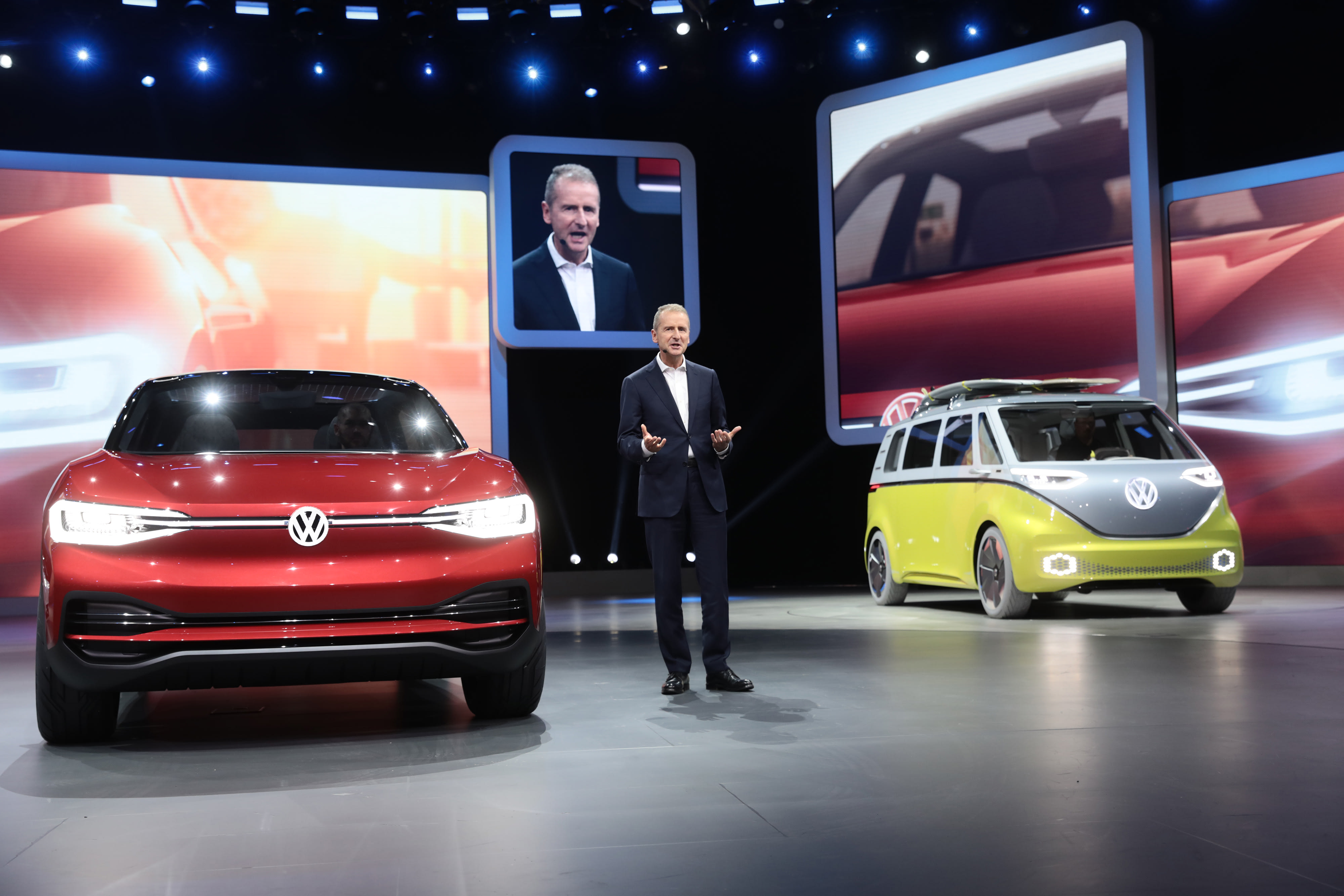
Google has announced a decision to open-source a more expansive version of Android Automotive, marking a pivotal shift in the auto industry’s transition from hardware-led engineering to software-first vehicle design, a move that could redefine how future cars are built, updated, and monetized.

The technology giant has unveiled Android Automotive OS for Software Defined Vehicles, or AAOS SDV, extending its footprint far beyond dashboard screens into the operational core of the vehicle. The platform is designed to manage a broad range of non-safety functions, including climate systems, seat actuators, lighting, mirrors, cameras, telemetry, and instrument clusters, effectively moving Android from an infotainment layer into what industry executives increasingly describe as the “digital backbone” of the modern car.

This is a significant escalation in the contest between Big Tech firms and traditional automakers for control of the in-car software ecosystem.

Until now, Android Automotive OS has largely been associated with infotainment and connected services. Vehicles such as the Volvo EX90 already run the platform natively, allowing users to access Google Maps, media apps, voice assistants, and vehicle settings directly from the central display. The new SDV architecture goes deeper, targeting the fragmented electronic control units that currently govern different parts of a car.

At the heart of Google’s pitch is a solution to one of the industry’s most persistent problems: software fragmentation.

Modern vehicles often run dozens, and sometimes hundreds, of electronic control units sourced from different suppliers, each with its own software layer. This patchwork architecture increases costs, complicates updates, and slows the rollout of new features. Google says AAOS SDV introduces a modular, topology-agnostic framework that allows carmakers to standardize communication across these systems while enabling granular over-the-air software updates.

That matters because the economics of the automotive business are changing. Cars are no longer sold as static products. Increasingly, manufacturers are moving toward post-sale software upgrades, subscription features, predictive maintenance, and AI-powered driver assistance. A unified operating layer makes these recurring revenue models easier to deploy.

For legacy manufacturers that have struggled with software execution, the attraction is obvious. Companies such as Nissan Motor Co. and Subaru Corporation, which have historically lagged behind in digital cockpit sophistication, may see Google’s platform as a shortcut to compete with software-led rivals. Instead of spending years building proprietary systems, they can adopt a ready-made foundation and focus engineering resources on branding, ride dynamics, and differentiated user experiences.

For firms whose software is already central to their competitive edge, the picture is more complicated. Tesla, Inc. and Rivian Automotive, Inc. have spent years developing vertically integrated vehicle software stacks that tie together battery management, autonomy systems, cabin controls, and user interfaces. For such players, handing part of that control to Google could dilute a key strategic advantage.

This is where the competitive tension with Apple Inc. intensifies. Apple’s CarPlay Ultra has similarly expanded its reach deeper into the vehicle interface, but Google’s approach is more infrastructural. While Apple’s offering largely remains a front-end user experience layer, AAOS SDV is aimed at the embedded operating framework itself. In effect, Google is competing not merely for screen space but for architectural control of the vehicle’s digital systems.

However, a standardized software foundation could accelerate deployment, but it may also flatten differentiation across brands. If multiple mass-market automakers rely on the same core platform, cabin interfaces and digital experiences may begin to converge, making it harder for brands to maintain a distinctive identity.

Another major issue is data governance. As vehicles collect more telemetry, location data, and behavioral information, privacy concerns are likely to intensify. Academic research has already raised questions about the breadth of data captured by automotive operating systems, including speed, seat positions, and climate settings, sometimes without clear disclosure. As Google moves deeper into vehicle control systems, scrutiny over who owns and monetizes that data is expected to grow.

But this means the battle for the future of the car is no longer just about electric drivetrains or autonomous driving. It is now increasingly involved in controlling the operating system.

Google’s latest move positions Android as a potential default software layer for the next generation of software-defined vehicles, a development that could shift power away from traditional Tier 1 suppliers and further blur the lines between automakers and technology companies.

Top 4 Cryptos to Watch in April 2026: Experts See Bright Futures for BlockDAG, BNB, Tron & Dogecoin

0

The crypto market is radiating positivity in April 2026. Although price shifts remain part of the journey, a surge in corporate adoption is fortifying the entire ecosystem. While Bitcoin and Ethereum maintain their leadership, a wave of enthusiasm is driving investors toward creative alternatives that solve real-world challenges.

This outlook highlights the latest progress for household names like Binance Coin, Tron, and Dogecoin, alongside the trailblazing BlockDAG. By analyzing these diverse initiatives, forward-thinking individuals can identify which assets hold the greatest promise for upcoming milestones. Let’s dive into what makes these projects the top cryptos to watch right now.

1. BlockDAG (BDAG): The Rising Titan Targeting a $10B Milestone

BlockDAG is boldly sprinting toward a $10 billion market capitalization, a feat that would cement its status as a Top 30 global elite on CoinMarketCap. This ambitious objective proves the network is ready to stand shoulder-to-shoulder with the world’s most famous blockchain protocols. As global capital pours in, this $10B vision shows the project has evolved from a promising newcomer into a permanent, high-impact international player.

Fueling this optimism is a spectacular performance on tracking sites, where the coin recently defied the odds by holding steady above $0.35 on CoinMarketCap. This price level represents a massive leap from its starting point, showing the project has the internal muscle to flourish independently. With experts now eyeing $0.70 as the next natural peak, the solid floor at $0.35 has captured the world’s attention.

Even with this public market success, a final golden opportunity exists to enter at the exclusive $0.000022 presale rate. This creates a massive value gap compared to the $0.35 live market price, offering one last chance to join before the open market takes the reins. Between its $10B market cap dream and the final hours of this low entry offer before the April 8 trading launch, many view BlockDAG as the premier choice today.

2. Binance Coin (BNB): Scaling High via the Maxwell Upgrade

Binance Coin (BNB) continues to shine as a cornerstone of the digital world, acting as the vital engine for the entire Binance family. As the lifeblood of the Binance Smart Chain, it powers a massive web of decentralized apps and the popular Trust Wallet. Thanks to the recent Maxwell Upgrade, the network is now faster and more scalable, providing a seamless experience for millions of users worldwide.

With a market value exceeding $85 billion and a trading price near $629, BNB’s clever “burn” system and its new links to assets like Tether Gold are winning over major institutions. For those prioritizing proven utility and ecosystem growth, BNB remains one of the top cryptos to watch for a sturdy and flourishing portfolio.

3. Tron (TRX): Efficiency and Growth in Global Markets

Tron has secured its reputation as a champion of decentralized content and stablecoin efficiency. Since its 2017 debut, the network has matured into a high-speed system that manages over $85 billion in USDT transactions. Its tiny fees and incredible speed make it the favorite choice for people sending digital cash across the globe instantly.

Recent news classifying TRX as a commodity has cleared the legal path, making it even more attractive to professional participants. Due to its massive earnings and constant daily use, analysts view Tron as one of the top cryptos to watch for anyone valuing long-term reliability and practical blockchain success.

4. Dogecoin (DOGE): The Community Favorite Moving Mainstream

Dogecoin continues to surprise the world, transforming from a fun internet meme into a serious financial contender. Supported by a tireless global fan base and famous advocates, it firmly holds its spot in the top ten cryptocurrencies by market size.

Exciting new steps, such as its move into social media payment tools and the arrival of meme-coin ETFs, have kept its trading volume sky-high. While it is famous for energetic price moves, its growing use for everyday online shopping gives it a unique and friendly utility. Its massive social reach and high energy make it one of the top cryptos to watch for those following market excitement.

Summing Up!

The crypto market in April 2026 is full of diverse potential, from the steady reliability of Binance Coin and Tron to the high-energy community spirit of Dogecoin. While these top-tier assets offer a great foundation, investors hunting for the most transformative growth are focusing on fresh breakthroughs.

When looking at technology and future potential, BlockDAG stands out as the most optimistic choice. Its $10 billion market cap target and cutting-edge architecture provide a competitive advantage that older blockchains find hard to replicate. While every coin mentioned has its strengths, the mix of advanced tech and the final presale window makes BlockDAG a truly unique opportunity. For anyone looking for the top crypto to watch, BlockDAG is the clear winner.

Tekedia Capital Celebrates Unicorns In Its Portfolio

0

At Tekedia Capital, we recently celebrated our first official unicorn. We invested in this company at launch in Q4 2024, and just last week, it raised an additional $160 million, crossing the billion-dollar valuation mark.

Within this quarter, we expect another unicorn milestone as one of our portfolio companies completes its latest fundraising. This one is particularly remarkable; we invested at a $5 million valuation, and it is now worth $1 billion with minimal dilution.

Good People, there is abundance in the future. Beginning Monday, as the next Tekedia Capital cycle opens, we will be deploying capital into 18 global startups.

AI Boom Drives Record-Breaking $300 Billion Venture Capital Investment in Q1 2026

0

The first quarter (Q1) of 2026 marked an unprecedented moment in global venture capital, fueled largely by massive investments in artificial intelligence infrastructure and frontier technology labs.

According to Crunchbase data, investors deployed approximately $300 billion across 6,000 startups worldwide, representing a surge of over 150% both quarter over quarter and year over year.

This figure stands as the highest quarterly venture investment ever recorded, surpassing all previous benchmarks. Notably, the total investment in Q1 2026 alone accounted for nearly 70% of the entire venture capital deployed throughout 2025 and exceeded every full-year total prior to 2018.

A significant portion of this capital flowed into artificial intelligence companies, particularly a select group of U.S.-based firms executing record-breaking funding rounds. Among the largest beneficiaries were OpenAI, which raised $122 billion, Anthropic with $30 billion, xAI securing $20 billion, and Waymo raising $16 billion. Together, these four companies accounted for $188 billion, approximately 65% of total global venture investment during the quarter.

Overall, AI companies attracted $242 billion in funding, representing 80% of total global venture capital in Q1. This significantly surpassed the previous record set in Q1 2025, when AI accounted for 55% of total funding. U.S.-based startups dominated the landscape, raising $250 billion, or 83% of global venture investment, up from an already elevated 71% in the same period last year.

Outside the United States, China emerged as the second-largest market, attracting $16.1 billion in venture funding, followed by the United Kingdom with $7.4 billion. Both regions recorded strong growth both quarter over quarter and year over year.

The surge in funding was heavily concentrated in late-stage deals, which totaled $246.6 billion across 584 transactions, an increase of 205% compared to the previous year. Notably, $235 billion was invested in just 158 companies that each raised $100 million or more.

Early-stage funding reached $41.3 billion across 1,800 deals, reflecting modest quarter-over-quarter growth but a 41% increase year over year, largely driven by Series A rounds. Seed-stage funding totaled $12 billion, up 31% year over year; however, the number of deals declined by 30% to 3,800, indicating a trend toward larger but fewer early-stage investments.

Despite the surge in venture funding, the IPO market remained relatively subdued, particularly in the United States, where new listings slowed amid a broader downturn in software stocks. In contrast, China’s IPO market gained momentum during the quarter.

Globally, 21 venture-backed companies achieved exits exceeding $1 billion, with the majority concentrated in Asia. Thirteen of these exits occurred in China, four in other parts of Asia, and only four in the United States.

The largest IPO of quarter one (Q1), was PayPay, a Japan-based fintech firm that debuted with a valuation of $10 billion. Additionally, Chinese AI companies Z.ai and MiniMax went public on the Hong Kong Stock Exchange, each achieving valuations exceeding $6 billion.

While IPO activity lagged, mergers and acquisitions remained robust. Startup M&A transactions reached a combined value of over $56.6 billion, marking the third-strongest quarter since the market downturn in 2022.

Among the largest deals were Savvy Games Group’s planned $6 billion acquisition of Moonton from ByteDance, and Capital One’s $5.15 billion acquisition of fintech startup Brex. In summary, Q1 2026 redefined the venture capital landscape, with artificial intelligence at the center of an extraordinary surge in global investment activity.