DD
MM
YYYY

PAGES

DD
MM
YYYY

spot_img

PAGES

Home Blog

Adani Weighs Airline Launch As India Seeks Stronger Competition to Indigo And Air India

0

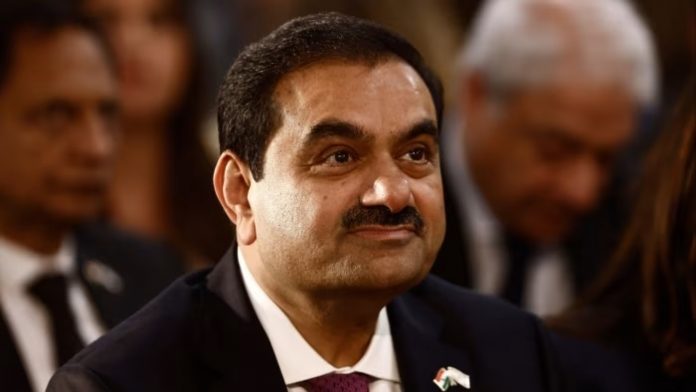
Indian billionaire Gautam Adani’s conglomerate is exploring the launch of a new airline, a move that could reshape India’s aviation industry by challenging the dominance of IndiGo and Air India, according to two sources cited by Reuters.

The proposal marks a significant shift for the Adani Group, which has rapidly expanded its presence in aviation infrastructure through airport acquisitions but has consistently maintained that it had no plans to operate an airline. While no final decision has been made, the internal deliberations show that India’s evolving aviation industry is prompting a reassessment of opportunities in one of the world’s fastest-growing air travel markets.

According to one of the sources, discussions remain at an early stage, and the group is carefully evaluating the commercial risks of entering an industry known for thin profit margins, high capital requirements and intense competition.

The deliberations also come amid growing concern within the Indian government over the concentration of the country’s airline market and operational challenges facing its two largest carriers.

Government Seeks Stronger Competition

One source said the Indian government has privately encouraged several large business groups, including Adani, to consider launching an airline as policymakers seek to reduce the risks associated with an increasingly concentrated market.

The push follows heightened scrutiny of Air India after last year’s fatal crash in Ahmedabad, as well as operational disruptions at market leader IndiGo, which cancelled thousands of flights in December because of a pilot shortage, stranding passengers and triggering regulatory intervention to curb surging airfares.

“It’s a difficult business, but Adani wants to consider it in the national interest,” the source said, adding that policymakers have concluded another major airline could improve competition and strengthen the resilience of India’s aviation sector.

Neither the government nor the Adani Group has publicly commented on the reported discussions.

India’s domestic aviation market has become increasingly concentrated over the past decade following the collapse of several airlines. IndiGo currently controls 65.4% of the domestic market, while Air India holds about 25%, giving the two carriers a combined market share exceeding 90%.

The dominance of the two airlines has fueled concerns among regulators and industry observers that reduced competition could eventually affect fares, service quality and network resilience.

India has already witnessed the failure of several major airlines over the past 15 years, including Kingfisher Airlines, Jet Airways and Go First, highlighting the financial challenges of operating in a market characterized by high fuel taxes, aggressive pricing, supply-chain disruptions and aircraft delivery delays. Despite those headwinds, India’s long-term aviation outlook remains among the strongest globally, supported by rising incomes, expanding regional connectivity and increasing passenger demand.

The government aims to increase the number of operational airports to between 350 and 400 by 2047, compared with just 74 in 2014, while Indian airlines have collectively placed record aircraft orders with Boeing and Airbus to accommodate future growth.

Adani Ignites Aviation Ambitions

Although Adani has ruled out entering the airline business in the past, the group has steadily expanded its influence across aviation infrastructure. It now operates eight airports across India, including Mumbai’s two airports, making it one of the country’s largest private airport operators.

The conglomerate is pursuing an $11 billion airport expansion strategy, while Adani Airports recently announced plans to invest more than $2 billion in airport-linked commercial developments spanning hotels, retail centers and office complexes across six locations.

Those investments are part of a broader plan to transform airports into integrated commercial hubs that generate revenue beyond passenger traffic. According to the second source, one option under consideration is acquiring a stake in an existing airline rather than launching an entirely new carrier, although all strategic alternatives remain under review.

Regulatory Hurdles and Conflict Concerns

Any move into commercial aviation could raise fresh regulatory questions because Adani already owns a significant airport network. The group has reportedly approached the Indian government seeking changes to rules that restrict certain airport operators from owning stakes in scheduled airlines.

Independent aviation analyst Brendan Sobie said such cross-ownership could create concerns among competing carriers.

“There are niche examples of airports also owning airlines in markets such as Kyrgyzstan, Thailand and Vietnam,” Sobie said. “Other airlines in India would rightfully be concerned about a possible conflict of interest.”

Regulators would likely closely examine whether airport ownership could provide preferential treatment in areas such as slot allocation, ground handling or airport charges.

News of Adani’s internal discussions weighed on shares of Adani Enterprises, which fell more than 3% in Mumbai trading.

Shares of IndiGo also declined by more than 1%, reflecting investor expectations that the prospect of a new large competitor could intensify competition in India’s airline industry.

In contrast, SpiceJet surged 10%, with investors speculating that a financially stronger industry participant could potentially trigger broader consolidation or strategic partnerships.

However, the discussions represent a striking change in tone for the Adani Group.

In an interview with Reuters last December, Jeet Adani, director of Adani Airports and Gautam Adani’s youngest son, said the conglomerate had no interest in launching an airline because of the industry’s structurally low profitability.

“Our comfort and our core competency is in creating hard assets on the ground, long-gestation assets, running them quite efficiently,” he said.

Some analysts believe that whether the company ultimately proceeds will likely depend on its assessment of whether tighter integration between airport operations and airline services can create sufficient long-term value to offset the sector’s historically challenging economics.

But if Adani decides to move forward, it would represent one of the most significant competitive developments in Indian aviation since Tata Group’s acquisition of Air India. That, many believe, will potentially end the effective duopoly that has emerged in one of the world’s fastest-growing aviation markets.
Tesla CEO Musk Urges Faster AI Investment As Company Targets More Than $25bn In Capital Spending

0

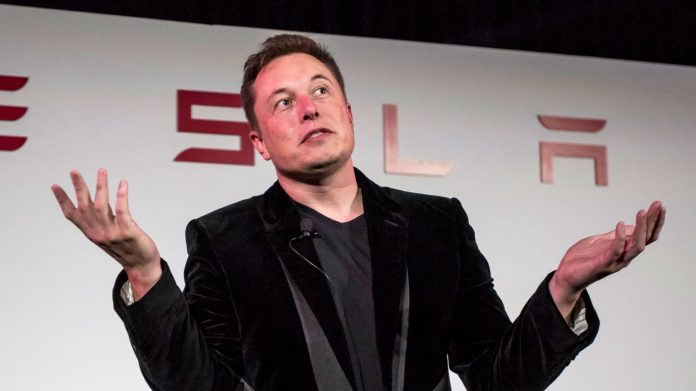
Tesla Chief Executive Elon Musk said the electric vehicle maker should accelerate spending on artificial intelligence and manufacturing infrastructure even if it results in some inefficiencies, arguing that moving quickly is more important than maximizing capital efficiency in the race to build next-generation AI and robotics technologies.

Speaking during Tesla’s second-quarter earnings call on Thursday, Musk said he has instructed company executives to continue increasing capital expenditures as Tesla expands production capacity for its autonomous vehicles, humanoid robots and AI computing infrastructure.

“We should be spending on capex as fast as we can spend — as fast as we can without it being too wasteful. So we’re not trying to aim for some extremely high-efficiency capital spend because that would slow things down,” Musk told analysts.

The comments indicate Musk’s willingness to prioritize speed over near-term profitability as Tesla attempts to transform itself from an electric vehicle manufacturer into a company centered on artificial intelligence, robotics and autonomous transportation.

Tesla’s capital expenditures surged 142% from a year earlier to $5.8 billion in the second quarter as investment accelerated across multiple projects, including production facilities for the Cybercab robotaxi, the Optimus humanoid robot and AI computing infrastructure needed to train sophisticated autonomous driving systems.

The spending spree weighed on the company’s cash generation. Tesla reported negative free cash flow of $1.1 billion during the quarter, marking its first quarterly cash flow deficit since 2024. The company also reported earnings that fell short of Wall Street expectations, sending its shares lower in premarket trading.

Despite the weaker financial performance, Tesla indicated that investment will continue to rise.

Executives told investors that total capital expenditures are expected to exceed $25 billion this year, underscoring the scale of the company’s commitment to AI and advanced manufacturing.

Chief Financial Officer Vaibhav Taneja said Tesla is also seeking additional financing flexibility by arranging debt facilities that would allow it to borrow as much as $30 billion if needed to support future expansion.

He said spending is expected to increase further over the next two to three years as Tesla undertakes several large-scale projects, including construction of a new solar panel manufacturing facility, expansion of AI computing capacity and development of a massive “Terafab” semiconductor manufacturing plant in partnership with SpaceX.

The Terafab project is part of Tesla’s broader plan of increasing control over critical technologies that underpin its AI ambitions. By investing in semiconductor production and computing infrastructure, the company aims to reduce reliance on external suppliers while securing the processing power needed for autonomous driving, robotics and machine learning.

The investment plans also bolster Musk’s belief that Tesla’s future growth will be driven less by conventional vehicle sales and more by AI-powered products and services. He has repeatedly argued that autonomous vehicles, humanoid robots and AI software will ultimately generate significantly greater value than Tesla’s traditional automotive business.

That strategy places Tesla alongside other technology giants that are dramatically increasing capital spending to secure leadership in artificial intelligence.

Alphabet recently raised its projected annual capital expenditures to between $195 billion and $205 billion, while Microsoft, Amazon and Meta are collectively investing hundreds of billions of dollars in AI data centers, specialized chips and cloud infrastructure. The industry’s unprecedented spending reflects expectations that AI will become the dominant computing platform over the coming decade.

Like Tesla, several major technology companies have also reported pressure on free cash flow as investment accelerates. Alphabet recorded nearly $6 billion in negative free cash flow in the second quarter after sharply increasing AI-related spending, highlighting how companies are sacrificing short-term financial metrics to finance long-term AI expansion.

Musk defended Tesla’s investment pace by arguing that the company’s capital allocation remains highly productive despite its scale.

He said Tesla’s capital efficiency was “off-scale good” because much of its spending is directed toward productive assets, including manufacturing facilities, AI infrastructure and industrial equipment that can generate long-term returns.

“I think probably this is the fastest industrial scale-up since World War II in America,” Musk said.

His remarks lend credence to a philosophy that contrasts with traditional corporate finance, where companies typically seek to maximize returns on invested capital while carefully controlling expenditures. Musk instead argues that delaying investment to improve efficiency risks allowing competitors to gain technological advantages in industries where leadership may be determined by speed of execution.

The comments also stand in contrast to Musk’s long-running criticism of government spending. Over the past year, he has repeatedly argued that public-sector expenditures are often characterized by inefficiency and waste. On Tesla’s earnings call, however, he distinguished between unproductive spending and aggressive investment in assets that expand productive capacity and accelerate technological development.

For investors, Tesla’s plan presents a familiar trade-off. The company’s growing investment commitments are likely to weigh on profitability and cash flow over the near term, but management believes they are essential to establishing leadership in autonomous driving, robotics and AI infrastructure, markets that Musk expects to define Tesla’s future far more than electric vehicles alone.

Chegg officially wiped out by AI

0

The story of Chegg began in 2006 when they found a loophole in the study pattern of students and profitable business to exploit. Chegg began providing students with answers to their assignment problems and also questions and answers to known exam and quiz solutions.

This began raking in millions of dollars for the small company, soon, Chegg became a global name. In November 2013, J.P Morgan led Chegg’s IPO at about $12 per share, way above the expected $9.5 and sold 15 million shares. Chegg’s valuation rose to about $1.1 billion in a fully diluted market.

Chegg’s market value peaked in February 2021 when their shares were priced at about $108 per share. This was a huge win for both the investors and founders. Things were going smoothly until ChatGPT launched.

In November 2022, the Sam Altman led OpenAI team released ChatGPT, the popular conversational AI platform we all know, for free. This provided anyone with the ability to ask the AI agent for almost anything and get answers instantly in a concise manner without having to browse the internet. This provided students with a quick, more accurate and concise method of finding solutions to their problems. Immediately, Chegg felt the blow.

Chegg’s shares drop by 65% in same November, marking a sharp turning point for the global educational company which once had a promise of providing students with solutions for their assignments. In June 2024, Chegg cut off its global employee by 23% and another 45% later on the following year. Today Chegg is fighting for its survival, trading at $0.85 per share, and almost delisted from NYSE.

The story of Chegg is not a one-off situation, it is the bubble effect of the impact of AI on learning and education. As students adopt modern AI assisted solutions to improve their learning pace, others often get to feel the heat in a different manner.

Today, AI has dramatically changed the way we learn, school and solve problems. It is just a matter of time, because those who do not adopt to these technologies risk losing out or being swept under the carpet of civilization and technology.

For Chegg, they learnt this at the cost of losing $618 million of their livelihood.

Alphabet, Tesla Shares Slide As Soaring AI Spending Overshadows Earnings Gains

0

Shares of Alphabet and Tesla fell in premarket trading on Thursday after both companies signaled a fresh acceleration in artificial intelligence-related spending, bolstering investor concerns that the race to dominate AI will require years of elevated capital investment before generating commensurate financial returns.

Alphabet shares fell about 4% before the opening bell. In comparison, Tesla dropped more than 5%, as investors focused less on quarterly operating performance and more on rapidly expanding capital expenditure plans and negative free cash flow.

The reaction underscores a broader shift in market sentiment. For much of the past two years, investors rewarded technology companies for aggressively investing in AI infrastructure. Increasingly, however, markets are scrutinizing whether those investments will translate into sustainable earnings growth, particularly as spending commitments continue to rise.

Alphabet Raises AI Investment Plans

Google parent Alphabet increased its 2026 capital expenditure forecast to between $195 billion and $205 billion, up from its previous projection of $180 billion to $190 billion, while warning that spending would rise further in 2027. The increase points to the company’s race to expand AI computing infrastructure, including data centers, custom AI chips and networking equipment needed to support growing demand for Gemini models, AI-powered search and enterprise cloud services.

Chief Executive Sundar Pichai said the higher spending was driven primarily by the need to rapidly expand computing capacity.

“The increase is primarily due to an acceleration in the delivery of capacity to meet growing demand,” he said.

Google has repeatedly stated that customer demand for AI services exceeds the computing capacity currently available, making infrastructure expansion a necessity rather than an optional investment.

The company’s comments also suggest that supply constraints, rather than demand, remain one of the biggest limitations on AI revenue growth.

Tesla Ramps Up Spending On Robotics And AI

Tesla also outlined a much larger investment program as it shifts beyond electric vehicles toward artificial intelligence, autonomous driving and humanoid robotics. Second-quarter capital expenditure surged 142% year over year to $5.79 billion, while the company said it expects to spend more than $25 billion this year.

Chief Executive Elon Musk sought to reassure investors that the spending would generate substantial long-term returns.

“This is a massive capex year. I’m confident that all the things that we’re investing in will yield incredible returns. Really, maybe the best capex returns that we’ve ever seen,” Musk said during the earnings call.

Tesla said much of the investment is being directed toward expanding semiconductor production capabilities and preparing manufacturing lines for Optimus, the company’s humanoid robot. The company said it is installing first-generation production lines for Optimus and expects manufacturing to begin soon, underscoring Musk’s ambition to transform Tesla from primarily an automotive manufacturer into an AI and robotics company.

Cash Flow Concerns Take Center Stage

One of the biggest concerns for investors was that both companies reported negative free cash flow during the second quarter. Free cash flow is closely watched because it measures how much cash remains after capital investments and is often viewed as a key indicator of financial flexibility.

Negative free cash flow is not unusual during periods of heavy investment. However, it signals that companies are consuming cash today in anticipation of future growth, increasing pressure to demonstrate that AI investments eventually generate higher revenue and profit.

The results reinforce a growing divide within the technology sector between companies benefiting from AI demand immediately, such as chipmakers and infrastructure providers, and firms still investing heavily to build the platforms expected to monetize AI over the longer term.

Despite the market reaction, both companies reported encouraging operational results.

Alphabet’s cloud business continued to benefit from enterprise AI adoption, with Google Cloud revenue rising 82% year over year to $24.8 billion, exceeding analysts’ expectations. The strong performance indicates that AI services are becoming a meaningful driver of cloud growth as businesses increasingly deploy generative AI applications.

Tesla also delivered solid growth in its core automotive operations.

Revenue from the automotive business increased 23% year over year to $20.52 billion, demonstrating continued demand for the company’s vehicles even as management broadens its strategic focus toward AI-powered technologies.

The market reaction highlights how investor priorities are evolving. Earlier in the AI boom, announcements of higher spending were often viewed positively because they signaled technological leadership. Now, with the largest technology companies collectively committing hundreds of billions of dollars to AI infrastructure, investors are demanding evidence that those investments will generate attractive returns within a reasonable timeframe.

The response to Alphabet and Tesla’s results also reflects broader concerns that AI development is becoming significantly more capital intensive, requiring sustained investment in data centers, advanced semiconductors, networking infrastructure and energy capacity.

As competition among the world’s largest technology companies intensifies, the focus is shifting from who can spend the most on AI to who can convert that spending into durable earnings growth and shareholder returns.

Dollar Holds Firm, Yen Slides to 40-Year Low as Middle East War Fuels Oil Rally and Rate Expectations

0

The U.S. dollar remained resilient on Thursday, hovering near multi-month highs against major currencies as escalating conflict in the Middle East drove oil prices higher, boosted U.S. Treasury yields and prompted investors to scale back expectations for Federal Reserve interest rate cuts.

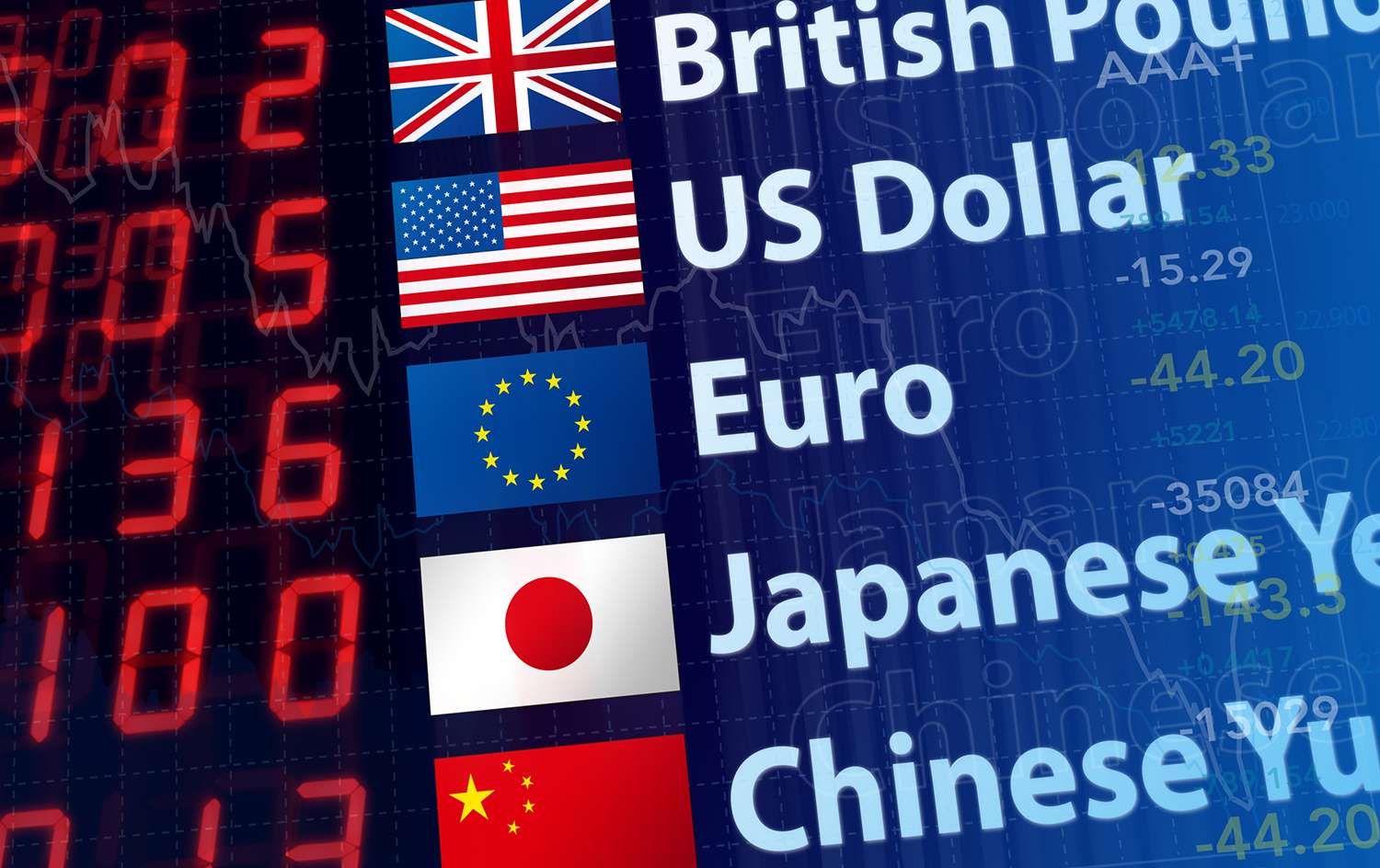
The greenback edged slightly lower against the euro ahead of the European Central Bank’s policy decision but climbed to its strongest level against the Japanese yen since 1986, underscoring widening policy and economic divergences among the world’s largest economies.

Markets remain focused on the fallout from the U.S.-Israeli war on Iran, which has severely disrupted shipping through the Strait of Hormuz while attacks by Yemen’s Houthi movement in the Red Sea have heightened fears of a broader energy supply shock. The twin threats to two of the world’s most important oil transit routes have sent crude prices sharply higher, amplifying inflation concerns and reshaping expectations for monetary policy across global markets.

The U.S. dollar index, which measures the currency against a basket of six major peers including the euro and yen, slipped marginally by 0.08% to 101.06. However, the modest decline masked continued strength in the dollar, which has benefited from its traditional safe-haven status and the relative resilience of the U.S. economy to higher energy prices.

Unlike Europe and Japan, which rely heavily on imported energy, the United States has become one of the world’s largest oil and natural gas producers. That has reduced its vulnerability to external energy shocks and strengthened the dollar whenever geopolitical tensions push oil prices higher.

The latest surge in crude prices has also complicated the outlook for interest rates. Investors increasingly believe the Federal Reserve will have less room to ease monetary policy if higher energy costs feed into broader inflation, helping support U.S. Treasury yields and the dollar.

Attention on Thursday also centered on the European Central Bank, which is widely expected to leave interest rates unchanged while maintaining a tightening bias amid renewed inflation risks stemming from the Middle East conflict.

Markets have already priced in two ECB rate increases by early 2027, leaving investors focused on whether policymakers will signal an even more hawkish stance.

“We cannot fully discount the tail risk of an early 25 bps hike (today),” said Michiel Tukker, senior strategist at ING.

“The question is whether markets would interpret this as a hawkish policy turn or whether the move would be perceived as front-loading September’s move.”

The euro traded 0.09% higher at $1.1423 ahead of the policy announcement.

Yen Still Under Pressure

The Japanese yen remained under the greatest pressure among major currencies, falling to its weakest level against the dollar since December 1986. The currency was last trading at 163.30 per dollar, extending a prolonged decline that has become a growing concern for Japanese policymakers.

While many analysts have attributed the yen’s weakness to the Bank of Japan’s cautious pace of monetary tightening, others argue that Japan’s deteriorating economic outlook is playing an equally important role.

“The consensus view blames a timid BOJ (for the recent yen fall), but I think the problem is that higher oil prices have dashed hopes of 1.5% GDP growth this year,” said Kit Juckes, strategist at Societe Generale, noting that the yen has become the weakest-performing currency in the G10 group.

Japan imports nearly all of its crude oil, making the economy particularly vulnerable to sustained increases in global energy prices. A weaker yen further amplifies those costs by making dollar-denominated imports even more expensive, increasing inflationary pressure while squeezing consumers and businesses.

Ironically, expectations for additional Bank of Japan tightening have continued to grow. Japan’s two-year government bond yield climbed to a 31-year high on Thursday as investors increased bets that the central bank could accelerate the pace of future interest rate increases to contain inflation and stabilize the currency.

Nevertheless, the widening interest rate gap between Japan and the United States continues to favor the dollar, encouraging investors to borrow cheaply in yen and invest in higher-yielding dollar assets, a strategy that has weighed heavily on the Japanese currency.

Japanese authorities have stepped up efforts to curb speculative selling of the yen.

Finance Minister Katsunobu Kato reiterated on Thursday that the government stands ready to take decisive action in the foreign exchange market if necessary. Tokyo previously intervened directly in April and May after the yen weakened beyond the psychologically important 160-per-dollar threshold.

However, many analysts believe currency intervention alone may offer only temporary relief unless accompanied by broader policy measures.

Mallika Sachdeva, head of forex thematics at Deutsche Bank Research, said a key variable would be whether Japan’s Government Pension Investment Fund (GPIF), the world’s largest pension fund, is encouraged to increase domestic investments.

“If the Government Pension Investment Fund (GPIF) is mandated to bring money back into domestic assets, this could be very bullish for the yen,” she said.

“However, if the BOJ is coopted to support bonds through renewed JGB purchases, this could be very negative.”

Japan’s finance ministry has recently indicated it wants the country’s vast public pension funds to substantially increase investments in domestic assets, a move that could reduce capital outflows and provide structural support for the yen.

Investors are also closely monitoring Japan’s fiscal trajectory, which many strategists believe will become increasingly important in determining the currency’s long-term direction.

Treasury Continues to Scale Amid Oil Surge

Meanwhile, U.S. Treasury yields continued to climb as investors adjusted to the prospect of higher inflation and fewer Federal Reserve rate cuts.

The benchmark 10-year Treasury yield rose above 4.67%, while the policy-sensitive two-year yield climbed to 4.317%. The 30-year Treasury bond yield also moved above 5.16%, reflecting investor demands for higher compensation amid rising inflation expectations and growing government borrowing needs.

Bond yields and prices move inversely, and rising yields generally support the dollar by making U.S. assets more attractive to global investors.

Energy markets remained the principal driver of global financial sentiment.

Brent crude futures surged $3.80, or 4%, to $97.87 a barrel, reaching their highest level in more than a month and extending gains for a fifth consecutive session.

The rally reflects mounting fears that disruptions in the Middle East could significantly reduce global oil supplies.

Iran’s Revolutionary Guards said an oil tanker caught fire following an explosion while attempting to navigate a mined route near the Strait of Hormuz off Oman’s coast. Two additional tankers reportedly turned back.

The Guards also declared that the Strait of Hormuz remains under Iranian control and “completely closed” while U.S. military operations continue in the region, warning that no tanker would be permitted to transit the waterway without Tehran’s authorization.

The Strait of Hormuz is the world’s most important oil chokepoint, handling roughly one-fifth of global oil consumption. Any prolonged disruption could trigger severe supply shortages and sharp increases in energy prices worldwide.

Adding to market anxiety, Yemen’s Iran-backed Houthi movement has intensified attacks in the Bab el-Mandeb Strait, another critical maritime corridor connecting the Red Sea with the Gulf of Aden.

The Houthis said on Thursday they struck two Saudi oil tankers as part of what they described as a naval blockade targeting Saudi Arabia.

According to Goldman Sachs, nearly 9 million barrels of oil per day have passed through the Bab el-Mandeb Strait over the past month, including approximately 4 million barrels daily that would be difficult to reroute if multiple regional chokepoints remain blocked.

“The immediate outlook for crude oil remains supportive as markets price a worrying probability of supply interruptions in a second chokepoint,” said Pepperstone research strategist Ahmad Assiri.

The conflict continued to escalate militarily.

The U.S. military said it had completed a 12th consecutive night of strikes against Iranian targets, hours after President Donald Trump warned that the United States would destroy an Iranian bridge or power plant each time Iran attacks vessels transiting the Strait of Hormuz.

Goldman Sachs expects oil prices to retain most of their recent gains through July and August, citing declining global inventories, reduced Middle Eastern production, strong seasonal summer fuel demand and a slowdown in releases from strategic petroleum reserves.