

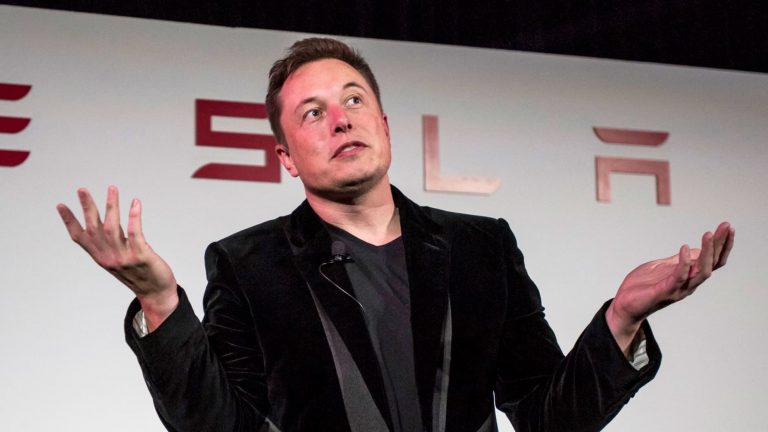
Tesla Chief Executive Elon Musk said the electric vehicle maker should accelerate spending on artificial intelligence and manufacturing infrastructure even if it results in some inefficiencies, arguing that moving quickly is more important than maximizing capital efficiency in the race to build next-generation AI and robotics technologies.
Speaking during Tesla’s second-quarter earnings call on Thursday, Musk said he has instructed company executives to continue increasing capital expenditures as Tesla expands production capacity for its autonomous vehicles, humanoid robots and AI computing infrastructure.
“We should be spending on capex as fast as we can spend — as fast as we can without it being too wasteful. So we’re not trying to aim for some extremely high-efficiency capital spend because that would slow things down,” Musk told analysts.
Register for the next Tekedia Mini-MBA.
Register for Tekedia AI in Business Masterclass.
Join Tekedia Capital Syndicate and co-invest in great global startups.
The comments indicate Musk’s willingness to prioritize speed over near-term profitability as Tesla attempts to transform itself from an electric vehicle manufacturer into a company centered on artificial intelligence, robotics and autonomous transportation.
Tesla’s capital expenditures surged 142% from a year earlier to $5.8 billion in the second quarter as investment accelerated across multiple projects, including production facilities for the Cybercab robotaxi, the Optimus humanoid robot and AI computing infrastructure needed to train sophisticated autonomous driving systems.
The spending spree weighed on the company’s cash generation. Tesla reported negative free cash flow of $1.1 billion during the quarter, marking its first quarterly cash flow deficit since 2024. The company also reported earnings that fell short of Wall Street expectations, sending its shares lower in premarket trading.

Despite the weaker financial performance, Tesla indicated that investment will continue to rise.
Executives told investors that total capital expenditures are expected to exceed $25 billion this year, underscoring the scale of the company’s commitment to AI and advanced manufacturing.
Chief Financial Officer Vaibhav Taneja said Tesla is also seeking additional financing flexibility by arranging debt facilities that would allow it to borrow as much as $30 billion if needed to support future expansion.

He said spending is expected to increase further over the next two to three years as Tesla undertakes several large-scale projects, including construction of a new solar panel manufacturing facility, expansion of AI computing capacity and development of a massive “Terafab” semiconductor manufacturing plant in partnership with SpaceX.
The Terafab project is part of Tesla’s broader plan of increasing control over critical technologies that underpin its AI ambitions. By investing in semiconductor production and computing infrastructure, the company aims to reduce reliance on external suppliers while securing the processing power needed for autonomous driving, robotics and machine learning.
The investment plans also bolster Musk’s belief that Tesla’s future growth will be driven less by conventional vehicle sales and more by AI-powered products and services. He has repeatedly argued that autonomous vehicles, humanoid robots and AI software will ultimately generate significantly greater value than Tesla’s traditional automotive business.
That strategy places Tesla alongside other technology giants that are dramatically increasing capital spending to secure leadership in artificial intelligence.
Alphabet recently raised its projected annual capital expenditures to between $195 billion and $205 billion, while Microsoft, Amazon and Meta are collectively investing hundreds of billions of dollars in AI data centers, specialized chips and cloud infrastructure. The industry’s unprecedented spending reflects expectations that AI will become the dominant computing platform over the coming decade.
Like Tesla, several major technology companies have also reported pressure on free cash flow as investment accelerates. Alphabet recorded nearly $6 billion in negative free cash flow in the second quarter after sharply increasing AI-related spending, highlighting how companies are sacrificing short-term financial metrics to finance long-term AI expansion.
Musk defended Tesla’s investment pace by arguing that the company’s capital allocation remains highly productive despite its scale.
He said Tesla’s capital efficiency was “off-scale good” because much of its spending is directed toward productive assets, including manufacturing facilities, AI infrastructure and industrial equipment that can generate long-term returns.
“I think probably this is the fastest industrial scale-up since World War II in America,” Musk said.
His remarks lend credence to a philosophy that contrasts with traditional corporate finance, where companies typically seek to maximize returns on invested capital while carefully controlling expenditures. Musk instead argues that delaying investment to improve efficiency risks allowing competitors to gain technological advantages in industries where leadership may be determined by speed of execution.
The comments also stand in contrast to Musk’s long-running criticism of government spending. Over the past year, he has repeatedly argued that public-sector expenditures are often characterized by inefficiency and waste. On Tesla’s earnings call, however, he distinguished between unproductive spending and aggressive investment in assets that expand productive capacity and accelerate technological development.
For investors, Tesla’s plan presents a familiar trade-off. The company’s growing investment commitments are likely to weigh on profitability and cash flow over the near term, but management believes they are essential to establishing leadership in autonomous driving, robotics and AI infrastructure, markets that Musk expects to define Tesla’s future far more than electric vehicles alone.