DD
MM
YYYY

PAGES

DD
MM
YYYY

spot_img

PAGES

Home Blog

Bitcoin Retraces Above $77,000 as US And Iran Move Towards Historic Deal Agreement

0

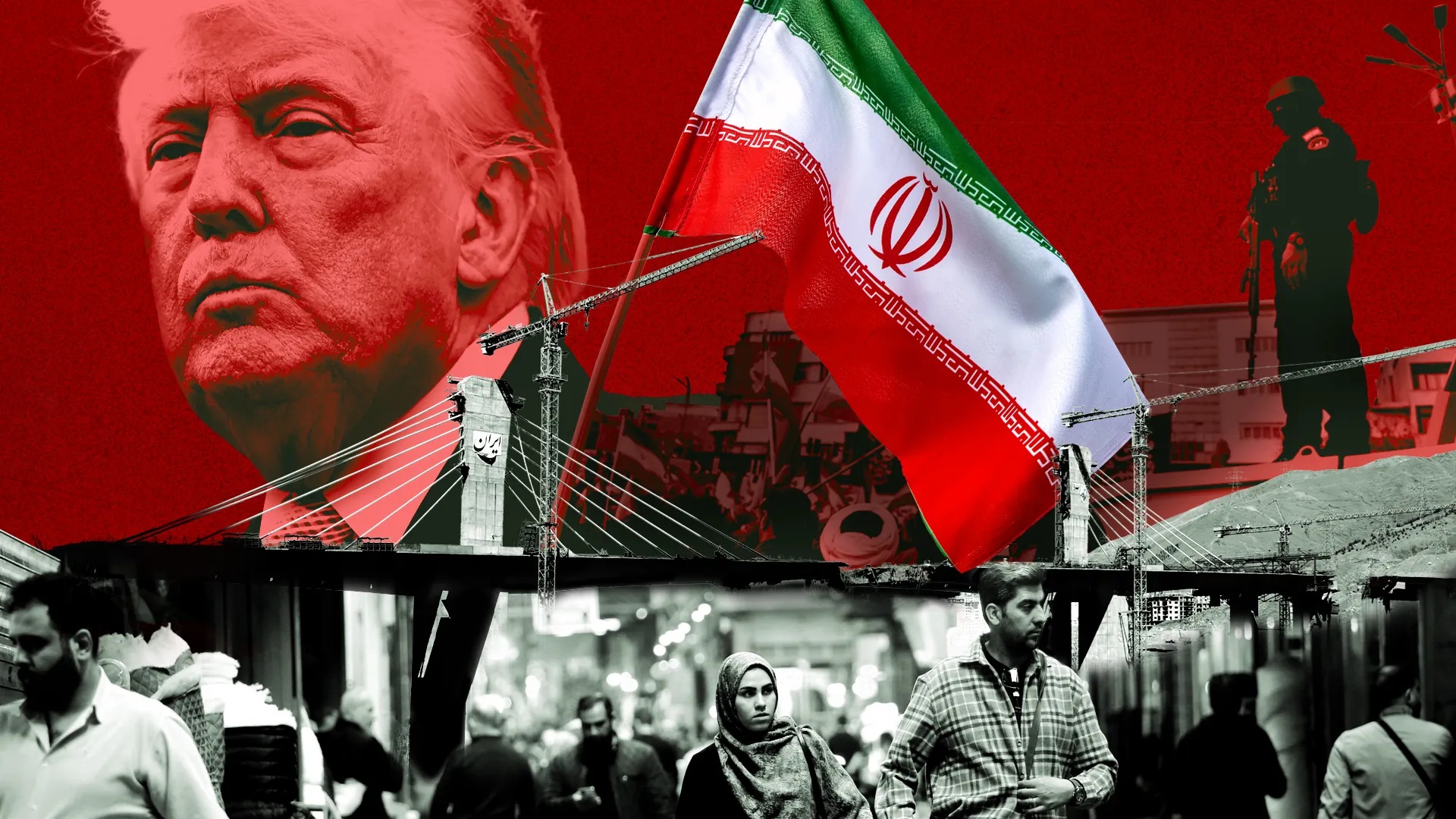
Bitcoin has surged back above the $77,000 prize zone, after President Donald Trump announced that a peace agreement with Iran has been largely negotiated,  with final details expected soon.

The deal includes reopening the strategically vital Strait of Hormuz, a move that immediately eased geopolitical tensions and triggered a sharp risk-on rally across crypto markets.

In a post on Truth Social, President Trump wrote,

“An Agreement has been largely negotiated, subject to finalization between the United States of America, the Islamic Republic of Iran, and the various other Countries. The Strait of Hormuz will be reopened.”

According to Trump, the talks focused on a “Memorandum of Understanding pertaining to PEACE.” He added that the of Hormuz would be under the agreement.

The announcement followed calls with Middle Eastern leaders and Israeli Prime Minister Benjamin Netanyahu. Markets interpreted the news as a major de-escalation following months of conflict that began earlier in 2026.

The recent surge of Bitcoin comes after the crypto asset last week, plunged below the $75,000 mark in a sharp market downturn that sent shockwaves across the cryptocurrency industry, as billions of dollars in leveraged positions were wiped out within hours.

The crypto market experienced a massive wave of liquidations totaling nearly $1 billion. According to Glassnode, Bitcoin accounted for the largest share of these liquidations, totaling $378 million. Of this total, $353 million corresponded to long positions.

BTC reportedly broke a key psychological level, trading as low as $74,215, amid heightened market volatility. As at the time of writing this report, the crypto asset is trading at $76,657 amid bullish optimism.

However, altcoins gained more strongly than Bitcoin in the recent upward price retracement. The move suggests traders shifted back into higher-risk assets after the peace-deal headlines reduced short-term fear.

AI-linked tokens led part of the rebound. NEAR Protocol rose 14.8% over 24 hours and gained more than 62% over the week. Worldcoin also climbed 8.7% on the day and more than 26% over seven days. Privacy-linked assets also moved higher.

Zcash gained 8.8% over 24 hours and nearly 28% for the week, making it one of the stronger large-cap performers. Other major altcoins also recovered. Ondo rose 8.5%, Morpho gained 7.8%, and Hyperliquid increased 6.3% over the same period.

Why The US-Iran Deal Agreement Matters For Bitcoin

  Geopolitical Risk Premium Removed: The Strait of Hormuz handles about 20% of global oil trade. Threats to close it had previously spiked oil prices and weighed on markets. Reopening signals stability.

  Risk-On Environment: Bitcoin thrives in environments of reduced uncertainty. Peace headlines often boost investor appetite for high-beta assets like crypto.

This development comes amid ongoing negotiations that have seen multiple ceasefires, proposals, and setbacks throughout 2026. While the deal is not yet finalized, the market’s swift reaction shows how sensitive crypto remains to macro and geopolitical headlines.

At the same time, uncertainty remains. Although negotiations appear advanced, reports indicate that final details are still being debated, and political opposition exists on both sides. Any collapse in talks could quickly reignite volatility across both traditional and digital asset markets.

According to trader and crypto market analyst Matthew Hyland. Bitcoin has rallied for about 90 days following the $60,000 low reached in February, signaling a bull market rally.

“There has never been a rally that trended upward for 89 days ever in a bear market in BTC history,” Hyland said, adding, “The break of high time frame resistance has also marked the start of a bull market rally the prior three times.”

The Polymarket odds of Bitcoin hitting $55,000 in 2026 are 51%, while the odds of it falling to $45,000 are at 31%. However, 71% of the circulating supply is held by long-term holders, making a break below $60,000 unlikely, according to onchain data.

Outlook

Bitcoin’s recovery above $77,000 demonstrates how deeply the crypto asset is now intertwined with global geopolitics. The U.S.-Iran agreement matters not just because of diplomacy itself, but because it shapes investor confidence, oil prices, inflation expectations, and the overall appetite for risk assets worldwide.

Analysts are watching for official confirmation from all parties, including Iran. If the agreement holds and leads to a full resolution (potentially including nuclear-related terms), it could pave the way for further upside in Bitcoin and equities while pressuring safe-haven assets like gold and oil lower.

Nvidia CEO Presses Super Micro to Comply with Authorities As Taiwan Opens First AI Server Smuggling Probe

0

Nvidia chief executive Jensen Huang has called on Super Micro Computer to strengthen compliance controls after Taiwanese authorities detained three individuals over alleged fraudulent declarations tied to artificial intelligence servers assembled for the US chipmaker’s ecosystem.

The case, which prosecutors say involves the suspected misrepresentation of AI server shipments for export, marks Taiwan’s first known enforcement action specifically targeting semiconductor-related smuggling. It comes against the backdrop of escalating global restrictions on advanced chips, including US limits on the export of high-end Nvidia accelerators to China, which have reshaped supply chains across the AI hardware sector.

Speaking to reporters in Taipei on Saturday, Huang said Nvidia maintains strict guidance for its partners but drew a clear line on responsibility.

“Nvidia is rigorous in explaining regulations to all of its partners,” he said. “Ultimately Super Micro has to run their own company. I hope that they will enhance and improve their regulation compliance and avoid that from happening in the future.”

The unusually direct intervention underscores the pressure building across Nvidia’s manufacturing and distribution network, where server makers such as Super Micro play a central role in assembling GPU-based systems used in data centers for training large-scale AI models.

Super Micro has not commented publicly on the Taiwan detentions.

The detained individuals are alleged to have been involved in purchasing servers in Taiwan and exporting them using falsified documentation, according to local prosecutors. A court has approved their continued detention as investigations proceed. Authorities have not indicated whether Nvidia chips inside the systems were part of the suspected diversion, but the probe is being closely watched, given the sensitivity of AI-grade hardware flows across Asia.

The case adds to a widening enforcement pattern around Nvidia-linked hardware. In the United States, federal prosecutors have already pursued a separate high-profile case involving allegations that Super Micro systems were used to reroute Nvidia chips to restricted markets. That case, which includes charges against a company co-founder, remains unresolved, with the defendant pleading not guilty.

Together, the two investigations in the US and Taiwan are feeding a broader regulatory tightening across jurisdictions that sit at the center of AI infrastructure manufacturing. While Taiwanese prosecutors have said their case is independent of the US proceedings, they have not ruled out possible overlap in supply chain actors or methods, noting that further investigation is required.

Nvidia does not directly control the server-level export pathways through which its chips ultimately move. Instead, compliance enforcement depends heavily on partners operating across multiple jurisdictions, often under divergent export control regimes.

This episode emerges when Washington’s export restrictions on advanced semiconductors to China have created incentives for rerouting, reclassification, and intermediary shipping structures across Southeast Asia. That dynamic has placed manufacturers and system integrators under closer scrutiny, particularly those handling high-density AI servers capable of hosting large clusters of Nvidia accelerators.

Super Micro, one of the key builders of such systems, sits at the center of that ecosystem. Its machines are widely deployed in hyperscale data centers used by companies developing frontier AI models, including generative systems such as OpenAI’s ChatGPT.

The Taiwan case is also emerging at a moment when Nvidia is attempting to stabilize its global supply chain relationships amid rapid demand growth for AI compute infrastructure. Huang’s decision to publicly press a partner on compliance is unusual for a company that typically avoids direct commentary on third-party enforcement matters, suggesting heightened sensitivity around potential reputational spillovers.

The broader industry context remains defined by tightening export controls, rising scrutiny of AI hardware flows, and increasing coordination between regulators in the US, Europe, and Asia over semiconductor governance. In that environment, even isolated enforcement actions are being read as indicators of a more structured global crackdown on AI-era chip distribution networks.

Nvidia CEO Jensen Huang Says China is Part of Its New $200bn Market

0

Nvidia Chief Executive Jensen Huang signaled that the company still sees China as a critical long-term growth market, even as Washington tightens export controls and Beijing accelerates efforts to build a domestic semiconductor ecosystem capable of challenging American dominance.

Speaking in Taipei on Saturday ahead of Computex, Huang said Nvidia’s projected $200 billion market opportunity for central processing units, or CPUs, includes China, underlining the company’s determination to remain deeply connected to the world’s second-largest technology market despite escalating geopolitical friction.

“I would think so,” Huang said when asked whether the forecast included China.

The comments come at a pivotal moment for Nvidia as the artificial intelligence boom enters a new phase. For much of the generative AI surge, investors focused overwhelmingly on graphics processing units, or GPUs, the highly specialized chips that power large-language-model training. But Nvidia is now attempting to convince Wall Street that its next growth wave will come from broader AI infrastructure demand spanning CPUs, networking, inference systems, and full-stack computing platforms.

That transition is becoming increasingly important as enterprises move toward agentic AI systems capable of autonomous decision-making and task execution. Such systems require enormous amounts of computing coordination beyond GPU acceleration alone, opening a potentially massive market for advanced CPUs.

During Nvidia’s earnings call earlier this week, Huang introduced the company’s new “Vera” CPU architecture as a gateway into what he described as a $200 billion market opportunity. Vera forms part of Nvidia’s next-generation Vera Rubin platform, which combines proprietary CPU and GPU architectures into tightly integrated AI systems designed to compete more aggressively against traditional processor leaders such as Intel and Advanced Micro Devices.

The strategy marks a major evolution for Nvidia, which for years dominated the GPU market but played only a limited role in CPUs. Analysts say the company is now attempting to position itself as the operating backbone of the entire AI economy, spanning training, inference, networking, robotics, and autonomous systems.

China remains central to that vision, even as U.S.-China tensions increasingly complicate Nvidia’s operations. The Biden and Trump administrations progressively tightened restrictions on advanced AI chip exports to China, arguing that high-performance semiconductors could strengthen Beijing’s military and surveillance capabilities. Those restrictions forced Nvidia to redesign several products specifically for the Chinese market, including lower-powered variants of its flagship chips.

Huang said Nvidia has received U.S. government licenses to sell its H200 chips to China, though Chinese regulatory approvals have not yet materialized as Beijing promotes domestic semiconductor champions such as Huawei Technologies and Cambricon Technologies.

Reuters reported last week that Washington had approved roughly 10 Chinese companies to purchase H200 chips, Nvidia’s second-most-powerful AI processor. Yet no shipments have been delivered so far, illustrating the continuing uncertainty surrounding cross-border semiconductor trade.

“H200 has been licensed to ship to China. It would be terrific to be able to serve that market. The Chinese market is very important. It’s very large, of course,” Huang said.

His remarks highlight Nvidia’s delicate balancing act. The company must comply with U.S. national security rules while also protecting access to a market that analysts estimate could account for tens of billions of dollars in future AI infrastructure spending.

At the same time, Beijing is aggressively investing in semiconductor self-sufficiency. Chinese technology firms and state-backed funds have poured capital into domestic chipmakers after export restrictions exposed China’s dependence on American technology. Nvidia’s limited ability to fully participate in China’s AI expansion could ultimately accelerate the rise of local competitors.

Taiwan also featured prominently in Huang’s remarks, upholding the island’s indispensable role in global AI supply chains. Huang confirmed he would meet executives from Taiwan Semiconductor Manufacturing Company, the world’s largest contract chipmaker and the company responsible for manufacturing many of Nvidia’s most advanced processors.

He said Nvidia is ramping production of its Vera Rubin platform, adding that the second half of the year would be “very busy” for Taiwan’s semiconductor ecosystem. The comments underscore how the AI boom continues to funnel enormous investment into Taiwan despite growing geopolitical risks surrounding the island.

Earlier this week, Advanced Micro Devices, AMD, announced plans to invest more than $10 billion in Taiwan’s AI sector to deepen manufacturing partnerships and expand assembly capacity for advanced chips.

When asked whether Nvidia planned similar investments, Huang said the company had long supported Taiwanese partners extensively, though he stopped short of announcing new capital commitments.

The trip also comes amid heightened scrutiny over AI chip smuggling and export-control enforcement. Taiwanese prosecutors said this week they were investigating three individuals suspected of illegally exporting high-end AI servers manufactured by Super Micro Computer and equipped with Nvidia chips restricted under U.S. export laws.

The investigation follows a March indictment by the U.S. Justice Department accusing three individuals linked to Super Micro, including one of its co-founders, of helping smuggle roughly $2.5 billion worth of American AI technology into China.

Huang sought to distance Nvidia from the allegations while emphasizing compliance.

“We are very rigorous in explaining laws and regulations to our partners,” he said. “Ultimately, Super Micro has to run their own company.”

The export-control issue has become increasingly sensitive as Washington attempts to prevent advanced American AI technology from reaching Chinese entities through intermediaries or gray-market channels. Analysts say enforcement challenges are likely to intensify as demand for high-end AI chips explodes globally.

For Nvidia, however, the bigger issue may be sustaining investor confidence after its meteoric rise. The company briefly became the world’s most valuable publicly traded firm this year as investors poured into AI-linked stocks.

Anthropic’s Mythos Delivers Striking Early Results In AI-Driven Cybersecurity, Found More Than 10,000 Vulnerabilities

0

Anthropic has released its first progress report on Project Glasswing, the ambitious cybersecurity initiative launched in April aimed at turning advanced AI into a powerful defensive weapon against AI-powered cyberattacks.

Powered by the unreleased Claude Mythos Preview model, the project has already produced impressive outcomes in its first month, uncovering more than 10,000 vulnerabilities across partner organizations.

The initiative represents a sophisticated acknowledgment of a growing reality in cybersecurity: as AI systems become more capable, the most effective defense may lie in deploying similarly advanced AI to hunt for weaknesses before malicious actors can exploit them.

Strong Results from Key Partners

The report highlights how Mythos Preview is outperforming traditional security methods in both speed and thoroughness. Most participating organizations have each identified hundreds of critical or high-severity vulnerabilities in their software using the model.

Notable examples include:

  • Cloudflare discovered 2,000 bugs, with 400 classified as high or critical severity.
  • Mozilla identified and fixed 271 vulnerabilities in Firefox — a tenfold increase compared to previous scans using an earlier Claude model.
  • Microsoft has linked larger-than-usual patch releases to vulnerabilities uncovered through Mythos Preview.

Anthropic also conducted its own scans of 1,000 open-source projects, identifying 6,202 high- and critical-severity vulnerabilities out of a total of 23,019. One independent security research firm reportedly used the model to successfully breach macOS, chaining exploits in a system long considered among the most secure.

These results suggest Mythos Preview is operating at a level where it can systematically map and prioritize vulnerabilities far more efficiently than human-led teams, potentially shifting the balance in the cybersecurity arms race.

Despite the promising defensive applications, Anthropic has chosen not to release Mythos Preview to the general public. The company stated that no organization, including itself, has yet developed adequate safeguards to prevent such a powerful model from being misused for offensive purposes.

This measured approach aligns with Anthropic’s founding emphasis on responsible AI development and constitutional principles. The company plans to release “Mythos-class models” in the future once robust safeguards are in place. In the meantime, it is expanding Project Glasswing through partnerships with the U.S. government and other nations, signaling a strategic effort to strengthen ties with policymakers and position itself as a trusted partner in national security.

Current collaborators already include a formidable lineup: Amazon Web Services, Apple, CrowdStrike, Google, JPMorgan Chase, NVIDIA, and Palo Alto Networks, among others. This ecosystem of leading technology and security firms creates a powerful collaborative network for advancing AI-assisted defense capabilities.

Financial Strength Fuels Ambitious Safety Agenda

The progress on Project Glasswing arrives as Anthropic approaches its first profitable quarter since its founding in 2021. According to a recent Wall Street Journal report, the company is on track to generate $10.9 billion in revenue and an operating profit of $559 million for the quarter ending in June. However, Anthropic does not anticipate sustained profitability in subsequent quarters, as it plans to significantly ramp up investments in computing infrastructure, talent acquisition, and safety research.

This financial momentum provides Anthropic with greater flexibility to pursue long-term, high-impact initiatives like Glasswing without immediate commercial pressures, allowing the company to prioritize safety and societal benefit alongside technological advancement.

Project Glasswing is seen as an indication of a maturing understanding within the AI community that powerful models must be harnessed for defense as aggressively as they are developed for capability. The traditional asymmetry in cybersecurity, where attackers need only find one vulnerability while defenders must secure everything, is being challenged by AI systems that can comprehensively scan, prioritize, and even suggest fixes at scale.

Yet the dual-use nature of these tools remains the central tension. The same capabilities that empower defenders can, in the wrong hands, dramatically lower the barrier for sophisticated attacks. Anthropic’s decision to limit access while building trusted partnerships reflects a responsible path forward, but it also highlights the growing importance of governance frameworks for frontier AI in sensitive domains like cybersecurity.

Elon Musk’s Shifting Energy Vision: SpaceX Filing Reveals xAI’s Heavy Reliance on Natural Gas as Tesla’s Clean Energy Master Plan Takes a Backseat

0

Elon Musk’s companies are showing signs of divergent priorities in their energy strategy. While Tesla has long championed an electrified, solar-powered future, a new SpaceX IPO filing highlights how Musk’s xAI is leaning heavily on fossil fuels to power its rapidly expanding AI infrastructure — raising questions about whether the original Tesla Master Plans are being quietly deprioritized in favor of immediate AI demands.

The SpaceX prospectus, released this week, offers a rare window into Musk’s sprawling empire and reveals that xAI is using dozens of unregulated natural gas turbines to fuel its data centers, with plans to purchase an additional $2.8 billion worth of such equipment, according to TechCrunch.

This marks a notable departure from the clean energy ethos that has defined much of Musk’s public persona and Tesla’s long-term roadmap.

Tesla’s Master Plans, four iterations released over the years, have consistently centered on accelerating the transition away from hydrocarbons. In the very first Master Plan, Musk articulated the company’s core purpose.

“The overarching purpose of Tesla Motors…is to help expedite the move from a mine-and-burn hydrocarbon economy towards a solar electric economy,” he said.

Master Plan Part 3, released just three years ago, laid out a detailed vision for eliminating fossil fuels through massive scaling of solar, batteries, and electric vehicles. The plan positioned Tesla as a key player in decarbonizing not just transportation but the entire global energy system.

Yet the SpaceX filing paints a different picture for Musk’s newest venture. xAI’s data centers are currently running on natural gas, and there is little mention of significant solar procurement from Tesla to power them. While xAI has purchased $697 million worth of Tesla Megapacks (grid-scale battery storage) over the last two years to manage peak loads, and SpaceX has bought 1,279 Cybertrucks for $131 million, the absence of material solar adoption stands out.

Space-Based Solar as the Long-Term Bet

Instead of terrestrial solar, the filing emphasizes space-based solar power as the future solution for energy-intensive data centers. SpaceX argues that orbital solar arrays could generate more than five times the energy of ground-based systems due to continuous sunlight without atmospheric interference or weather disruptions.

This reflects Musk’s well-known enthusiasm for space-based energy concepts. He and other Silicon Valley leaders have increasingly discussed lofting massive server racks into orbit to bypass earthly constraints like NIMBY opposition, grid limitations, and land use issues.

However, the economics remain daunting: launching and maintaining data centers in space would face enormous challenges, including far higher power costs than terrestrial operations, radiation protection for chips, and the technical difficulty of distributing AI training workloads across satellites.

The filing acknowledges that AI compute demand could reach “terawatt-scale annual growth,” far outstripping current global data center consumption of around 40 gigawatts. Musk’s “first principles” approach is evident here; he starts from the projected need and works backward, concluding that space may ultimately be the only scalable solution.

Critics see a clear contradiction. While Tesla continues to promote solar roofs, Megapacks, and vehicle electrification, Musk’s AI ambitions appear to be accelerating fossil fuel use in the short term. xAI’s natural gas turbines are described as stopgaps until space-based solutions mature, but that timeline remains speculative. Musk has a track record of optimistic projections, and many of his grand visions (full self-driving, Mars colonization) have taken longer than initially promised.

The reliance on natural gas also highlights the immense energy appetite of modern AI. Training and running frontier models requires enormous, always-on power, often in locations where renewable infrastructure is not yet sufficient. This creates a tension between the clean energy ideals Musk has championed for nearly two decades and the raw computational demands of the AI race he is now deeply embedded in.

However, there is growing concern, especially from energy analysts, that this divergence could have several consequences, highlighted as follows:

For Tesla: If xAI continues prioritizing natural gas over Tesla solar and storage solutions, it may represent a missed opportunity for internal synergy and send mixed signals to investors and customers who bought into the clean energy narrative.

For the Energy Transition: Musk’s influence is enormous. A visible pivot toward fossil fuels for AI infrastructure could slow momentum on terrestrial renewables, even as he continues to advocate for them publicly.

For Investors: SpaceX’s IPO filing provides rare insight into Musk’s thinking. The emphasis on space-based power suggests he views orbital infrastructure as a long-term hedge against earthly limitations, but the near-term reliance on natural gas underscores the practical challenges of scaling AI sustainably.

But Musk has never been one to follow a linear path. His companies often pursue multiple seemingly contradictory strategies simultaneously, betting that breakthroughs in one area will eventually reinforce the others.