DD
MM
YYYY

PAGES

DD
MM
YYYY

spot_img

PAGES

Home Blog

Anthropic Looks to $190bn to $200bn 2028 Revenue to Justify a Potential Record AI Valuation

0

Anthropic is asking prospective investors to look unusually far into the future as it prepares for a potential blockbuster initial public offering, with bankers and investors using the company’s projected 2028 revenue to assess how much the artificial intelligence developer could be worth.

The Claude maker is projecting revenue of roughly $190 billion to $200 billion in 2028, according to two people familiar with its financials cited by Reuters. The forecast represents an extraordinary jump from the more than $47 billion annualized revenue run rate Anthropic reported in May and illustrates the scale of growth investors would be expected to price into the company ahead of a potential public listing.

Rather than relying primarily on current earnings, investors and bankers are using enterprise-value-to-revenue multiples applied to future projections, according to four people familiar with the process. That approach is common for rapidly expanding software companies that have yet to establish mature profit margins, but using forecasts two years into the future highlights the unusual difficulty of valuing an AI company whose financial profile is changing at exceptional speed.

Anthropic’s latest projections come as the company attempts to establish itself as one of the leading commercial AI platforms while spending heavily on computing infrastructure, model development, and personnel. The central question for investors is whether revenue can continue expanding faster than the enormous costs required to support increasingly capable AI systems.

The company’s recent financial performance has strengthened that case.

Anthropic’s revenue run rate was about $9 billion at the end of 2025 before climbing to more than $47 billion by May 2026. The company has projected second-quarter revenue of at least $10.9 billion and was on track for its first quarterly operating profit of about $559 million, according to people familiar with its financials.

Separate documents seen by Bloomberg showed preliminary second-quarter revenue of more than $11.5 billion, compared with $787 million a year earlier and $4.73 billion in the first quarter. The figures remain subject to revision.

The pace of expansion has put Anthropic in a direct contest with OpenAI for corporate AI customers, particularly in areas such as software development and coding. Anthropic’s annualized revenue has surpassed $47 billion, while OpenAI’s annualized revenue has topped $40 billion, although the companies may calculate their run rates differently.

Investors Are Being Asked to Price The Future

The proposed valuation methodology highlights a fundamental problem facing investors in AI companies: traditional measures such as current earnings provide limited insight into businesses still spending aggressively to build their competitive position.

Anthropic is investing heavily in GPUs and other computing capacity, model training, inference, and hiring. Those expenses suppress current profitability, but investors are effectively being asked to assume that the costs will decline as a percentage of revenue as the company reaches greater scale.

The underlying investment thesis is straightforward. If Anthropic can continue adding customers and increase usage of its models while improving computing efficiency, revenue could grow substantially faster than operating costs. Higher utilization, more efficient models and declining computing costs could then allow margins to expand.

The risk is that the opposite could happen. AI companies are locked in an infrastructure race that requires enormous capital commitments, while competition from OpenAI, Google, Meta and Chinese developers could force companies to spend more to maintain technological leadership.

That makes the $190 billion to $200 billion 2028 revenue forecast particularly important. Investors are not simply evaluating what Anthropic is earning today. They are assessing whether the company can become a business capable of generating hundreds of billions of dollars in annual sales within a relatively short period.

Palantir, Cloudflare and SpaceX Emerge As Valuation Benchmarks

Anthropic is also looking for public-company comparisons that can help investors determine an appropriate revenue multiple. Cloudflare, Palantir and SpaceX are among the companies being considered as reference points ahead of Anthropic’s analyst day, according to people familiar with the process.

Each provides a different valuation framework.

Palantir has become an important benchmark for investors valuing companies with rapid growth and significant exposure to AI. The company trades at roughly 53 times expected 2026 revenue, according to LSEG data.

Cloudflare, meanwhile, offers a comparison with a high-growth software and internet infrastructure company and trades at about 41.6 times expected 2026 revenue. SpaceX also trades at roughly 41.6 times expected 2026 revenue, although its business mix and capital requirements differ substantially from Anthropic’s.

Applying those kinds of multiples to Anthropic’s projected 2028 revenue could produce an enormous valuation, potentially pushing the company into the ranks of the world’s most valuable businesses.

But the comparison also demonstrates the risk. High revenue multiples require investors to maintain confidence in exceptionally strong future growth. Any slowdown in customer adoption, pricing pressure, or deterioration in AI margins could cause those multiples to contract sharply.

Anthropic’s IPO Could Reshape the AI Market

The potential listing would be significant beyond Anthropic itself. Analysts have touted it to become one of the largest tests yet of whether public-market investors are willing to assign extraordinary valuations to AI companies based largely on future scale.

The IPO would also arrive as investors have become more sensitive to the enormous capital requirements of the AI boom. Heavy spending on data centers, GPUs and electricity has contributed to concerns that the financial returns from AI could take longer to materialize than expected.

There have already been precedents for investors looking well beyond a company’s current earnings when valuing high-growth AI businesses. Backers of Cerebras Systems cited 2028 revenue projections ahead of its IPO, while SpaceX investors considered forecasts extending to 2029 before its public debut.

Anthropic’s case, however, is unusually large because the projected revenue base is so substantial. The company is also preparing for a potential IPO before OpenAI, while Chinese AI company DeepSeek is reportedly considering a listing as well. That could turn the next phase of the AI race into a competition not only for customers, computing power and talent, but also for public-market capital.

For investors, the central question will be whether Anthropic’s extraordinary growth can translate into durable economics.

“Could they (Anthropic) get a $2 trillion valuation, yeah they could and I just wonder if it would stay there over time,” said David Merkel, a principal at Aleph Investments.

The bigger issue, he said, is whether AI will generate enough additional productivity to justify such valuations.

That question is likely to sit at the center of Anthropic’s IPO. The company’s projected $190 billion to $200 billion in 2028 revenue may demonstrate the size of the opportunity, but investors will ultimately have to decide how much of that future growth is already embedded in the price.


Berkshire Makes $17bn Investment in Alphabet as Buffett’s Successor Digresses from Equity Portfolio

0

Berkshire Hathaway made a roughly $17 billion investment in Alphabet during the second quarter, elevating Google’s parent company to its third-largest equity holding and giving investors a clearer view of how Warren Buffett’s successor, Greg Abel, is deploying the conglomerate’s enormous cash reserves.

Berkshire’s latest portfolio filing with the U.S. Securities and Exchange Commission showed the company owned nearly 106 million Class A and Class C Alphabet shares as of June 30. The position was worth about $36.6 billion based on current prices, placing Alphabet ahead of Coca-Cola at roughly $35.1 billion but behind Apple at $69.7 billion and American Express at $51.9 billion.

Berkshire added about 48.1 million Alphabet shares during the quarter, making the technology company by far its largest new investment in the period.

About 60% of those shares, or roughly 29 million, were acquired directly from Alphabet as part of a $10 billion private placement announced by the companies in early June. The remaining shares indicate Berkshire bought approximately $7 billion of Alphabet stock through the open market.

The scale of the purchase represents a significant shift in Berkshire’s equity portfolio, particularly because Alphabet had not previously ranked among the conglomerate’s largest disclosed holdings.

The investment also gives Berkshire greater exposure to the technology and artificial intelligence spending cycle. Alphabet operates Google, the world’s largest search engine, as well as its growing cloud business and Gemini artificial intelligence products. The company has been investing heavily in AI infrastructure and models as competition intensifies across the technology industry.

Alphabet was not Berkshire’s only notable addition during the quarter.

According to CNBC’s Warren Buffett’s Watch, Berkshire increased its holding in Delta Air Lines by 44%, adding roughly $1.6 billion to the position. The conglomerate now owns about 57.3 million Delta shares, worth approximately $5.1 billion.

The Delta investment is also notable because Buffett has historically had a difficult relationship with the airline industry. Berkshire initially invested in Delta and several other major airlines before selling its airline holdings at a loss during the first quarter of 2020 as the COVID-19 pandemic caused global air travel to collapse.

Buffett had previously expressed deep skepticism about airlines. In his 2007 shareholder letter, he joked that if a “farsighted capitalist” had been present at Kitty Hawk when the Wright brothers made their first flight, that investor would have benefited from preventing the flight.

Delta returned to Berkshire’s portfolio in the first quarter of this year, marking a renewed bet on the airline after Buffett’s earlier exit.

Berkshire also increased its Macy’s holding by 142%, although the relatively small size of the position meant the increase was worth only about $100 million.

The company added approximately $280 million to its investment in homebuilder Lennar during the same quarter in which Berkshire announced its $6.8 billion acquisition of homebuilder Taylor Morrison Home.

The latest filing also showed that Berkshire continued to reduce its exposure to financial companies, extending a selling trend evident in recent quarters.

Berkshire cut its stake in Ally Financial by 7% and reduced its Capital One position by 58%. Its Bank of America holding fell 5.9%. Because Berkshire’s Bank of America position remains one of its largest investments, the relatively modest percentage reduction translated into a decline of about $1.7 billion in the value of the stake, making it the company’s largest dollar reduction during the quarter.

Berkshire has now reduced its Bank of America position by 53% following eight consecutive quarters of selling. The portfolio changes provide an early indication of the investment priorities emerging under Abel, who succeeded Buffett as Berkshire’s chief executive.

That transition has attracted the attention of Michael Burry, the investor known for his successful bet against the U.S. housing market before the 2008 financial crisis. Burry criticized the way Berkshire has been deploying its cash reserves, arguing that Buffett’s successor may not possess the same willingness to wait for unusually attractive investment opportunities.

In a Substack post, Burry said his “biggest fear” had been that Buffett’s successor would not have the legendary investor’s “patience for the fat pitch.”

“Now, I believe this fear has come true,” Burry wrote.

Burry said he no longer considers Berkshire an attractive investment, although he acknowledged that the company still has an enormous cash position. Berkshire had roughly $360 billion in cash remaining, according to his comments.

His concern is less about the absolute amount of money Berkshire has spent than about the nature of the company’s initial moves under Abel.

“I believe this fear has come true,” Burry wrote, arguing that Abel’s “first steps look to be more framing moves than investment moves.”

Burry later clarified that he was not recommending that investors short Berkshire shares.

The debate goes to the heart of Buffett’s investment philosophy. For decades, Berkshire’s strategy has emphasized patience, allowing Buffett and his investment managers to hold cash until opportunities emerged at prices they considered sufficiently attractive.

Buffett frequently compared investing with baseball, arguing that investors have no obligation to swing at every opportunity.

“What’s nice about investing is you don’t have to swing at pitches,” Buffett told The New York Times in 2007. “You can wait for the pitch you want.”

Berkshire’s decision to invest heavily in Alphabet suggests that the company is willing to deploy significant capital into large technology businesses when management identifies what it considers an attractive opportunity. At the same time, the reduction in financial holdings indicates a meaningful rebalancing of the portfolio. The combination of the Alphabet purchase, the Delta increase, and continued sales of financial stocks marks a significant shift from the portfolio positioning Berkshire had maintained in recent years.

Investors have already reacted cautiously to the changes. Both classes of Berkshire shares fell more than 3% during the week following the company’s second-quarter spending disclosures, even as Berkshire resumed significant share buybacks for the first time in two years.

The market response suggests that some investors are questioning whether Abel’s early capital-allocation decisions will match the standards established during Buffett’s tenure.

The Alphabet investment, however, offers an important test of that transition. Berkshire is committing billions to one of the world’s largest technology companies at a time when AI is reshaping the technology sector and driving enormous capital spending.

JPMorgan Cuts Banking Ties With Polymarket Over Regulatory Concerns, but Relationship Continues

0

JPMorgan Chase terminated its direct banking relationship with prediction-market operator Polymarket in October 2025 over regulatory concerns, according to a person familiar with the matter, highlighting the growing compliance risks banks face as event-based trading platforms expand into mainstream finance.

The decision, first reported by the Financial Times and confirmed by Reuters, did not amount to a complete break between the two companies. Polymarket said it continues to maintain relationships with multiple JPMorgan entities, including operational integrations and arrangements involving customer fund flows.

“We maintain a close, active relationship with JPMorgan across multiple entities, operational integrations, and material handling of customer fund flows,” a Polymarket spokesperson said.

“The strength of our relationship is highlighted by our CEO speaking at three of their flagship events in the past year alone. Any suggestion otherwise fundamentally mischaracterizes our relationship,” the spokesperson added.

JPMorgan’s decision concerned its banking relationship with Polymarket, rather than an across-the-board termination of all commercial dealings. Reports indicate that Polymarket subsequently found another banking partner, although the identity of that institution has not been disclosed. JPMorgan has also continued other interactions with the company.

The development comes as prediction markets have expanded rapidly since the 2024 U.S. presidential election, attracting users interested in trading contracts tied to elections, sports, economic indicators and other real-world events.

The growth has placed the industry at the intersection of financial markets, gambling, and cryptocurrency, creating a difficult regulatory environment for both the platforms and financial institutions that provide them with banking services.

Why Banks Are Becoming Cautious

Prediction markets allow users to buy and sell contracts whose value is linked to the outcome of an event. Supporters believe that the resulting prices can provide a real-time measure of collective expectations and market sentiment.

The regulatory question is whether some of these contracts amount to financial derivatives or unlawful gambling products.

Polymarket has already faced significant regulatory action. In 2022, the Commodity Futures Trading Commission ordered the company to pay a $1.4 million penalty and cease offering unregistered event-based binary options contracts to U.S. customers.

The company has since taken steps to establish a regulated U.S. presence, but prediction markets remain under scrutiny from regulators and lawmakers at both the federal and state levels.

That uncertainty creates a particular problem for banks.

Financial institutions must assess not only whether a customer has obtained a particular regulatory authorization but also the broader legal and compliance risks associated with processing its funds. A prediction-market platform can therefore become a difficult banking customer even while pursuing regulatory approval for its underlying business.

JPMorgan’s decision illustrates that distinction. Regulatory uncertainty can affect a company’s access to financial infrastructure independently of whether regulators ultimately allow it to operate.

Prediction Markets Face Growing Political and Legal Scrutiny

The banking decision comes as the prediction-market industry faces a wider regulatory challenge.

New York City Council Speaker Julie Menin this week accused major prediction-market companies of using predatory marketing practices that could exploit younger traders.

Separately, New York Attorney General Letitia James sued Polymarket rival Kalshi last month, alleging that its prediction-market operations violate state gambling laws.

The legal battles are significant because prediction-market operators are seeking to establish themselves as legitimate financial-market businesses rather than online gambling companies.

The distinction carries major consequences.

Analysts have noted that if the platforms are treated primarily as financial markets, they can potentially operate within the regulatory framework governing derivatives and exchanges. But if state authorities classify particular contracts as gambling, operators could face a different set of restrictions, licensing requirements and enforcement actions.

That uncertainty is particularly relevant to banks, which have extensive regulatory obligations of their own.

Polymarket’s continued expansion has made the relationship with established financial institutions increasingly important. The company has attracted significant investor interest as prediction markets have grown into a major new category of financial activity. At the same time, its business model remains exposed to regulatory disputes over which types of event contracts can legally be offered and to whom.

For JPMorgan, maintaining selected commercial ties while ending the direct banking relationship suggests a more nuanced approach than simply abandoning the company. The bank can continue engaging with Polymarket in areas where it is comfortable with the regulatory exposure while limiting direct involvement in banking services that may carry greater compliance risk.

However, Polymarket finding alternative banking arrangements demonstrates that access to financial infrastructure has become an important consideration as the company scales.

Prediction markets are increasingly being promoted as sources of information about market expectations, but the same characteristics that make them attractive to traders are creating concerns about gambling, market manipulation, insider information and consumer protection.

Those concerns are expected to become more significant as platforms expand beyond political events into sports, financial markets and other areas where large amounts of money can be wagered.

For now, the JPMorgan-Polymarket relationship illustrates the uneasy middle ground occupied by the industry. Prediction markets are attracting major investors, financial institutions and millions of users, yet banks remain sensitive to unresolved regulatory questions surrounding their business models.

The fact that JPMorgan ended one banking relationship with Polymarket while maintaining other commercial connections shows that Wall Street’s response is not necessarily a simple rejection of prediction markets. Instead, banks appear to be separating individual services and assessing the regulatory risk attached to each part of the relationship.

WinAUD PayID Casino Australia — Why I Believe This Platform Nails What Aussie Players Actually Want in 2026

0

I’ve been watching the Australian online casino scene for years now, and there’s something refreshing happening in 2026. Players aren’t just looking for flashy graphics anymore. They want speed, simplicity, and payment methods that actually work the way modern banking should. That’s exactly where WinAUD comes into the picture, and honestly, I think they’ve cracked the code on what makes Aussie players stick around.

Let me be clear from the start. This isn’t about chasing the newest trend or jumping on some marketing bandwagon. It’s about a platform that’s built around PayID, a payment system most of us already use for everyday transactions. When that kind of convenience meets online gaming, the experience shifts from frustrating to genuinely enjoyable. I want to share why I believe WinAUD deserves attention right now.

PayID Just Makes Sense for Australian Players

You know that feeling when you’re trying to deposit funds and you’re stuck entering a 16-digit card number, then your CVC, then waiting for verification codes? It’s tedious. PayID changed all that for regular banking, and now it’s doing the same for online casinos.

With PayID, you link your mobile number or email to your bank account once. That’s it. After that, deposits happen almost instantly. No card details. No long forms. Just a few taps and you’re ready to play. From what I’ve seen, this is exactly the kind of friction-free experience Aussie players have been asking for.

WinAUD has made PayID a core part of their deposit system. That tells me they’re paying attention to what actually matters. Speed matters. Security matters. And not having to dig out your wallet every time you want to top up your account definitely matters.

The Security Angle You Can’t Ignore

I don’t want to sound preachy, but security is a big deal. When you use PayID, you’re not handing over your card details to a third party. You’re using a system that’s backed by Australian banks and regulated by NPP Australia. That’s a level of trust you don’t get with every payment method.

WinAUD’s decision to prioritise PayID shows they’re thinking long-term. Players feel safer when they know their financial info isn’t floating around. It’s a smart move that builds confidence, especially for anyone new to online gaming.

Why I Think WinAUD Stands Out Among Australian Platforms

There are plenty of online casinos targeting Australian players. Some are decent. Some are forgettable. What sets WinAUD apart, in my opinion, is how they’ve built their entire player experience around convenience without sacrificing quality.

First, the game selection is solid. You’ll find pokies from well-known providers, live dealer tables that actually load quickly, and table games that cater to both casual players and those who prefer strategy-based gaming. It’s not trying to be everything to everyone, but it covers the bases well.

Second, the mobile experience is excellent. I’ve tested it on both iOS and Android, and everything runs smoothly. No clunky menus. No lag during spins. Just clean, responsive gameplay that adapts to whatever screen you’re using.

But here’s what really stands out: WinAUD doesn’t overcomplicate things. The interface is straightforward. You can find what you’re looking for without clicking through five different menus. That simplicity is rare, and it’s one of the reasons I keep coming back to recommend this platform.

Real Benefits That Actually Matter to Players

Let’s talk about what you actually get when you choose a platform like this. I’m not interested in vague promises. I want tangible benefits that improve your gaming sessions.

Instant Deposits and Fast Withdrawals

PayID deposits are near-instant. You can go from deciding to play to spinning your first pokie in under a minute. That’s powerful when you’re in the mood to game and don’t want to wait around.

Withdrawals are processed quickly too. While every platform has its verification steps, WinAUD handles them efficiently. Most players report seeing funds back in their accounts within 24 hours, sometimes faster. That’s a huge improvement over the three-to-five-day waits some other casinos impose.

Promotions That Don’t Feel Like a Trap

I’ve seen too many welcome bonuses that sound amazing until you read the terms and realise you’d need to wager your deposit 50 times before seeing a cent back. WinAUD’s promotions are far more reasonable. The wagering requirements are competitive, and the terms are written in plain English. You don’t need a law degree to figure out what you’re signing up for.

They also run regular reload bonuses and free spin offers that give existing players something to look forward to. It’s not just about grabbing new sign-ups and forgetting everyone else. That loyalty focus matters.

Customer Support That Responds When You Need It

I’ve had to reach out to support a few times, mostly to test response times and quality. Each time, I got a reply within minutes. The agents were helpful, not robotic, and they actually solved the issue instead of just sending me a link to the FAQ page.

That kind of support builds trust. When you know someone’s there to help if something goes wrong, you’re more likely to relax and enjoy your gaming.

How This Fits Into the Bigger Picture for 2026

Australian players are becoming more selective. They want platforms that respect their time, protect their data, and offer genuine value. The days of flashy ads and empty promises are fading. Players talk to each other. They share experiences. Word gets around fast.

WinAUD’s focus on PayID is part of a broader shift towards smarter, player-first design. It’s not revolutionary in a loud, disruptive way. It’s just really well executed. And sometimes that’s exactly what you need.

I’ve noticed more platforms trying to copy this model, which tells me it’s working. But there’s a difference between adding PayID as an afterthought and building your entire payment experience around it. WinAUD did the latter, and it shows.

My Final Thoughts on the Experience

Look, no platform is perfect. There’s always room for improvement. But from my experience, WinAUD gets the fundamentals right. The payment process is fast and secure. The game library is diverse without being overwhelming. The mobile experience is smooth. And the customer support actually cares.

For Australian players who value convenience and reliability, this is a platform worth exploring. It’s not trying to be flashy or gimmicky. It’s just delivering a quality gaming experience built on a payment method we already trust.

In 2026, that’s exactly what matters. Players want less hassle and more fun. WinAUD delivers on both fronts, and that’s why I believe it’s earning its place as a go-to choice for Aussies who take their online gaming seriously.

If you’re tired of clunky deposit systems and slow withdrawals, give this platform a try. You might find it’s exactly what you’ve been looking for all along.

10 Best Platforms to Sell Target, Apple, and Razer Gold Gift Cards for Cash

0

Selling gift cards like Target, Apple, and Razer Gold for cash in Nigeria is easy when you choose a platform that’s secure, fast, and reliable. 

With so many gift card trading apps and websites available, knowing which ones offer competitive rates, quick payouts, and a smooth experience can make all the difference.

In this article, we’ll walk you through 10 of the best platforms to sell Target, Apple, and Razer Gold gift cards for cash in 2026. Whether you’re trading occasionally or regularly, these platforms provide a safe, and convenient way to convert your gift cards into cash. 

Top 10 Platforms to Sell Target, Apple, and Razer Gold Gift Cards in Nigeria

Selling Target, Apple, and Razer Gold gift cards for cash is easier when you know which platforms offer the best combination of speed, competitive rates, and reliability. Below is a quick comparison of 10 popular gift card trading platforms based on their payout speed, rates, ease of use, and overall reliability.

s/n Platforms Payout Speed Rates Ease of use Reliability
1 Cardtonic Very Fast Consistent Clean interface, smooth process  Excellent
2 1minutepay Fast Fair Simple but limited features  Good
3 Sekiapp Moderate Varies by card User-friendly mobile app Good
4 FlipEx Fast Competitive Web and app available  Very Good
5 CardCash Fast Competitive Easy-to-use platform with a straightforward process Very Good 
6 Innixx Fast Good Beginner-friendly interface Good
7 Giftcardhome Moderate Average Simple navigation Good
8 GiftcardsToNaira Fast Competitive Easy trading experience  Very Good
9 Zinkitex Moderate Fair User-friendly platform Good
10 OwnCard Fast Competitive Clean interface with a quick trading process Very Goos

1. Cardtonic:

Cardtonic is one of the most trusted platforms for anyone looking to sell Target, Apple, and Razer Gold gift cards for cash in Nigeria. If you’re searching for where to sell Razer Gold gift cards for cash in Nigeria, Cardtonic stands out thanks to its fast payouts, competitive rates, and secure trading experience.

One of the first things users notice is how quickly transactions are processed. Most trades are completed within minutes, making Cardtonic an excellent choice for anyone who values speed and convenience. 

The platform also offers some of the most competitive and consistent gift card rates in Nigeria, and its built-in rate calculator lets you check exactly how much your gift card is worth before starting a trade.

The platform is designed with simplicity in mind, featuring a clean interface that’s easy to navigate on both the mobile app and website. From selecting your gift card type to completing your transaction, the process is smooth and beginner-friendly.

Beyond its user-friendly experience, Cardtonic has earned a strong reputation for transparency, dependable customer support, and secure transactions. 

Whether you’re trading occasionally or regularly, Cardtonic remains one of the most reliable platforms for converting your Target, Apple, and Razer Gold gift cards into cash in Nigeria.

2. 1minutepay:

1minutepay is a fairly popular platform among regular gift card traders in Nigeria. One of its biggest strengths is speed, payouts are processed quickly, which is ideal if you’re trying to convert your card to cash without delay. 

The rates are decent, not always the highest, but fair enough for frequent transactions. The platform itself is simple and straightforward, though it doesn’t offer too many extra features beyond the core trading process. 

It’s a good choice for users who want fast results without too much complexity. Overall, it’s reliable and gets the job done.

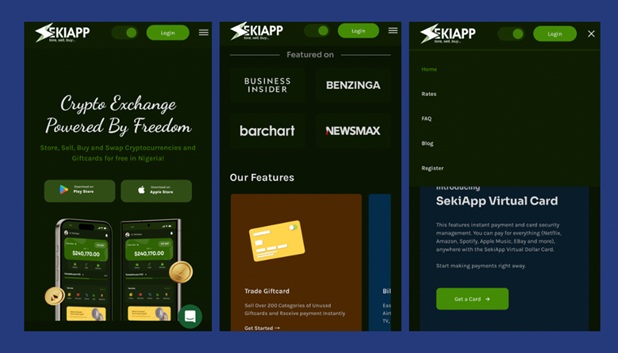
3. Sekiapp:

Sekiapp is another trading app that has gained traction, especially among mobile users. Payout speed is moderate not slow, but you may wait a bit longer compared to others. 

Where Sekiapp really stands out is in its user-friendly app design; everything feels smooth, especially if you’re used to trading on your phone. 

Their rates vary depending on the type of gift card, so it’s a good idea to check before committing. 

While it might not always offer the fastest turnaround, the overall experience is stable, and the app is easy to trust for casual or semi-regular trades.

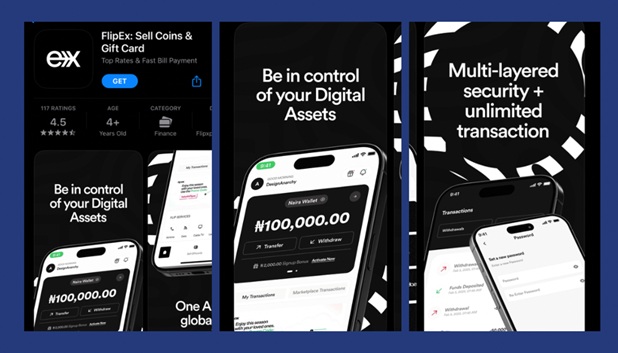
4. FlipEx:

FlipEx delivers a well-balanced trading experience. It performs strongly in terms of payout speed, many users report getting their payments shortly after submitting their cards. 

Their rates are competitive, often sitting just below the top-tier platforms. What users appreciate most is that FlipEx works across both web and mobile, so you can trade wherever you’re comfortable. 

The layout is clean and modern, which adds to its ease of use. Overall, FlipEx is a solid platform with dependable service and a straightforward trading process, especially for users who value flexibility and consistency.

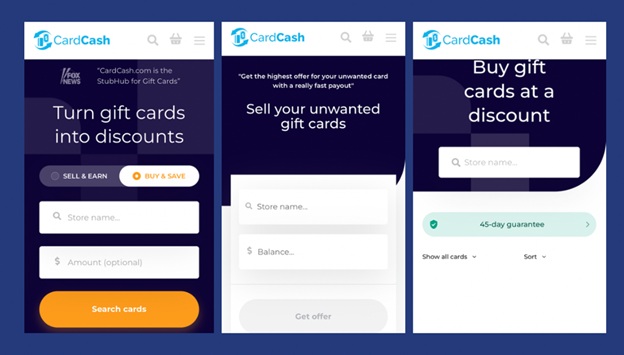
5. CardCash:

CardCash is another dependable platform for trading Target, Apple, and Razer Gold gift cards in Nigeria. It is known for fast payouts, so users do not have to wait long to receive their money after a trade.

The rates are decent, although not always the highest compared to other apps. What makes CardCash appealing is its ease of use. The interface is simple to navigate, making it beginner-friendly for first-time traders.

With a smooth process and a strong reputation for reliability, CardCash is a solid option for anyone who wants quick and stress-free transactions.

6. Innixx:

Innixx is designed for users who want a simple and smooth way to trade gift cards for cash. 

The platform offers quick payouts and supports several popular gift card brands, making it suitable for everyday trading. 

Its clean interface allows users to complete transactions with ease, while the overall process is straightforward enough for beginners. If you’re looking for a platform that prioritises simplicity without sacrificing efficiency, Innixx is worth considering.

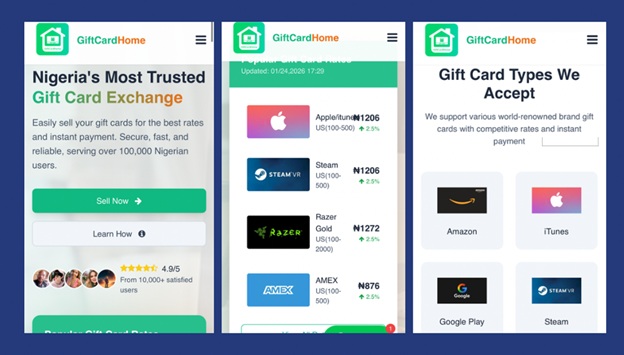
7. Giftcardhome:

Giftcardhome provides users with a convenient way to exchange gift cards for cash through an easy-to-follow trading process. While payout speed can vary depending on the type of gift card being traded, the platform is known for offering fair rates and reliable service. 

Its simple design makes it easy to navigate, and users can complete transactions without dealing with unnecessary complexity. This makes it a practical choice for those who prefer a straightforward trading experience.

8. GiftCardsToNaira:

GiftCardsToNaira is another platform that allows users to convert gift cards into cash quickly and securely. It offers competitive rates across different gift card categories and aims to process transactions as efficiently as possible. 

The platform’s easy navigation and smooth trading experience make it suitable for users who trade gift cards regularly. Its support for multiple gift card brands also gives traders more flexibility when selling their cards.

9. ZinkiteX:

ZinkiteX focuses on providing a secure and reliable gift card trading experience for Nigerian users. The platform supports a variety of gift card brands and offers fair market rates, making it a reasonable option for those looking to exchange gift cards for cash. 

Its interface is easy to use, allowing users to submit trades with minimal effort. While processing times may differ depending on the card type, the platform continues to attract users looking for a dependable trading service.

10. OwnCard:

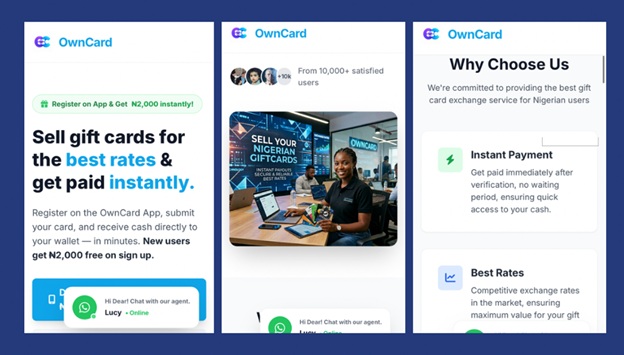
OwnCard is a modern gift card trading platform that combines fast payouts with a simple and intuitive user experience. It supports several popular gift card brands and offers competitive rates that appeal to both occasional and frequent traders. 

The trading process is straightforward, from submitting your gift card details to receiving payment. With its clean design and efficient service, OwnCard is a solid option for anyone looking for a smooth and reliable gift card trading experience.

Frequently Asked Questions About Trading Apple Gift Cards in Nigeria 

  1. How to Sell Target Gift Cards for Cash in 2025?

If you’re wondering how to sell Target gift cards for cash in 2025, the process remains largely the same in 2026. Simply choose a trusted gift card trading platform like Cardtonic, create an account, select the Target gift card you want to sell, upload the required details, and complete the transaction. Once your gift card is verified, you’ll receive payment directly into your preferred account.

  1. How Much is a $100 Target, Apple, or Razer Gold Gift Card Worth in Nigeria?

The value of a $100 Target, Apple, or Razer Gold gift card depends on factors such as the card brand, denomination, country of origin, and current market rates. To get the most accurate value before trading, use Cardtonic’s gift card rate calculator or check the latest exchange rates on the platform.

  1. Is it Safe to Sell Target, Apple, and Razer Gold Gift Cards Online?

Yes, it’s safe to sell gift cards online as long as you use a reputable platform. Trusted platforms prioritise secure transactions, transparent pricing, and reliable customer support to ensure your gift cards are exchanged safely and you receive payment promptly.

  1. Where to Sell Apple Gift Cards for Cash in Ghana?

If you’re looking for where to sell Apple gift cards for cash in Ghana, choose a platform with competitive rates, secure transactions, and fast payouts. Before trading, compare rates, verify the platform’s reputation, and ensure it supports Apple gift cards in Ghana.

  1. Can I Sell Both Physical and e-code Target, Apple, and Razer Gold gift cards for Cash?

Yes. Many gift card trading platforms accept both physical and e-code gift cards. However, availability may vary depending on the platform and the specific gift card brand, so it’s always a good idea to check the platform’s supported card types before starting your trade.

Conclusion

Converting Target, Apple, and Razer Gold gift cards into cash in Nigeria is more convenient than ever when you use a trusted platform. 

With options like Cardtonic, 1MinutePay, CardCash, FlipEx, and others offering competitive rates, fast payouts, and user-friendly experiences, you have several reliable platforms to choose from in 2026.

Whether you trade gift cards occasionally or on a regular basis, choosing a reputable platform ensures a smooth, and secure experience. If you’re looking for a platform that consistently delivers competitive rates, quick payments, and excellent customer support, Cardtonic is a great place to start.