

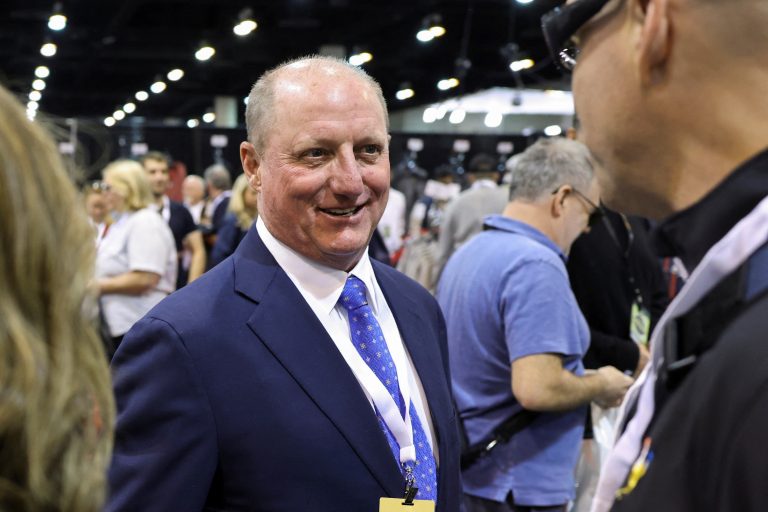
Berkshire Hathaway made a roughly $17 billion investment in Alphabet during the second quarter, elevating Google’s parent company to its third-largest equity holding and giving investors a clearer view of how Warren Buffett’s successor, Greg Abel, is deploying the conglomerate’s enormous cash reserves.
Berkshire’s latest portfolio filing with the U.S. Securities and Exchange Commission showed the company owned nearly 106 million Class A and Class C Alphabet shares as of June 30. The position was worth about $36.6 billion based on current prices, placing Alphabet ahead of Coca-Cola at roughly $35.1 billion but behind Apple at $69.7 billion and American Express at $51.9 billion.
Berkshire added about 48.1 million Alphabet shares during the quarter, making the technology company by far its largest new investment in the period.
Register for the next Tekedia Mini-MBA.
Register for Tekedia AI in Business Masterclass.
Join Tekedia Capital Syndicate and co-invest in great global startups.
About 60% of those shares, or roughly 29 million, were acquired directly from Alphabet as part of a $10 billion private placement announced by the companies in early June. The remaining shares indicate Berkshire bought approximately $7 billion of Alphabet stock through the open market.
The scale of the purchase represents a significant shift in Berkshire’s equity portfolio, particularly because Alphabet had not previously ranked among the conglomerate’s largest disclosed holdings.
The investment also gives Berkshire greater exposure to the technology and artificial intelligence spending cycle. Alphabet operates Google, the world’s largest search engine, as well as its growing cloud business and Gemini artificial intelligence products. The company has been investing heavily in AI infrastructure and models as competition intensifies across the technology industry.

Alphabet was not Berkshire’s only notable addition during the quarter.
According to CNBC’s Warren Buffett’s Watch, Berkshire increased its holding in Delta Air Lines by 44%, adding roughly $1.6 billion to the position. The conglomerate now owns about 57.3 million Delta shares, worth approximately $5.1 billion.
The Delta investment is also notable because Buffett has historically had a difficult relationship with the airline industry. Berkshire initially invested in Delta and several other major airlines before selling its airline holdings at a loss during the first quarter of 2020 as the COVID-19 pandemic caused global air travel to collapse.

Buffett had previously expressed deep skepticism about airlines. In his 2007 shareholder letter, he joked that if a “farsighted capitalist” had been present at Kitty Hawk when the Wright brothers made their first flight, that investor would have benefited from preventing the flight.
Delta returned to Berkshire’s portfolio in the first quarter of this year, marking a renewed bet on the airline after Buffett’s earlier exit.
Berkshire also increased its Macy’s holding by 142%, although the relatively small size of the position meant the increase was worth only about $100 million.
The company added approximately $280 million to its investment in homebuilder Lennar during the same quarter in which Berkshire announced its $6.8 billion acquisition of homebuilder Taylor Morrison Home.
The latest filing also showed that Berkshire continued to reduce its exposure to financial companies, extending a selling trend evident in recent quarters.
Berkshire cut its stake in Ally Financial by 7% and reduced its Capital One position by 58%. Its Bank of America holding fell 5.9%. Because Berkshire’s Bank of America position remains one of its largest investments, the relatively modest percentage reduction translated into a decline of about $1.7 billion in the value of the stake, making it the company’s largest dollar reduction during the quarter.
Berkshire has now reduced its Bank of America position by 53% following eight consecutive quarters of selling. The portfolio changes provide an early indication of the investment priorities emerging under Abel, who succeeded Buffett as Berkshire’s chief executive.
That transition has attracted the attention of Michael Burry, the investor known for his successful bet against the U.S. housing market before the 2008 financial crisis. Burry criticized the way Berkshire has been deploying its cash reserves, arguing that Buffett’s successor may not possess the same willingness to wait for unusually attractive investment opportunities.
In a Substack post, Burry said his “biggest fear” had been that Buffett’s successor would not have the legendary investor’s “patience for the fat pitch.”
“Now, I believe this fear has come true,” Burry wrote.
Burry said he no longer considers Berkshire an attractive investment, although he acknowledged that the company still has an enormous cash position. Berkshire had roughly $360 billion in cash remaining, according to his comments.
His concern is less about the absolute amount of money Berkshire has spent than about the nature of the company’s initial moves under Abel.
“I believe this fear has come true,” Burry wrote, arguing that Abel’s “first steps look to be more framing moves than investment moves.”
Burry later clarified that he was not recommending that investors short Berkshire shares.
The debate goes to the heart of Buffett’s investment philosophy. For decades, Berkshire’s strategy has emphasized patience, allowing Buffett and his investment managers to hold cash until opportunities emerged at prices they considered sufficiently attractive.
Buffett frequently compared investing with baseball, arguing that investors have no obligation to swing at every opportunity.
“What’s nice about investing is you don’t have to swing at pitches,” Buffett told The New York Times in 2007. “You can wait for the pitch you want.”
Berkshire’s decision to invest heavily in Alphabet suggests that the company is willing to deploy significant capital into large technology businesses when management identifies what it considers an attractive opportunity. At the same time, the reduction in financial holdings indicates a meaningful rebalancing of the portfolio. The combination of the Alphabet purchase, the Delta increase, and continued sales of financial stocks marks a significant shift from the portfolio positioning Berkshire had maintained in recent years.
Investors have already reacted cautiously to the changes. Both classes of Berkshire shares fell more than 3% during the week following the company’s second-quarter spending disclosures, even as Berkshire resumed significant share buybacks for the first time in two years.
The market response suggests that some investors are questioning whether Abel’s early capital-allocation decisions will match the standards established during Buffett’s tenure.
The Alphabet investment, however, offers an important test of that transition. Berkshire is committing billions to one of the world’s largest technology companies at a time when AI is reshaping the technology sector and driving enormous capital spending.