DD
MM
YYYY

PAGES

DD
MM
YYYY

spot_img

PAGES

Home Blog

America’s Economic Paradox: Growth Without Jobs

0

Question: How do you see the U.S. market, and what is the new normal from an African perspective?

My Response: The new normal is that the U.S. economic architecture is being redesigned, and what we are witnessing is not a single adjustment but a series of unfolding “new normals” that will play out over the next few years. I saw a similar pattern when Britain exited the European Union. The country cycled through leaders, each searching for a magic wand. None appeared because structural redesigns do not yield instant solutions.

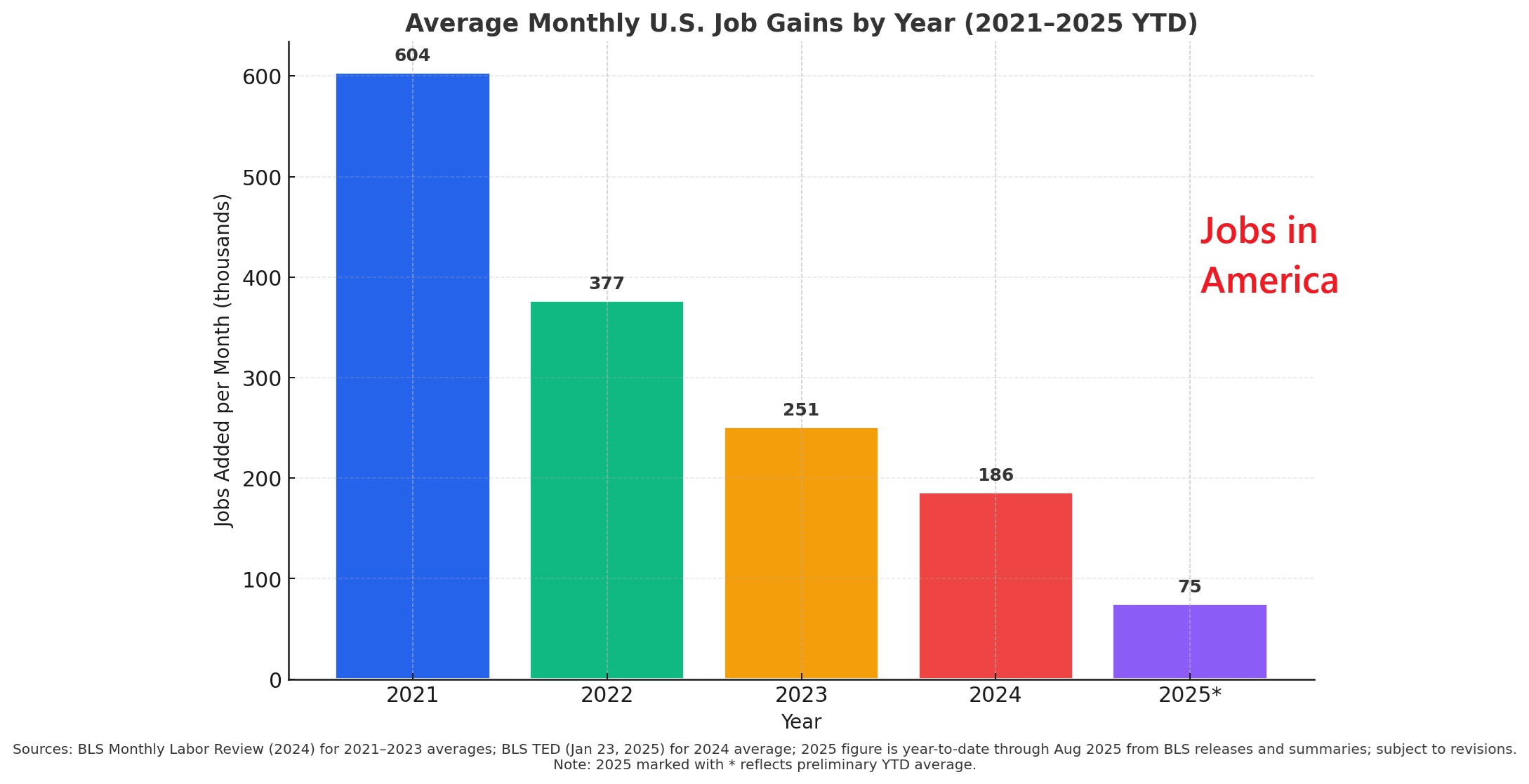
So, what is happening in the United States? America is now experiencing jobless growth. If you track average monthly job creation since 2021, the trajectory is unmistakable: from the exuberant highs of nearly 600,000 jobs per month to fewer than 100,000. Last month, the U.S. added just 64,000 jobs. Yet, unemployment rates remain relatively low, not because the economy is firing on all cylinders, but partly because immigration has slowed, reducing new entrants into the labor force. That demographic slowdown is masking a deeper structural shift.

President Trump understands this reality. Tariffs became one lever to stimulate domestic production. But tariffs alone cannot bridge a fundamental cost gap where a worker in Cambodia earns $10 a day, making relocation to Los Angeles economically unattractive even with a 100% tariff. The Federal Reserve, bound by its dual mandate of employment and price stability, watches this paradox unfold: low unemployment on paper, but slowing job creation beneath the surface.

Meanwhile, Wall Street is euphoric. Equity markets rally, corporate profits rise, and capital flows remain strong. But for the newly graduated American seeking a first job, the experience feels very different. Somewhere between AI-driven productivity gains, corporate efficiency pushes, and shifting demographics lies an unresolved equation.

Many blame AI for the disappearance of entry-level roles. But the truth is more nuanced. The U.S. economy was already losing momentum before AI adoption accelerated following ChatGPT’s launch in late 2022. AI did not create the imbalance; it simply amplified it. And no one has yet figured out how to unwind this paralysis without trade-offs.

From an African perspective, I drop this Igbo proverb: “onye na-amaghi ebe mmiri bidoro mawa ya, agaghi ama ebe o kwusiri” [he who does not know where the rain began to beat him cannot know where it will stop]. Ask an Igbo elder around you to explain that because as Mazi Chinua Achebe noted, proverbs are the palm oil with which words are eaten.

UK Prime Minister Theresa May Resigns as Illusion of “The Rise of Me Only” Ravages

Phantom is Rolling Out Early Access to its Phantom Cash Debit Card

0

Phantom, the popular multi-chain crypto wallet, officially announced that early access to its Phantom Cash debit cards is starting to roll out this week. Begins in the United States excluding New York and Alaska for some features.

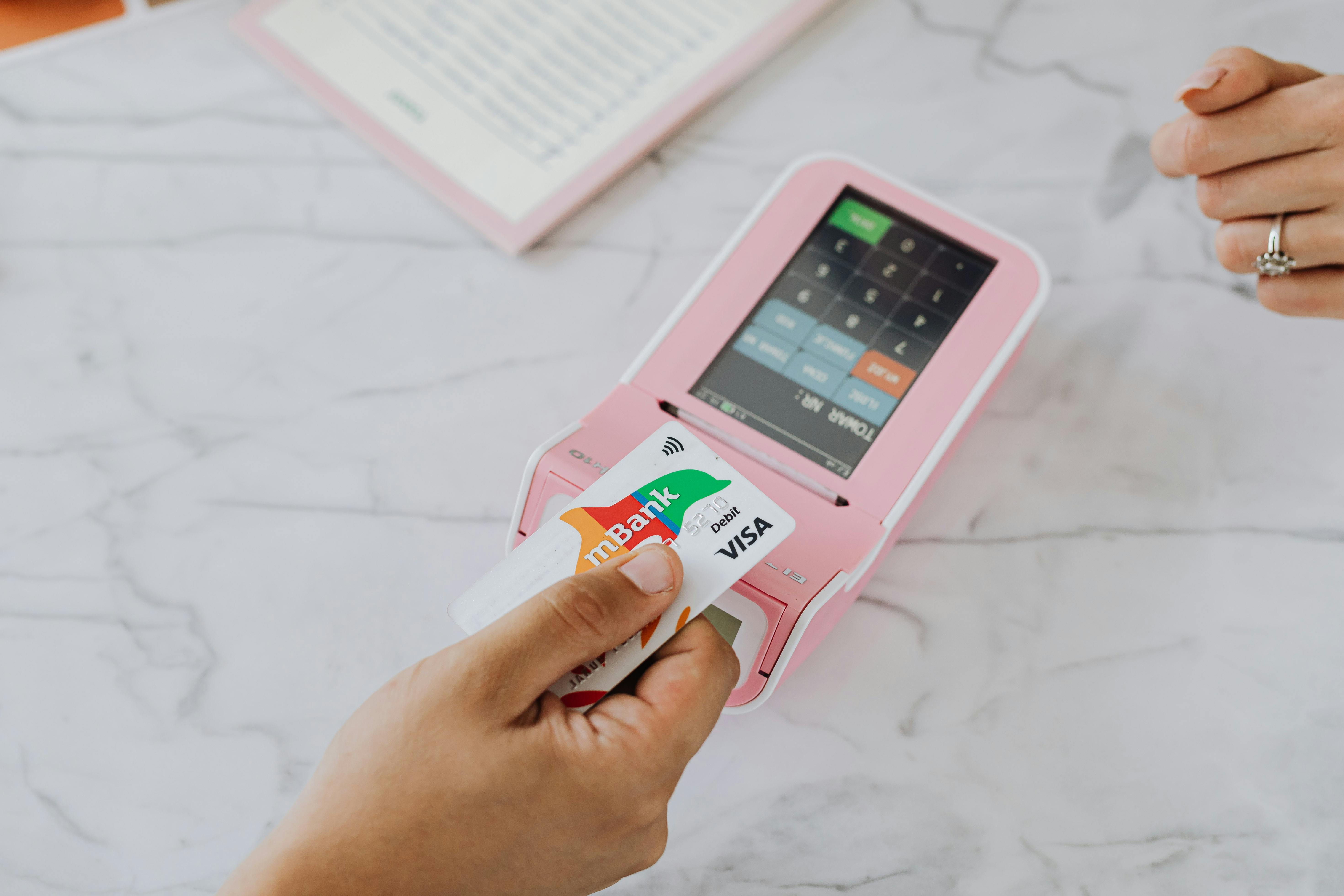
Prepaid Visa debit card— virtual at launch, with physical cards coming later. It supports Apple Pay, Google Pay, and anywhere Visa is accepted. Spend directly from your Phantom Cash balance, backed by the on-chain USD-pegged stablecoin CASH on Solana.

Funds stay on-chain until the point of sale—no need to manually convert to fiat beforehand. Identity verification— KYC via Stripe is needed for the card, bank transfers, and direct deposits. Phased rollout via the existing waitlist in the Phantom mobile app. If you’re on the waitlist, access is coming gradually this week.

Internationaly planned soon after the US launch. Card issued by Lead Bank; program managed by Bridge Ventures. This is a big step for Phantom in bridging crypto with everyday spending, turning the wallet into more of a full money app.

Implications of Phantom Cash Debit Card Launch

Phantom’s rollout of its prepaid Visa debit card—virtual first, physical later marks a significant evolution for the wallet, turning it from a crypto-native tool into a hybrid money app.

Its enables seamless everyday spending directly from on-chain CASH without manual fiat conversion. Funds stay on-chain until point-of-sale, reducing friction and making crypto feel like “real money” for daily use e.g., Apple Pay/Google Pay anywhere Visa is accepted.

This bridges DeFi with traditional spending, potentially accelerating user retention—if people can spend crypto easily, they’re more likely to hold and use it. Crypto debit cards are proliferating, unlocking real-world utility and driving adoption beyond speculation.

Positions Phantom’s 20M+ users, dominant on Solana as a full-stack finance app, competing with neobanks like Cash App or Revolut. Drives demand for CASH stablecoin: Already seeing yield on balances, gas-free transfers, and now direct spending—could challenge USDT/USDC dominance with consumer-focused features.

Increases TVL and activity on Solana via more on-ramps, P2P transfers, and yield-earning stable balances. Early access via waitlist + KYC via Stripe unlocks bank links and off-ramps, expanding beyond crypto natives. Intensifies competition in Crypto Cards. Joins a crowded field: Coinbase Card, Crypto.com Visa, and dozens of others like Solflare, Bitnob, emerging projects like Pintopay or XPlace.

Truly on-chain until spend vs. many that auto-convert upfront, plus Solana’s low fees and speed. Pushes innovation—higher cashback, rewards, and yields becoming standard to attract users.

Reinforces stablecoins as a bridge for hybrid finance: More wallets adding fiat rails blurs lines between self-custody and traditional banking. Requires KYC for card/bank features, aligning with US rules like the GENIUS Act for stablecoins—could set precedents for compliant on-chain spending.

Fees apply, phased rollout, If successful, accelerates “new money” apps where wallets handle holding, swapping, earning, and spending—shrinking the gap between TradFi and Web3.

This launch is a quiet but powerful step toward real-world crypto utility. With international expansion soon, it could significantly boost Solana’s momentum and stablecoin usage in 2026. Exciting times for everyday crypto!

Solana Leads Most Blockchains Across Key Metrics in 2025

0

Solana leads most major blockchains across these key metrics, based on on-chain data from sources like DeFiLlama, Artemis, Blockworks, and industry reports.

Solana consistently ranks #1, often with more monthly active addresses than all other Layer-1 and Layer-2 chains combined, ~127 million in mid-2025 per Artemis/Blockworks data; reports of 57–83 million in various months, far ahead of competitors like Tron, Base, or Near.

Solana dominates overwhelmingly, processing hundreds of millions weekly e.g., 543 million in one November 2025 week—more than triple the rest combined and billions monthly, thanks to its high throughput. No other chain comes close in total transaction count.

Solana has led network revenue for multiple consecutive quarters and much of 2025 like $271 million in Q2 2025, topping all chains per Blockworks; over $1.25 billion annually from Oct 2024–Oct 2025 per DeFiLlama/Artemis. Much of this comes from app-level activity and tips, outpacing Ethereum and others.

Closely tied to revenue, Solana generates the highest total fees paid by users in many periods e.g., $8.5 million weekly in late 2025 reports, though per-transaction fees remain extremely low ~$0.00025 average.

Solana frequently leads or co-leads DEX volume, with weeks hitting $29 billion nearly double Ethereum’s and capturing over 50% market share in peak periods. It held the top spot for multiple months in 2025, though Ethereum occasionally reclaimed it briefly.

Solana’s dominance stems from its speed, low costs, and booming ecosystem such as memecoins, DeFi, apps like Pump.fun. While competitors like Ethereum with L2s, Base, or Tron lead in isolated areas like TVL or specific quarters, Solana tops the board in these user/activity/economic metrics for most of 2025.

Drivers Behind Solana’s Surge

Solana’s explosive growth in 2025—leading in monthly active users up to 98 million, transactions ~34 billion+, revenue ~$2.85 billion annually, fees, and trading volume ~$1.6 trillion—isn’t accidental.

It’s fueled by a potent mix of technical superiority, ecosystem innovation, and real-world adoption. Solana’s high throughput and ultra-low fees ~$0.00025 per transaction make it the go-to for high-volume activities like DeFi, NFTs, and gaming.

This enables seamless, real-time trading without the bottlenecks seen on slower chains like Ethereum. Events like NFT drops and game launches create viral spikes in user engagement and transaction volume, drawing in millions of new addresses quarterly.

Platforms like Pump.fun, Jupiter Exchange, and Raydium have turned Solana into a meme-coin factory and DeFi powerhouse. Memes alone accounted for 25% of DEX volume ~$83 billion in Q4, while project tokens surged 118% quarter-over-quarter. DApps generated $90 million in October revenue, led by Pump.fun and Phantom wallets.

Builders like Drift and integrations with protocols like Jupiter’s lending and prediction markets create sticky liquidity and user loops, compounding activity. Over $476 million in ETF inflows since October, plus tokenized treasuries from Ondo, Franklin Templeton, have brought “real money” on-chain.

Solana now handles 60-70% of all stablecoin transactions via USDC, PYUSD, USDT, outpacing L2s combined, with higher velocity than competitors. Partnerships with Visa, PayPal, and Shopify for payments settle billions daily, anchoring institutional trust.

Wrapped BTC (cbBTC) inflows hit $410 million YTD via DeFi rewards, while upgrades like Alpenglow (100x faster finality) and Multiple Concurrent Leaders position Solana as the “trading venue of the planet”—balancing max performance with censorship resistance.

This attracts builders and capital, with Solana’s app revenues topping crypto for over a year. These drivers form a self-reinforcing cycle: Usage begets liquidity, which draws institutions, amplifying metrics further. Solana’s dominance signals a shift toward high-performance, user-centric blockchains, with ripple effects across markets, tech, and adoption.

As the “most used chain” in 2025, Solana captures half the users of all major L1s/L2s combined, positioning SOL for outsized gains. Analysts eye $150–$300 by mid-2026, driven by ETF demand and revenue multiples already $2.85 billion annually, outpacing peers.

This could rotate capital from BTC/ETH, making SOL a “top 3” asset and an index play for global funds. Leading in DEX volumes ~$70 billion TVL, $7 billion daily and fees cements Solana as crypto’s “financial bazaar,” fostering novel experiments like prop AMMs and on-chain perps. It draws top builders via Colosseum grants, accelerating RWAs, payments, and consumer apps.

By 2026, expect mainstream integration—Visa/PayPal scaling to trillions in settlements—turning Solana into “internet capital markets.” Solana’s metrics expose rivals’ weaknesses: Ethereum L2s fracture liquidity, while BTC lags in programmability and scalability.

This pushes innovations like MegaETH/Tempo challenging Solana’s TPS edge—but also risks like fee share erosion down to single digits from Hyperliquid/BNB competition.

Overall, it validates PoS over PoW, with Solana dubbed “Bitcoin 3.0” for superior decentralization and scarcity potential via fee burns. Parabolic adoption legitimizes crypto for institutions and consumers, enabling self-custody derivatives and global payments.

However, volatility from meme-driven surges and past outages highlight centralization concerns. If upgrades deliver, Solana could onboard trillions in tokenized value; if not, rotations to faster rivals could temper growth.

In essence, Solana’s surge isn’t hype—it’s proof that utility wins. It redefines blockchain viability, rewarding speed and composability while challenging the status quo. For investors and builders, it’s a bet on the chain where “real money works,” but diversification remains key amid crypto’s wild swings.

UK Advances Major Crypto Regulation Overhaul

0

The UK government has announced plans to introduce legislation that will bring cryptocurrencies and cryptoasset services under full regulatory oversight, treating them similarly to traditional financial products like stocks and shares. The new rules are set to come into force in October 2027.

Crypto firms like exchanges, custodians, brokers, and wallet providers serving UK customers will require authorization and ongoing supervision from the Financial Conduct Authority (FCA). They must comply with standards for transparency, consumer protection, operational resilience, and market integrity — aligning with existing rules for traditional finance.

The approach extends the UK’s current financial services framework rather than creating a bespoke system unlike the EU’s MiCA regime, mirroring a “same risk, same regulation” philosophy seen in the US.

Aims to boost investor confidence, reduce fraud, detect suspicious activity more easily, and exclude “dodgy actors” while supporting innovation and growth. Chancellor Rachel Reeves stated that the rules provide “clear rules of the road” and are “a crucial step in securing the UK’s position as a world-leading financial centre in the digital age.”

The government emphasizes proportionate regulation to attract investment and position the UK as a global crypto hub. This builds on earlier 2025 developments, including draft legislation in April and FCA consultations on stablecoins, custody, and trading platforms.

Separate rules for stablecoins overseen by the Bank of England and tax reporting are also progressing. The announcement has been widely reported as a balanced move to enhance protections without stifling the industry.

The UK’s decision to extend existing financial services rules to cryptoassets, under full Financial Conduct Authority (FCA) oversight starting in October 2027, represents a balanced “same risk, same regulation” approach.

This aligns more closely with the US framework than the EU’s bespoke MiCA regime. Crypto services will adhere to standards similar to traditional finance, including transparency, fair treatment under the FCA’s Consumer Duty, and operational resilience.

This addresses current gaps where consumers often lack recourse in scams or firm failures. Enhanced oversight will make it easier to detect suspicious activity, enforce sanctions, and exclude “dodgy actors,” tackling the 55% surge in investment scams many crypto-related reported in recent years.

Rules on disclosures, risk warnings, and market integrity will help investors make informed decisions, potentially boosting retail participation crypto ownership rose from 4% in 2021 to ~12% in 2024.

Higher compliance may lead to fewer platforms serving UK users or increased fees passed on to consumers. Firms serving UK customers including overseas ones for certain activities must obtain FCA approval, moving beyond mere AML registration. This covers exchanges, custodians, brokers, wallet providers, and activities like staking/lending.

FCA building symbolizing new regulatory perimeter for crypto firms need to meet standards for capital adequacy, segregation of assets, conflict management, and market abuse prevention. Transitional period allows preparation. Chancellor Rachel Reeves emphasized “clear rules of the road” to provide certainty, encouraging investment, innovation, and job creation.

The UK aims to attract firms by positioning itself as a competitive global hub. Chancellor Rachel Reeves on positioning the UK as a digital finance leader Truly decentralized activities may remain outside scope, but controlled DeFi front-ends could be regulated. Focus on proportionate rules to avoid stifling growth.

By fostering a “trusted, competitive, and innovative” market, the regime supports the government’s goal of making the UK a top destination for crypto firms, potentially drawing investment away from less regulated jurisdictions.

Integrating crypto reduces systemic risks and bridges digital assets with mainstream markets (e.g., tokenized assets, stablecoins for payments). Collaboration with the US via transatlantic taskforce and divergence from EU MiCA could shape global standards, enhancing the UK’s role in digital finance.

Overall, the regulations are widely viewed as a maturation step for the sector: protecting users without overly restricting innovation. Firms have until 2027 to adapt, with FCA rules finalizing by end-2026. This could mark a pivotal shift toward mainstream crypto adoption in the UK.

Lovable Soars to $6.6bn Valuation as Accel, Khosla Double Down on Europe’s Vibe-Coding Boom

0

Lovable, the Stockholm-based artificial intelligence startup riding the surge of interest in so-called “vibe coding,” has vaulted into the top tier of Europe’s startup ecosystem after a new funding round valued the company at $6.6 billion, according to people familiar with the deal who spoke to CNBC.

The round, which has not yet been formally announced, includes U.S. venture capital firm Accel, a returning investor that has become one of the most influential backers of AI-native software companies. Khosla Ventures is also participating, one of the sources said. Both spoke on condition of anonymity because the transaction is private. Forbes reported in November that Lovable was raising at a valuation of around $6 billion.

If confirmed, the deal marks a dramatic step-up from Lovable’s $1.8 billion valuation in July, when it raised $200 million. The new price tag means Lovable has more than tripled its valuation in a matter of months, making this its third funding round in 2025 and underscoring the intensity of investor demand for fast-growing AI developer platforms.

Founded in 2023, Lovable has become one of the fastest-scaling software companies in Europe. In November, the company disclosed that it had reached $200 million in annual recurring revenue, an extraordinary jump from the $1 million ARR milestone it crossed less than a year earlier. At the time, Lovable said users were creating roughly 100,000 projects per day on its platform, a figure that highlights both strong adoption and heavy daily usage.

Lovable’s core product allows users to build applications and websites through natural language prompts, without needing to write code. The platform relies on large language models from providers such as OpenAI and Anthropic, translating text instructions into functioning software. This approach has resonated with founders, designers, and small teams that want to move quickly, as well as with more experienced developers looking to speed up prototyping and iteration.

The company’s rise places it at the center of a broader shift in how software is created. Investors increasingly believe that AI-assisted development tools can dramatically expand the number of people who are able to build digital products, lowering technical barriers and compressing development timelines. That thesis has already driven eye-catching valuations in the United States, where Anysphere, the maker of coding tool Cursor, raised $2.3 billion at a $29.3 billion valuation in November.

Replit reached a $3 billion valuation after a $250 million round in September, while Vercel closed a $300 million funding round valuing it at $9.3 billion.

Against that backdrop, Lovable’s valuation looks less like an outlier and more like Europe’s answer to a U.S.-dominated category. Accel’s continued backing is notable in that context. The firm has emerged as a key conduit for capital flowing into “vibe coding” startups, having also participated in billion-dollar rounds for Cursor and for Thinking Machines, the AI company founded by former OpenAI executive Mira Murati.

Lovable’s July funding round already drew a mix of prominent European and global names, including Creandum, Klarna founder Sebastian Siemiatkowski, ElevenLabs founder Mati Staniszewski, and Synthesia founder Victor Riparbelli. The fresh capital further strengthens its balance sheet as competition intensifies and as well-funded rivals push aggressively to capture developers and non-technical users alike.

The company is also signaling global ambitions. While headquartered in Stockholm, Lovable is opening offices in Boston and San Francisco, a move that would put it closer to major customers, partners, and talent pools in the U.S. market. That expansion suggests the company sees itself not as a regional champion but as a global contender in AI-powered software creation.

The key question for investors will be whether Lovable can sustain its growth trajectory as the market matures and as large AI model providers continue to move up the stack, offering more end-to-end product-building tools themselves. For now, the latest funding round confirms that capital markets are willing to pay a premium for companies that sit at the intersection of AI infrastructure and everyday productivity.

In doing so, Lovable has become a rare example of a European startup reaching multi-billion-dollar valuation territory at speed, reinforcing the view that the next wave of globally significant AI companies will not be built in Silicon Valley alone.