

Average Salaries Across Europe in 2024: How Much Do Workers Earn in Each EU Country?

Quote from Alex Bobby on December 16, 2025, 6:10 AMThe start of a new year is traditionally one of the busiest periods for job switching across Europe. January brings fresh budgets for companies, renewed hiring plans, and a wave of employees acting on New Year’s resolutions to seek better pay, improved work-life balance, or new opportunities abroad. In this context, salary remains one of the most decisive factors shaping career moves — and across Europe, pay levels vary dramatically.
So how much do workers really earn across the continent? And what explains the stark differences between countries that share a single market, and in many cases, a single currency?
According to Eurostat’s latest data for 2024, average annual salaries in the European Union reveal a continent sharply divided between high-earning economies in the north and west and lower-paid labour markets in the east and southeast.
Register for Tekedia Mini-MBA edition 19 (Feb 9 – May 2, 2026).
Register for Tekedia AI in Business Masterclass.
Join Tekedia Capital Syndicate and co-invest in great global startups.
Register for Tekedia AI Lab.
Average EU salary nears €40,000
The average annual salary per employee in the EU stands at €39,808, adjusted to reflect full-time employment. While this figure provides a useful benchmark, it masks extraordinary variation between member states.
At the top of the scale is Luxembourg, where the average annual salary reaches €82,969 — more than double the EU average and 5.4 times higher than Bulgaria, which sits at the bottom with an average salary of €15,387.
Beyond Luxembourg, five other EU countries report average salaries above €50,000 per year:
Denmark
Ireland
Belgium
Austria
Germany
These countries benefit from strong productivity levels, highly skilled workforces, and a concentration of high-value industries.
At the other end of the spectrum, average annual salaries fall below €20,000 in several EU states. In addition to Bulgaria, Greece and Hungary also rank among the lowest-paid countries in the bloc, reflecting long-standing structural challenges and weaker wage growth.
A clear regional divide
Eurostat’s data confirms a familiar pattern: Western and Northern Europe dominate the top of the wage rankings, while Eastern and Southeastern Europe trail behind.
Part of this divide reflects economic history and development levels, but it is also shaped by differences in industrial composition, productivity, and labour market institutions. While many eastern EU states have experienced strong economic growth over the past decade, wage convergence with wealthier member states remains slow.
Importantly, Eurostat adjusts its figures to account for part-time work, presenting salaries as if all employees worked full-time. This allows for a fairer comparison between countries such as the Netherlands or Germany, where part-time employment is common, and those with more traditional full-time work patterns.
Why do salaries differ so much?
According to Giulia De Lazzari, an economist at the International Labour Organization (ILO), productivity is the single most important factor behind wage differences across Europe.
“Higher productivity enables countries to sustain higher wages,” she explained, noting that output per worker remains a key determinant of pay levels.
Countries with a large share of high-value-added sectors — such as finance, information technology, pharmaceuticals, and advanced manufacturing — tend to offer significantly higher wages. These sectors generate greater profits per employee, allowing companies to pay more while remaining competitive.
By contrast, economies where employment is concentrated in lower value-added sectors — including agriculture, textiles, tourism, and basic services — typically struggle to raise wages sustainably. In such industries, margins are thinner, productivity gains are slower, and competition is often intense.
Cost of living matters — but not always enough
Nominal salary figures only tell part of the story. When adjusted for purchasing power, the gap between countries narrows, though it does not disappear.
Workers in lower-wage countries often benefit from cheaper housing, food, and services, meaning their income can stretch further locally. However, inflation over recent years has eroded this advantage in many parts of Europe, particularly in energy and food prices, which rose sharply across both rich and poorer economies.
As a result, even after accounting for purchasing power, wage disparities remain significant — and increasingly visible in a more mobile European labour market.
Job mobility and the “salary pull”
With remote work becoming more common and cross-border recruitment on the rise, salary differences are playing a growing role in labour mobility. Higher-paying countries such as Germany, Ireland, and the Nordics continue to attract skilled workers from across the EU, intensifying concerns about brain drain in lower-wage economies.
At the same time, rising wages in parts of Central and Eastern Europe are helping some countries retain talent, particularly in technology and engineering. Still, the pace of convergence remains uneven.
What this means for workers in 2025
For workers considering a job move in the new year, salary comparisons are only the starting point. Taxes, social security contributions, housing costs, and quality of public services all shape real take-home pay and living standards.
Nevertheless, the data highlights a core reality of the European labour market: where you work still matters enormously for how much you earn.
As economic uncertainty grows — driven by slowing manufacturing, inflation pressures, and geopolitical risks — wage growth may come under strain in 2025. That makes informed career decisions, and realistic expectations about pay, more important than ever.
Conclusion
Europe’s salary landscape reflects deep-rooted economic differences that continue to shape workers’ choices and opportunities. While the average EU salary now approaches €40,000, the gap between high- and low-paying countries remains vast. Productivity, sectoral structure, and cost of living all play a role, but the result is clear: pay inequality across Europe is still a defining feature of the labour market. As workers reassess their careers in the new year, understanding these differences may be just as important as negotiating the next contract.


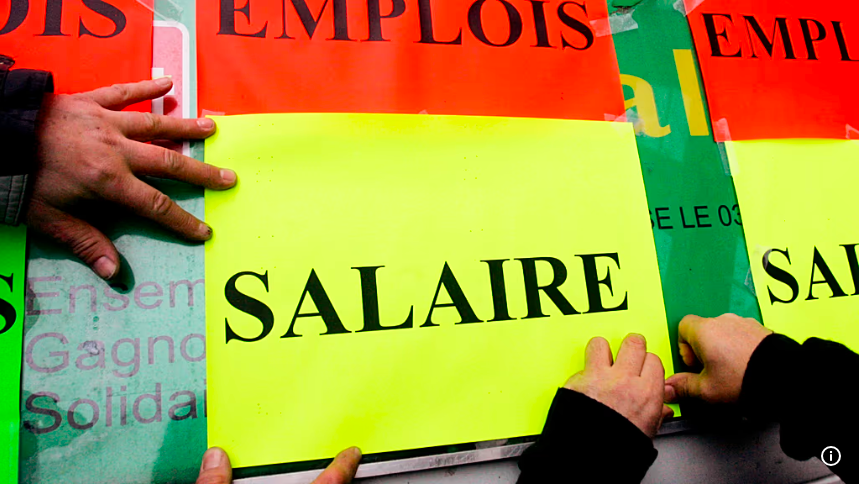
The start of a new year is traditionally one of the busiest periods for job switching across Europe. January brings fresh budgets for companies, renewed hiring plans, and a wave of employees acting on New Year’s resolutions to seek better pay, improved work-life balance, or new opportunities abroad. In this context, salary remains one of the most decisive factors shaping career moves — and across Europe, pay levels vary dramatically.
So how much do workers really earn across the continent? And what explains the stark differences between countries that share a single market, and in many cases, a single currency?
According to Eurostat’s latest data for 2024, average annual salaries in the European Union reveal a continent sharply divided between high-earning economies in the north and west and lower-paid labour markets in the east and southeast.
Average EU salary nears €40,000
The average annual salary per employee in the EU stands at €39,808, adjusted to reflect full-time employment. While this figure provides a useful benchmark, it masks extraordinary variation between member states.
At the top of the scale is Luxembourg, where the average annual salary reaches €82,969 — more than double the EU average and 5.4 times higher than Bulgaria, which sits at the bottom with an average salary of €15,387.
Beyond Luxembourg, five other EU countries report average salaries above €50,000 per year:
-
Denmark
-
Ireland
-
Belgium
-
Austria
-
Germany
These countries benefit from strong productivity levels, highly skilled workforces, and a concentration of high-value industries.
At the other end of the spectrum, average annual salaries fall below €20,000 in several EU states. In addition to Bulgaria, Greece and Hungary also rank among the lowest-paid countries in the bloc, reflecting long-standing structural challenges and weaker wage growth.
A clear regional divide
Eurostat’s data confirms a familiar pattern: Western and Northern Europe dominate the top of the wage rankings, while Eastern and Southeastern Europe trail behind.
Part of this divide reflects economic history and development levels, but it is also shaped by differences in industrial composition, productivity, and labour market institutions. While many eastern EU states have experienced strong economic growth over the past decade, wage convergence with wealthier member states remains slow.
Importantly, Eurostat adjusts its figures to account for part-time work, presenting salaries as if all employees worked full-time. This allows for a fairer comparison between countries such as the Netherlands or Germany, where part-time employment is common, and those with more traditional full-time work patterns.
Why do salaries differ so much?
According to Giulia De Lazzari, an economist at the International Labour Organization (ILO), productivity is the single most important factor behind wage differences across Europe.
“Higher productivity enables countries to sustain higher wages,” she explained, noting that output per worker remains a key determinant of pay levels.
Countries with a large share of high-value-added sectors — such as finance, information technology, pharmaceuticals, and advanced manufacturing — tend to offer significantly higher wages. These sectors generate greater profits per employee, allowing companies to pay more while remaining competitive.
By contrast, economies where employment is concentrated in lower value-added sectors — including agriculture, textiles, tourism, and basic services — typically struggle to raise wages sustainably. In such industries, margins are thinner, productivity gains are slower, and competition is often intense.
Cost of living matters — but not always enough
Nominal salary figures only tell part of the story. When adjusted for purchasing power, the gap between countries narrows, though it does not disappear.
Workers in lower-wage countries often benefit from cheaper housing, food, and services, meaning their income can stretch further locally. However, inflation over recent years has eroded this advantage in many parts of Europe, particularly in energy and food prices, which rose sharply across both rich and poorer economies.
As a result, even after accounting for purchasing power, wage disparities remain significant — and increasingly visible in a more mobile European labour market.
Job mobility and the “salary pull”
With remote work becoming more common and cross-border recruitment on the rise, salary differences are playing a growing role in labour mobility. Higher-paying countries such as Germany, Ireland, and the Nordics continue to attract skilled workers from across the EU, intensifying concerns about brain drain in lower-wage economies.
At the same time, rising wages in parts of Central and Eastern Europe are helping some countries retain talent, particularly in technology and engineering. Still, the pace of convergence remains uneven.
What this means for workers in 2025
For workers considering a job move in the new year, salary comparisons are only the starting point. Taxes, social security contributions, housing costs, and quality of public services all shape real take-home pay and living standards.
Nevertheless, the data highlights a core reality of the European labour market: where you work still matters enormously for how much you earn.
As economic uncertainty grows — driven by slowing manufacturing, inflation pressures, and geopolitical risks — wage growth may come under strain in 2025. That makes informed career decisions, and realistic expectations about pay, more important than ever.
Conclusion
Europe’s salary landscape reflects deep-rooted economic differences that continue to shape workers’ choices and opportunities. While the average EU salary now approaches €40,000, the gap between high- and low-paying countries remains vast. Productivity, sectoral structure, and cost of living all play a role, but the result is clear: pay inequality across Europe is still a defining feature of the labour market. As workers reassess their careers in the new year, understanding these differences may be just as important as negotiating the next contract.
Share this:
- Click to share on Facebook (Opens in new window) Facebook
- Click to share on X (Opens in new window) X
- Click to share on WhatsApp (Opens in new window) WhatsApp
- Click to share on LinkedIn (Opens in new window) LinkedIn
- Click to email a link to a friend (Opens in new window) Email
- Click to print (Opens in new window) Print