

Ancient Greece to Turner v Constable: Seven of the Greatest Rivalries in Art History

Quote from Alex Bobby on December 16, 2025, 2:41 AM
From Ancient Greece to Turner versus Constable, explore the greatest rivalries in art history and how creative competition shaped masterpieces, movements and legacies.
There is an art to rivalry. Long before modern sports or celebrity feuds, artists were measuring themselves against one another, sharpening their skills in the heat of competition. From Ancient Greece to 19th-Century Britain, rivalry has acted as both provocation and propulsion — pushing artists to innovate, take risks and, at times, humiliate their opponents with a single decisive stroke.
One of the earliest recorded artistic showdowns took place around 400 BC, between two legendary Greek painters, Zeuxis and Parrhasius. According to the Roman writer Pliny the Elder, Zeuxis painted a bunch of grapes so lifelike that birds flew down to peck at them. Confident of victory, he turned to view Parrhasius’s work and reached out to draw back what appeared to be a curtain — only to realise the curtain itself was the painting. Zeuxis conceded defeat instantly. He had fooled birds; Parrhasius had fooled a master painter. The lesson was clear: true victory lies in outwitting the outwitted.
More than two millennia later, a similarly theatrical duel unfolded in London. In 1832, JMW Turner and John Constable, the twin titans of British Romanticism, found their works hung side by side at the Royal Academy. Constable’s monumental The Opening of Waterloo Bridge dominated the room with its ceremonial grandeur and painstaking detail. Turner’s contribution — a modest seascape of the Dutch port of Helvoetsluys — looked almost unfinished by comparison.
Sensing danger, Turner acted fast. Brush in hand, he added a single, shocking daub of bright red paint to a breaking wave in the foreground — later transformed into a buoy. The tiny intervention electrified the canvas, drawing the eye and injecting drama. Constable, spotting the change, reportedly muttered: “He has been here and fired a gun.” Turner had won the shootout by drawing faster, not bigger.
This rivalry now takes centre stage in Turner and Constable: Rivals and Originals at Tate Britain, an exhibition exploring how competition shaped both artists’ legacies. Born just a year apart — Turner in 1775 to a London barber, Constable in 1776 to a prosperous Suffolk corn merchant — they could hardly have been more different. Critics dubbed them “fire and water”. Constable pursued truth and observation; Turner chased atmosphere and poetry. One reviewer famously declared Constable “silver” and Turner “gold”.
But Turner and Constable are just one chapter in a much longer story. Across art history, rivalries have repeatedly sparked creative breakthroughs. Here are seven of the greatest — and the lessons they leave behind.
1. Zeuxis v Parrhasius: Deceive the deceiver
As the earliest known artistic duel, this Greek contest established rivalry as a test of intellect as much as technique. Parrhasius didn’t just paint better — he anticipated his opponent’s confidence and turned it against him.
2. Leonardo da Vinci v Michelangelo: Feud is fuel
Florence, 1503. According to Giorgio Vasari, Leonardo was asked to explain a difficult passage from Dante. Spotting Michelangelo nearby, he deflected: “He will explain it to you.” Michelangelo, feeling mocked, shot back by ridiculing Leonardo’s failure to complete a colossal bronze horse. Their rivalry, sharpened by mutual disdain, pushed both men to ever greater heights — even when they were commissioned to paint opposing murals in the same civic hall.
3. Raphael v Michelangelo: Learn from your enemy
Raphael admired Michelangelo’s work obsessively, absorbing his rival’s muscular figures and dramatic compositions. While Michelangelo resented Raphael’s popularity, Raphael quietly borrowed his strengths — and won favour through charm rather than confrontation.
4. Caravaggio v the Classical painters: Break the rules
Caravaggio’s violent realism and chiaroscuro stood in direct opposition to the idealised style of academic painters. His rivalry with tradition itself reshaped European art, proving that defiance can be a competitive strategy.
5. Turner v Constable: Speed beats polish
Turner’s infamous red buoy shows how instinct and daring can outweigh meticulous preparation. In moments of direct comparison, boldness often triumphs over perfection.
6. Van Gogh v Gauguin: Intensity has consequences
Their volatile partnership in Arles ended with Van Gogh’s mental collapse and the infamous severed ear. Yet the rivalry pushed both artists to define their styles more clearly — a reminder that creative tension can be productive, but also destructive.
7. Picasso v Matisse: Rivalry as lifelong dialogue
Rather than open hostility, Picasso and Matisse engaged in a decades-long exchange of ideas, each responding to the other’s innovations. Their rivalry was less a battle than a conversation — and modern art is richer for it.
From illusionistic grapes to blazing buoys, art history shows that rivalry is rarely about victory alone. It is about pressure, provocation and the relentless desire to outdo someone worthy of being outdone. When artists collide, culture advances — and sometimes, with a single brushstroke, history is rewritten.
Looking Forward
Looking ahead, these historic rivalries offer more than colourful anecdotes — they provide a lens through which to understand creativity itself. In a world where artists now compete in global, digital spaces rather than royal courts or crowded salons, rivalry continues to evolve, but its core remains unchanged. The tension between imitation and originality, speed and precision, truth and poetry still defines artistic progress. As new generations reinterpret the past and challenge the present, future masterpieces will likely emerge not in isolation, but in dialogue — and sometimes conflict — with equally ambitious peers. Rivalry, it seems, will always have a place at the heart of art’s future.
Conclusion / Final Thought
Rivalry has never been a side note in art history; it has been one of its most powerful engines. From Zeuxis and Parrhasius in Ancient Greece to Turner’s blazing red buoy fired across Constable’s bow, competition has repeatedly forced artists to sharpen their vision, refine their technique and redefine what art can be. These clashes were not merely about ego or reputation, but about pushing boundaries and claiming artistic ground. In the end, rivalry did not diminish greatness — it forged it. Art, as history shows, often advances fastest when genius has something, and someone, to prove itself against.
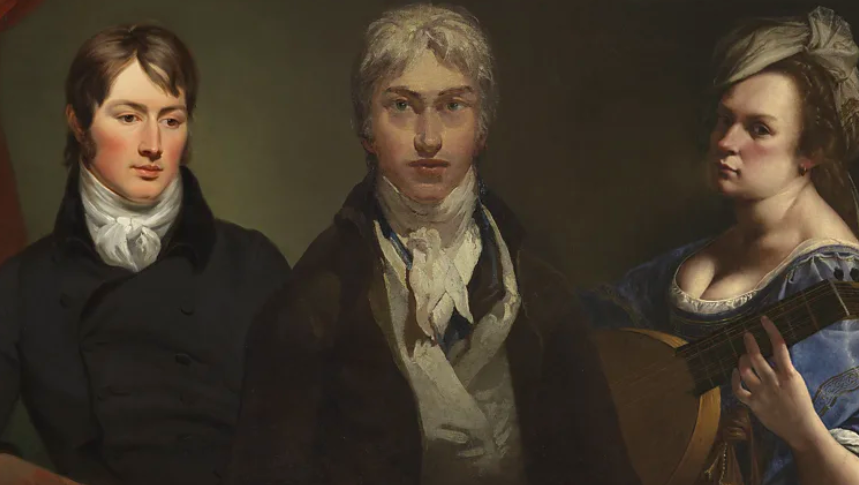
From Ancient Greece to Turner versus Constable, explore the greatest rivalries in art history and how creative competition shaped masterpieces, movements and legacies.
There is an art to rivalry. Long before modern sports or celebrity feuds, artists were measuring themselves against one another, sharpening their skills in the heat of competition. From Ancient Greece to 19th-Century Britain, rivalry has acted as both provocation and propulsion — pushing artists to innovate, take risks and, at times, humiliate their opponents with a single decisive stroke.
One of the earliest recorded artistic showdowns took place around 400 BC, between two legendary Greek painters, Zeuxis and Parrhasius. According to the Roman writer Pliny the Elder, Zeuxis painted a bunch of grapes so lifelike that birds flew down to peck at them. Confident of victory, he turned to view Parrhasius’s work and reached out to draw back what appeared to be a curtain — only to realise the curtain itself was the painting. Zeuxis conceded defeat instantly. He had fooled birds; Parrhasius had fooled a master painter. The lesson was clear: true victory lies in outwitting the outwitted.
More than two millennia later, a similarly theatrical duel unfolded in London. In 1832, JMW Turner and John Constable, the twin titans of British Romanticism, found their works hung side by side at the Royal Academy. Constable’s monumental The Opening of Waterloo Bridge dominated the room with its ceremonial grandeur and painstaking detail. Turner’s contribution — a modest seascape of the Dutch port of Helvoetsluys — looked almost unfinished by comparison.
Register for Tekedia Mini-MBA edition 19 (Feb 9 – May 2, 2026).
Register for Tekedia AI in Business Masterclass.
Join Tekedia Capital Syndicate and co-invest in great global startups.
Register for Tekedia AI Lab.
Sensing danger, Turner acted fast. Brush in hand, he added a single, shocking daub of bright red paint to a breaking wave in the foreground — later transformed into a buoy. The tiny intervention electrified the canvas, drawing the eye and injecting drama. Constable, spotting the change, reportedly muttered: “He has been here and fired a gun.” Turner had won the shootout by drawing faster, not bigger.
This rivalry now takes centre stage in Turner and Constable: Rivals and Originals at Tate Britain, an exhibition exploring how competition shaped both artists’ legacies. Born just a year apart — Turner in 1775 to a London barber, Constable in 1776 to a prosperous Suffolk corn merchant — they could hardly have been more different. Critics dubbed them “fire and water”. Constable pursued truth and observation; Turner chased atmosphere and poetry. One reviewer famously declared Constable “silver” and Turner “gold”.
But Turner and Constable are just one chapter in a much longer story. Across art history, rivalries have repeatedly sparked creative breakthroughs. Here are seven of the greatest — and the lessons they leave behind.

1. Zeuxis v Parrhasius: Deceive the deceiver
As the earliest known artistic duel, this Greek contest established rivalry as a test of intellect as much as technique. Parrhasius didn’t just paint better — he anticipated his opponent’s confidence and turned it against him.
2. Leonardo da Vinci v Michelangelo: Feud is fuel

Florence, 1503. According to Giorgio Vasari, Leonardo was asked to explain a difficult passage from Dante. Spotting Michelangelo nearby, he deflected: “He will explain it to you.” Michelangelo, feeling mocked, shot back by ridiculing Leonardo’s failure to complete a colossal bronze horse. Their rivalry, sharpened by mutual disdain, pushed both men to ever greater heights — even when they were commissioned to paint opposing murals in the same civic hall.
3. Raphael v Michelangelo: Learn from your enemy
Raphael admired Michelangelo’s work obsessively, absorbing his rival’s muscular figures and dramatic compositions. While Michelangelo resented Raphael’s popularity, Raphael quietly borrowed his strengths — and won favour through charm rather than confrontation.
4. Caravaggio v the Classical painters: Break the rules
Caravaggio’s violent realism and chiaroscuro stood in direct opposition to the idealised style of academic painters. His rivalry with tradition itself reshaped European art, proving that defiance can be a competitive strategy.
5. Turner v Constable: Speed beats polish
Turner’s infamous red buoy shows how instinct and daring can outweigh meticulous preparation. In moments of direct comparison, boldness often triumphs over perfection.
6. Van Gogh v Gauguin: Intensity has consequences
Their volatile partnership in Arles ended with Van Gogh’s mental collapse and the infamous severed ear. Yet the rivalry pushed both artists to define their styles more clearly — a reminder that creative tension can be productive, but also destructive.
7. Picasso v Matisse: Rivalry as lifelong dialogue
Rather than open hostility, Picasso and Matisse engaged in a decades-long exchange of ideas, each responding to the other’s innovations. Their rivalry was less a battle than a conversation — and modern art is richer for it.
From illusionistic grapes to blazing buoys, art history shows that rivalry is rarely about victory alone. It is about pressure, provocation and the relentless desire to outdo someone worthy of being outdone. When artists collide, culture advances — and sometimes, with a single brushstroke, history is rewritten.
Looking Forward
Looking ahead, these historic rivalries offer more than colourful anecdotes — they provide a lens through which to understand creativity itself. In a world where artists now compete in global, digital spaces rather than royal courts or crowded salons, rivalry continues to evolve, but its core remains unchanged. The tension between imitation and originality, speed and precision, truth and poetry still defines artistic progress. As new generations reinterpret the past and challenge the present, future masterpieces will likely emerge not in isolation, but in dialogue — and sometimes conflict — with equally ambitious peers. Rivalry, it seems, will always have a place at the heart of art’s future.
Conclusion / Final Thought
Rivalry has never been a side note in art history; it has been one of its most powerful engines. From Zeuxis and Parrhasius in Ancient Greece to Turner’s blazing red buoy fired across Constable’s bow, competition has repeatedly forced artists to sharpen their vision, refine their technique and redefine what art can be. These clashes were not merely about ego or reputation, but about pushing boundaries and claiming artistic ground. In the end, rivalry did not diminish greatness — it forged it. Art, as history shows, often advances fastest when genius has something, and someone, to prove itself against.
Uploaded files:Share this:
- Click to share on Facebook (Opens in new window) Facebook
- Click to share on X (Opens in new window) X
- Click to share on WhatsApp (Opens in new window) WhatsApp
- Click to share on LinkedIn (Opens in new window) LinkedIn
- Click to email a link to a friend (Opens in new window) Email
- Click to print (Opens in new window) Print