

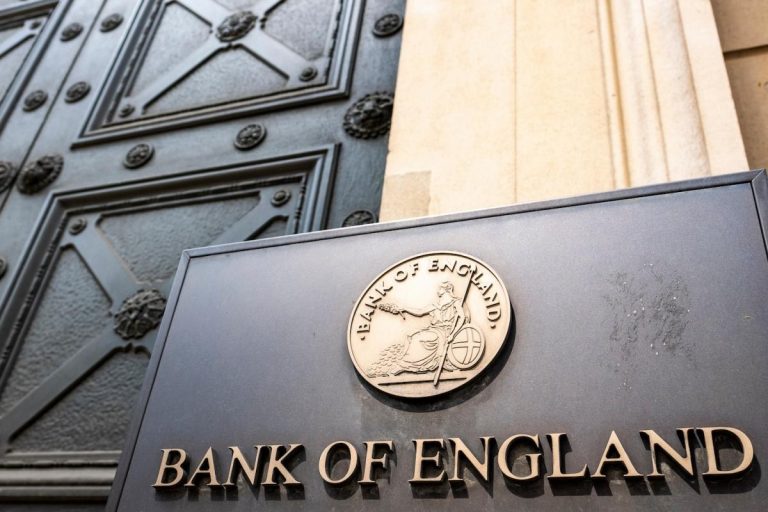
The Bank of England appears to be adopting a more open stance toward stablecoins, amid calls to ease regulation.
In a report by Bloomberg, the UK central bank plans to grant exemptions to proposed limits on Stablecoin holdings by businesses, indicating a softening stance toward crypto assets amid growing competition from the US.
It also plans to issue waivers for certain crypto exchanges that need to hold large amounts of Stablecoins, and to allow the use of Stablecoins as settlement assets within its experimental digital securities sandbox
Register for Tekedia Mini-MBA edition 20 (June 8 – Sept 5, 2026).
Register for Tekedia AI in Business Masterclass.
Join Tekedia Capital Syndicate and co-invest in great global startups.
Register for Tekedia AI Lab.
In a recent address, the Bank of England Governor Andrew Bailey reflected on the reforms made since the 2008 financial crisis and underscored the continued need to safeguard the financial system. Bailey differentiated between high-risk crypto-assets and stablecoins designed for payments, noting that the latter should be held to the same regulatory standards as traditional money to maintain public trust.
He emphasized that stablecoins intended for retail and wholesale payments belong in the “money category,” making this distinction critical to shaping effective regulatory policy. In an opinion piece, he stated that it would be wrong to oppose Stablecoins as a matter of principle.
“Indeed, i do not hold that view, recognizing their potential in driving innovation in payments systems both at home and across borders. Practice matters, however, and it is critical that these Stablecoins satisfy the conditions that enable public trust”, Bailey wrote.

The Bank of England governor’s recent speech, marks a notable departure from his earlier stance. Recall that in his September 2020 speech, he drew a sharp distinction between crypto-assets and money, characterising assets such as bitcoin as “unsuited to the world of payments”. He further noted that cryptocurrencies “have no intrinsic value” and people who invest in them should be prepared to lose all their money.
However, his apparent shift in tone has been lauded by many in the digital asset space. Nick Jones, Founder and CEO of Zumo, described the change as a “welcome shift in direction,” adding that the Bank’s “long-held scepticism towards digital assets is starting to dissipate.”
He further noted that Bailey’s remarks signal growing recognition that digital assets can coexist with fiat currencies in a reimagined global financial system. Jones also commended the Bank’s decision to initiate an upcoming consultation, saying it opens the door to industry collaboration and positions the UK to benefit from innovation in digital finance.

Mark Aruliah, Head of EMEA Policy and Regulatory Affairs at Elliptic, characterized the Bank’s approach as a “cautious embrace.” He however warned that with the U.S. implementing its GENIUS Act and the European Union already advancing the MiCA framework, the UK risks falling behind if it moves too slowly. “This moderate boost of confidence could be too little too late,” Aruliah cautioned.
Industry leaders are urging regulators to create a framework that fosters innovation without compromising financial stability.
One key concern among fintech leaders is the potential imposition of strict limits on stablecoin holdings a proposal previously considered by the Bank. They argued that such restrictions would “damage the UK’s competitiveness as a financial hub.
Several other participants maintain that the priority should not be to limit access but to establish a clear and resilient regulatory environment. The challenge before the Bank of England now lies in maintaining its commitment to financial stability while developing a regulatory regime that empowers the UK to take a leading role in the evolving global stablecoin landscape.
The Bank of England recent stance on Stablecoins, comes at a time when the digital asset is increasingly gaining global recognition. As digital currencies continue to reshape the financial landscape, stablecoins are increasingly bridging the divide between traditional banking systems and the world of cryptocurrencies.
The use of stablecoins has increased in recent years with the average supply of stablecoins in circulation increasing roughly 28% year-over-year. Total transfer volume hit $27.6 trillion last year, surpassing the combined volume of Visa and Mastercard transactions in 2024.
Since stablecoins are pegged to reserve assets, they tend to maintain a constant value and do not experience the severe price fluctuations seen amongst other types of cryptocurrencies. This trait makes stablecoins ideal for payments, savings and remittances.
Notably, more financial institutions and fintech companies are entering the stablecoin market. Just last month, Standard Chartered Bank announced it was partnering with cryptocurrency companies to launch a stablecoin that will be pegged to the Hong Kong dollar. Several other financial technology companies such as PayPal, Bank of America and Stripe have also launched stablecoins products.
With the growing acceptance and adoption of stablecoins by individuals and institutions, proponents maintain that the digital asset can enable quicker and more affordable international payments, and can be used to bring financial services to the over 1 billion people worldwide who lack access to traditional banking.