

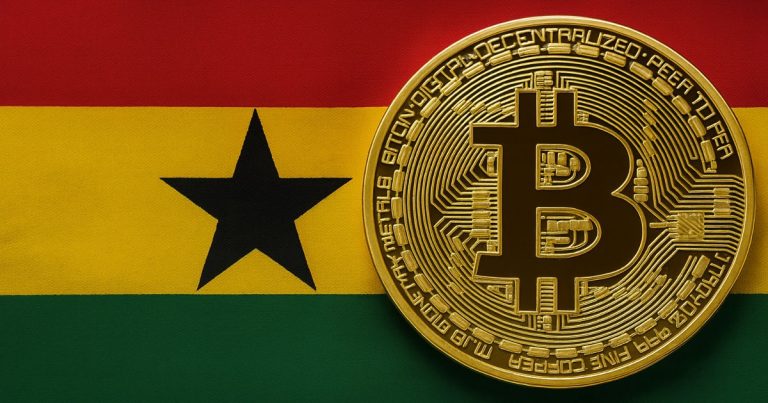
The Central Bank of Ghana (Bank of Ghana, BoG) is finalizing a regulatory framework for cryptocurrency platforms, set to be submitted to parliament by September 2025. The proposed Virtual Asset Providers Act aims to license and regulate Virtual Asset Service Providers (VASPs), including crypto exchanges and wallet providers, to ensure transparency, consumer protection, and financial stability.
VASPs must register with the BoG by August 15, 2025, and comply with anti-money laundering (AML), Know Your Customer (KYC), and counter-terrorism financing (CFT) regulations, aligning with global standards like those of the Financial Action Task Force (FATF). Approximately 3 million Ghanaians (17% of the adult population) use cryptocurrencies, with $3 billion in transactions recorded from July 2023 to June 2024, driven by remittances, savings, and cross-border payments.
The framework addresses challenges posed by the volatile Ghanaian cedi, which gained 48% in the past year after a 25% drop, aiming to improve financial data collection and manage currency impacts. The BoG is establishing a dedicated unit to oversee the digital asset sector, ensuring compliance and fostering innovation. The BoG is testing the eCedi, a central bank digital currency (CBDC), to integrate digital finance into the formal economy, alongside blockchain initiatives like the Ghana Gold Coin (GGC).
Register for Tekedia Mini-MBA edition 20 (June 8 – Sept 5, 2026).
Register for Tekedia AI in Business Masterclass.
Join Tekedia Capital Syndicate and co-invest in great global startups.
Register for Tekedia AI Lab.
Ghana’s move mirrors efforts in Nigeria, South Africa, and Kenya to regulate digital assets, positioning it as a potential fintech hub in West Africa. The framework, developed with public and industry feedback, seeks to balance innovation with risk management, addressing issues like money laundering, fraud, and cybersecurity. The BoG’s 2024 Draft Guidelines on Digital Assets emphasize licensing, AML compliance, and consumer protection, building on a regulatory sandbox launched in 2022 with EMTECH Solutions to test blockchain innovations.
With 3 million Ghanaians (17% of adults) using cryptocurrencies, formal regulation could integrate these users into the mainstream financial system, especially for remittances and cross-border payments, which hit $3 billion from July 2023 to June 2024. Regulating crypto platforms will improve the BoG’s ability to track digital asset transactions, providing better data to manage the volatile Ghanaian cedi (up 48% recently after a 25% drop). This could reduce pressure on the currency and inform monetary policy.
A clear regulatory framework positions Ghana as a fintech hub in West Africa, potentially drawing foreign investment and fostering blockchain innovation, similar to Nigeria and South Africa. The framework supports the BoG’s eCedi (CBDC) pilot, enabling a regulated digital finance ecosystem that could reduce cash dependency and enhance transaction efficiency. Licensing and AML/KYC requirements will reduce risks of fraud, scams, and money laundering, protecting users in a market prone to crypto-related crimes.

Crypto platforms must comply by August 15, 2025, or face penalties, ensuring only legitimate VASPs operate, which could weed out unreliable actors. Adhering to FATF standards enhances Ghana’s credibility in international finance, reducing the risk of being gray-listed for weak AML/CFT measures. Regulation could normalize cryptocurrency adoption, encouraging hesitant users and businesses to engage, boosting digital payment adoption.
The framework balances innovation (via the 2022 sandbox and blockchain projects like the Ghana Gold Coin) with oversight, though strict rules might stifle smaller startups unable to meet compliance costs. The establishment of a Digital Assets Unit and growth in the regulated crypto sector could create jobs in fintech, compliance, and cybersecurity. Excessive compliance costs could deter smaller VASPs, concentrating the market among larger players and limiting competition.
The BoG’s capacity to enforce regulations and monitor a fast-evolving sector may be strained, especially with limited resources. While regulation mitigates some risks, crypto market volatility could still impact users and the economy if not carefully managed. Ghana’s proactive approach aligns with regional peers (Nigeria, Kenya, South Africa), potentially giving it a first-mover advantage in West African fintech.

Harmonized regulations could facilitate regional crypto trade, but differing standards across countries may complicate compliance for VASPs operating regionally. Overall, the framework could foster a safer, more inclusive digital economy while positioning Ghana as a leader in African fintech, provided the BoG balances regulation with innovation and effectively implements the rules.