

The US federal government has entered a partial shutdown at 12:01 a.m. EDT after Congress failed to pass a funding bill before the fiscal year’s end on September 30.
This marks the 15th shutdown since 1981, triggered by deep partisan divides over spending priorities, including health care protections, border security, and infrastructure funding.
The impasse pits Republicans, who control the White House, House, and Senate under President Trump, against Democrats demanding extensions for Affordable Care Act (ACA) tax credits and opposition to cuts in social programs.
Register for Tekedia Mini-MBA edition 20 (June 8 – Sept 5, 2026).
Register for Tekedia AI in Business Masterclass.
Join Tekedia Capital Syndicate and co-invest in great global startups.
Register for Tekedia AI Lab.
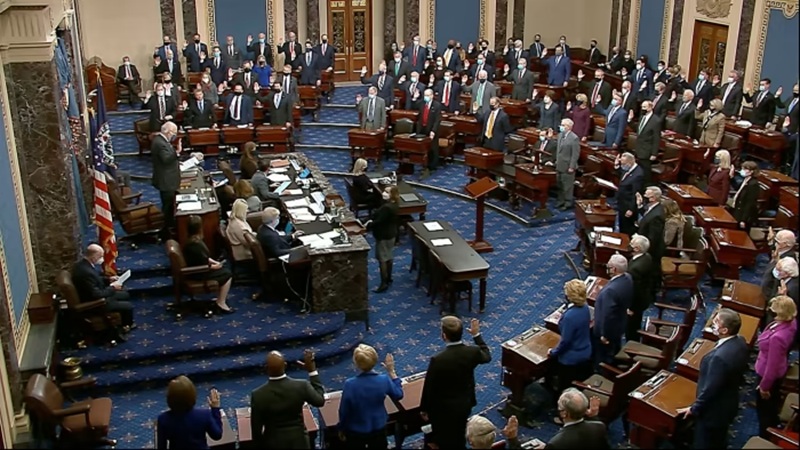
The House passed a continuing resolution (CR) to fund operations through November 21 at current levels, but it stalled in the Senate, where Democrats blocked it via filibuster, citing insufficient protections against rising health costs and other “partisan riders.”
President Trump and GOP leaders blame Senate Democrats, particularly Leader Chuck Schumer, for the “Schumer Shutdown,” while Democrats counter that Republicans are using the crisis to slash entitlements.
In retaliation, the Trump administration has frozen $18 billion in federal funds for New York City rail and subway projects, targeting Schumer’s home state.

A White House meeting on September 29 yielded no breakthrough, with Trump threatening “mass layoffs” for non-essential programs to force negotiations.
No resolution timeline is clear, but past shutdowns have lasted from days to over a month. The shutdown halts non-essential operations, furloughs ~800,000 federal workers without pay, though backpay is eventual, and disrupts services.
Essential functions like national security, air traffic control, and law enforcement continue, but with reduced staffing ~800,000 furloughed (e.g., IRS, EPA staff); ~1.4 million “essential” workers unpaid but on duty like Border Patrol, TSA. Daily losses: $400M in wages.

Military personnel continue duties; backpay guaranteed post-shutdown. September jobs report (Oct 3) delayed; other BLS stats halted. Wall Street unease amid volatility.
Stock markets open as usual, but investors watch for prolonged effects. Airport security lines lengthen fewer TSA; flight delays possible; national parks close no rangers, visitor centers. Flights operate; FAA air traffic control continues pilots union warns of strain.
FDA halts new drug approvals, food inspections; USDA stops loan guarantees, animal feed monitoring risk to meat/milk safety. Medicare/Medicaid payments continue; ACA subsidies at risk if unresolved by year-end.
NIH/NSF halt grants, scientific work; HUD pauses new loans/mortgages. Smithsonian museums open until ~Oct 6 using reserves. IRS stops processing refunds, audits; DOJ curtails civil cases.
Criminal prosecutions, border security proceed. Tax filing deadline Oct 15 for extensions unchanged. Smithsonian, Capitol/White House tours canceled; WIC nutrition aid for low-income families at risk.
Social Security checks issued; veterans’ benefits continue. Estimated weekly cost: $1B+ to travel alone, plus broader economic drag. Prolonged shutdown could lead to permanent layoffs in discretionary programs, per OMB guidance.
This shutdown echoes 2018-2019’s border wall fight but ties into 2025’s battles over ACA credits expiring December 31 and Trump’s push for spending cuts federal outlays up 58% since 2019.
VP JD Vance called Democrats “hostage takers” on CBS, while Speaker Mike Johnson framed it as a “downsize opportunity.” Former VP Kamala Harris blamed Republicans for prioritizing “health care cost hikes.”
The partial shutdown, now in its first day as of October 1, 2025, extends beyond immediate service disruptions into broader ripple effects on the economy, public health, political dynamics, and daily life.
While historical shutdowns have often been short-lived with retroactive pay for workers, this one—fueled by clashes over ACA extensions, spending cuts, and partisan riders—carries unique risks due to the Trump administration’s threats of mass layoffs and program reductions.
Experts like those at the Milken Institute warn of amplified economic drag in a fragile recovery environment, with potential GDP hits of 0.1-0.5% per week if prolonged. Below, I break down the key implications across categories, drawing on contingency plans, expert analyses, and real-time reactions.
Shutdowns typically shave off minimal growth, but this could differ amid high debt— debt-to-GDP at 130% and volatility from tariffs or inflation. Key effects include delayed data releases, furlough-induced spending drops ($400M daily wage loss), and investor unease—S&P futures dipped overnight, while Bitcoin held steady above $113K, echoing past rallies during uncertainty.
Health risks climb with FDA/USDA inspection halts like meat safety lapses, and NIH trials pause, delaying research. Social Security/Medicare payments flow mandatory spending, but VA services strain—veterans’ hospitals stay open, but non-urgent care waits.
Airports operational but strained TSA lines up 20-30%; national parks close visitor centers, canceling hikes and tours—impacting 400+ sites and $500M+ monthly tourism. Smithsonian museums shutter after Oct 6.
Disproportionate harm to women/minorities via WIC/SNAP cuts; urban areas like NYC face amplified transit woes from frozen funds. Prolonged effects could mirror 2013’s sanitation crises in parks, fostering public health hazards.
This “Schumer Shutdown” (GOP label) vs. “GOP austerity ploy” (Dem framing) deepens divides, with Trump eyeing it for entitlement reforms and Democrats filibustering over ACA credits expiring Dec 31.
White House broadcasts mock Dem “devastating impacts” rhetoric, while polls show 59% of independents oppose shutdowns. Senate votes failed 55-45 (GOP CR) and 47-53 (Dem alternative); next attempts Wednesday, but brinkmanship persists.
Scope Ratings flags U.S. ‘AA’ downgrade risk from fiscal chaos, eroding trust amid rising deficits. Allies watch warily; adversaries may exploit delays in aid/diplomacy. Could force OBBB (One Big Beautiful Bill Act) tweaks, but Vought’s letter blames Dem “insane demands,” signaling escalation.
Overall, a brief shutdown under 2 weeks likely limits damage to inconvenience, but extension invites recessionary echoes, per Nomura economists.