

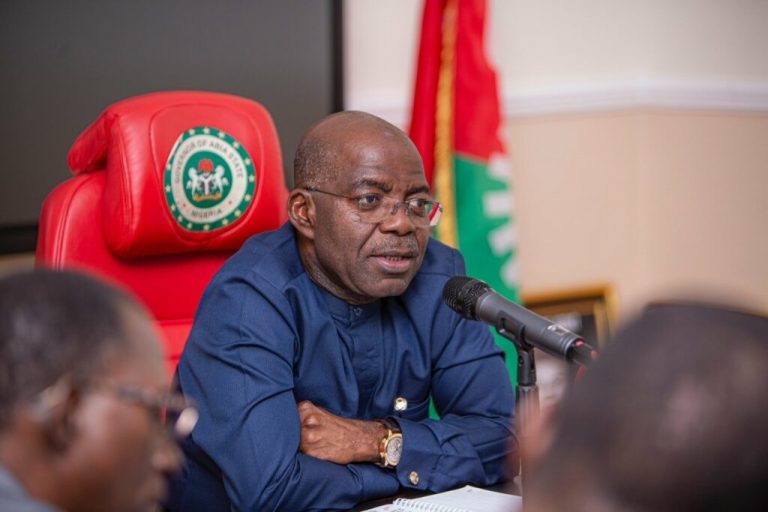
The Abia State Government has finalized the acquisition of Afro Beverages from the Asset Management Corporation of Nigeria (AMCON), marking a significant milestone in Governor Alex Otti’s industrial revitalization programme.
Otti disclosed the development on Friday during the February edition of his monthly media parley at the Government House in Umuahia, stating that the state had concluded the purchase process and was already receiving expressions of interest from prospective investors.
“The State Government has completed the acquisition of Afro Beverages from Asset Management Corporation of Nigeria and begun receiving expressions of interest from prospective investors. Similar investor interest is being recorded for Star Paper Mill in Owerrinta, because we prefer competent private sector operators to manage the firms sustainably,” he said.
Register for Tekedia Mini-MBA edition 20 (June 8 – Sept 5, 2026).
Register for Tekedia AI in Business Masterclass.
Join Tekedia Capital Syndicate and co-invest in great global startups.
Register for Tekedia AI Lab.
Afro Beverages is one of five moribund industries identified for revival under the administration’s policy to restore dormant assets, boost manufacturing output, and generate employment. The others include Star Paper Mill, Textile Mills, International Equitable Associates, and Ogwe Golden Chicken.
The state previously completed the repossession of Star Paper Mill in Aba from AMCON through a N2.5 billion buyback arrangement. An additional N500 million was paid during initial negotiations to facilitate the takeover of Afro Beverages. The strategy to reclaim distressed industrial assets from AMCON, stabilize ownership, and then attract private-sector operators to manage them on a commercial footing is born of management concern.
Nigeria’s history of poorly-managed enterprises has become a bane of industrial development, creating a significant trust deficit in the government’s ability to run a successful business.

The governor stressed that the state does not intend to run the factories directly but will prioritize experienced investors capable of restoring production lines and sustaining operations. The approach aims to mitigate the historical challenges that led to the firms’ collapse, including undercapitalization, weak governance, and infrastructure constraints.
Manufacturing hub ambitions and SME push
The revival effort is central to a broader plan to reposition Aba — long regarded as Abia’s commercial engine — as a manufacturing hub in southeastern Nigeria. At the start of the administration, Otti announced a policy framework focused on reactivating abandoned industries as anchors for supply chains and job creation.
Beyond large industrial assets, the state is moving to deepen support for small and medium-scale enterprises. Otti announced approval for an SME Village and Innovation Hub in Aba, describing it as a center for productivity, innovation, and technology services, including computer and mobile device sales and repairs.

“The State Government has taken a principled stand to support SMEs in the state, and that land has already been acquired for the project,” he said.
The hub is expected to collaborate with the Export Group Lab at Ogbonnaya Onu Polytechnic, linking technical training with market-oriented production. The initiative aligns with legislation enacted in December aimed at positioning Abia as a technology and innovation hub in the region. The combined focus on legacy manufacturing and emerging tech sectors signals an attempt to diversify the state’s industrial base rather than rely solely on traditional factories.
Power reforms, transport, and structural constraints
Industrial recovery in Abia hinges heavily on reliable electricity — historically a binding constraint on manufacturers in Aba and surrounding areas. Otti said efforts are underway to restore power supply in Ohafia, Bende, and Ukwa East local government areas. He added that the state is considering acquiring a majority stake in Enugu Electricity Distribution Company (EEDC) to facilitate electricity wheeling from Geometric Power into Umuahia.
The proposal mirrors a recent transition in the Etche Community in Rivers State, where supply shifted from the Port Harcourt Distribution Company to Geometric Power. If executed, the arrangement could provide Abia with greater control over distribution performance and industrial power reliability, a factor that directly affects factory uptime and operating costs.
The administration is also developing plans to introduce more electric buses as part of a cleaner urban transport strategy. While still at the planning stage, the initiative complements the broader economic modernization agenda by targeting infrastructure bottlenecks and environmental sustainability simultaneously.
Together, the Afro Beverages acquisition, the SME innovation hub, electricity sector engagement, and transport reform indicate a multi-layered strategy: reclaim distressed assets, crowd in private capital, strengthen SME ecosystems, and tackle infrastructure deficits. However, economists note that the durability of the programme will depend on execution — particularly the speed at which investors recommence production and the extent to which power reforms deliver measurable improvements for manufacturers.
Overall, the completion of the Afro Beverages deal represents a tangible step in translating policy intent into asset recovery, with the administration betting that revived factories can once again anchor employment and industrial growth in Abia.