

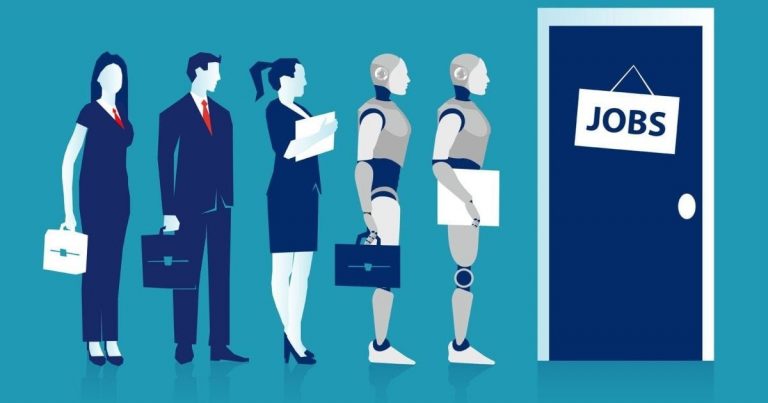
New research from Anthropic suggests the much-feared wave of job losses tied to artificial intelligence has yet to materialize. But the company’s latest findings indicate the technology is already redrawing the contours of the labor market in quieter, less visible ways—particularly for those at the start of their careers.
Presenting the data at the Axios AI Summit in Washington, Peter McCrory said there is, so far, no measurable gap in unemployment rates between workers in AI-exposed roles and those in occupations largely insulated from automation. Even in jobs where tools like Claude are being used to automate core tasks, such as technical writing, coding, and data processing, employment levels remain broadly stable.
That stability, however, masks a deeper shift. Rather than eliminating roles outright, AI is beginning to change how value is created within them. The report finds that productivity gains are accruing unevenly, favoring workers who have already integrated AI into their workflows in sophisticated ways.
Register for Tekedia Mini-MBA edition 20 (June 8 – Sept 5, 2026).
Register for Tekedia AI in Business Masterclass.
Join Tekedia Capital Syndicate and co-invest in great global startups.
Register for Tekedia AI Lab.
Early adopters are not simply automating routine tasks; they are using AI systems as iterative tools for problem-solving, drafting, and decision support. This “co-pilot” model of work is producing outsized efficiency gains, effectively widening the gap between workers who can leverage the technology and those still experimenting with it at the margins.
The result is an emerging skills divide that may prove more consequential than immediate job losses. As AI capabilities expand, the premium on knowing how to direct, refine, and validate machine-generated output is rising. Workers without those skills risk being left behind, even if their roles remain intact on paper.
The implications are particularly stark for younger workers. Entry-level roles—long seen as training grounds for building foundational skills—are among the most exposed to automation. Tasks such as drafting reports, compiling data, and basic coding are precisely the functions AI systems are rapidly mastering.

CEO Dario Amodei has warned that this dynamic could accelerate sharply, with AI potentially eliminating up to half of entry-level white-collar jobs within five years and driving unemployment significantly higher. While such projections remain contested, they reflect a growing concern that the first rung of the career ladder may be eroding.
Anthropic’s data suggests the early stages of that shift may already be underway—not through mass layoffs, but through reduced hiring, altered job scopes, and rising expectations for AI fluency among new recruits.
Geography is compounding the divide. The report finds that AI usage is concentrated in high-income economies and, within countries such as the United States, in regions with dense clusters of knowledge workers. Adoption is similarly skewed toward a relatively small set of specialized occupations where the technology delivers immediate returns.

This uneven distribution raises questions about AI’s oft-cited role as an economic equalizer. Instead, the current trajectory points toward amplification of existing advantages, with capital-rich firms and highly skilled workers pulling further ahead as they integrate AI more deeply into their operations.
At a macro level, the findings help explain a growing disconnect in the data. Labor markets in advanced economies remain resilient, with unemployment rates holding steady even as businesses rapidly deploy AI tools. Yet anecdotal evidence from employers points to shifting hiring patterns, particularly at the junior level, where some roles are being consolidated or redesigned rather than replaced outright.
However, the challenge of timing has been noted by policymakers. McCrory argues that the window for proactive intervention may be narrow, given the speed at which AI capabilities are improving and diffusing across industries. Monitoring frameworks that track not just employment levels but task-level changes and hiring trends will be critical to identifying displacement before it becomes entrenched.
“Displacement effects could materialize very quickly, so you want to establish a monitoring framework to understand that before it materializes so that we can catch it as it’s happening and ideally identify the appropriate policy response,” McCrory told TechCrunch.
Currently, jobs are still there, and the labor market continues to absorb technological change. But beneath that surface, AI is quietly restructuring how work is performed, who performs it, and who benefits most. If the current trajectory holds, the first visible impact may not be a surge in unemployment. Many believe it will be a gradual hollowing out of entry-level opportunities—reshaping career pathways long before job losses show up in the data.