

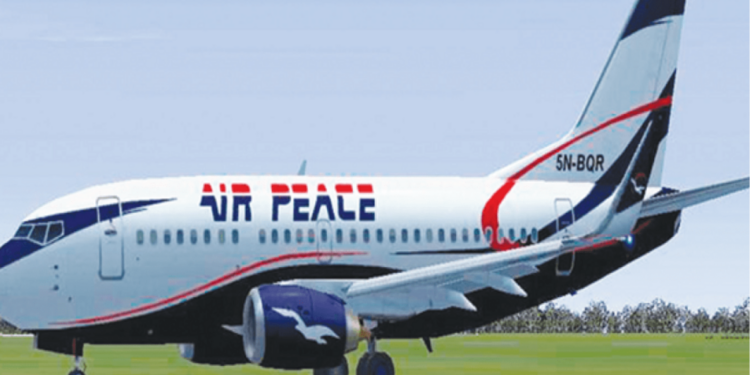
The Chairman and Chief Executive Officer of Air Peace, Allen Onyema, has warned that domestic economy airfares in Nigeria could surge beyond N1 million from 2026, as airlines brace for the implementation of new tax reform laws that he says threaten the survival of the local aviation industry.
Speaking on The Morning Show on Arise News on Sunday, Onyema linked the potential fare spike directly to provisions in the tax reform package scheduled to take effect in January 2026. According to him, the reforms roll back key incentives introduced under the 2020 Finance Act, incentives that had offered airlines temporary relief in an already high-cost operating environment.
At the core of Onyema’s concern is the reintroduction of Value Added Tax on aircraft, spare parts, and air tickets. These items had been exempted under the 2020 Finance Act as part of efforts to stabilize Nigeria’s aviation sector, which has struggled for years with high costs, limited access to credit, and persistent foreign exchange pressures.
Register for Tekedia Mini-MBA edition 20 (June 8 – Sept 5, 2026).
Register for Tekedia AI in Business Masterclass.
Join Tekedia Capital Syndicate and co-invest in great global startups.
Register for Tekedia AI Lab.
Onyema explained that the implications are severe. An aircraft imported at a value of around $80 million would immediately attract 7.5% VAT under the new rules, translating into billions of naira in additional costs at today’s exchange rates. He said airlines would have little choice but to pass those costs on to passengers.
“By the time you bring these things in, at the end of the day, the cost of operation will be huge,” Onyema said during the interview. “Your ticket fares will hit N1. something million soon.”
He added that Nigerian airlines lack the financial buffers to absorb new taxes, noting that borrowing costs in the country can reach as high as 35%. In his words, expecting airlines to take on additional fiscal burdens under such conditions is unrealistic and potentially destructive.

“If we implement that tax reform, Nigerian airlines could go down within three months,” he warned.
Onyema also questioned the policy direction behind taxing air transportation, citing the International Civil Aviation Organization’s annexes, which state that VAT should not be imposed on air transport services. He argued that aviation should be treated as a strategic sector that enables trade, tourism, and economic integration, not as a revenue source to be squeezed.
Beyond the looming tax changes, Onyema painted a broader picture of an industry under sustained pressure. He said Nigerian airlines face a combination of high fuel prices, multiple statutory charges, and foreign exchange constraints that significantly erode their revenue.

To illustrate the point, Onyema disclosed that for a domestic ticket priced at about N350,000, airlines retain roughly N81,000, with the balance taken up by taxes, levies, charges, and fees payable to various agencies. This, he said, undermines the narrative that airlines are profiteering at passengers’ expense.
He pushed back against frequent public criticism over high fares, arguing that Nigerian domestic ticket prices remain among the cheapest in the world when converted to U.S. dollars. Even at current levels, he said, many routes are barely viable. Flights to parts of the Southeast, in particular, often return with few passengers, leaving airlines to absorb losses.
On operational challenges, Onyema addressed complaints about flight delays and cancellations, saying many disruptions stem from factors beyond airlines’ control. These include bird strikes, inadequate airport infrastructure, and lapses by ground handling companies. He said airlines are often blamed for issues rooted in systemic weaknesses across the aviation value chain.
His comments come at a time when the wider policy environment remains uncertain. While Nigeria is preparing to implement tax reforms that could raise costs for airlines, a separate regional initiative points in the opposite direction. Under a 2024 agreement by ECOWAS member states, all air ticket taxes across the sub-region are to be abolished from January 1, 2026, with the aim of reducing fares and boosting regional connectivity.
That contrast has raised questions about how Nigeria will align its domestic tax regime with regional commitments. In 2024, data from the International Air Transport Association showed that Nigeria earned about $62 million from airline ticket taxes, part of the $1.97 billion collected across Africa. For governments facing fiscal pressures, aviation remains an attractive source of revenue, even as airlines warn of the long-term consequences.
Earlier in December 2025, Nigeria also implemented an additional $11.5 security levy under the Advance Passenger Information System, pushing total charges on international tickets to $31.50. Airlines say such incremental charges, when layered on top of each other, steadily weaken the sector.
Against this backdrop, people are asking whether regional initiatives under ECOWAS will force a rethink, easing costs and preventing the sharp fare increases Onyema now warns could be imminent.