

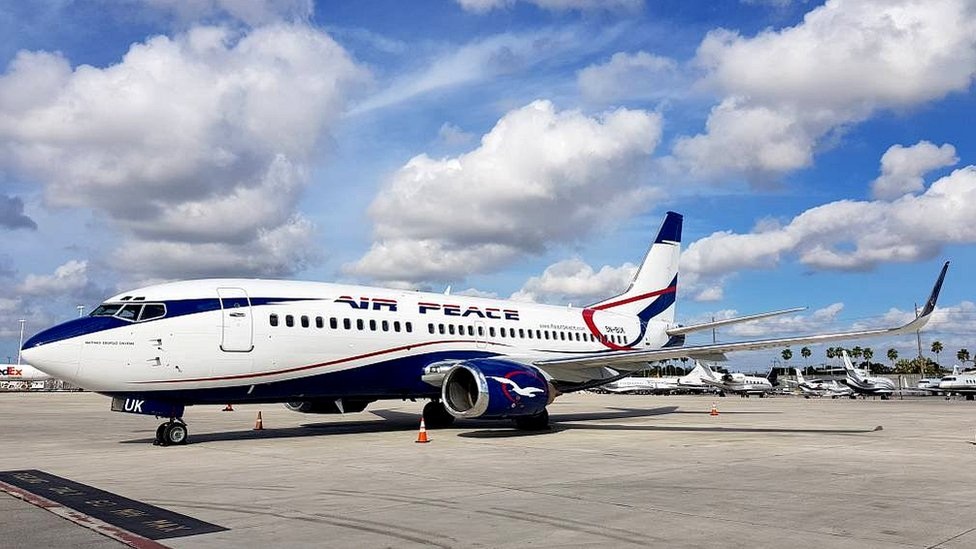
The Airline Operators of Nigeria (AON) has issued a formal warning that domestic airlines may suspend all flight operations nationwide starting Monday, April 20, 2026, due to the unsustainable surge in aviation fuel (Jet A1) prices.
Jet A1 has risen from around ?900 per litre as of late February 2026 to ?3,300 per litre now — a more than 300% increase in just weeks. Airlines argue this far outpaces global crude oil price movements and involves unfair/local pricing practices by marketers. At least one airline has already grounded its entire fleet since March 13, 2026.
Operators say fuel costs alone now exceed ticket revenues, making continued operations unviable without major changes. In a letter dated April 14, 2026, to the Major Energies Marketers Association of Nigeria (MEMAN), AON President Dr. Abdulmunaf Yunusa Sarina described the situation as astronomical and unsustainable.
They are urging immediate intervention to align prices with international realities, or they will halt flights from April 20. This is currently a threat and ultimatum rather than a confirmed shutdown — it depends on whether fuel marketers or the government; the letter was copied to the presidency, aviation minister, NCAA, etc. step in quickly with relief or price adjustments. No final confirmation of a full grounding has been reported as of April 16.
Register for the next Tekedia Mini-MBA.
Register for Tekedia AI in Business Masterclass.
Join Tekedia Capital Syndicate and co-invest in great global startups.
Aviation fuel typically accounts for 40%+ of airline operating costs in Nigeria. Geopolitical factors have contributed to broader price volatility, but operators are pointing to significant local markups. Passengers could face major disruptions to domestic routes if it proceeds, with knock-on effects for business, cargo, and the wider economy.
The surge in Nigeria’s aviation fuel (Jet A1) prices—from around ?900 per litre in late February 2026 to ?3,300 per litre by mid-April 2026 (a >300% jump in under two months)—stems from a mix of global geopolitical shocks, domestic economic vulnerabilities, and market structure issues. Airlines via AON describe the local increase as artificial and disproportionate, noting that global crude oil prices rose only ~30% in the same period.
The sharp escalation traces back to the US-Israel-Iran conflict that intensified around late February 2026. This led to disruptions in the Strait of Hormuz, a critical chokepoint for ~20% of global oil and LNG supplies and ~70% of Africa’s jet fuel and kerosene imports. Shipping and refined product flows from Middle Eastern refineries nearly halted, causing global supply shortages and price volatility.
International crude prices climbed reaching above $100–$112 per barrel at peaks but Jet A1; a refined kerosene derivative saw amplified spikes due to refining margins, processing costs, and logistics. In the US, for example, Jet A1 averaged $8.63 per gallon in April 2026 up ~$2 from March. Africa, heavily reliant on imports via Hormuz routes, faced compounded effects like thinner physical stocks and higher delivered costs.

MEMAN cite these tensions—especially potential Strait of Hormuz closures—as the core driver, dismissing airline claims of extreme local markups. Nigeria’s situation worsened due to structural weaknesses, even as the Dangote Refinery ramped up production and began exporting Jet A1 including cargoes to Europe and West Africa: Heavy reliance on imports and forex constraints: Despite Dangote’s capacity, domestic supply chains still involve significant importation or dollar-denominated costs.
Naira volatility and limited foreign exchange access inflate landed costs. Aviation fuel often requires forex for components, shipping, or blending. Post-subsidy removal, prices fully reflect supply and demand. With limited local refining historically and ongoing debates over crude feedstock to Dangote, marketers pass on global shocks plus local costs. High inland transport costs, airport delivery variations, and infrastructure gaps add premiums. Prices reportedly vary by airport and volume purchased.
Airlines accuse a few major marketers of arbitrary and unilateral hikes and exploitation of the crisis, claiming local prices far exceed international benchmarks adjusted for the ~30% crude rise. MEMAN disputes the exact figures quoted but acknowledges upward pressure. New airlines entering the market have kept ticket prices relatively stable despite fuel now comprising 40–45%+ of operating costs. This squeezes margins further, as operators absorb costs rather than fully passing them on.

Dangote’s role adds nuance: The refinery has helped Nigeria become a net petrol exporter in some months and a Jet A1 supplier to Europe amid global shortages. However, domestic Jet A1 prices have still surged—partly due to export prioritization, crude supply challenges to the refinery, and the fact that local distribution and pricing remains market-driven rather than fully insulated.
Jet fuel isn’t crude; it involves refining yields, transportation especially when routes are disrupted, storage, and quality specs. In Nigeria, layering on naira depreciation, import duties and logistics, and thin competition in marketing magnifies the effect. Fuel costs can exceed ticket revenue on many routes, leading to grounded fleets and the April 20 shutdown threat.
The crisis highlights Nigeria’s vulnerability to both global shocks and domestic bottlenecks in a key sector. If you’re planning travel in or out of Nigeria around or after April 20, consider flexible tickets or alternatives in the short term. The situation is developing rapidly — any intervention could still avert or delay the suspension.