

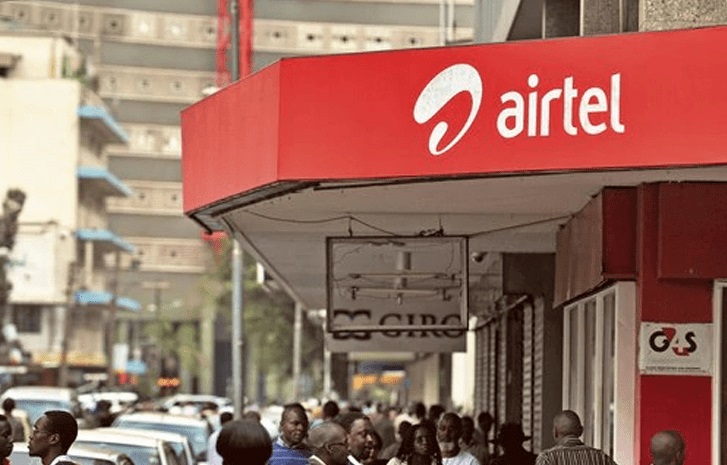
Airtel Africa and Vodacom Group have entered into a strategic infrastructure-sharing agreement covering Mozambique, Tanzania, and the Democratic Republic of Congo (DRC) in a bid to expand digital connectivity, improve service quality, and reduce operational costs across key African markets.
The deal, which remains subject to regulatory approvals, will see the two telecom giants share fiber-optic networks and tower infrastructure to accelerate the rollout of high-speed internet services, particularly in underserved and rural communities where deployment costs are high.
Under the arrangement, both companies will be able to leverage each other’s existing network assets, reducing the need for costly parallel infrastructure builds. This is expected to result in faster internet speeds, better service reliability, and improved access to mobile, fixed, and financial services.
Register for Tekedia Mini-MBA edition 20 (June 8 – Sept 5, 2026).
Register for Tekedia AI in Business Masterclass.
Join Tekedia Capital Syndicate and co-invest in great global startups.
Register for Tekedia AI Lab.
Driving Digital Inclusion
Vodacom CEO Shameel Joosub called the partnership a “proactive step” toward a sustainable and inclusive digital future for Africa, noting that the company’s goal to connect 260 million customers by 2030 hinges on scalable, cost-efficient network solutions.
Airtel Africa CEO Sunil Taldar echoed this sentiment, stating that collaboration, even between competitors, has become essential to meet Africa’s growing demand for data-driven services.
“Accelerating the deployment of fibre connectivity is key to enabling 4G and 5G technologies in Africa,” Taldar said, adding that the move will also enhance network performance, extend rural coverage, and create more opportunities for digital and financial inclusion.

He noted that partnering with Vodacom will open up greater access to digital and financial opportunities for customers, while meeting all regulatory requirements.
Economic Impact of The Deal
Industry analysts say the deal reflects a broader shift in Africa’s telecom sector toward cooperative infrastructure models. As demand for data surges due to the rise of video streaming, fintech applications, and cloud-based services, operators are increasingly opting to share assets to keep costs down while speeding up network deployment.
In many African countries, infrastructure-sharing agreements have proven effective in bridging connectivity gaps in regions where return on investment is traditionally low. By pooling resources, operators can free up capital for service innovation, while governments benefit from quicker progress toward national broadband and digital economy goals.

The move also positions Airtel Africa and Vodacom to compete more aggressively with MTN Group, which has been expanding its own cross-border infrastructure-sharing agreements. Airtel Africa struck a similar deal with MTN earlier this year in Nigeria and Uganda, while Nigerian operator 9mobile recently partnered with MTN to cut capital expenditure and improve network reach.
Catalyst for 5G Readiness
Analysts also note that fiber connectivity is critical for powering next-generation networks. With the African 5G rollout still in early stages, deals like this could play a pivotal role in building the backbone infrastructure needed to support ultra-fast mobile networks. This, in turn, would enable advanced applications in telemedicine, e-learning, and remote work — areas that have seen increased adoption since the COVID-19 pandemic.
By pooling infrastructure in Mozambique, Tanzania, and DRC — three markets with growing internet penetration but significant connectivity gaps — Airtel Africa and Vodacom aim to deliver a sustainable model for expanding access while meeting rising consumer and enterprise demand for reliable, high-speed data services.