

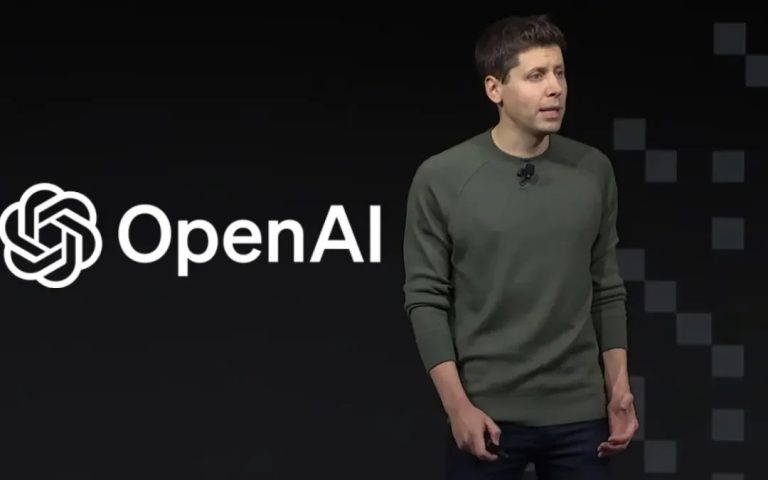
OpenAI CEO Sam Altman believes that the workforce disruption caused by artificial intelligence will hit older employees far harder than fresh graduates. This view stands in sharp contrast to the warnings voiced by many other tech leaders.
Speaking on Cleo Abram’s Huge Conversations YouTube show, Altman said he is “more worried about what it means not for the 22-year-old, but for the 62-year-old that doesn’t want to go retrain or rescale or whatever the politicians call it that no one actually wants.”
He acknowledged that AI will inevitably eliminate some jobs, but argued that younger people entering the workforce are far better positioned to adapt and take advantage of the technology.
Register for Tekedia Mini-MBA edition 20 (June 8 – Sept 5, 2026).
Register for Tekedia AI in Business Masterclass.
Join Tekedia Capital Syndicate and co-invest in great global startups.
Register for Tekedia AI Lab.
“If I were 22 right now and graduating college, I would feel like the luckiest kid in all of history,” Altman said. “There’s never been a more amazing time to go create something totally new, to go invent something, to start a company… It is probably possible now to start a one-person company that will go on to be worth more than a billion dollars and deliver an amazing product and service to the world.”
Altman’s optimism is rooted in his belief that the breadth of AI capabilities has opened unprecedented opportunities for innovation, entrepreneurship, and productivity. In his view, the AI era could produce entirely new industries and professions, potentially enabling even solo founders to rival major corporations in scale.
However, not all of his peers share that sentiment. Anthropic CEO Dario Amodei recently warned that AI could wipe out up to half of entry-level white-collar jobs within the next five years — a scenario he called a “potential catastrophe” given the lack of robust societal and policy frameworks to manage the displacement.

Amodei and other industry leaders stress that without deliberate retraining programs and social safety nets, the job losses could hit younger and less experienced workers hard, regardless of their adaptability.
Altman acknowledged that beyond a five-year horizon, predicting the labor market becomes more difficult due to the accelerating pace of AI development. He painted a futuristic — almost science-fiction — picture of what work might look like in 2035, imagining graduates taking on roles as space explorers or operating in entirely new industries that do not exist today.
The divide between Altman’s hopeful outlook and the caution voiced by other AI leaders underscores a key tension in the public AI debate: whether the technology will be a great economic equalizer or a force that deepens inequality. While younger workers may indeed have more flexibility to adapt, older employees in sectors susceptible to automation could face steep challenges — particularly if governments and corporations fail to invest in meaningful retraining and transition strategies.

This generational disparity in AI readiness is expected to shape labor policy discussions in the coming years, especially as AI adoption accelerates across industries from law and finance to healthcare and logistics. The question may no longer be whether AI will replace jobs, but who will be best prepared to seize the opportunities it creates — and who risks being left behind.