

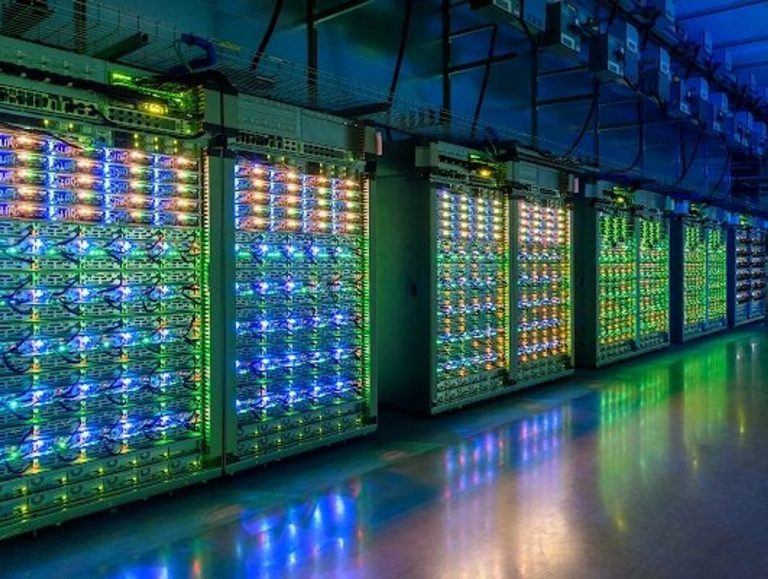
Internal Amazon documents have revealed that major changes are coming to one of the company’s largest data center operations, underscoring how rapidly the artificial intelligence boom is reshaping cloud infrastructure.
As demand for AI computing accelerates, technology giants are redesigning their facilities to support more powerful processors, higher energy consumption, and advanced cooling systems. The reported changes signal that Amazon is preparing its cloud business for the next generation of AI workloads rather than traditional computing tasks.
At the heart of the transformation is Amazon Web Services (AWS), the company’s cloud computing division and one of the largest providers of data center services in the world.
AWS has long supplied businesses with computing power, storage, and networking, but the explosive adoption of generative AI has dramatically changed what customers require.
Register for the next Tekedia Mini-MBA.
Register for Tekedia AI in Business Masterclass.
Join Tekedia Capital Syndicate and co-invest in great global startups.
Instead of conventional servers handling websites and databases, enterprises are now demanding clusters of thousands of graphics processing units (GPUs) capable of training and running sophisticated AI models.
The leaked documents reportedly outline plans to redesign sections of a massive AWS data center to accommodate these new hardware requirements. AI accelerators consume significantly more electricity than standard processors while generating far more heat.
As a result, existing facilities must be upgraded with stronger electrical infrastructure, denser server racks, and more advanced cooling technologies, including liquid cooling systems that can efficiently dissipate heat from high-performance chips.

These changes reflect a broader industry trend. Companies such as Microsoft, Google, Meta, and Oracle are all investing billions of dollars to expand AI-ready infrastructure. Nvidia’s latest GPUs have become the backbone of modern AI development, creating unprecedented demand for specialized data centers.
Amazon has also invested heavily in developing its own custom AI chips, including Trainium and Inferentia, to reduce dependence on third-party hardware while lowering costs for customers.
The redesign of Amazon’s facilities highlights the enormous energy demands created by artificial intelligence. AI servers can consume several times more power than traditional cloud infrastructure, forcing operators to rethink how electricity is delivered throughout a data center.
Utilities, renewable energy providers, and even nuclear power developers are becoming increasingly important partners as technology companies search for reliable sources of electricity capable of supporting future expansion.

Beyond hardware, the reported upgrades suggest Amazon is positioning AWS to remain competitive in the intensifying cloud market. Microsoft has leveraged its partnership with OpenAI to attract enterprise customers, while Google continues integrating its Gemini AI models across cloud services.
Amazon cannot afford to fall behind in an industry where AI capabilities are increasingly influencing purchasing decisions. Investing in AI-optimized infrastructure strengthens AWS’s ability to host foundation models, support AI startups, and provide businesses with scalable computing resources.
These developments also raise questions about cost and sustainability. Building AI-focused data centers requires billions of dollars in capital expenditure, while the associated energy consumption has drawn scrutiny from environmental groups and regulators.
Companies must balance rapid expansion with commitments to reduce carbon emissions, improve energy efficiency, and responsibly manage water usage for cooling systems. The challenge will be meeting surging AI demand without overwhelming local power grids or undermining sustainability goals.
The reported internal Amazon documents reveal more than a simple infrastructure upgrade. They illustrate how artificial intelligence is fundamentally transforming the architecture of modern data centers and reshaping investment priorities across the technology industry.
As AI adoption continues to accelerate, cloud providers are entering a new era where computing capacity, energy availability, and specialized hardware will determine competitive advantage.
Amazon’s planned changes demonstrate that the race to build the infrastructure powering the AI economy is only beginning, and the companies that successfully adapt their data centers today are likely to lead the next generation of cloud computing.