

Amazon has asked U.S. regulators for permission to deploy up to 5,105 internet satellites to power a direct-to-device (D2D) communications network, marking a major expansion of its ambitions in the fast-growing satellite connectivity market and setting up a more direct challenge to SpaceX’s Starlink.
In a filing submitted Saturday to the Federal Communications Commission (FCC), Amazon said the proposed satellite constellation would combine its existing Project Kuiper infrastructure with the satellites and wireless spectrum of Globalstar, the satellite operator it agreed to acquire in a deal valued at approximately $11.6 billion.
The filing, which comes more than a year after SpaceX’s, represents Amazon’s first formal regulatory step toward building a satellite network capable of connecting directly to smartphones and other mobile devices without relying on traditional cellular towers.
Register for the next Tekedia Mini-MBA.
Register for Tekedia AI in Business Masterclass.
Join Tekedia Capital Syndicate and co-invest in great global startups.
If approved, the project would significantly broaden Amazon’s role in the space communications industry, moving beyond broadband internet services into the emerging direct-to-device market, where technology companies and satellite operators see strong demand for expanding mobile coverage to remote regions and improving emergency communications.
Direct-to-device technology enables ordinary smartphones and connected devices to communicate with satellites using licensed cellular spectrum, allowing users to send messages, make calls, or access data in areas where terrestrial mobile networks are unavailable.
Amazon said the network is intended to serve consumers and businesses that remain beyond the reach of conventional wireless infrastructure.

“Amazon looks forward to delivering on the promise of D2D connectivity, including to the millions of people living, traveling and working in places beyond the reach of existing networks today,” the company said in its FCC application.
According to the filing, the service will target users who are “unserved or underserved” by existing wireless providers while also supporting emergency response operations, including search-and-rescue missions, disaster recovery efforts and communications for remote industrial sites, transportation fleets and supply chains.
The proposal builds on Amazon’s announcement in April that it would acquire Globalstar, a move widely viewed as an effort to secure the spectrum rights necessary to compete in satellite-enabled mobile communications. The company expects the acquisition to close in 2027, with deployment of the direct-to-device network scheduled to begin in 2028.

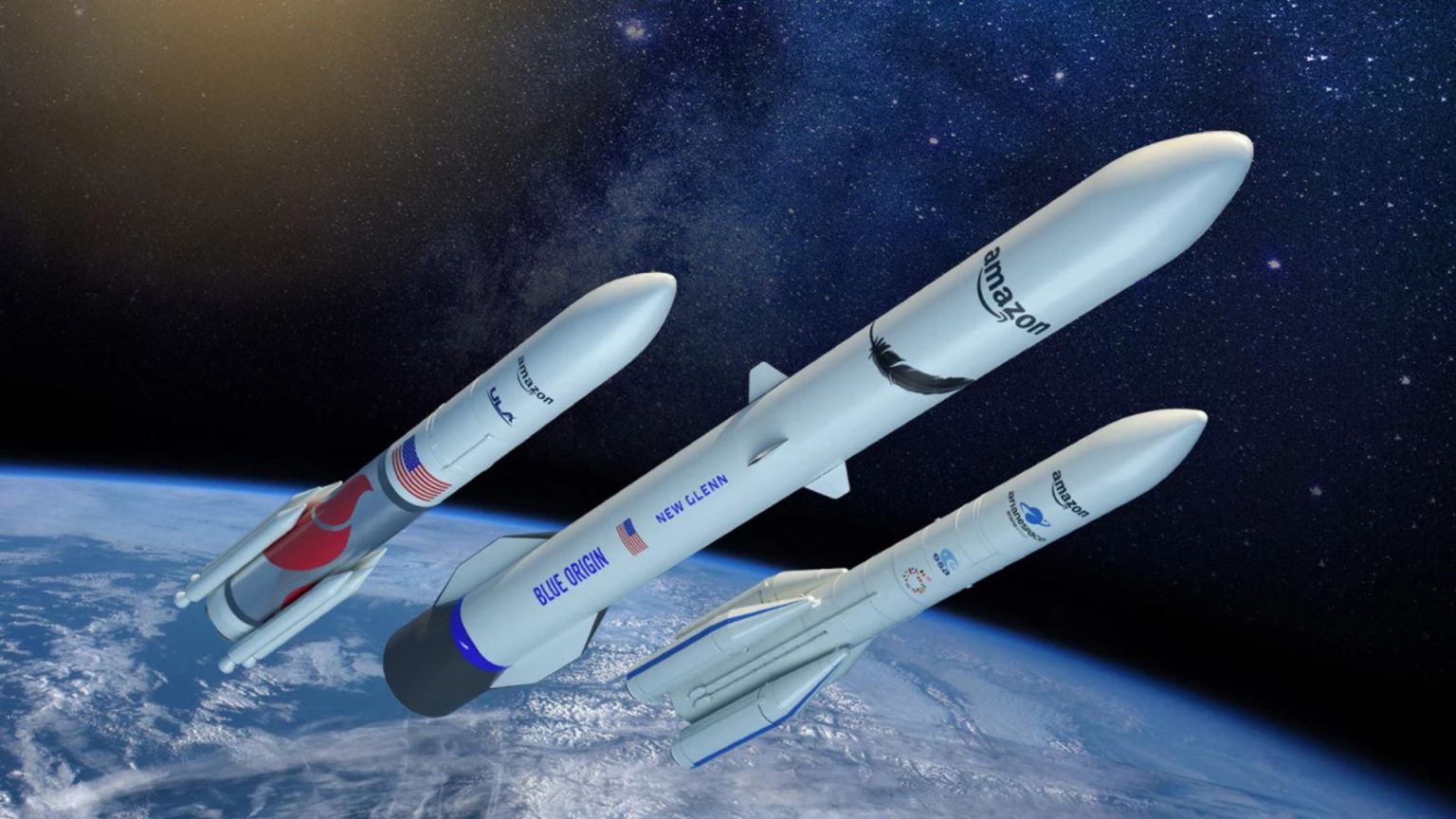
The initiative also complements Amazon’s broader Project Kuiper program, its low-Earth orbit satellite broadband network designed to compete with SpaceX’s Starlink. Project Kuiper has accelerated deployment over the past year. Amazon now has more than 390 satellites in orbit, a milestone the company recently said is sufficient to begin offering initial broadband service later this year.
Although that figure represents meaningful progress, Amazon still trails Starlink by a wide margin. SpaceX operates more than 10,000 satellites, giving it by far the world’s largest low-Earth orbit satellite constellation and a substantial first-mover advantage in satellite broadband and direct-to-cell services.
Amazon also continues to face an aggressive deployment schedule imposed by regulators.
Last month, the FCC granted the company a waiver from a deadline requiring it to deploy 1,600 first-generation Kuiper satellites by July 30, acknowledging delays related to satellite manufacturing and launch availability. However, Amazon remains obligated to deploy its full first-generation constellation of 3,232 satellites by July 2029, a requirement intended to ensure efficient use of licensed spectrum.
The proposed direct-to-device constellation would operate alongside, rather than replace, Amazon’s existing Kuiper network, substantially increasing the company’s overall satellite footprint.
Competition in the direct-to-device market has intensified as satellite operators seek new revenue streams beyond traditional broadband internet access.
SpaceX has already begun rolling out Starlink Mobile, its direct-to-cell service developed in partnership with T-Mobile in the United States. The company strengthened its position by acquiring wireless spectrum licenses from EchoStar, allowing compatible smartphones to connect directly to Starlink satellites without requiring specialized satellite hardware.
The broader industry is moving rapidly toward satellite-enabled mobile connectivity as advances in satellite technology, antenna design and spectrum sharing make it increasingly feasible for conventional smartphones to communicate directly with orbiting satellites.
Analysts view direct-to-device services as one of the most promising growth segments in the satellite communications industry because they address coverage gaps in rural areas, maritime routes, aviation corridors and disaster zones where conventional mobile infrastructure is either unavailable or vulnerable to outages.
For Amazon, integrating Globalstar’s spectrum assets with Project Kuiper could provide an advantage by enabling the company to offer a broader suite of connectivity services spanning broadband internet, enterprise communications and direct smartphone connectivity.