

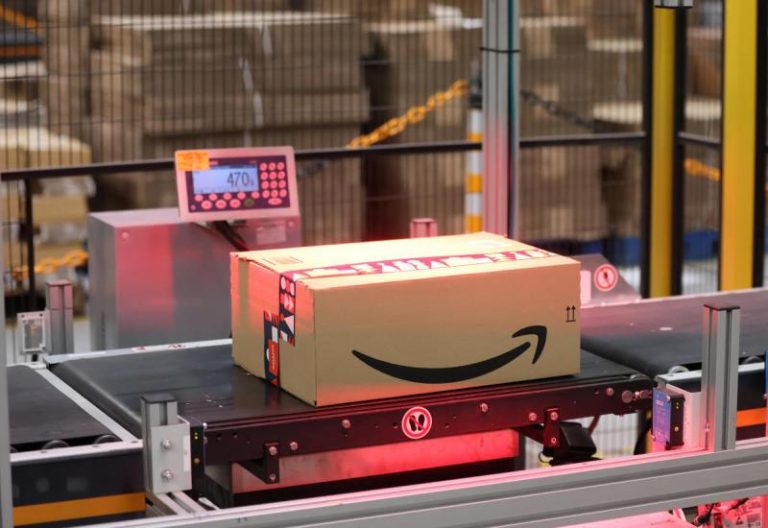
In what’s shaping up to be one of the first major clashes between Big Tech and an emerging AI startup, Amazon has accused Perplexity AI of breaching its rules and using deceptive practices with its new agentic web browser, Comet.
The e-commerce giant says the startup’s technology violates its terms of service by secretly placing orders on behalf of users without disclosure, a claim Perplexity has rejected as “bullying” designed to stifle innovation.
According to a report by Bloomberg, Amazon alleges that Perplexity’s Comet browser not only fails to disclose when its AI is shopping on Amazon but also violates computer fraud laws by using automated systems to make purchases. The company said it had asked Perplexity to stop such practices over a year ago, an agreement it claims the startup later broke when Comet was launched.
Register for Tekedia Mini-MBA edition 20 (June 8 – Sept 5, 2026).
Register for Tekedia AI in Business Masterclass.
Join Tekedia Capital Syndicate and co-invest in great global startups.
Register for Tekedia AI Lab.
“We’ve repeatedly requested that Perplexity remove Amazon from the Comet experience, particularly in light of the significantly degraded shopping and customer service experience it provides,” Amazon said in a statement.
The company added that “third-party applications that offer to make purchases on behalf of customers from other businesses should operate openly and respect service provider decisions whether or not to participate.”
Perplexity’s browser, Comet, is designed to act as an autonomous shopping assistant. Tests conducted by PCMag show that it can indeed make purchases on Amazon without requiring the user to log in or manually enter payment details.

“It took about 30 seconds before it prompted me to confirm, which I did, and it placed the order using my default payment method and address,” PCMag’s Ruben Circelli reported, describing the system as “definitely easy” and functional on Amazon’s platform.
Amazon sees that capability as a step too far. The company argues that the practice undermines user trust and its control over the shopping experience. It also raises security and liability questions — particularly if an AI makes unintended purchases or if something goes wrong with a transaction.
Perplexity, however, hit back with a blistering public response, accusing Amazon of trying to crush competition.

“Amazon should love this,” the startup said in a statement. “Easier shopping means more transactions and happier customers. But Amazon doesn’t care. They’re more interested in serving you ads, sponsored results, and influencing your purchasing decisions with upsells and confusing offers.”
The company went further, claiming that Amazon is “trying to make life worse” for consumers by limiting innovation.
“Amazon shouldn’t forget what it’s like to be our size and passionate about a world-changing product,” Perplexity said.
The conflict emerges amid growing tensions around “agentic AI” — autonomous systems that act on a user’s behalf online. These systems represent the next phase of artificial intelligence, blurring the line between software and service. Perplexity argues that such tools are the future of human–AI interaction, saying: “With the rise of agentic AI, software is also becoming labor: an assistant, an employee, an agent. Today, Amazon announced it does not believe in your right to hire labor, to have an assistant or an employee acting on your behalf.”
Yet the technology’s risks are already apparent. Even OpenAI, the world’s leading AI company, has cautioned that its own agentic system, ChatGPT Atlas, is imperfect. “ChatGPT agent is powerful and helpful, and designed to be safe, but it can still make (sometimes surprising!) mistakes, like trying to buy the wrong product or forgetting to check in with you before taking an important action,” said Dane Stuckey, OpenAI’s Chief Information Security Officer, after Atlas was released.
He pointed to “prompt injection attacks” as a key concern — situations where malicious code embedded in a website or email can manipulate an AI agent’s behavior. Such vulnerabilities could lead an AI to ignore user instructions or perform unauthorized transactions.
Perplexity’s public statements did not address those security risks, instead emphasizing the broader potential of agentic commerce. The company argues that consumers should be able to delegate online shopping to digital assistants that act entirely on their behalf — a vision that could transform e-commerce, but also disrupt traditional retail models.
Amazon, by contrast, appears intent on keeping shopping inside its own walls. Last month, the company introduced its own “Help Me Decide” AI shopping assistant, designed to guide customers through product choices while keeping them engaged on Amazon’s platform. Perplexity’s system bypasses that experience altogether — users never need to visit Amazon’s website, which could limit exposure to advertisements and sponsored listings that drive a large share of Amazon’s revenue.
That difference in strategy may explain the intensity of Amazon’s response. “They’re more interested in serving you ads,” Perplexity’s statement argued, framing the dispute as a fight over who controls the consumer relationship — the retailer or the AI intermediary.
Not every retailer is taking Amazon’s approach. Walmart, for instance, announced in October that it had partnered with OpenAI to enable direct shopping through ChatGPT using its “Instant Checkout” technology. With this integration, customers can order Walmart products without ever leaving the ChatGPT interface.
“This is agentic commerce in action,” Walmart said at the time — effectively embracing the same model Amazon is now challenging.
As agentic AI grows more capable, the legal and commercial implications are likely to multiply. For now, Amazon’s warning to Perplexity signals that the company is unwilling to cede control of its marketplace to outside algorithms — no matter how convenient they might be for shoppers.
What happens next could help define how AI agents interact with the world’s largest online platforms, and who ultimately gets to profit when a machine clicks “Buy Now.”