

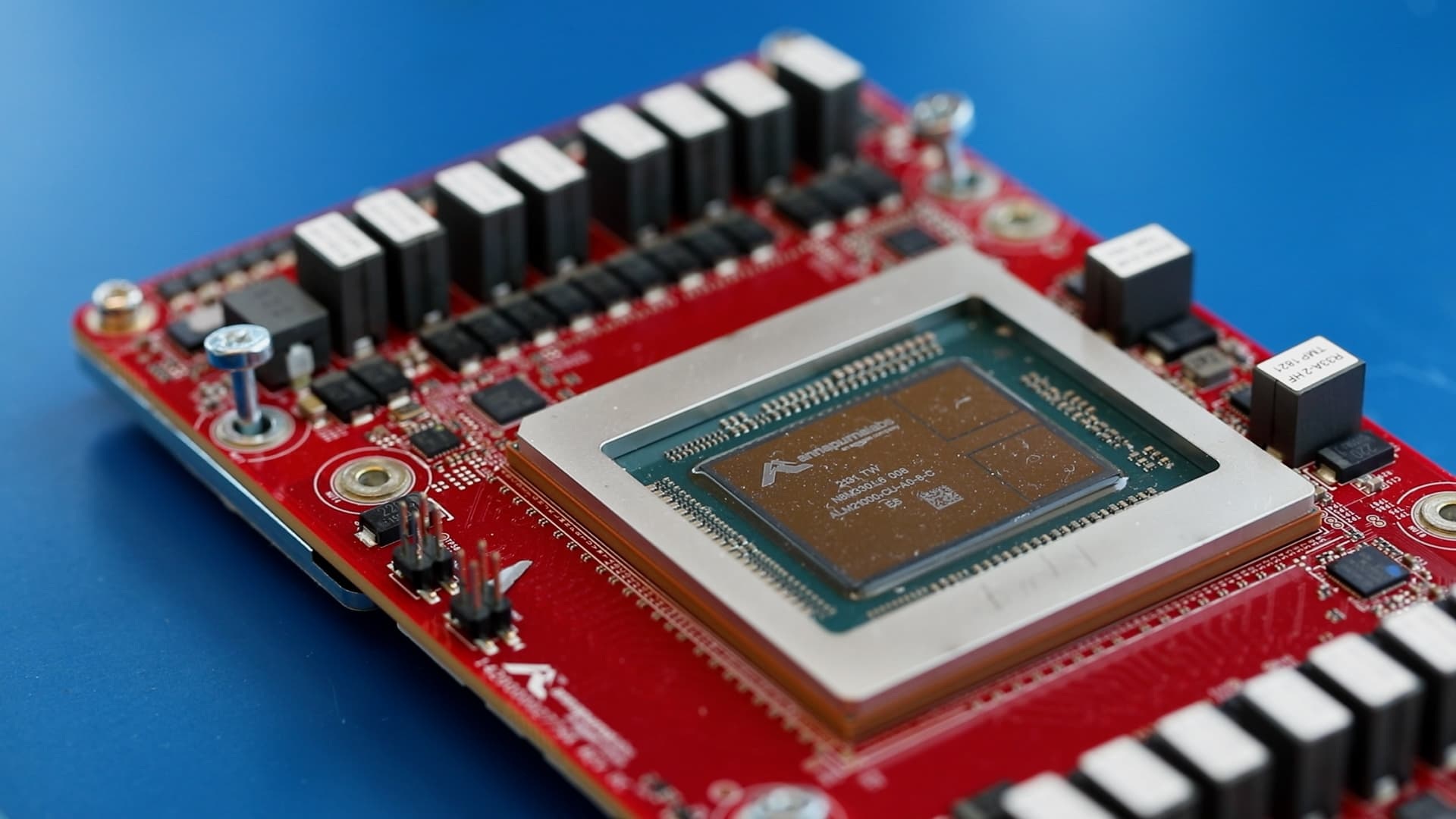
Amazon is prioritizing the development of its own chips for key consumer devices as it seeks greater control over the integration of hardware and software in an increasingly AI-driven product lineup.
In a wide-ranging interview on CNBC’s “The Tech Download” podcast, Panos Panay, head of devices and services at Amazon, discussed for the first time the company’s approach to semiconductors in its hardware and how it is experimenting with different types of AI-enabled gadgets.
“We do make our own end-to-end silicon for the devices that we ship,” Panay said.
Register for the next Tekedia Mini-MBA.
Register for Tekedia AI in Business Masterclass.
Join Tekedia Capital Syndicate and co-invest in great global startups.
He noted that Amazon’s custom silicon is already present in devices such as the Echo Show 8, Echo Show 11, and Fire TV. In October, Amazon unveiled the AZ3 and AZ3 Pro chips designed to run AI models on-device rather than relying on the cloud. Many device makers view locally processed AI as offering advantages in speed and security.
The move mirrors strategies employed by companies like Apple, which designs its own chips to achieve tighter hardware-software integration. Panay emphasized that for certain critical devices, end-to-end silicon is essential.
“On some of the more critical devices right now, our focus is end-to-end silicon, because to your point, if you really want that hardware and software connection … and if we’re going to go deliver this ambient experience in the home for people in the most secure way, we definitely need to think about how that end-to-end delivery of hardware comes together,” he said.

Panay added that Amazon continues to work with external chip suppliers such as Qualcomm for some products.
The emphasis on custom silicon is part of a broader effort to enhance AI capabilities across its device portfolio. The company launched Alexa+ for general availability in the U.S. this year — a significantly upgraded version of its digital assistant capable of handling more complex queries and tasks, learning user context and patterns. Alexa+ aims to tie together Amazon’s ecosystem of hardware, from Ring doorbells to Echo devices and Fire TV.
Rethinking the Future of AI Devices
As Amazon’s digital assistant gains more advanced features, Panay said the company is rethinking how users will interact with devices and what that means for the next generation of gadgets.

“I think we might be moving away from a world of apps and screens,” Panay said, adding that “conversation and context” will be more important for AI assistants.
When asked about the types of gadgets Amazon is developing, Panay was cautious about specifics but hinted at significant activity.
“When you think about the future of AI devices, you got to be super skeptical right now for anyone who tells you they know what they are. I have a lab full of devices,” he said.
Last month, Qualcomm CEO Cristiano Amon told the same podcast that the company was working on 40 new AI-powered devices as consumer electronics firms search for the next major category after the smartphone.
Alexa+ will continue to compete with offerings from OpenAI’s ChatGPT and Google’s Gemini, both of which are also targeting the consumer experience. Google is leveraging the reach of the Android operating system to expand its user base, while companies like Samsung are building many of their AI features on Gemini models.
For Amazon, Alexa+ represents a strategic effort to deepen user engagement within its own ecosystem of devices and services, potentially driving more commerce and loyalty.
Last year, Amazon made a notable foray into wearables with its acquisition of Bee, a company that produces $49.99 wristbands capable of understanding voice commands, creating lists, answering questions, and drafting notes. Panay indicated there is a broader roadmap for on-the-go devices.
“So when you are back in the home or when you are at work, that connection stays consistent and contextual,” Panay said. He added that “you won’t have to wait long” for an Amazon product in this category.
Implications for Amazon’s Hardware Future
Analysts see Amazon’s focus on custom silicon and AI-native devices as a representation of a maturing strategy in consumer hardware. By developing its own chips, the company gains greater control over performance, power efficiency, and integration with its software ecosystem. This vertical integration approach is expected to help Amazon differentiate its products in a competitive market where AI capabilities are becoming table stakes.
The emphasis on on-device AI processing also addresses growing concerns around privacy and latency. Running models locally reduces dependence on cloud infrastructure and can provide faster, more responsive experiences. However, it also requires significant investment in chip design and optimization.
The company’s hardware efforts are closely tied to its services business. Against that backdrop, enhanced AI capabilities in devices like Echo and Fire TV are expected to drive greater usage of Amazon’s ecosystem, from shopping to entertainment and smart home control. This integration strategy has been a hallmark of Amazon’s approach, allowing it to compete effectively against specialized players in various categories.