

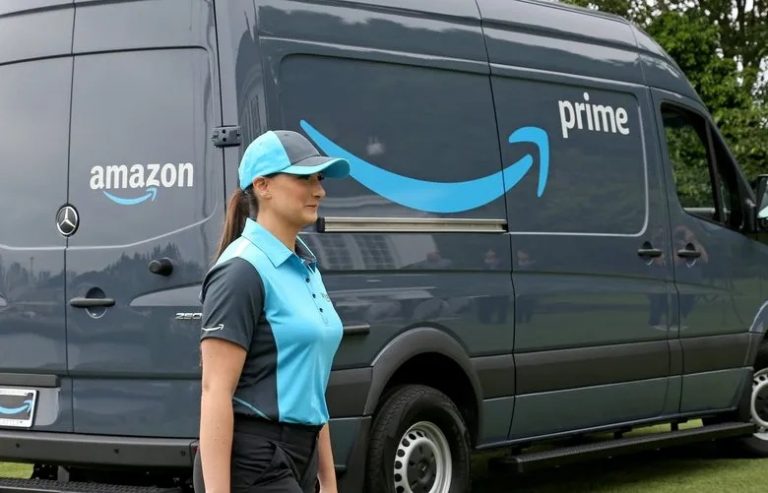
For decades, Amazon has been synonymous with moving packages. The company built its reputation on delivering books, electronics, household goods, and countless other products to customers with unprecedented speed and efficiency.
Its vast logistics network, powered by warehouses, delivery vans, cargo planes, and sophisticated algorithms, transformed global commerce. Yet Amazon’s ambitions now extend far beyond transporting physical goods.
Increasingly, the company is focused on moving people, reshaping how individuals travel, work, and interact with services in the digital age.
At the heart of this shift is Amazon’s growing investment in technologies and platforms that influence human mobility and behavior. Through its cloud computing division, Amazon Web Services (AWS), the company provides the digital infrastructure that powers transportation networks, ride-sharing applications, smart city initiatives, and autonomous vehicle development.
Register for the next Tekedia Mini-MBA.
Register for Tekedia AI in Business Masterclass.
Join Tekedia Capital Syndicate and co-invest in great global startups.
Rather than merely delivering packages to consumers, Amazon is helping create the systems that guide how people move through modern society. One of the most visible examples of this evolution is Amazon’s involvement in autonomous transportation.
The company’s acquisition of Zoox signaled its commitment to developing self-driving vehicle technology. Zoox is building autonomous robotaxis designed to transport passengers safely and efficiently without human drivers. While many people still associate Amazon with warehouses and delivery trucks.
Its investment in autonomous mobility demonstrates a broader vision: participating directly in the future movement of people. Amazon’s logistics expertise also gives it a unique advantage in understanding mobility challenges.

The company manages one of the most complex transportation networks in the world, coordinating millions of deliveries daily. The algorithms used to optimize delivery routes, predict demand, and reduce transit times can also be applied to passenger transportation systems.
This convergence of logistics and mobility highlights how Amazon’s core competencies can expand into entirely new markets. Beyond transportation itself, Amazon is moving humans through its influence on labor and workforce mobility.
The company employs millions of workers globally and has created extensive training and education programs designed to help employees develop new skills.
Initiatives focused on technology training, cloud computing certification, and career advancement enable workers to transition into higher-paying and more specialized roles. In this sense, Amazon is facilitating social and economic mobility, helping people move upward in their careers rather than simply moving products across geographic distances.

The rise of remote work has further amplified Amazon’s role in connecting people. AWS supports countless businesses, educational institutions, and government organizations that rely on cloud infrastructure for virtual collaboration.
Employees can work from anywhere, students can attend online classes, and businesses can operate across borders. Amazon’s technology effectively enables the movement of ideas, knowledge, and professional opportunities, reducing the importance of physical location.
Critics argue that the company’s expansion into transportation, workforce development, and digital infrastructure concentrates enormous power within a single organization. Concerns about data privacy, labor practices, market dominance, and the societal impact of automation continue to fuel debate.
As Amazon becomes more deeply embedded in the systems that move people and information, its responsibilities to society grow as well. Amazon is no longer just a company that moves packages from one place to another.
It is becoming a key player in the movement of people, opportunities, and digital experiences. Whether through autonomous vehicles, cloud-powered transportation systems, workforce development programs, or remote connectivity.
Amazon is helping shape how humans navigate an increasingly interconnected world. The future of Amazon may be defined not only by what it delivers, but by how it enables people themselves to move forward.