

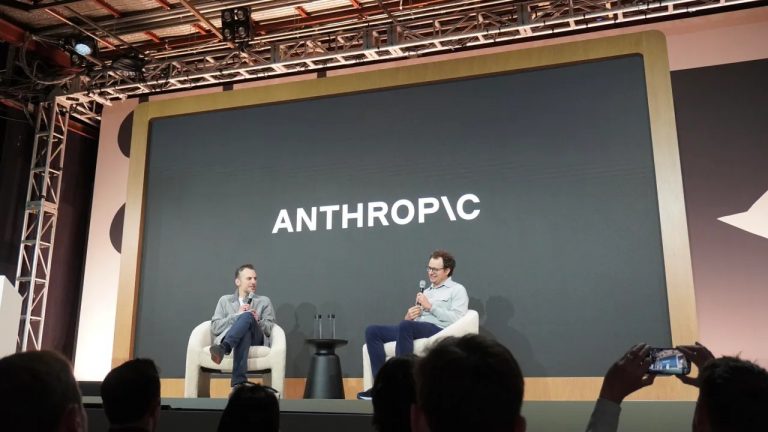
Anthropic has expanded Claude’s free tier with file creation, third-party integrations, and task “Skills,” while reiterating that the chatbot will remain ad-free — a pointed contrast to OpenAI’s plans to introduce advertising in ChatGPT.
Anthropic is upgrading the free version of its Claude chatbot, broadening access to features previously reserved for paying users in a move that appears strategically timed against OpenAI’s planned advertising integration into ChatGPT.
On Wednesday, the company announced that free Claude users can now create and edit files, connect to external services through “Connectors,” and deploy reusable task-based “Skills.” The update significantly narrows the functional gap between Claude’s free and paid tiers.
Register for Tekedia Mini-MBA edition 20 (June 8 – Sept 5, 2026).
Register for Tekedia AI in Business Masterclass.
Join Tekedia Capital Syndicate and co-invest in great global startups.
Register for Tekedia AI Lab.
The announcement concluded with the tagline “No ads in sight,” underscoring Anthropic’s public commitment to keep Claude ad-free even as debate over monetization models intensifies across the AI industry.
Enterprise Features Move Into the Free Tier
Anthropic introduced file creation capabilities for paid users in September. Beginning this week, free-tier users can also generate and edit Excel spreadsheets, PowerPoint presentations, Word documents, and PDFs. The file-generation feature is powered by Claude’s Sonnet 4.5 model.
The upgrade positions Claude as more than a conversational chatbot, extending it into productivity workflows typically associated with office software suites. By enabling structured document creation directly within chat interactions, Anthropic is strengthening Claude’s appeal for students, freelancers, and small teams who may not subscribe to premium plans.

The introduction of “Connectors” further expands functionality. Free users can now link Claude to third-party services, including Canva, Slack, Notion, Zapier, and PayPal. This integration layer allows Claude to access external content and perform cross-platform tasks, increasing its utility within professional environments.
Anthropic also expanded access to “Skills,” a feature that allows users to preload folders of instructions, scripts, and reference materials so Claude can execute repeatable tasks in structured ways. The capability effectively creates customizable mini-workflows within the chatbot interface.
Additional improvements include longer conversation memory, more interactive responses, and enhanced voice and image search functionality.

Together, the upgrades represent a meaningful shift: Claude’s free tier now functions as a lightweight AI productivity platform rather than a limited demo product.
The Advertising Divide
The timing of the expansion aligns with OpenAI’s stated intention to introduce advertising into ChatGPT for free users. While OpenAI has not detailed the precise format or timing of ad deployment, the plan marks a potential pivot in the economics of consumer AI services.
Anthropic has framed its approach in sharp contrast. The company reiterated that Claude will remain ad-free, stating that inserting advertisements into conversations would be incompatible with its vision of the assistant as a tool for work and deep thinking. The company has said that more than 80% of its revenue comes from enterprise customers, reducing reliance on consumer monetization.
The rivalry spilled into public messaging. In a Sunday Super Bowl advertisement, Anthropic depicted competing chatbots awkwardly inserting product placements into conversations, a clear reference to advertising-driven models. OpenAI Chief Executive Sam Altman described the ads as “funny” but “clearly dishonest,” saying OpenAI would not deploy advertising in the manner portrayed and positioning ads as a way to expand access for users who cannot afford subscriptions.
The exchange reflects a broader strategic divergence. One model prioritizes enterprise revenue and subscription tiers, maintaining a clean conversational environment. The other signals openness to diversified monetization to subsidize free access at scale.
The expansion of Claude’s free tier also comes amid intensifying competition across the generative AI market. Large models are increasingly converging in baseline capabilities, shifting differentiation toward ecosystem integration, workflow depth, and pricing structures.
Anthropic is raising the competitive bar for free-tier offerings by offering file generation, cross-platform connectors, and structured skills at no cost. The move may pressure rivals to either enhance their own free features or accelerate monetization efforts.
There is also a trust dimension. Advertising inside AI conversations raises questions about content neutrality, recommendation bias, and data use. An ad-free stance allows Anthropic to position Claude as an assistant optimized for utility rather than engagement-driven monetization.
At the same time, expanding free-tier functionality increases compute costs. File generation, external API calls, and extended memory sessions require sustained infrastructure investment. Anthropic’s enterprise-heavy revenue mix may help absorb those costs, but the long-term sustainability of a robust ad-free free tier depends on continued commercial adoption among paying customers.
The upgrade signals that competition in AI is moving beyond raw model performance toward platform architecture and business model identity. As OpenAI experiments with advertising and Anthropic doubles down on subscription and enterprise revenue, users are being offered distinct visions of how conversational AI should function — and how it should be funded.