

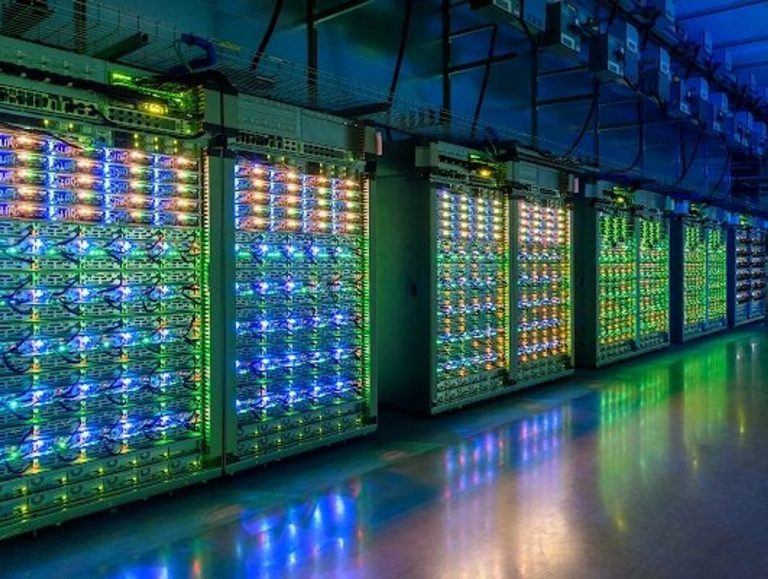
Anthropic has signed a lease with energy developer EverWind for data center capacity at Point Tupper in Nova Scotia, marking the Claude maker’s first data center agreement in Canada as the artificial intelligence company expands the computing infrastructure needed to support its rapidly growing business.
The agreement comes alongside EverWind’s plans to invest more than C$10 billion in a data center campus and wind power projects in Nova Scotia. The company has described the proposed investment as the largest privately funded investment in the province’s history, positioning the development as a major industrial and energy project as demand for AI computing continues to rise.
The deal is another indication of how AI developers are increasingly seeking access to large-scale computing capacity and energy infrastructure beyond their established markets. As models become more computationally demanding and businesses adopt AI tools, access to reliable electricity and data center capacity has become a central consideration for companies seeking to expand their services.
Register for the next Tekedia Mini-MBA.
Register for Tekedia AI in Business Masterclass.
Join Tekedia Capital Syndicate and co-invest in great global startups.
For Anthropic, the Canadian agreement represents a further step in its effort to secure the infrastructure required to support its Claude AI models. The company spent $7.33 billion on computing and infrastructure last year, roughly three times its spending in 2024, illustrating the scale of investment required to compete in the increasingly capital-intensive AI industry.
However, the Nova Scotia project also brings familiar questions about the local costs of data center expansion. Large computing facilities can require substantial electricity and water resources, while placing additional demands on power grids, water systems and other public infrastructure. These concerns have become more prominent as technology companies pursue ambitious infrastructure projects to meet rising demand for AI services.
Jacob Glick, Anthropic’s head of public policy for Canada, said the company would work to protect electricity customers and water resources while ensuring local communities benefit from the development.

His comments address a major issue facing communities considering major data center investments: will the economic benefits, including investment and employment, outweigh the demands placed on local infrastructure and natural resources?
EverWind’s proposed investment combines data center development with wind power projects, reflecting the growing connection between AI infrastructure and energy generation. The ability to secure sufficient electricity has become a major constraint on data center expansion, particularly as AI workloads increase the amount of computing power required.
The proposed campus at Point Tupper could make Nova Scotia a more significant destination for AI infrastructure investment. However, the scale of the announced investment does not by itself establish how quickly the campus will be built, how much computing capacity will ultimately become operational, or how the associated electricity supply will be delivered.

The relationship between the data center campus and wind power development will also be important in determining the project’s practical energy requirements. Wind generation can contribute to lower-carbon electricity supply, but its output varies with weather conditions. Data centers, by contrast, require dependable power around the clock, making grid connections, energy storage, backup generation and other sources of electricity relevant to how such projects operate.
The arrangement underpins a broader challenge for the AI industry: expanding computing capacity while managing electricity costs, power reliability and environmental concerns.
The proposed investment is expected to bring substantial private capital into the province. But analysts believe that Nova Scotia’s longer-term economic impact will be based on the development’s implementation, the jobs and business opportunities it creates, the infrastructure required to support it, and the extent to which local residents benefit from the investment.
Electricity pricing is one of the most serious aspects of the deal. If a major data center increases demand for power infrastructure, regulators and policymakers must consider how the associated costs are allocated between the project, the utility and other electricity customers. Anthropic’s stated commitment to protecting ratepayers signals that the distribution of those costs will be an important part of the public debate surrounding the development.
Water consumption presents another consideration, depending on the cooling systems and operating arrangements used at the facility. As communities scrutinize the resource requirements of large data centers, technology companies and developers face increasing pressure to demonstrate that new capacity can be accommodated without placing disproportionate burdens on local services.
Anthropic’s Canadian agreement comes as the company continues to invest heavily in the computing resources underpinning its AI business. Its $7.33 billion expenditure on computing and infrastructure last year, three times the amount spent in 2024, underscores the financial demands associated with developing and operating increasingly capable AI systems.
These investments can support model training, inference and the delivery of AI products to customers, but they also create pressure to generate sufficient revenue and productivity gains to justify the capital committed. Securing data center capacity is therefore both a technical requirement and a commercial decision: infrastructure must be available when needed, while its cost must remain compatible with the economics of the business.
The agreement also comes as Anthropic prepares for a potential US initial public offering that could value the company at more than $2 trillion. That prospective valuation would place considerable attention on its growth prospects, financial performance, infrastructure commitments, and ability to convert demand for Claude into sustainable returns.
But the company’s IPO plans are emerging amid controversy. New York City Comptroller Mark Levine has urged Anthropic to delay the offering over concerns involving safety and governance. Those concerns introduce another dimension to the company’s expansion, as investors assess not only the commercial opportunity in AI but also the risks associated with developing and deploying powerful models.
The proposed Canadian infrastructure deal does not resolve those questions, but it illustrates the scale of the operational commitments involved in sustaining Anthropic’s ambitions. Building a competitive AI business requires more than developing models and attracting customers. It also depends on securing computing resources, managing energy requirements, and navigating the regulatory and community concerns that accompany large infrastructure projects.