

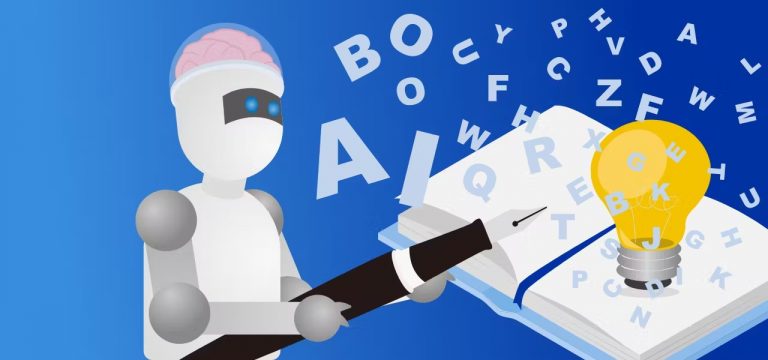
Anthropic is moving to make AI-generated writing easier to identify, potentially giving publishers, schools, and other institutions a new way to establish whether text was produced with its Claude artificial intelligence models.
The AI company said Monday that new Claude models will embed an “imperceptible watermark” directly into AI-generated text. The marking is designed to have no effect on the meaning or readability of the content and will remain attached to text when it is copied and pasted. Anthropic also said the watermark may survive some forms of editing.
The technology marks a significant step in the growing effort by AI companies to establish the provenance of synthetic content. Rather than relying entirely on statistical AI detectors, which attempt to determine whether a passage appears machine-generated, watermarking creates a signal at the point where the content is produced.
Register for the next Tekedia Mini-MBA.
Register for Tekedia AI in Business Masterclass.
Join Tekedia Capital Syndicate and co-invest in great global startups.
Anthropic said the feature is part of its commitments to greater transparency under the European Union’s AI Act. Claude models launched on or after August 2 will support the marking from launch, while the company is working to extend the capability to older models.
The watermark will apply to Claude-generated content worldwide, including text produced when Claude is accessed through cloud providers. Anthropic also plans to give third parties tools that can detect the markings, potentially allowing publishers, universities, schools and other organizations to verify whether material was generated through Claude.
The development comes as the publishing industry confronts a difficult question: how can editors distinguish between legitimate use of AI as an assistive tool and cases in which AI-generated material is presented as entirely human-authored?

That question has already produced high-profile disputes.
Last month, a book agent withdrew support for the crime novel “Call Me, I’ll Hide the Body” following concerns that its author may have used AI. Fourteen publishers had reportedly bid for the book, and a publishing deal had been completed before the agent apologized. The author, Jerry Falade, denied using AI to write the novel.
Earlier this year, Hachette withdrew Mia Ballard’s horror novel “Shy Girl” following allegations that the work contained AI-generated writing. Ballard told The New York Times that she had not used AI to write the book and said a freelance editor had introduced AI-generated material without her direct knowledge.

Anthropic’s watermark could give publishers another layer of evidence in cases like these. A detectable Claude watermark could establish that Claude-generated material had been incorporated into a document, even when the text itself does not contain obvious signs of machine generation.
That distinction matters because conventional AI detection is inherently difficult. Modern language models can produce prose that closely resembles human writing, while editing can further obscure the characteristics that automated detectors attempt to identify.
Watermarking approaches the problem from a different direction. Instead of asking whether text looks like it was generated by AI, a detection system can look for a signal deliberately embedded by the model provider.
Google has already pursued a similar strategy. Google DeepMind expanded its SynthID system to AI-generated text in the Gemini app and web experience in 2024, embedding an imperceptible watermark by adjusting the probability of words selected during generation. The company says SynthID can identify AI-generated content while preserving the quality and meaning of the text.
Google has since expanded SynthID across text, images, audio and video and introduced a detector designed to identify content generated with its AI systems.
Anthropic’s move therefore points to an emerging industry standard in which AI companies take greater responsibility for identifying the material their models produce.
But watermarking will not make AI-generated writing impossible to disguise.
Anthropic acknowledges that extensive editing, paraphrasing, translation or combining Claude’s output with human-written material can make its watermark undetectable. That limitation means the technology is unlikely to provide a definitive answer in every disputed case.
There is also an important question of what exactly a watermark proves.
The presence of a Claude watermark could demonstrate that Claude was involved in producing some portion of a document, but it would not necessarily establish that Claude wrote the entire work. Someone could use the model for proofreading, translation, restructuring, or other limited assistance and still leave behind a detectable signal.
For publishers and educators, that distinction is expected to become increasingly important as policies around acceptable AI use become more sophisticated. A university may prohibit students from submitting AI-generated assignments while allowing AI-assisted proofreading. A publisher may permit an author to use AI for research or editing while requiring the prose itself to be written by the author. A watermark alone cannot determine whether such rules have been violated.
The more consequential development may therefore be the creation of a broader provenance system around AI-generated text.
If major AI laboratories consistently embed detectable signals in their outputs and make detection tools available to third parties, publishers and educational institutions could eventually have a more reliable mechanism for investigating disputed material. It could also make it harder for users to present entirely AI-generated work as exclusively their own.
At the same time, the technology raises questions about privacy, false accusations and the treatment of legitimate AI-assisted work. A detectable mark could be useful as evidence, but institutions will need to establish clear standards for interpreting that evidence rather than treating a watermark as automatic proof of misconduct.
Claude’s watermark.
It’s totally strippable, because vendors do NOT work together. Take Claude’s output, pass through ChatGPT and ask it to restate it, watermark stripped, and it’s STILL generated by AI. Just, also translated by AI. Workflow matters. Testimony, is not proof.