

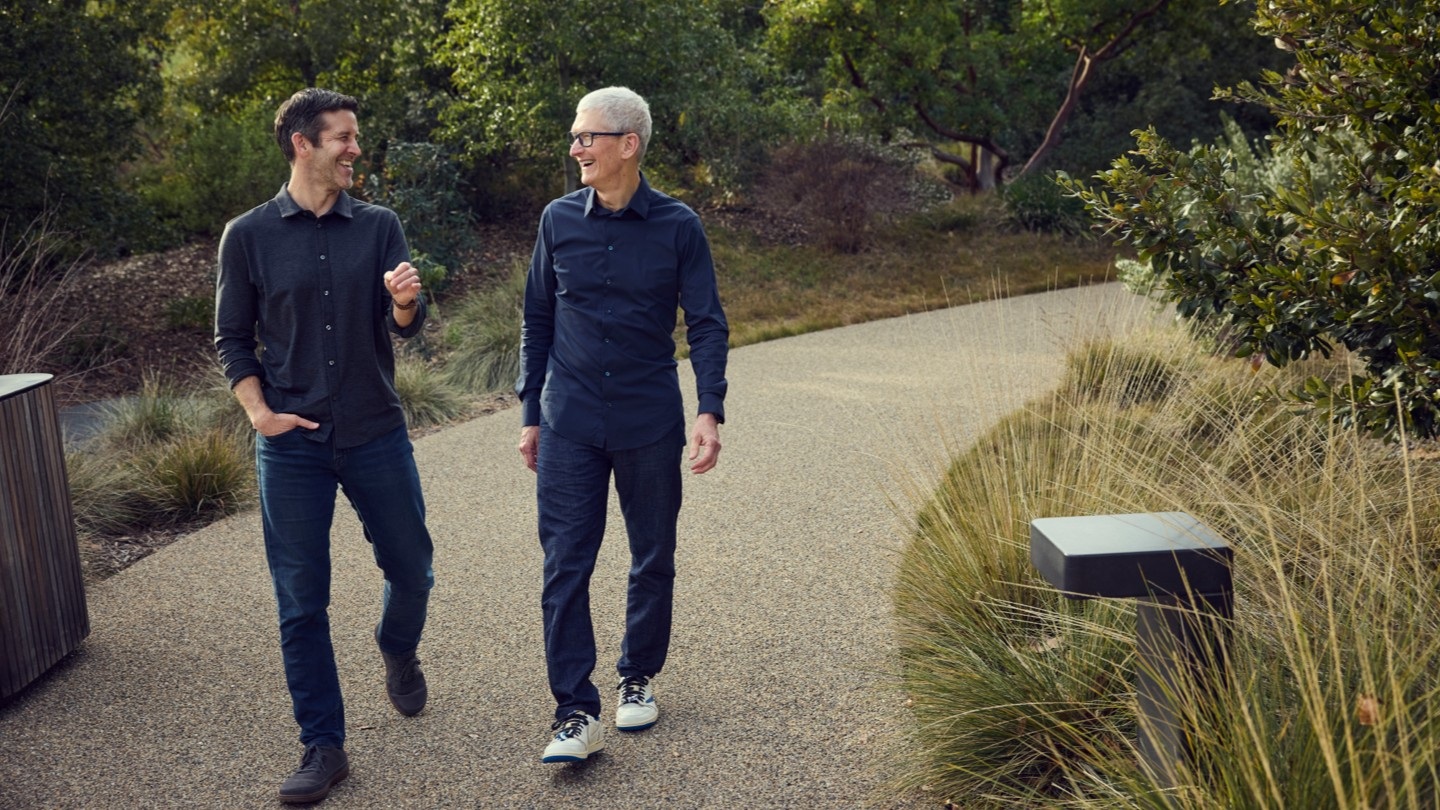
Apple has announced its first leadership transition in more than a decade, naming John Ternus as chief executive officer, succeeding Tim Cook, who will become executive chairman on September 1.
The move closes a defining chapter in Apple’s history and opens a more uncertain one, as the company confronts intensifying competition in artificial intelligence, geopolitical strain on its supply chain, and growing investor scrutiny over its innovation pipeline.
Cook, 65, will remain CEO through the summer to oversee the transition. Ternus, currently senior vice president of hardware engineering, will also join Apple’s board upon assuming the role, while chairman Arthur Levinson will shift to lead independent director.
Register for the next Tekedia Mini-MBA.
Register for Tekedia AI in Business Masterclass.
Join Tekedia Capital Syndicate and co-invest in great global startups.
“It has been the greatest privilege of my life to be the CEO of Apple and to have been trusted to lead such an extraordinary company,” Cook said. “I love Apple with all of my being, and I am so grateful to have had the opportunity to work with a team of such ingenious, innovative, creative, and deeply caring people who have been unwavering in their dedication to enriching the lives of our customers and creating the best products and services in the world.”
Ternus becomes Apple’s eighth CEO, taking over from a leader who transformed the company operationally and financially. Since succeeding Steve Jobs in 2011, Cook has overseen a roughly 24-fold increase in market capitalization, with Apple closing at about $4 trillion. Revenue has nearly quadrupled to more than $400 billion annually, driven in part by expansion into wearables such as the Apple Watch and AirPods, and newer categories like the Vision Pro headset.
Cook’s tenure was defined by operational discipline. A former supply chain executive with stints at IBM and Compaq, he rebuilt Apple’s global manufacturing network, turning it into one of the most efficient and tightly managed supply chains in the technology industry. That capability became a competitive advantage, allowing Apple to scale production and maintain margins even as its product portfolio expanded.

He also evolved into a central figure in policy and diplomacy. Cook’s engagement with governments ranged from defending user privacy, including a high-profile standoff with U.S. authorities over iPhone encryption, to navigating trade tensions under Donald Trump. His recent efforts included promoting Apple’s commitment to invest $600 billion in the United States, a move aimed at mitigating tariff risks and strengthening political alignment.
Yet the transition comes at a moment when Apple’s challenges are shifting from operational execution to technological leadership. Ternus inherits a company widely seen as trailing peers in artificial intelligence, an area reshaping the competitive landscape for consumer technology.
While Apple has continued to deliver strong hardware performance, including solid demand for the iPhone 17, it has faced criticism for lagging in generative AI capabilities. That concern intensified after delays to upgrades of its Siri voice assistant. The company has since moved to reset its AI strategy, including leadership changes and plans to integrate models such as Google Gemini into future products.

Ternus’s background signals continuity in hardware excellence but raises questions about how aggressively Apple will pivot toward AI-led services. Having spent roughly half his life at Apple, he has overseen engineering across flagship products including the iPhone, iPad, Mac, Apple Watch, AirPods, and Vision Pro. His elevation suggests Apple is betting on deep institutional knowledge and product integration as it navigates its next phase.
As part of the reshuffle, Johny Srouji will assume an expanded role as chief hardware officer, consolidating oversight of hardware technologies and engineering. That move could streamline development as Apple seeks tighter integration between silicon, devices, and software, a critical factor in competing on AI performance.
The broader context is less forgiving than the one Cook inherited. Apple faces a more fragmented global supply chain, shaped by geopolitical tensions and shifting trade policies. Tariffs and regulatory pressures are complicating manufacturing decisions, particularly in China and other Asian markets central to Apple’s operations.
At the same time, the surge in demand for AI chips is creating supply constraints across the semiconductor industry, adding a fresh challenge. Apple’s ability to secure and integrate advanced silicon will be central to its competitiveness in AI-driven products.
The transition also denotes a generational shift. Ternus, roughly 15 years younger than Cook, steps into the role at a time when Apple’s growth narrative is under scrutiny. The company must balance its legacy as a hardware innovator with the need to lead in software and AI, areas where rivals have moved faster.
The key question for investors is whether Apple can replicate its past formula of tightly integrated ecosystems in a world increasingly defined by AI platforms. Cook’s era demonstrated that operational excellence could drive extraordinary value. Ternus’s challenge will be to prove that Apple can still set the pace in defining the next wave of technology.