

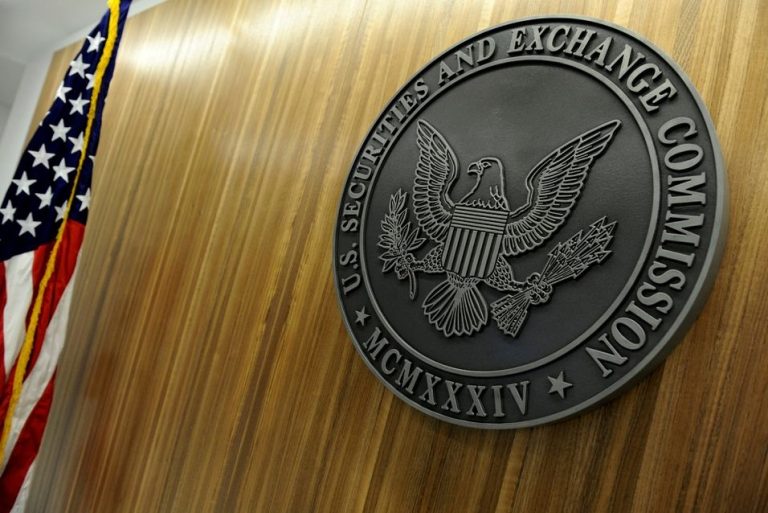
The U.S. Supreme Court is set to examine the reach of the Securities and Exchange Commission’s authority to strip illegal profits from wrongdoers, in a case that goes to the core of how the agency polices financial markets.
At issue is not whether the SEC can seek disgorgement, a remedy long recognized by courts and codified by Congress, but how far that power extends. The justices are being asked to decide whether the regulator must prove that investors suffered concrete financial harm before it can compel defendants to return ill-gotten gains.
The challenge is brought by Ongkaruck Sripetch, who was ordered to repay more than $3 million linked to a pump-and-dump scheme involving penny stocks. Sripetch admitted violating securities laws and served a 21-month prison sentence in a related criminal case. His argument now focuses on the limits of civil enforcement: that the SEC failed to show his actions caused stock prices to fall or inflicted measurable losses on investors.
Register for the next Tekedia Mini-MBA.
Register for Tekedia AI in Business Masterclass.
Join Tekedia Capital Syndicate and co-invest in great global startups.
The administration of President Donald Trump has defended the SEC’s broader reading of its powers, framing disgorgement as a tool aimed at removing incentives for fraud rather than compensating victims.
“Disgorgement is a remedy designed to strip ill-gotten profits from wrongdoers, not to compensate victims for their losses,” Justice Department lawyers argued in court filings.
The distinction is consequential because if disgorgement is treated primarily as a deterrent, the SEC can pursue it without tying profits directly to investor losses. If the court adopts Sripetch’s position, the agency would need to demonstrate a clearer causal link between misconduct and financial harm, raising the bar for enforcement.

The case arrives against a backdrop of heavy reliance on disgorgement. The SEC secured about $1.4 billion through the remedy in fiscal 2025, excluding certain large settlements, following $6.1 billion the previous year, when it accounted for nearly three-quarters of total penalties. Those figures underline how central disgorgement has become to the agency’s enforcement model, particularly in complex cases where identifying and compensating individual victims is impractical.
Lower courts have not spoken with one voice. A federal judge in California sided with the SEC, and the ruling was upheld by the U.S. Court of Appeals for the Ninth Circuit. But other appellate courts have taken a narrower view, requiring evidence of “pecuniary harm” to justify disgorgement. That divergence has created legal uncertainty for both regulators and defendants, prompting the Supreme Court to intervene.
Beyond the immediate case, the implications extend to how financial misconduct is deterred. Disgorgement operates on a simple premise: wrongdoing should not be profitable. By forcing defendants to give up gains, the SEC aims to neutralize the economic incentive behind fraud. Requiring proof of investor harm could complicate that approach, particularly in modern markets where losses are diffuse, indirect, or obscured by trading dynamics.

There is also a practical enforcement dimension. Many securities violations, including insider trading and market manipulation, generate profits that are easier to calculate than the losses suffered by counterparties. Imposing a strict harm requirement could limit the SEC’s ability to act in such cases, potentially shifting emphasis toward fines and penalties, which serve a different legal purpose.
However, critics of the SEC’s approach argue that expanding disgorgement without clear limits risks blurring the line between equitable remedies and punitive sanctions. They contend that requiring proof of harm would align enforcement more closely with traditional legal principles and prevent overreach.
The case also fits into a broader pattern of judicial scrutiny of administrative agencies. In recent years, the Supreme Court has signaled a willingness to narrow or clarify the scope of regulatory authority, particularly where statutes leave room for interpretation. This case could further define how far agencies can go in shaping enforcement tools that are not explicitly detailed in legislation.
For financial institutions and market participants, the ruling could alter risk calculations. A narrower disgorgement standard may reduce exposure in certain enforcement actions, while a broader one would preserve the current framework, where profits can be reclaimed even without a precise accounting of investor losses.
The stakes are therefore both legal and economic. At one end, a ruling in favor of Sripetch could constrain one of the SEC’s most potent tools, forcing a recalibration of enforcement strategy. At the other, a decision backing the agency would reinforce its ability to act decisively against misconduct in increasingly complex markets.
The court’s eventual decision is expected to clarify whether the principle that “fraud should not pay” is sufficient on its own, or whether regulators must also demonstrate who, precisely, paid the price.