

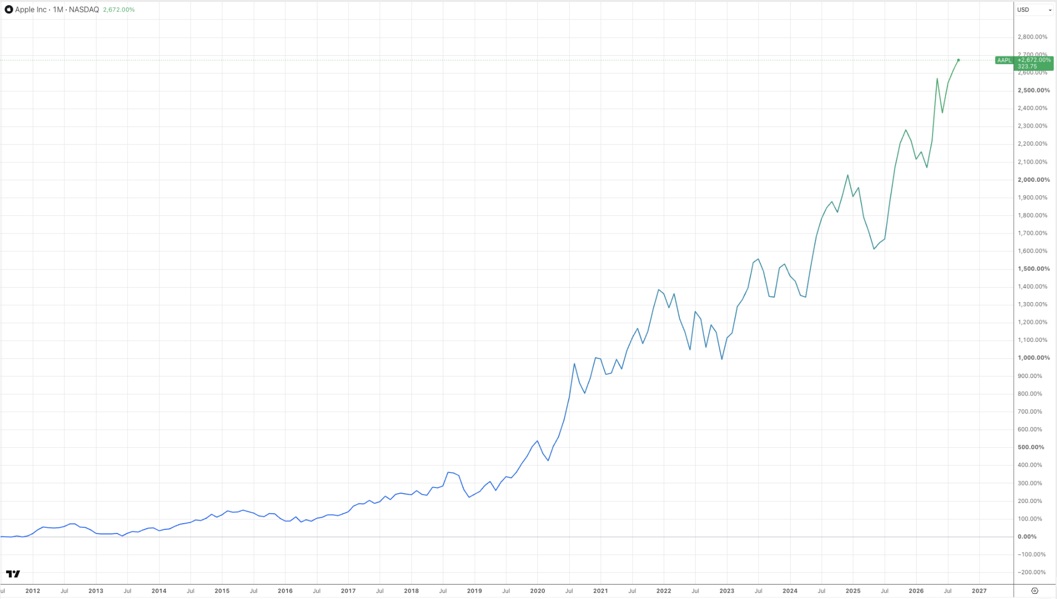
The change in leadership at Apple marks the end of one of the most successful eras in the history of the US technology industry. During Tim Cook’s tenure as CEO, the company’s stock price increased by more than 2,275%, and, taking dividends into account, the total return for investors reached 2,736%. Apple’s market capitalization grew from less than $350 billion to $4.6 trillion over the same period, briefly putting the company at the top of the stock screener by market cap.
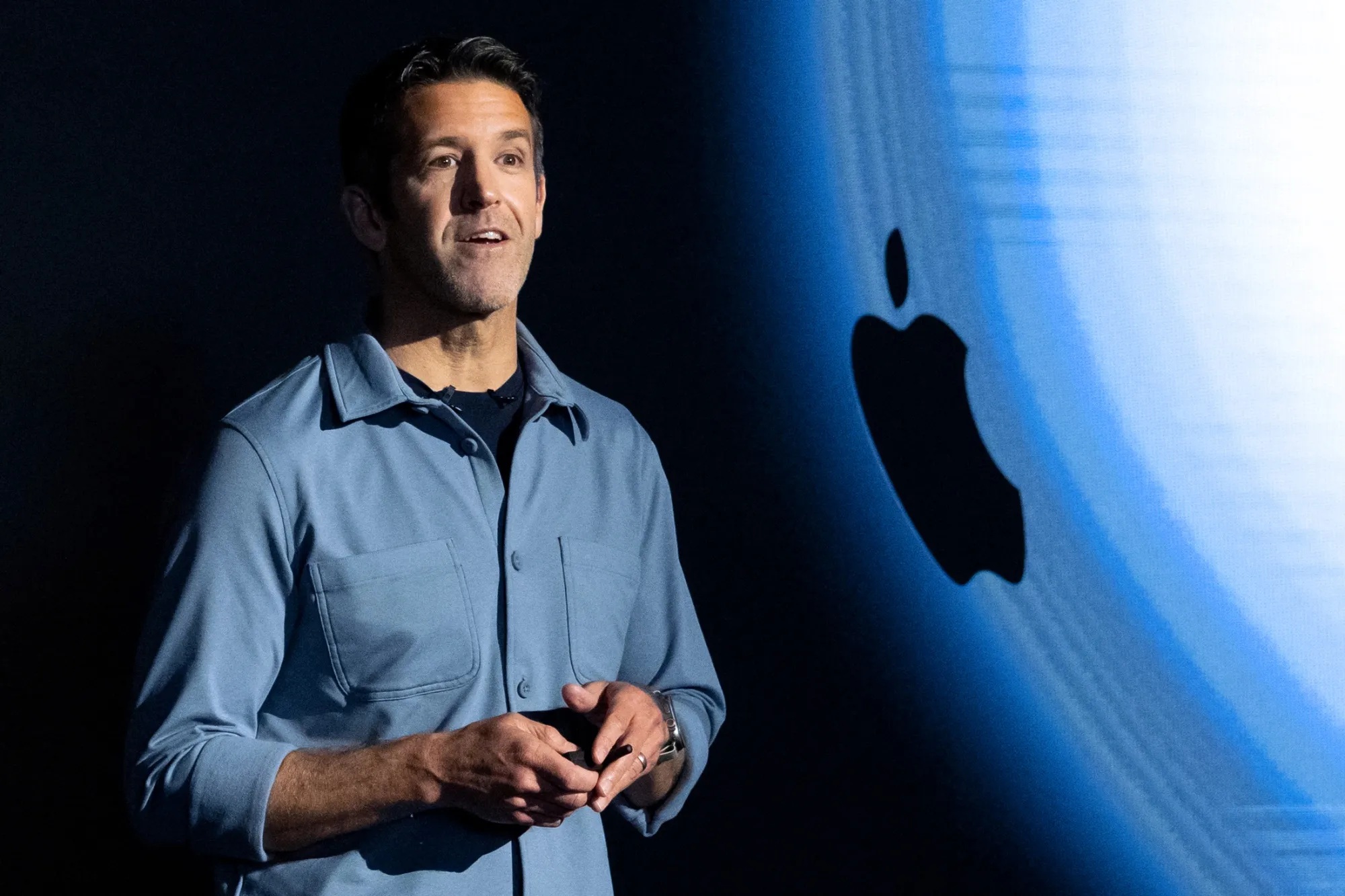
Now, the company’s leadership has been handed over to John Ternus, who previously held the position of senior vice president of hardware engineering. Tim Cook will remain at Apple as executive chairman of the board of directors, helping ensure a smooth leadership transition.
The scale of the new leader’s responsibility is also reflected in his compensation package. Ternus’s base salary will be $3 million per year, and he will receive an additional $55 million or so in the form of stock. Part of the remuneration will depend on Apple’s performance relative to the S&P 500 index, directly aligning the new CEO’s financial interests with those of shareholders.
Ternus has inherited an impressive legacy. Under Cook, Apple transformed from a company that largely depended on the iPhone and Mac into a much more diversified business. Apple launched the Apple Watch and AirPods, significantly expanded its services business, and became one of the most valuable companies in the world. At the same time, Apple turned into a massive engine for generating and returning capital to shareholders.
It will be difficult for the new leader to replicate Cook’s results, if only because of the high base effect. Increasing market capitalization from $350 billion to several trillion dollars is significantly easier than delivering comparable growth for a company that is already valued at $4.6 trillion. Therefore, Ternus faces the challenge of finding new directions that can support business growth as the smartphone market matures while preserving the exceptionally profitable existing ecosystem.
Cook, as executive chairman, will receive a base salary of $2 million and stock options worth approximately $45 million. For comparison, his total compensation as CEO in 2025 reached $74.3 million. Cook has also stated that he expects to remain chairman of the board for a long time, meaning his influence over the company’s strategy will continue.
One of the first serious challenges for the new leadership is artificial intelligence. Apple is currently taking a much more cautious approach than many of its competitors, but at the same time, it is facing an intensifying struggle for talent and intellectual property.
The company is already suing OpenAI, accusing it of unlawfully using Apple’s proprietary technologies. At the center of the case is former Apple engineer Chan Liu, who, according to the company, continued to have access to confidential technical documentation after leaving and used it in his new job. Apple also alleges that he attempted to destroy evidence and is demanding financial compensation and a ban on the use of the disputed developments.
The scale of the potential talent drain appears even more serious. According to Apple, OpenAI managed to lure away more than 400 of its former employees. For a company whose competitive advantage has been built over decades around the close integration of its own chips, hardware, and software ecosystem, such an outflow of specialists poses not only a talent risk but also a financial one.
It is here that Ternus will have to determine the future direction of Apple’s development. Cook inherited a company worth less than $350 billion from Steve Jobs and turned it into a business worth $4.6 trillion. However, simply continuing the previous strategy no longer guarantees a similar result.
The new leader will have to simultaneously protect the existing ecosystem, find new sources of growth, and define Apple’s place in the artificial intelligence market. Therefore, the main indicator of Ternus’s success will not be the ability to replicate Cook’s achievements, but the ability to prove to investors that even with a market capitalization of $4.6 trillion, Apple still has products and markets capable of driving the next stage of growth.