

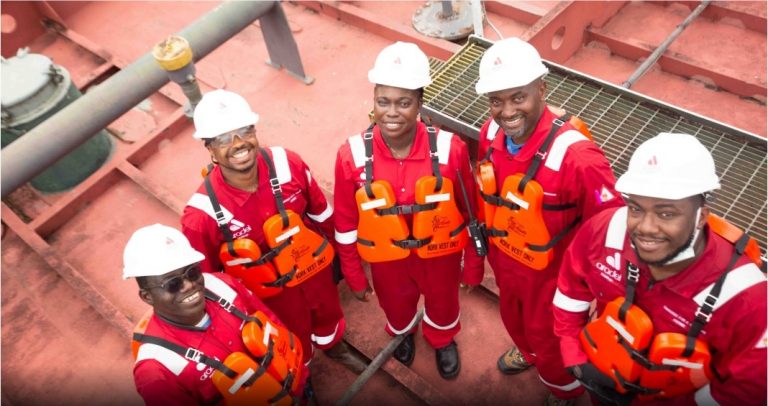
Aradel Holdings Plc posted a pre-tax profit of N752.71 billion for the six months ended June 30, 2026, representing a 293% year-on-year increase from N191.31 billion recorded in the corresponding period of 2025, as higher crude oil production and expanded operations lifted revenue to a record level.
The result, contained in the company’s unaudited financial statements filed with the Nigerian Exchange (NGX) on Friday, underscores the transformative impact of Aradel’s recent upstream acquisitions and increased production capacity, cementing its position among Nigeria’s fastest-growing indigenous energy companies.
Key Highlights (H1 2026 vs H1 2025)
- Revenue: N2.49 trillion, up 577% from N368.08 billion
- Gross profit: N1.44 trillion, up 807% from N163.16 billion
- Operating profit: N1.06 trillion, up 790% from N118.62 billion
- Pre-tax profit: N752.71 billion, up 293% from N191.31 billion
- Profit after tax: N191.04 billion, up 30% from N146.39 billion
- Finance costs: N326.14 billion, up 2,843% from N11.08 billion
- Earnings per share: N35.37, up 6% from N33.26
Aradel’s first-half performance was overwhelmingly driven by its upstream oil business, which accounted for nearly four-fifths of total revenue. Crude oil sales generated N1.98 trillion, representing approximately 79% of group revenue, while natural gas contributed N512.10 billion and refined petroleum products generated N129.44 billion. The crude oil segment remained the company’s principal earnings engine, delivering N545.70 billion in pre-tax profit.
Register for the next Tekedia Mini-MBA.
Register for Tekedia AI in Business Masterclass.
Join Tekedia Capital Syndicate and co-invest in great global startups.
The extraordinary revenue growth reflects Aradel’s expanded production base following the acquisition of additional upstream assets and increased hydrocarbon output. Those transactions have significantly altered the company’s earnings profile, allowing it to benefit from both higher production volumes and elevated global crude oil prices during the period.
Export markets continued to dominate sales, with international revenue reaching N1.94 trillion, accounting for nearly 78% of total turnover. The strong export mix positions Aradel to benefit directly from dollar-denominated oil sales while providing a natural hedge against naira volatility.
Costs Surge But Margins Remain Exceptionally Strong
Higher production inevitably translated into higher operating costs. Cost of sales rose more than fivefold to N1.05 trillion, compared with N204.92 billion a year earlier.

The largest cost components included:
- Royalties and statutory expenses of N415.49 billion
- Depreciation and amortization of N319.73 billion
- Operational and maintenance expenses of N212.73 billion
Despite the sharp increase, revenue growth significantly outpaced cost expansion, allowing gross profit to soar to N1.44 trillion and demonstrating the scalability of the company’s upstream operations.
The results suggest that Aradel continues to enjoy robust operating margins even as production expands, highlighting the strong cash-generating characteristics of its enlarged asset portfolio.

Finance Costs and Underlift Losses Weigh On Bottom Line
One of the few areas of pressure was financing costs. Finance expenses surged to N326.14 billion, almost thirty times the previous year’s level, largely reflecting higher interest expenses on acquisition-related borrowings as well as the unwinding of decommissioning obligations.
The increase illustrates the capital-intensive nature of Aradel’s recent expansion strategy, although operating earnings were sufficiently strong to absorb the higher financing burden.
Another significant drag came from other losses, including an underlift position of N489.42 billion alongside foreign exchange-related losses. Underlift occurs when a partner in a joint venture lifts less crude oil than its production entitlement during a reporting period. While such positions are often timing differences that reverse over subsequent lifting cycles rather than permanent losses, they can materially affect reported earnings in a given period.
Even after absorbing these sizeable charges, Aradel still generated more than N1 trillion in operating profit, showing the strength of its underlying operations.
However, Aradel’s financial position continued to strengthen alongside earnings growth. Total assets increased to N10.88 trillion, making the company one of the largest indigenous energy firms on the NGX by asset base.
Cash and cash equivalents rose to N1.72 trillion, providing substantial liquidity to support ongoing investments, debt servicing and shareholder distributions. Operating activities generated N975.61 billion in cash during the six-month period despite tax payments of N429.88 billion, highlighting the company’s strong cash conversion.
Importantly, Aradel also reduced its external borrowings, with total debt declining 10% to N1.81 trillion from N2.00 trillion at the end of 2025. The combination of rising cash balances and lower debt points to improving financial flexibility following the company’s acquisition-driven expansion.
Balance Sheet
- Total assets: N10.88 trillion, up 10% from N9.90 trillion in December 2025
- Cash and cash equivalents: N1.72 trillion, up 14% from N1.50 trillion
- External debt: N1.81 trillion, down 10% from N2.00 trillion
Aradel Holdings shares closed at N1,526.80 on Friday, July 31, unchanged from their level since July 10. The stock has nevertheless delivered an exceptional 127.9% year-to-date return, rising from N670 at the close of 2025 and making it one of the Nigerian Exchange’s strongest-performing large-cap energy stocks.
The share price performance indicates growing investor confidence in the company’s transformed earnings capacity, stronger cash generation and expanded upstream portfolio.
Outlook
Aradel’s first-half performance builds on an already outstanding 2025 financial year, during which pre-tax profit rose 163.6% to N835 billion from N316.8 billion in 2024.
That performance was supported by stronger operating earnings and non-recurring gains associated with the company’s ND Western and Renaissance transactions, which significantly expanded its production base.
The H1 2026 results indicate that the benefits of those acquisitions are now being reflected in core operating performance rather than one-off gains.
Looking ahead, analysts believe Aradel appears well positioned to sustain earnings momentum, supported by increased production capacity, strong export revenues, improving operational cash flows and continued deleveraging. However, investors will continue to monitor finance costs, underlift positions and foreign exchange exposure, which remain important variables capable of influencing reported earnings even as the company’s underlying operating performance continues to strengthen.