

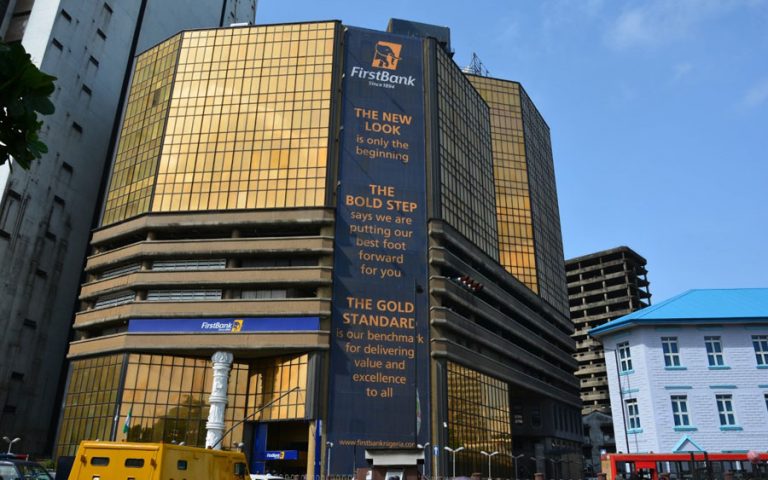
Nigeria has entered a new phase of its economic reform journey where the challenge is no longer restoring macroeconomic stability but converting recent policy gains into stronger private-sector investment, higher productivity and tangible improvements in living standards, according to FirstBank of Nigeria Limited.
In its “Reading the Signals | The Next Half” Mid-Year Economic & Market Outlook 2026, published in July, the bank said two years of sweeping economic reforms have largely succeeded in stabilizing key macroeconomic indicators. The next test, however, will be whether that stability translates into sustained economic expansion that benefits businesses and households.
The report notes that Nigeria’s economic narrative is gradually evolving from crisis management to growth execution, with policymakers now facing the more complex task of ensuring that improved foreign exchange stability, stronger external reserves and recovering investor confidence lead to higher investment, job creation and increased industrial productivity.
Register for the next Tekedia Mini-MBA.
Register for Tekedia AI in Business Masterclass.
Join Tekedia Capital Syndicate and co-invest in great global startups.
According to FirstBank’s Economic Research team, reforms implemented over the past two years have strengthened the country’s macroeconomic fundamentals, creating conditions that are more supportive of long-term economic growth.
Among the clearest indicators of that progress is the continued improvement in Nigeria’s external position.
The bank noted that external reserves rose to $51.46 billion as of June 30, 2026, providing the Central Bank of Nigeria (CBN) with a stronger buffer against external shocks while improving confidence in the country’s foreign exchange market.

Improved liquidity in the official foreign exchange market has also reduced pressure on the naira, narrowed distortions across currency markets and strengthened investor confidence, developments that have encouraged higher foreign capital inflows during the first half of the year.
According to the report, these improvements suggest that recent policy reforms are beginning to produce measurable outcomes in financial markets.
“Following two years of significant policy adjustment, the macroeconomic environment has become more stable. However, the central question is no longer the restoration of macroeconomic stability, but the extent to which that stability begins to strengthen productive economic activity, stimulate private investment and deliver broader improvements across the real economy,” FirstBank said.

The bank added that the first half of 2026 provided further evidence that economic reforms are increasingly being reflected in market outcomes through stronger external buffers, improved foreign exchange market conditions and recovering investor confidence.
Stability Alone Is Not Enough
While acknowledging the progress made, FirstBank cautioned that macroeconomic stability has yet to translate fully into broad-based economic improvements.
Inflation remains elevated, financing conditions are still restrictive, and borrowing costs continue to weigh on business expansion and consumer spending. Although foreign exchange reforms have reduced currency volatility and strengthened confidence, the bank said many businesses and households have yet to experience the full benefits of those gains.
As a result, policymakers must now focus on improving the transmission of macroeconomic improvements into the real economy.
“Increasingly, attention is shifting towards translating that stability into stronger investment, higher productivity, improved competitiveness and broader improvements in living standards.
“The second half of the year is therefore likely to be defined less by the direction of policy and more by the effectiveness with which recent macroeconomic gains are converted into stronger and more inclusive economic outcomes,” the bank said.
The assessment adds to a broader consensus among economists that macroeconomic stabilization is a necessary foundation for growth but not an end in itself. Sustained improvements in employment, industrial output and household incomes will depend on stronger private-sector investment, increased manufacturing capacity and productivity gains across key sectors of the economy.
Domestic Refining Reshapes Nigeria’s Trade Balance
One of the report’s strongest indicators of structural economic change is the transformation taking place in Nigeria’s petroleum trade.
According to FirstBank, refined petroleum exports increased by 20.3% quarter-on-quarter to $2.37 billion during the first quarter of 2026. At the same time, imports of refined petroleum products fell sharply by 87.5% to $310 million, compared with $2.48 billion in the previous quarter.
The dramatic reversal contributed to a significant improvement in Nigeria’s external trade position, with the country’s goods account surplus widening to $5.95 billion. The bank said the figures demonstrate that expanding domestic refining capacity is beginning to fundamentally alter Nigeria’s trade profile.
For decades, Nigeria exported crude oil while importing most of its refined fuel requirements, creating persistent pressure on foreign exchange reserves and exposing the economy to international fuel price volatility.
That pattern is now beginning to reverse.
FirstBank attributed much of the improvement to the operations of the 650,000-barrel-per-day Dangote Refinery, which has significantly expanded exports of gasoline, diesel and aviation fuel to African and European markets.
The refinery also benefited from stronger regional demand during the first half of the year as geopolitical tensions involving Iran disrupted global fuel supply chains and tightened international refined product markets.
The bank noted that increasing domestic refining capacity is reducing one of Nigeria’s largest historical sources of foreign exchange demand while creating new export earnings that strengthen the country’s external accounts.
Capital Inflows Show Improving Investor Confidence
The report also points to stronger investor sentiment as evidence that recent reforms are gaining credibility. Nigeria has recorded increasing foreign capital inflows as improvements in exchange rate transparency and macroeconomic stability have encouraged international investors to return to the market.
Earlier data showed capital importation rose to $10.37 billion during the first quarter of 2026, representing an 83.8% year-on-year increase, highlighting renewed foreign investor interest in Nigeria’s financial markets and broader economy.
Sustaining those inflows, according to FirstBank, will require continued policy consistency, stronger export performance and reforms that encourage long-term productive investment rather than short-term portfolio flows.
Looking ahead, the bank expects the second half of 2026 to be shaped less by new policy announcements and more by how effectively existing reforms translate into stronger economic activity.
Maintaining foreign exchange inflows, expanding non-oil exports, improving domestic value addition and attracting long-term investment will remain critical to sustaining economic momentum.
According to the report, the next phase of Nigeria’s reform programme should focus on strengthening productive sectors of the economy, increasing industrial competitiveness and improving household welfare.
“Macroeconomic stabilization is the foundation, but our collective focus must now shift to strengthening productive activity, accelerating private investment and delivering broad-based improvements that create lasting prosperity for Nigerians,” the report said.
For much of the past two years, policy discussions centered on stabilizing the naira, rebuilding foreign exchange reserves, removing long-standing market distortions and restoring investor confidence. While those objectives remain important, the conversation is increasingly moving toward whether the reforms can generate sustained improvements in productivity, employment and living standards.