

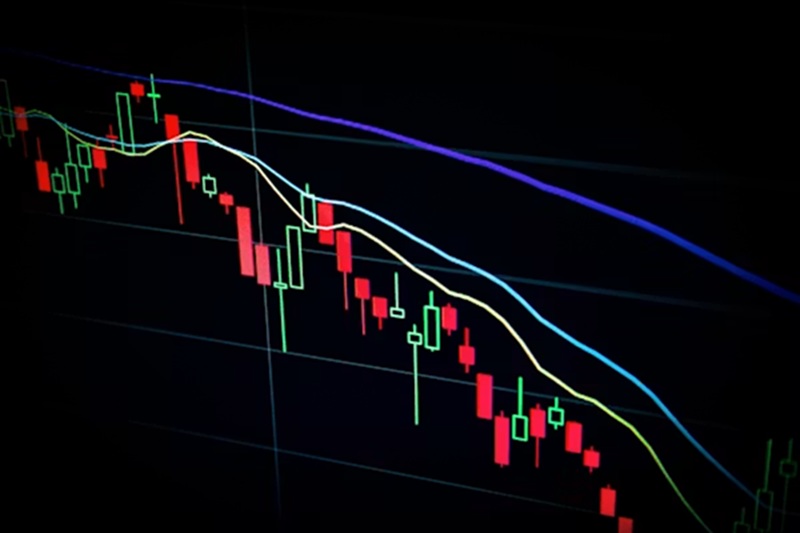
Asian equities fell sharply on Thursday as concerns over the profitability of artificial intelligence investments and the prospect of further US interest rate increases weakened investor confidence ahead of Anthropic’s record-breaking stock market debut.
The sell-off came as the Claude chatbot developer priced its initial public offering at $83 a share, above its previously targeted range, raising $81 billion in what it described as the largest stock market debut on record. The offering values Anthropic at approximately $1.5 trillion on a fully diluted basis, making its first trading session a major test of demand for publicly listed AI companies.
The listing has attracted considerable attention because investors are searching for evidence that the enormous capital flowing into AI development can generate sustainable returns. Anthropic’s valuation and the strength of demand for its shares could provide an indication of how much appetite remains for companies at the center of the technology boom.
Register for the next Tekedia Mini-MBA.
Register for Tekedia AI in Business Masterclass.
Join Tekedia Capital Syndicate and co-invest in great global startups.
But a strong debut may not be enough to settle concerns about the sector’s longer-term economics.
Kyle Rodda, senior financial market analyst at Capital.com, said the offering would be a major test for markets and appeared positioned for a strong listing.
“I don’t think it’s necessarily going to assuage all the fears about AI,” he said. “I think much of that boils down to future investment growth.”

US stock futures initially responded positively to the pricing announcement. Nasdaq futures rose 1.3%, while S&P 500 futures gained 0.36%. European stock futures advanced 0.3%.
Asian markets moved in the opposite direction. Taiwan’s benchmark index fell 4.4%, while South Korea’s KOSPI and Japan’s Nikkei edged higher in volatile trading. MSCI’s broadest index of Asia-Pacific shares outside Japan dropped 1.7% to a seven-month low and was on course for a weekly decline of nearly 6%, its steepest since early March.
The contrasting market reaction suggests investors are not treating Anthropic’s fundraising success as sufficient evidence that the broader AI investment cycle is secure.

AI Investment Concerns Persist Despite Record IPO
Investor confidence has weakened over recent weeks amid questions about whether AI companies can generate enough revenue to justify their valuations and the scale of spending required to build data centers and computing infrastructure.
The sector’s expansion has relied on substantial investment by technology companies, private capital and lenders. Much of that spending is directed towards advanced processors, data centers and the power infrastructure needed to operate AI systems. The growing use of debt to finance these projects has added another source of risk, particularly as borrowing costs rise.
Nvidia’s latest earnings forecast failed to restore confidence across the market. Investors largely looked past the chipmaker’s strong outlook as uncertainty surrounding the departure of chief executive Jensen Huang continued to affect sentiment. Nvidia’s board has dismissed the prospect of rehiring him.
The reaction highlights a change in how investors are assessing the AI trade. Strong demand for chips and rising revenue at leading technology companies are no longer enough on their own to reassure markets. Investors are also examining the durability of spending commitments, the financing behind infrastructure expansion and the ability of AI developers to convert adoption into profits.
Anthropic’s IPO offers a direct test of investor demand for a leading AI model developer, but its performance will not answer all those questions. A successful listing would demonstrate that public-market investors remain willing to finance large AI businesses. It would not establish that the industry’s infrastructure spending can deliver attractive returns or that current valuations are sustainable.
Armina Rosenberg, portfolio manager and co-founder of Minotaur Capital, said the offering would provide a useful gauge of investor appetite.
“But one listing won’t settle the debate,” she said. “There’s a genuine wall of worry right now, and it’ll take a few things to climb it.”
That caution is important because the AI market contains companies with different business models and financial exposures. Demand for a leading model developer does not necessarily translate into confidence in every chipmaker, cloud provider or data center operator linked to the sector.
Hawkish Fed Comments Lift Dollar As Oil Remains Weak
Currency markets faced a separate source of pressure as hawkish comments from Federal Reserve Governor Christopher Waller strengthened expectations of tighter US monetary policy.
Waller said on CNBC that the central bank needed to take more “aggressive action” if it wanted to bring inflation under control. He suggested that policymakers could raise interest rates by half a percentage point at their December meeting or use the post-meeting statement to prepare markets for additional increases.
His remarks followed hotter-than-expected US inflation data last week, reinforcing concerns that price pressures could remain persistent.
Traders were pricing in a 90% probability of a 25-basis-point rate increase next month, according to the CME FedWatch tool.
The dollar index, which measures the US currency against six major peers, rose 0.1% to 103.92, its highest level in 19 months. The euro traded at $1.0964, near its weakest level since April 2025, while the yen stood at 159.48 per dollar. Sterling was quoted at $1.31515.
OCBC strategists said stronger expectations for Fed tightening had so far offset weakness in technology shares, supporting the dollar.
“Persistent inflation, further Fed tightening and elevated US yields suggest it is still too early to bet against the USD,” they said.
A stronger dollar and higher US interest rates can put pressure on emerging-market currencies and make dollar-denominated borrowing more expensive. Higher yields can also reduce the relative appeal of equities, particularly high-growth technology companies whose valuations rely heavily on expectations of future earnings.
The Australian dollar fell 0.4% to $0.6686, reaching a 10-month low after weaker employment data reinforced expectations that Australian interest rates had probably peaked.
Oil prices remained under pressure as expectations of a growing supply surplus weighed on the market. Brent crude futures traded at $92.11 a barrel and were on course for a third consecutive weekly decline.
Investors were also monitoring an unprecedented three-way meeting involving US President Donald Trump, Chinese leader Xi Jinping and Russian President Vladimir Putin. The meeting added a geopolitical dimension to an already unsettled trading session.