

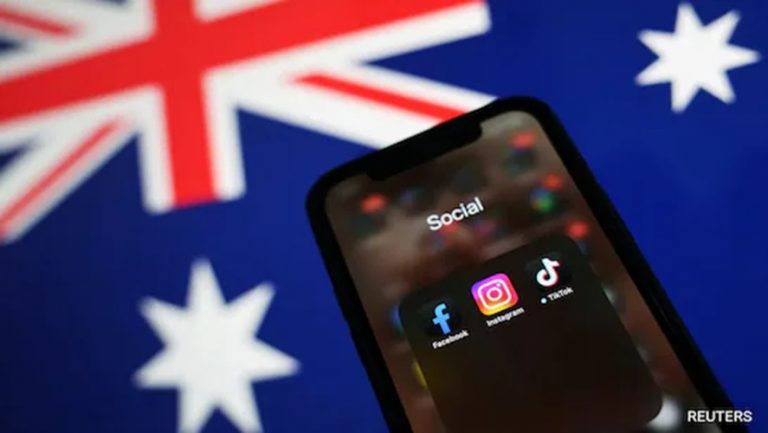
The Federal Court of Australia has delivered a significant legal blow to Apple and Google, ruling that both tech giants abused their market dominance in app distribution to stifle competition.
The decision marks a major win for Epic Games, the publisher behind Fortnite, in its years-long global battle to dismantle restrictive app store policies.
Justice Jonathan Beach concluded on Tuesday that the companies’ practices in controlling their respective app stores amounted to anti-competitive conduct, though he stopped short of finding them guilty of “unconscionable conduct.” This ruling clears the path for Epic to reintroduce Fortnite and its Epic Games Store in Australia — bypassing the 30 percent commission Apple and Google typically charge on in-app purchases through their proprietary payment systems.
Register for Tekedia Mini-MBA edition 20 (June 8 – Sept 5, 2026).
Register for Tekedia AI in Business Masterclass.
Join Tekedia Capital Syndicate and co-invest in great global startups.
Register for Tekedia AI Lab.
Epic’s CEO Tim Sweeney welcomed the ruling, saying Fortnite and the Epic Games Store would return to Australian users “soon” via Epic’s own platform.
“This is a step toward restoring fair competition and freeing developers from monopolistic control over app distribution,” Sweeney said.
Google, however, claimed partial victory, highlighting that the court rejected Epic’s demand to force Google to host rival app stores inside Google Play, as well as its challenge to certain “critical security protections.”

“We disagree with the court’s characterisation of our billing policies and practices, as well as its findings regarding some of our historical partnerships,” a Google spokesperson said in an emailed statement.
Apple similarly defended its ecosystem, calling the App Store “the safest way for users to get apps,” while noting it disagreed with several aspects of the decision.
The U.S. Legal Backdrop
Epic’s legal war against Apple and Google began in 2020 after the company deliberately broke both firms’ app store rules. It updated Fortnite with a feature allowing players to purchase in-game currency directly from Epic at a discounted rate, bypassing Apple and Google’s payment systems. In response, Apple pulled Fortnite from the App Store, and Google removed it from Google Play for devices that used the official store.

Epic immediately filed lawsuits in U.S. federal court, accusing both companies of violating antitrust laws by monopolizing the app distribution market and enforcing inflated commission rates. In its high-profile U.S. case against Apple, a California judge ruled in 2021 that Apple could no longer prohibit developers from linking to alternative payment systems, but stopped short of declaring Apple a monopoly under federal antitrust law. Both sides claimed partial victories, and appeals followed.
The legal pressure intensified in 2023 when Epic won a separate U.S. case against Google. A California jury sided with Epic, finding that Google’s Play Store policies — including deals with developers and handset makers to block competing app stores — were anti-competitive. This was a far more decisive win than Epic achieved against Apple in the U.S., and it is currently shaping ongoing settlement negotiations and potential remedies that could force Google to make sweeping changes to Android’s app distribution model.
These U.S. rulings have rippled globally. In the EU, Epic has leveraged the bloc’s Digital Markets Act to bring Fortnite back to iOS in Europe via third-party app stores, bypassing Apple’s commission. The Australian decision now adds another jurisdiction where the tech giants will have to rethink their gatekeeping role — and could inspire similar actions in Asia and Latin America.
Analysts have warned that if such rulings continue to accumulate, Apple and Google may be forced into a coordinated overhaul of their app store policies worldwide to avoid inconsistent regional rules. The global app economy generates well over $400 billion annually, and loosening the grip on app distribution would shift billions in revenue away from Apple and Google to developers and alternative platforms.