

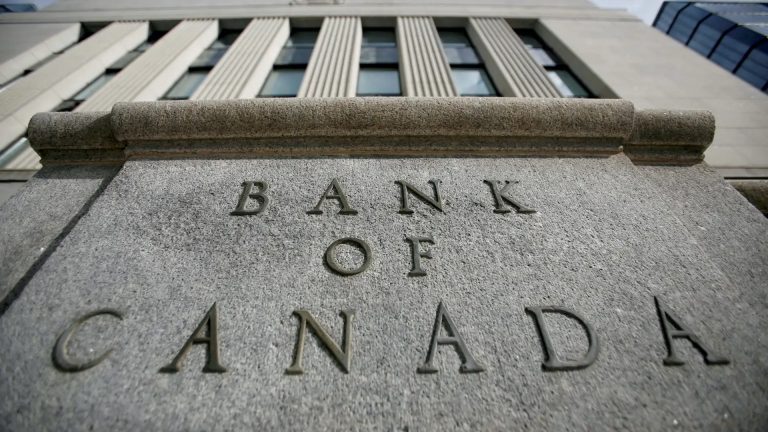
The Bank of Canada expects to raise its inflation forecast significantly this month as persistently high crude oil and petroleum product prices increase the risk of broader and more sustained price pressures, Governor Tiff Macklem said, putting renewed interest rate increases into focus ahead of the central bank’s October 28 policy decision.
Macklem said the continuing conflict in the Middle East, restricted oil shipments and damage to refinery capacity had increased the likelihood that higher energy costs would spread beyond fuel prices into the wider economy. The bank is preparing updated quarterly forecasts for inflation and economic growth that will inform its next interest rate decision.
“With the (Middle East) conflict ongoing, shipments still curtailed and refinery capacity damage, the risk that inflation broadens and becomes more persistent has gone up,” Macklem told journalists during a conference call from Bangkok on Saturday.
Register for the next Tekedia Mini-MBA.
Register for Tekedia AI in Business Masterclass.
Join Tekedia Capital Syndicate and co-invest in great global startups.
He reaffirmed the central bank’s commitment to its 2% inflation target, while leaving open the possibility of tighter monetary policy if the energy shock threatens to keep inflation above that objective.
“Our beacon is our 2% inflation target, and we are committed to keeping inflation close to target over time. We are prepared to adjust monetary policy as needed,” he said.
The anticipated upward revision to the inflation outlook presents a fresh challenge for the central bank. Higher oil prices can push up headline inflation directly through fuel and transportation costs, while also increasing the operating expenses of businesses that rely on energy, logistics and petroleum-based inputs. If companies pass those costs on to consumers, the initial energy shock could develop into a wider inflation problem.

The central bank’s concern is therefore not limited to the immediate increase in oil prices. It must assess whether those increases will fade as supply conditions improve or become embedded in broader pricing decisions, wage demands and consumer inflation expectations.
Financial markets have been anticipating that the Bank of Canada may need to raise interest rates over the coming year, although investors were not pricing in a rate change at the October 28 meeting or the bank’s final policy decision of the year in December, according to market expectations cited on Saturday.
Markets were pricing in a cumulative 100 basis points of rate increases over the course of next year, signaling concern that persistent energy-driven inflation could eventually require a more restrictive monetary policy stance.

The distinction between near-term and longer-term expectations is important. Investors are not necessarily anticipating an immediate increase, but they are preparing for the possibility that the central bank will have to reverse course if inflation remains elevated.
The bank’s updated forecasts could help clarify how policymakers are weighing the competing risks. A significant upward revision to inflation, particularly if accompanied by stronger evidence of persistent price pressures, would increase the importance of determining whether existing monetary policy remains sufficiently restrictive.
However, higher energy prices also weaken household purchasing power and raise costs for businesses. If the oil shock slows economic activity, the central bank could face a difficult trade-off between preventing inflation from becoming entrenched and avoiding additional pressure on growth.
Raising interest rates would not directly restore disrupted oil shipments or repair damaged refinery capacity. Instead, tighter monetary policy would work by moderating demand and influencing expectations, reducing the risk that an initial increase in energy prices triggers a broader and more persistent rise in inflation.
That mechanism carries costs. Higher borrowing rates can increase debt-servicing burdens for households and businesses, discourage investment and weaken consumption. The challenge for policymakers is to determine whether those effects are necessary to prevent the energy shock from becoming a longer-lasting inflation problem.
Macklem framed the October decision around precisely that question, rather than treating higher oil prices as an automatic trigger for rate increases.
“The question we are going to be asking ourselves is, ‘Is inflation likely to come back down towards our target on its own, or are we going to have to raise interest rates to influence the path, nudge the path for inflation back towards the target?’” he said.
The answer will depend on the expected duration of the supply disruption, the extent to which energy costs feed into other prices and the resilience of inflation expectations.
Macklem said the global economy had demonstrated resilience despite the Middle East conflict and the Russia-Ukraine war, but warned that its ability to withstand further shocks was being tested by higher costs and tighter financial conditions.
The assessment highlights the risk that an energy-driven inflation shock could complicate the outlook for central banks beyond Canada. Persistently expensive oil can raise production and transportation costs across economies, while the prospect of higher interest rates can tighten financing conditions at a time when businesses and households are already dealing with elevated expenses.
Governments are also facing constraints. Macklem said fiscal authorities had less room to maneuver and needed to adjust their policies to rebuild that capacity.
The warning points to a broader challenge for policymakers. Governments may face pressure to cushion households and businesses against rising energy costs, but additional spending can be difficult to sustain when public finances are already constrained. At the same time, central banks may have to maintain tighter monetary conditions if fiscal support adds to demand while supply remains restricted.
For Canada, the implications of the energy shock are likely to be determined by how long supply disruptions persist and how quickly higher petroleum costs affect the wider price level. A temporary increase could eventually unwind without requiring a substantial change in monetary policy. A prolonged disruption, however, could force the central bank to respond even as consumers and businesses face weaker purchasing power.
The October 28 decision will therefore hinge on more than the immediate inflation impact of higher crude oil prices. Analysts say policymakers must assess whether the shock is likely to dissipate naturally or whether it risks changing inflation behavior across the economy.
Macklem’s comments indicate that the Bank of Canada is preparing for a materially more difficult inflation outlook, but have not established that a rate increase is imminent. The updated forecasts will provide a clearer indication of how the central bank sees the balance between inflation risks and economic growth.