

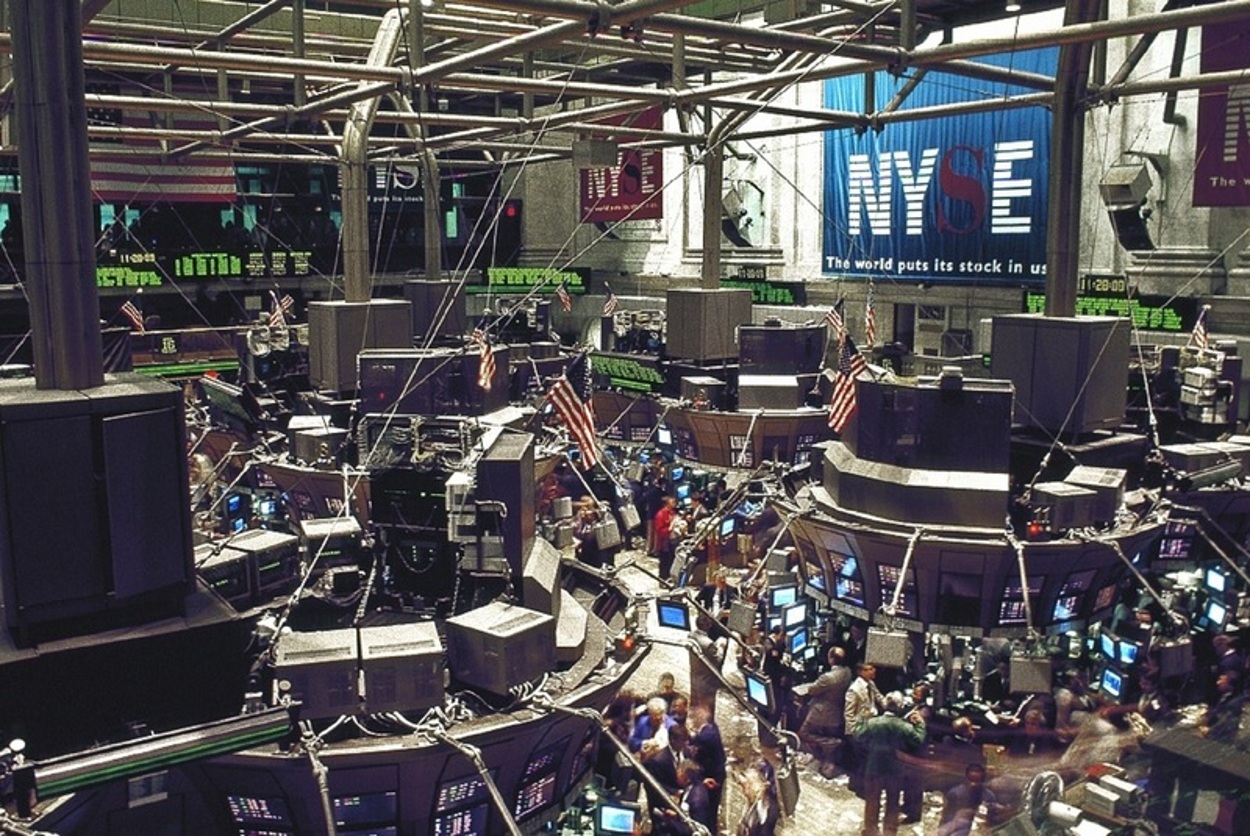
The financial markets are entering a critical period as banks prepare to report earnings amid rising Treasury yields, while investors search for companies positioned to benefit from the artificial intelligence revolution.
These two developments reflect the competing forces shaping the economy: higher borrowing costs that could pressure consumers and businesses, and technological innovation that continues to create opportunities for long-term growth.
For banks, the surge in Treasury yields to levels last seen in 2002 presents both opportunities and risks. Higher yields can improve lending profitability by allowing banks to charge more for loans. They can increase funding costs, weaken demand for credit, and reduce the market value of existing bond holdings.
Register for the next Tekedia Mini-MBA.
Register for Tekedia AI in Business Masterclass.
Join Tekedia Capital Syndicate and co-invest in great global startups.
As earnings season approaches, investors will closely examine whether financial institutions can navigate these challenges while maintaining profitability. The impact of rising yields depends largely on how quickly banks can adjust their lending rates compared with the interest they pay depositors.
Institutions that manage this balance effectively may report stronger net interest income. Conversely, banks facing intense competition for deposits could experience shrinking margins, especially if customers demand higher returns on their savings.
Higher borrowing costs may also affect credit quality. Households and businesses refinancing debt at elevated rates could struggle to meet their obligations, potentially increasing loan defaults and provisions for credit losses.

Investors will therefore pay attention to management forecasts, deposit trends, loan growth, and commentary on the economic outlook. The broader implications extend beyond the banking sector.
Persistently high Treasury yields can make government bonds more attractive relative to equities, putting pressure on stock valuations. They can also raise financing costs for companies investing in infrastructure, expansion, and emerging technologies.
Banks that demonstrate resilience during this environment could nevertheless emerge stronger, particularly if they maintain disciplined lending standards and sufficient capital. Recent market conditions have intensified these concerns.

The 30-year Treasury yield reached approximately 5.73% on October 8, its highest level since June 2002, before retreating after a strong bond auction. Persistent inflation, government borrowing requirements, and uncertainty over interest rates continue to influence investor sentiment.
Banks must now prove that their earnings can withstand this challenging financial environment. The artificial intelligence boom is creating a different investment opportunity. Rather than betting exclusively on which technology company will dominate AI, investors can consider businesses supplying the essential infrastructure required by competing platforms.
Three New York Stock Exchange-listed companies illustrate this strategy. The first is Quanta Services (PWR), which builds and maintains electricity transmission networks and other critical infrastructure. AI data centres require enormous amounts of electricity, and expanding grid capacity is becoming a major challenge for technology companies.
Quanta can benefit as utilities and data-centre developers invest in power connections, transmission lines, and electrical systems. Its opportunities extend beyond individual AI platforms because electricity infrastructure supports the entire industry.
The second is Eaton (ETN), a power-management specialist whose equipment helps distribute and control electricity. AI data centres require reliable electrical systems capable of handling increasingly demanding workloads.
As operators expand computing capacity, they need equipment that improves power efficiency, reliability, and safety. Eaton therefore offers exposure to the physical requirements of AI development, regardless of which company leads the software race.
The third is Vertiv (VRT), which provides power and cooling solutions for data centres. Advanced AI chips generate substantial heat and require sophisticated thermal management to operate efficiently.
As computing systems become more powerful and data centres grow, cooling technology becomes an essential investment rather than an optional expense. Vertiv’s business is positioned to benefit from this infrastructure demand, although execution, competition, and valuation remain important considerations.
These companies are not immune to economic pressures. High interest rates can increase financing costs, delay infrastructure projects, and reduce the valuations investors are willing to pay for future growth. Even businesses benefiting from AI demand can disappoint if expectations become excessive or spending slows.
The coming bank earnings season and the search for AI investment opportunities highlight a common lesson: fundamentals matter. Banks must demonstrate that they can generate sustainable profits despite expensive funding and potential credit deterioration. AI infrastructure companies must convert rising demand into dependable revenue and cash flow.
Investors should therefore examine balance sheets, earnings quality, debt levels, valuations, and future guidance before making decisions. In a market shaped by high bond yields and intense technological competition, the strongest opportunities may belong to businesses that combine genuine demand with financial resilience.