

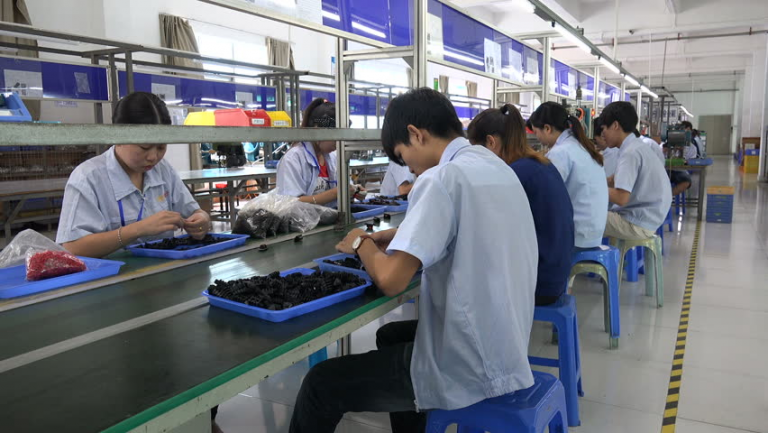
China created 10.52 million urban jobs in the first nine months of the year, achieving 87.7% of its annual employment target as Beijing prepares new measures to strengthen hiring in the services sector and maintain labor market stability.
The Ministry of Human Resources and Social Security announced the figures on Saturday, saying employment had remained generally stable despite ongoing pressure to generate jobs across the economy. The ministry plans to work with other government departments on a policy document designed to make services a more effective source of employment.
Vice Minister and ministry spokesperson Li Zhong said the proposed measures would promote employment through services sector development, positioning the industry as a principal channel for absorbing workers.
Register for the next Tekedia Mini-MBA.
Register for Tekedia AI in Business Masterclass.
Join Tekedia Capital Syndicate and co-invest in great global startups.
The announcement highlights the Chinese government’s effort to sustain job creation while expanding employment opportunities beyond traditional labor-intensive industries. With nearly nine-tenths of the annual urban employment target achieved by the end of September, the remaining challenge is to maintain hiring momentum through the final quarter and create sufficient opportunities for workers entering or moving within the labor market.
China’s planned policy document will focus on strengthening the relationship between services sector development and employment, reflecting the government’s intention to use the industry as a more substantial source of jobs.
Li said the ministry would coordinate with other departments to develop measures that allow services to play a greater role in absorbing workers. The announcement did not specify which service industries would receive priority or provide a timetable for the policy document’s implementation.

The emphasis on services indicates that Beijing is seeking to broaden the economy’s employment base while maintaining job creation in established industries. Services can provide work across a range of activities, including consumer-facing businesses and professional services, although the pace and quality of job creation will depend on demand, business conditions and the ability of employers to expand.
The ministry also intends to support employment in labor-intensive industries, which remain important sources of jobs, while identifying new opportunities in emerging and future industries.
That approach reflects the challenge of balancing immediate employment needs with longer-term economic transformation. Labor-intensive businesses can absorb large numbers of workers, but their hiring prospects may be affected by changes in demand, production costs, and industrial restructuring. Emerging industries may create new opportunities, but the extent to which they can offset employment pressures elsewhere will depend on how quickly those sectors expand and how well workers’ skills match employers’ requirements.

By pursuing both priorities, Beijing is seeking to preserve existing employment channels while developing additional sources of work.
The ministry said China’s surveyed urban unemployment rate averaged 5.2% from January to August, describing employment conditions as generally stable.
The measure provides an indication of labor market conditions in urban areas, but it does not, on its own, capture every dimension of employment pressure across the country. The figures released on Saturday did not include a September unemployment rate or provide further details on employment conditions across different age groups, industries or regions.
The creation of 10.52 million urban jobs represents 87.7% of the annual target, leaving approximately 12.3% still to be achieved during the final three months of the year.
Meeting the remaining target is largely tied to employers continuing to hire at a sufficient pace and whether the government’s planned support measures translate into additional opportunities. The headline job-creation figure also does not establish how many workers found permanent employment, how many changed jobs or whether new positions offered wages and conditions comparable with those they replaced.
The government’s emphasis on services, labor-intensive industries and emerging sectors indicates that employment policy will continue to focus on both the number of jobs created and the range of industries capable of absorbing workers.
Social Insurance Coverage Reaches More Than One Billion
The ministry also reported extensive participation in China’s social insurance system. As of the end of September, 1.079 billion people were enrolled in basic pension insurance, while unemployment insurance covered 251 million people and work-injury insurance covered 327 million.
The three social insurance funds had a combined balance of 11.2 trillion yuan, equivalent to approximately $1.67 trillion.
The figures provide an indication of the scale of China’s social protection system and the financial resources held across its three major insurance funds. Pension insurance supports retirement income, unemployment insurance provides protection for eligible workers who lose their jobs, and work-injury insurance covers qualifying employment-related injuries.
However, the combined fund balance should not be interpreted as an unrestricted government cash reserve. The funds serve specific social insurance obligations, and their financial position must be assessed in relation to contribution income, benefit payments and future liabilities.
Unemployment insurance coverage also differs from the number of people employed or unemployed. The 251 million people covered by the programme represent participation in a social insurance system, not the number of workers currently receiving unemployment benefits.
The latest figures therefore offer two distinct measures of China’s labor market and social protection framework: the number of urban jobs created during the year and the scale of insurance coverage available to workers and retirees.
China’s employment performance through September places the country within reach of its annual urban job-creation target, but the government’s planned measures indicate that sustaining employment remains a policy priority.
The services sector is expected to play a more prominent role in the next phase of the employment strategy, alongside continued support for labor-intensive industries and efforts to develop opportunities in emerging sectors.
The key test will be whether those measures generate enough additional hiring to meet the annual target while supporting workers facing changes in the structure of the economy. The reported 5.2% average surveyed urban unemployment rate through August suggests relative stability in the official measure, but the available figures do not provide a complete picture of job quality, underemployment or the distribution of employment opportunities.
With 87.7% of the annual target achieved, Beijing has made substantial progress towards its stated goal. However, economists believe its next challenge is to turn that progress into sustained employment growth while ensuring that services and newer industries can absorb workers.