

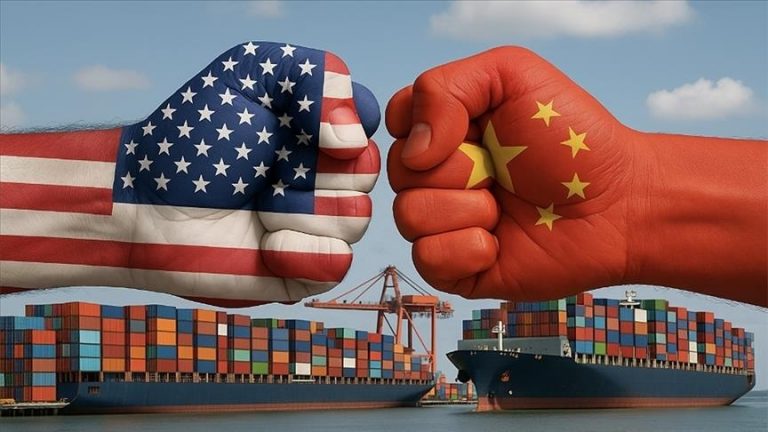
Chinese officials, influencers, and state-run media on Monday cast the new trade agreement with the United States — including a 90-day suspension of tariffs — as a major diplomatic and strategic win for Beijing, praising what they describe as the effectiveness of China’s firm stance and refusal to capitulate to pressure from the administration of President Donald Trump.
Framing the deal as a vindication of their hardline negotiation strategy, Chinese state media outlets said the breakthrough came not from compromise, but from Beijing’s defiance. A social media account affiliated with China’s national broadcaster, CCTV, declared, “China’s firm countermeasures and resolute stance have been highly effective.”
In concrete terms, the agreement, hammered out over the weekend in Geneva, Switzerland, will see the U.S. roll back tariffs from a punishing 145% to 30% on Chinese goods, while China will cut its own retaliatory tariffs from 125% to 10% on U.S. products. The tariff relief is set to last for 90 days but could be extended if further progress is made.
Register for Tekedia Mini-MBA edition 20 (June 8 – Sept 5, 2026).
Register for Tekedia AI in Business Masterclass.
Join Tekedia Capital Syndicate and co-invest in great global startups.
Register for Tekedia AI Lab.
The news immediately fueled a surge in global stock markets, lifting investor sentiment across Asia, Europe, and the U.S. But behind the optimism is a growing recognition, even in Washington and on Wall Street, that the short-term truce may actually favor China more than it does the United States.
Chinese Public Celebrates, Beijing Spins It as Proof of Strength
On Chinese social media, the response was jubilant. According to CNBC, Hashtags related to the trade deal trended heavily on Weibo, China’s largest microblogging site. One particular hashtag, #USChinaSuspending24%TariffsWithin90Days, attracted more than 420 million views by Monday afternoon. The “24%” figure referred to a net reduction in average tariffs noted in the joint statement issued by both countries.
Nationalistic sentiment was also apparent. One user, writing under the name Chun Feng Yi Ran, posted: “Our ancestors didn’t cave in, why should we give up what we have?” That single post attracted thousands of likes, echoing the widespread view that Beijing outmaneuvered Washington without backing down.

The trade ministry in Beijing used the moment to polish China’s image globally, calling the deal an “important step” and emphasizing that China remains a responsible and cooperative trading partner. However, in a sharp jab, the ministry also called on Washington to “completely correct its unilateral tariff practices,” reiterating that the U.S. was to blame for the trade escalation.
Exemptions and Quiet Concessions Behind the Curtain
While Beijing touts its strategic firmness, it has already begun granting exemptions to some local businesses ahead of the formal agreement. Analysts say this signals that China may have been more eager than it let on to ease the economic strain of the trade war, which had been squeezing manufacturers and exporters across the country.
Under the terms of the agreement, China also pledged to remove or suspend its non-tariff countermeasures. This includes tighter export restrictions on rare earth minerals, critical inputs for the U.S. tech and defense sectors, which Beijing had threatened to weaponize during the peak of tensions.

However, even as China made this commitment, the Ministry of Commerce released a statement on Monday reaffirming its crackdown on rare earth smuggling for “national security reasons,” subtly shifting blame to “foreign entities” for driving the illegal trade. The mixed messages underscore China’s tendency to leave interpretive room for policy shifts without openly breaching its agreements.
U.S. Officials Call It a Win — But Not Everyone Is Buying It
Back in Washington, the Trump administration has branded the agreement a “historic trade win.” Treasury Secretary Scott Bessent, speaking Monday on CNBC’s Squawk Box, said the two countries would begin work on a more comprehensive follow-up agreement over the “next few weeks.” He insisted that the tariff pause would create space for “a reset” in trade relations.
However, skepticism is mounting among U.S. economists and some business leaders. Some note that Trump’s administration entered the trade war without a coherent long-term strategy and has now exited without securing major structural concessions from Beijing.
“Now that Trump has surrendered in the China trade war he never had the cards to win, what’s next?” said Peter Schiff, Chief Economist and Global Strategist at Euro Pacific Capital. “I think the news is as good as it gets and can only get worse if the war re-escalates. Now, focus may return to the deficit-exploding budget that’s working its way through Congress.”
Others in the business community have echoed similar views. While the tariff rollback brings temporary relief to American importers and manufacturers, it leaves in place the fundamental structural issues — including forced technology transfers, industrial subsidies, and market access restrictions — that originally provoked the trade war.
Promise Fatigue and a Familiar Playbook
For many longtime observers of China’s negotiation tactics, the latest deal follows a familiar script: pledges of reform and cooperation with few immediate changes on the ground. Foreign executives often speak of “promise fatigue” — a term used to describe the gap between Beijing’s declarations and its domestic enforcement.
The new “consultation mechanism” proposed in the deal is designed to sustain regular talks between the U.S. and China on trade and economic matters. However, analysts warn that this mechanism, like others before it, could quickly devolve into a symbolic forum lacking real enforcement power.
The agreement does not resolve the core disputes between the world’s two largest economies. The 90-day reprieve is more of a timeout than a truce, and if negotiations break down again, both sides retain the option to reimpose tariffs.