

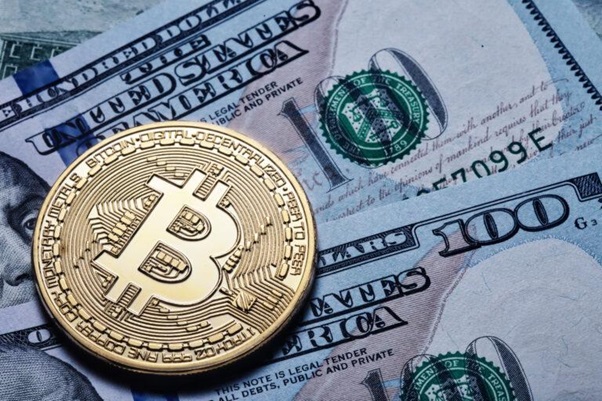
September has delivered an unusual combination for financial markets: a strengthening US dollar alongside a surprisingly resilient Bitcoin market. The US Dollar Index which measures the greenback against a basket of major currencies, has gained nearly 2% during the month, reaching 101.61 on Tuesday.
Its highest level since late July. At the same time, Bitcoin has advanced 6.14% in September, defying a historical tendency for the cryptocurrency to struggle during the month.
The dollar’s recent strength has been closely linked to expectations surrounding US monetary policy. The Federal Reserve’s quarter-point interest-rate hike on September 16 reinforced the view that policymakers remain focused on containing inflation.
Register for the next Tekedia Mini-MBA.
Register for Tekedia AI in Business Masterclass.
Join Tekedia Capital Syndicate and co-invest in great global startups.
Since then, a series of hawkish comments from Fed officials has kept the possibility of additional tightening firmly on the table. Higher interest rates generally increase the appeal of dollar-denominated assets by offering investors stronger returns, while also making the US currency more attractive relative to currencies with lower yields.
Ordinarily, this environment would create a difficult backdrop for Bitcoin. The cryptocurrency has often been sensitive to changes in liquidity, interest rates and the dollar’s direction.
A stronger dollar can reduce the purchasing power of international investors and make riskier assets less attractive. When borrowing costs rise, investors may become more selective, moving money away from speculative assets and toward cash or relatively safer fixed-income investments.

Yet Bitcoin has moved in the opposite direction this September. The cryptocurrency is up 6.14%, a notable performance considering that September has historically been one of its weaker months. The asset has averaged a loss of about 2.42% during September, making this year’s gain particularly striking by comparison.
Several factors may help explain the divergence. Bitcoin’s market structure has evolved significantly compared with previous cycles, with greater institutional participation and broader acceptance as an investable asset.
Investors may also be responding to expectations about future monetary conditions rather than simply reacting to the latest rate decision. If markets believe that the Federal Reserve’s tightening cycle is approaching its later stages, current rate increases may already be reflected in asset prices.

There is an important distinction between the dollar’s current strength and Bitcoin’s longer-term investment narrative. While a rising DXY can create headwinds, Bitcoin is influenced by its own supply dynamics, institutional flows, market sentiment and expectations surrounding adoption.
These forces can sometimes outweigh traditional macroeconomic relationships, particularly during periods when cryptocurrency-specific demand is strong. September’s performance should not automatically be interpreted as evidence that Bitcoin has permanently broken its relationship with the dollar.
Markets can change direction quickly, particularly when central-bank policy remains uncertain. Further rate increases, stronger-than-expected inflation or a sustained rise in Treasury yields could still put pressure on cryptocurrencies and other risk assets.
For now, though, September presents an intriguing contradiction. The dollar has strengthened nearly 2%, the Federal Reserve remains willing to tighten monetary policy, and yet Bitcoin has gained more than 6%.
The divergence highlights how increasingly complex the relationship between cryptocurrency and traditional macroeconomic indicators has become. Rather than moving mechanically in response to the dollar, Bitcoin appears to be responding to a broader mix of institutional demand, expectations and market-specific forces.